

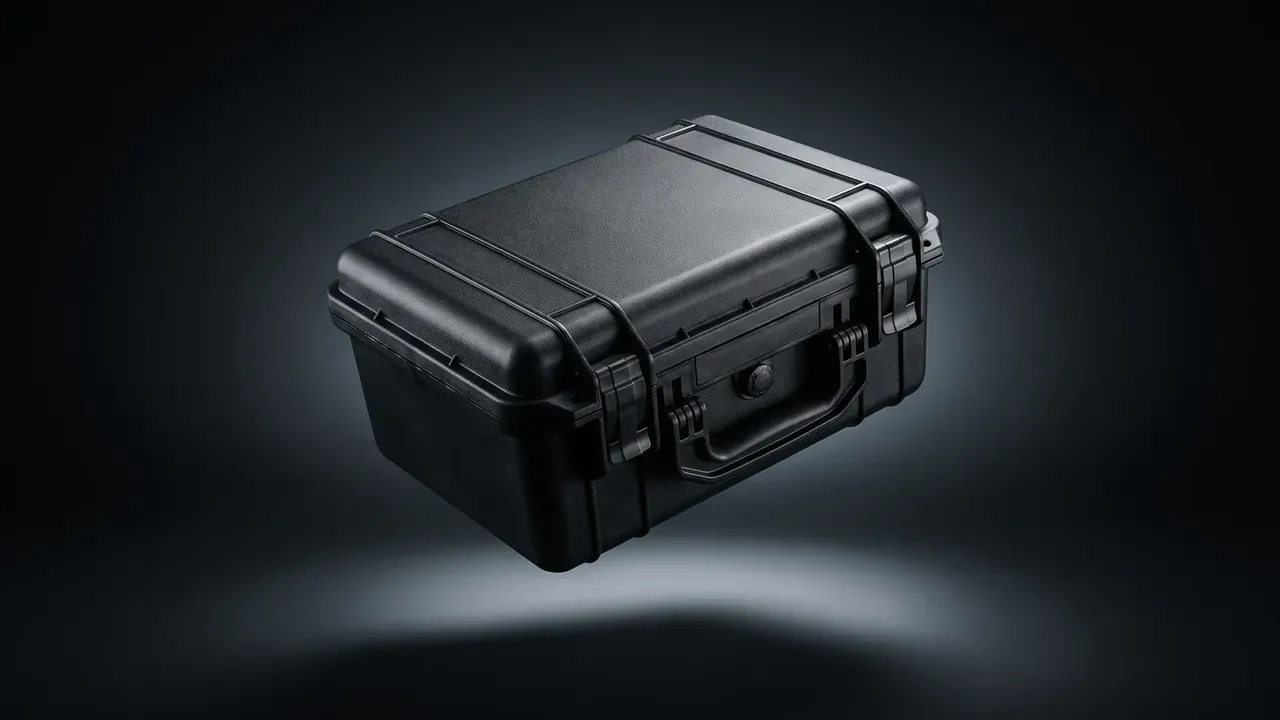
Quick answer: An ammunition chest competes less with other chests than with four substitutes: the mobile ammunition box, the security safe, the steel filing cabinet and the site-built cabinet. Seven measures separate them — usable volume, shelf load, protection class, locking, footprint, cost and expansion room. The chest lands upper-middle.
Table of contents
- Ammunition chest comparison: where the boundary sits
- Capacity and load: five ways to hold the same stock
- Protection and locking: where the tiers split
- Footprint and cost: two readings of one room
- Expansion room and conversion headroom
- FAQ
1. Ammunition chest comparison: where the boundary sits
An ammunition chest is a fixed vertical cabinet, anchored to the floor, divided into compartments and locked by two people. The mobile box travels with the task, the safe is graded by door thickness, the filing cabinet is a thin-panel drawer stack, the site-built cabinet is joinery cut to the room. All five lock, but strength and volume differ by an order of magnitude.
| Option | Volume | Position |
|---|---|---|
| Ammunition chest | 300 to 900 litres | Anchored |
| Ammunition box | 40 to 60 litres | Moves with the task |
| Security safe | 100 to 200 litres | Fixed, heavy |
| Steel filing cabinet | 180 to 260 litres | Semi-fixed |
| Site-built cabinet | 1200 litres and up | Tied to the building |
2. Capacity and load: five ways to hold the same stock
Shelf pitch explains most of the gap. Six shelves at 250 mm put ninety percent of a 900-litre chest to work; a four-drawer filing cabinet at 180 mm clear height uses seventy percent of 260 litres, because runners take the rest. On load, a chest shelf carries 120 kg on 1.2 mm steel with two ribs, a filing cabinet shelf 40 kg on runners that fail first, a safe shelf 80 kg behind a 10 mm door, an ammunition box 25 kg per case with no shelf.
| Option | Load per shelf | Usable share |
|---|---|---|
| Ammunition chest | 120 kg | about 90 percent |
| Ammunition box | 25 kg per case | about 75 percent |
| Security safe | 80 kg | about 60 percent |
| Steel filing cabinet | 40 kg | about 70 percent |
| Site-built cabinet | 150 kg | about 95 percent |
The box loses on indivisibility, not volume. A full 50-litre case weighs 25 kg, so taking half out still means carrying all of it; a chest is drawn shelf by shelf, and pays for it when 900 litres has to be emptied before the cabinet moves.
3. Protection and locking: where the tiers split
Protection is time to entry. A safe with a 10 mm door, 6 mm body and six locking points carries a stated resistance time; a chest with a 1.2 mm door, 1.0 mm body and two points is built against casual reach, not cutting tools. Buying the wrong one for the site is the actual failure.
Locking splits the same way. The chest runs dual control — key plus padlock, both holders present. The safe runs combination plus key, one person can open it, and the log carries accountability. The filing cabinet has one hasp on 0.8 mm steel. The box uses a hasp and a numbered lead seal. The question is not whose lock is better but who is kept out.
4. Footprint and cost: two readings of one room
Read floor space as stock per square metre. A chest gives 1800 litres from 0.5 m², a filing cabinet 650 from 0.4 m², a built-in unit 2400 from a wall run to 2400 mm. Spread cost over five years and the order holds: the chest is dearer per unit and built for ten, while the filing cabinet costs forty percent less and puts a second purchase inside the window when its runners drag at three years.
5. Expansion room and conversion headroom
Expansion asks three things: can shelves be added, can dividers change, can the unit move. Chest shelf holes sit on a 250 mm grid, two more shelves go above the original six, and a re-layout takes ten minutes. A built-in unit is strongest and weakest at once — no wasted gap to 2400 mm, and scrap the moment the room changes use. Door swing is the allowance usually forgotten: 900 mm before a chest door, 450 mm of drawer pull-out.
Conclusion
The five options come down to four trades: volume against footprint, protection against cost, portability against expansion, unit price against service life. The ammunition chest sits in the middle of all four, and once the seven measures share one definition, whether an ammunition chest belongs on the site becomes arithmetic rather than opinion.
This article covers container-side specifications and design implications only, not the handling, loading or use of the contents.
Related Reading
- Ammunition chest versus ammunition box: fixed storage and mobile transfer
- Ammunition chest selection guide: sizing to the site
- Ammunition box compared with its alternatives
- Material comparison for metal ammunition boxes
Related Products
- 8 Series — Gun Cases; Military Equipment Cases; Camera Equipment Cases; Drone Cases; Watch Cases; Knife Cases; First Aid Cases; Electronics Equipment Cases
- WL8-2812 PP Gun Case — model WL8-2812
- All protective cases and toolboxes: 7 series, 158 models