

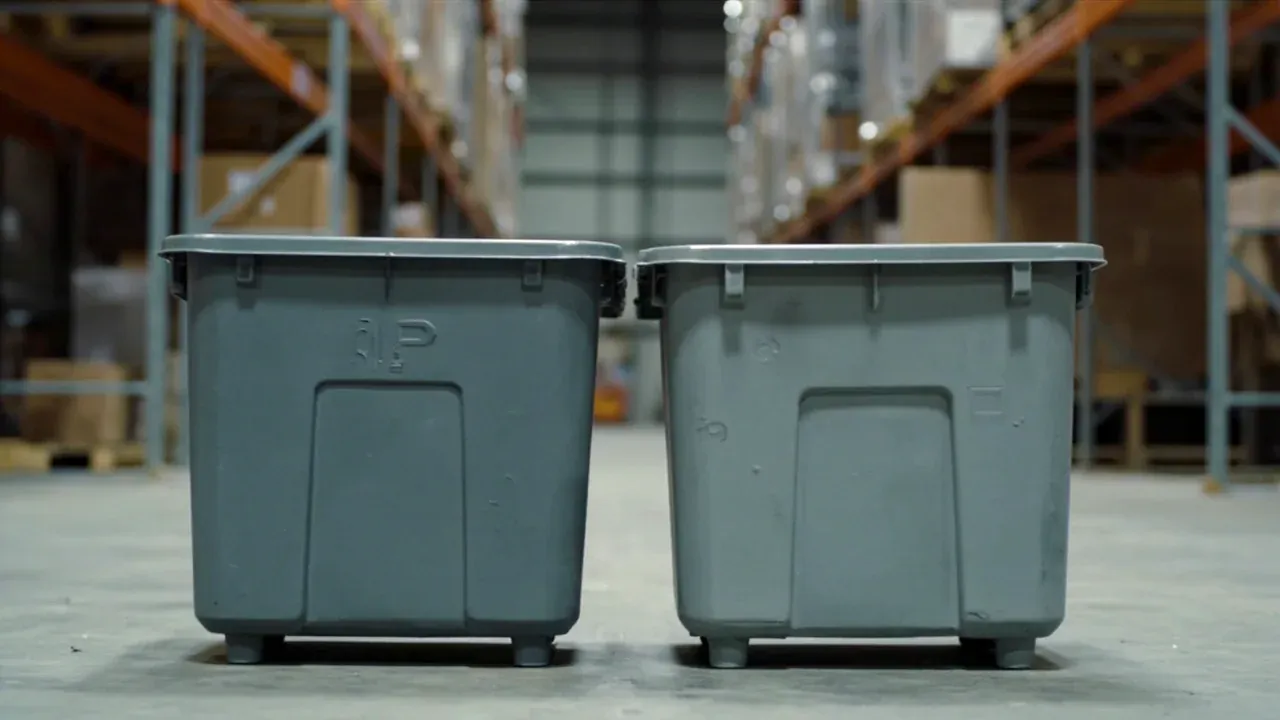
Quick answer: An ammunition box often looks like a storage bin; the difference hides in three places — a continuous lid gasket, locating recesses on the top, and marking fields on all four sides. Those decide whether it survives three damp years, stacks five tiers, and can be counted without turning it.
Table of contents
- Three structural differences
- Sealing: two methods, two failures
- Stacking: locating geometry sets the tier count
- Markings: the gap in stocktaking speed
- Price gap versus failure cost
- FAQ
1. Three structural differences
The two may come off the same moulding line; the difference is three local features: the lid gasket groove, the top locating structure, and the marking faces. A bin simplifies all three to save cost, an ammunition box cannot.
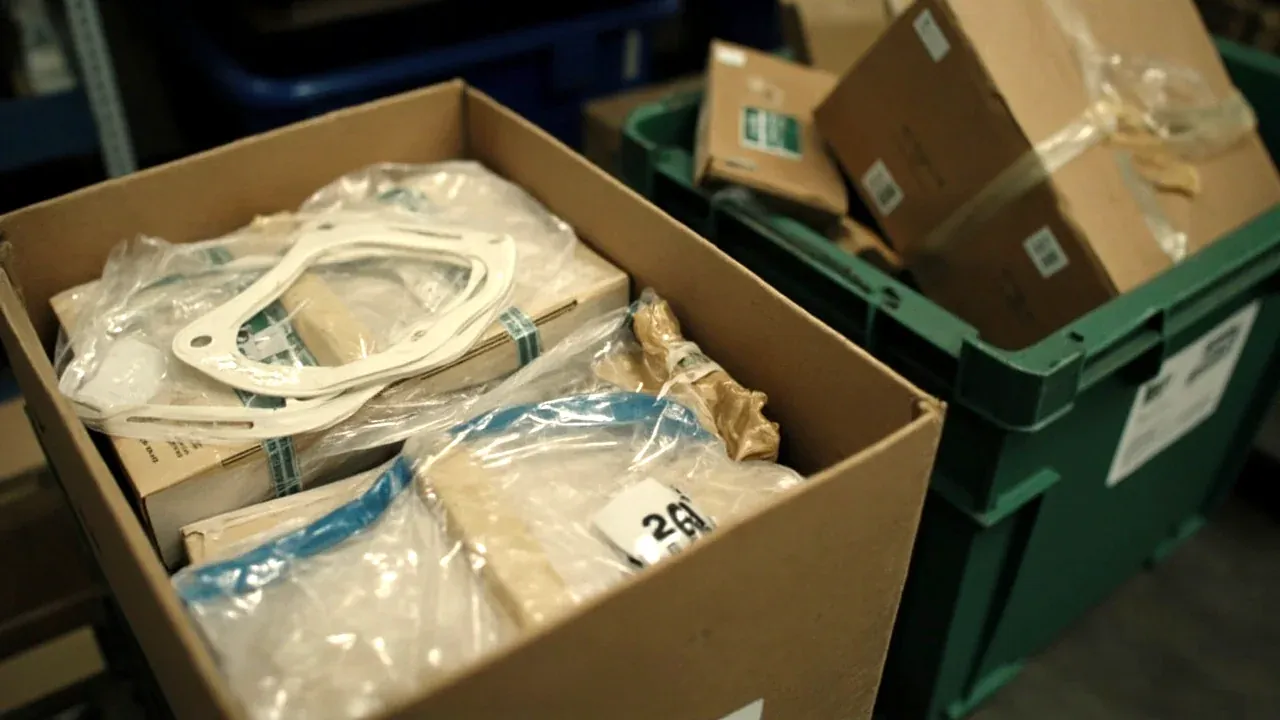
All three are visible in a photograph and rarely stated in a quotation. Ask three questions: is there a full-perimeter gasket groove, how deep are the top recesses, and are all four sides marked. No answer means a bin.
| Feature | Ammunition box | Storage bin |
|---|---|---|
| Lid rim | full gasket groove | flat or half-round foam |
| Top face | recesses over 5 mm | flat or shallow ribs |
| Marking | moulded fields on four sides | one label spot |
| Base | matching bosses | flat |
2. Sealing: two methods, two failures
An ammunition box compresses a full gasket into a groove; a bin uses half-round foam or a flat joint. The first seals by compression, the second by contact. Temperature cycling is the difference: a flat joint opens micro-gaps as body and lid shrink differently, and foam takes a permanent set.
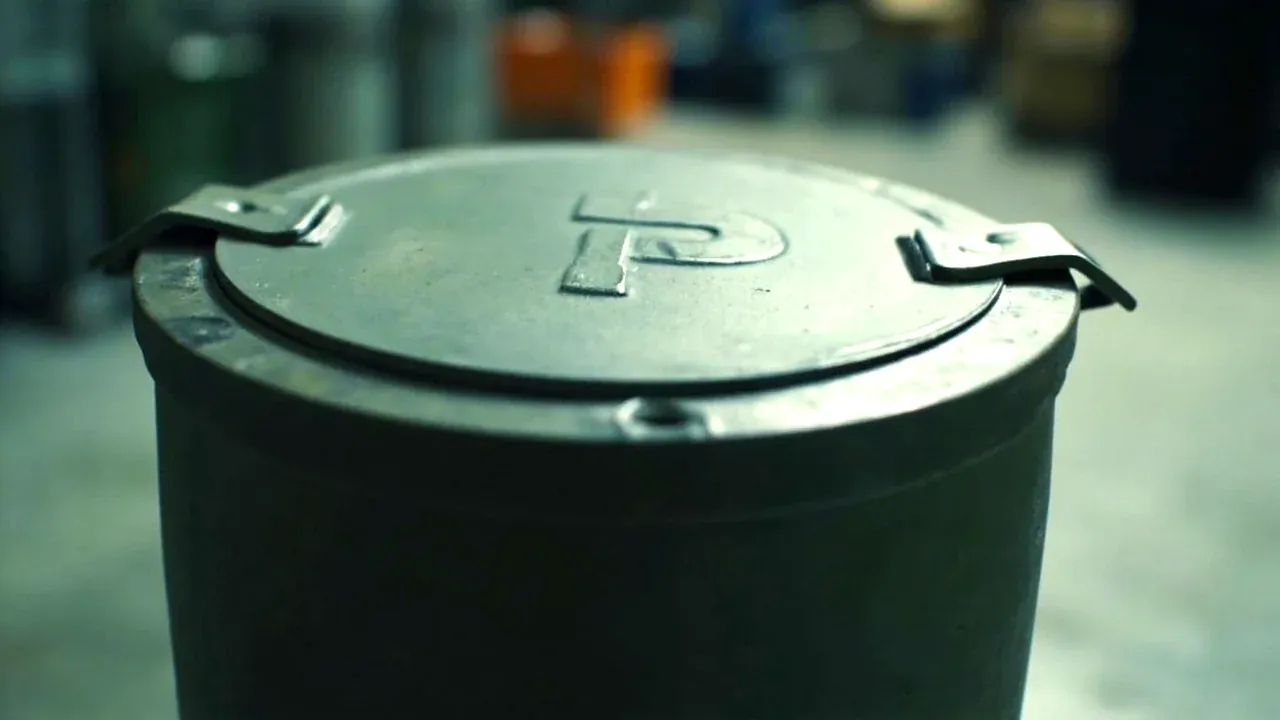
Failures differ too: a gasket leaks slowly and humidity climbs over weeks; foam leaks locally from a corner and shows after one rain event. Neither destroys contents immediately, but both halve storage life.
3. Stacking: locating geometry sets the tier count
Recesses and bosses interlock, so a stack behaves as one body; a flat base relies on weight and friction and drifts by the third tier, which is why flat boxes end up against a wall.
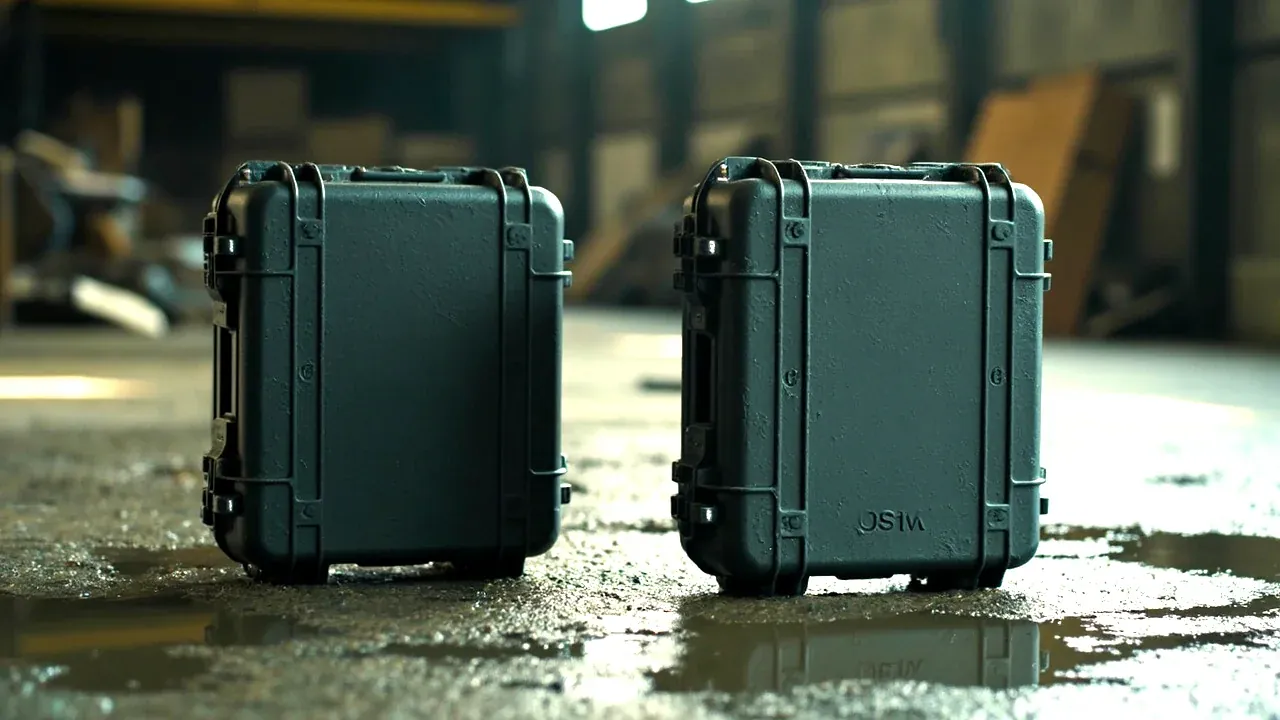
Interlocking also keeps a pallet intact during forklift moves, where flat boxes need stretch wrap and collapse once it is cut. Test on site: stack two empty boxes and push.
4. Markings: the gap in stocktaking speed
Four-side marking can be read from the aisle; a single side means turning every box. In a five-hundred-box store that is two people for half a day against two days.
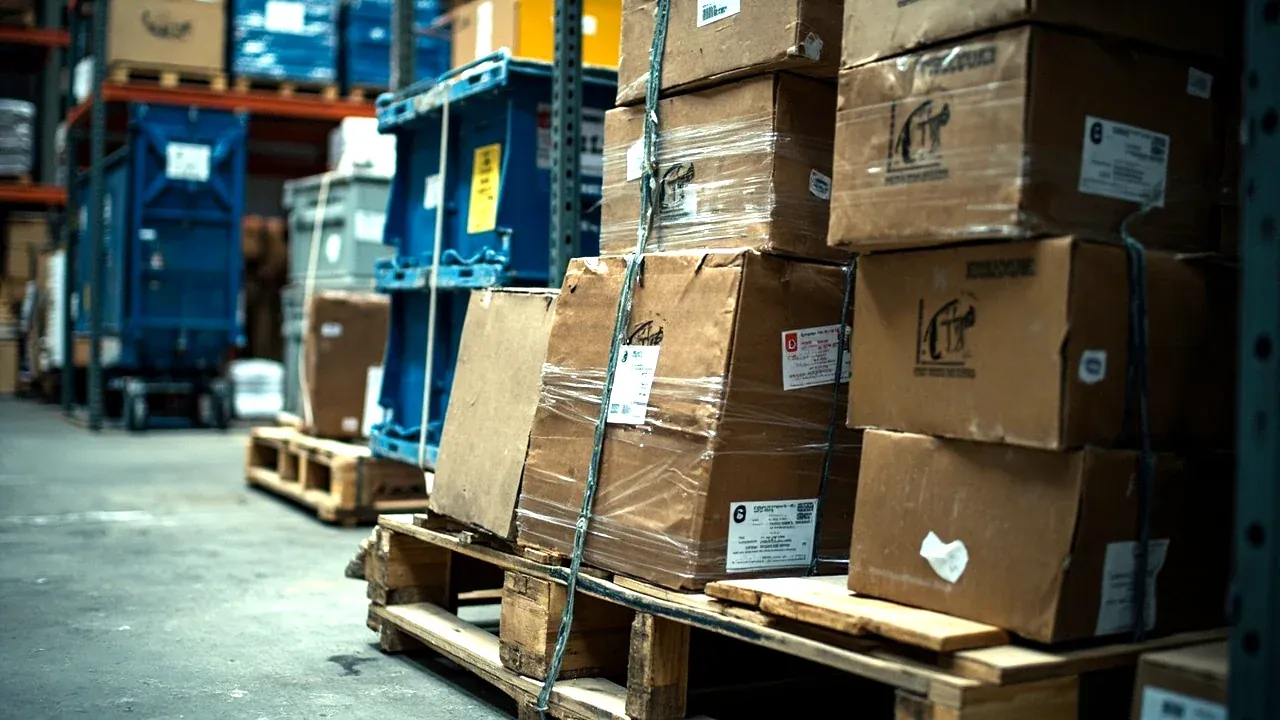
Split the content: fixed data moulded in, variable data on a durable label. Then a batch change costs one label instead of a full repaint.
5. Price gap versus failure cost
An ammunition box costs twenty to one hundred percent more, from the gasket mould, the thickened top and four marking faces. Against that sit a scrapped batch from damp, a stack collapse to redo, and overtime stocktaking.
Over five years one damp batch erases the difference. The question is not how much more it costs but what one damp batch costs — above the gap, buy the ammunition box; below it, a bin will do.
Conclusion
The line between an ammunition box and a bin is three features: a full gasket groove, top locating recesses and four marking faces. With all three it survives three damp years, stacks five tiers and counts without turning; without one, a lower price only delays failure by six months.
This article covers container-side specifications and design implications only, not the handling, loading or use of the contents.
Related Reading
- What an ammunition box is
- Ammunition container specifications
- Choosing an ammunition storage container
- Case seal materials
Related Products
- 8 Series — Gun Cases; Military Equipment Cases; Camera Equipment Cases; Drone Cases; Watch Cases; Knife Cases; First Aid Cases; Electronics Equipment Cases
- WL8-2812 PP Gun Case — model WL8-2812
- All protective cases and toolboxes: 7 series, 158 models