

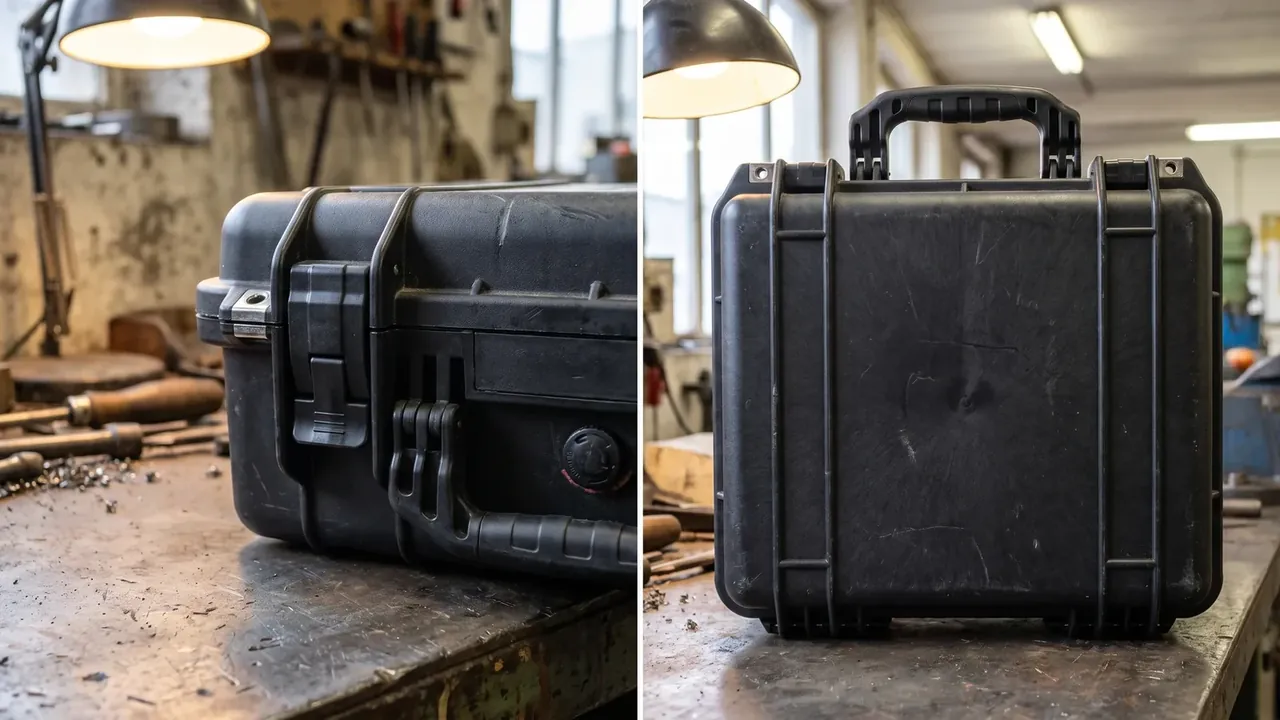
Quick answer: Ammunition chest procurement is decided before the request for quotation. Fix dimensions, shelf count, load and handling on one requirement sheet, ask for the price split into material, forming, hardware, coating and overhead, then settle MOQ, sample refund, delivery staging and warranty in the same contract.
Table of contents
- Start with a Requirement Sheet
- The Five Cost Blocks Behind a Quotation
- MOQ, Sampling and First-Article Approval
- Lead Time and Staged Delivery
- Inspection, Packing and Warranty Terms
- FAQ
1. Start with a Requirement Sheet
Ammunition chest procurement is usually lost before the quotation goes out. A buyer who writes one hundred units, as large as possible, leaves the supplier quoting a catalogue item, and the first delivery shows a shelf that cannot carry the load. Issue a requirement sheet first: outline size, shelf count, load per shelf, door swing and fork pocket height.
The two items most often left off are unit weight and stack height. A 135 kg chest and a 90 kg chest differ for rack selection, crew size and freight, and stack height decides whether the lid needs ribs. State 80 kg uniformly distributed rather than 80 kg, because a point load needs a heavier gauge.
| Item | Typical value | What goes wrong without it |
|---|---|---|
| Outline size | 1200×600×800 mm | Rack pitch and freight recalculated |
| Shelves | 5 tiers, 80 kg each, uniform | Price drops, static load fails |
| Unit weight | 135 kg or less | Crew size and lifting gear misjudged |
| Fork pockets | 100 mm off floor, 200 mm wide | No mechanical handling on arrival |
| Marking | Batch stamp inside, label outside | Traceability breaks at goods-in |
2. The Five Cost Blocks Behind a Quotation
Most quotations arrive as a single number, which cannot be compared, because one supplier amortises tooling into the unit price while another bills packing separately. Ask for five blocks: material, forming, hardware and locks, coating, and overhead plus margin. Once split, the high block is obvious.
Material runs about 46 % and is the only block tied to steel; a 300 CNY move per tonne shifts unit cost by roughly 12 CNY, so the quote needs a base price and a formula triggered beyond 5 %. Tooling must be separate: one folding and foaming set costs 18,000 CNY, or 90 CNY per unit across 200 units and 360 across 50. Hardware sits near 13 %, where a zero-interchange requirement adds 8 to 15 CNY per unit. Coating is 9 % but moves fastest: raising salt spray from 480 to 720 hours adds about 6 %. Compare on three-year cost, not unit price.
3. MOQ, Sampling and First-Article Approval
An MOQ of 50 units is the break-even line for most plants, for one reason: four hours to clear the line for a different gauge and ninety minutes to flush the booth for a different colour. Spread over fewer than 50 units, that pushes unit cost up a step. Do not fight the MOQ; consolidate demand instead.
Sampling is one unit at 1,800 CNY, refunded in full from 200 units, with a 12-working-day turnaround. Check measured dimensions against the drawing, shelf deflection under rated load, and lock feel with key insertion force. Clear all three before releasing the production order.
4. Lead Time and Staged Delivery
A standard order runs 30 working days, or 55 with new tooling. State when the clock starts, normally the later of drawing approval and deposit receipt; dated from signature alone, a supplier loses two weeks to approvals. Two topcoats also need four hours between them, and skipping that interval costs a grade of adhesion.
Staged delivery suits buyers with limited floor space: a first batch of 100 units, then one every 15 days capped at 150. Damages of 0.3 % per day, capped at 5 %, with cancellation rights after 15 days of delay, are normal for this category.
5. Inspection, Packing and Warranty Terms
Inspection happens on the supplier floor, with a third party appointed at roughly 800 CNY per person-day. Sampling follows defect class: critical at zero tolerance, major at AQL 1.0, minor at AQL 2.5. A report that says only pass has no value in a claim.
Packing is five-layer corrugated board with 20 mm EPE on a 1200×1000 mm pallet, six units per pallet, three pallets high. A 40-foot high-cube takes 42 units. Photograph any damaged carton at unloading and note it on the receipt, because carriers reject late claims.
| Term | Suggested value | Note |
|---|---|---|
| Warranty | Body 24 months, coating 18, locks 12 | Locks are a wear item |
| Retention | 10 % of contract value | Released 12 months after acceptance |
| Payment | 30 % deposit, 60 % before shipment, 10 % retention | A high deposit weakens leverage |
| Spares | Locks 2 %, hinges 1 % of order | Field repair without waiting |
Conclusion
Ammunition chest procurement is not a negotiation over a unit price but over enforceable constraints: the requirement sheet fixes what is bought, the cost split fixes where the money goes, first-article approval fixes what comes off the line, and the warranty clause fixes who pays when it does not. Settle those four before signature and the rest is scheduling. File the sheet with the sealed sample, and the next ammunition chest procurement starts from a known baseline.
This article discusses only the container (case body) side of specifications and design intent, and does not cover any handling, loading or use of the contents.
Related Reading
- Ammunition chest selection guide: sizing by stowage volume
- Ammunition chest versus alternative storage options
- Ordnance box standards: turning clauses into contract terms
- Ammunition stowage box applications by use case
Related Products
- 8 Series — Gun Cases; Military Equipment Cases; Camera Equipment Cases; Drone Cases; Watch Cases; Knife Cases; First Aid Cases; Electronics Equipment Cases
- WL8-2812 PP Gun Case — model WL8-2812
- All protective cases and toolboxes: 7 series, 158 models