

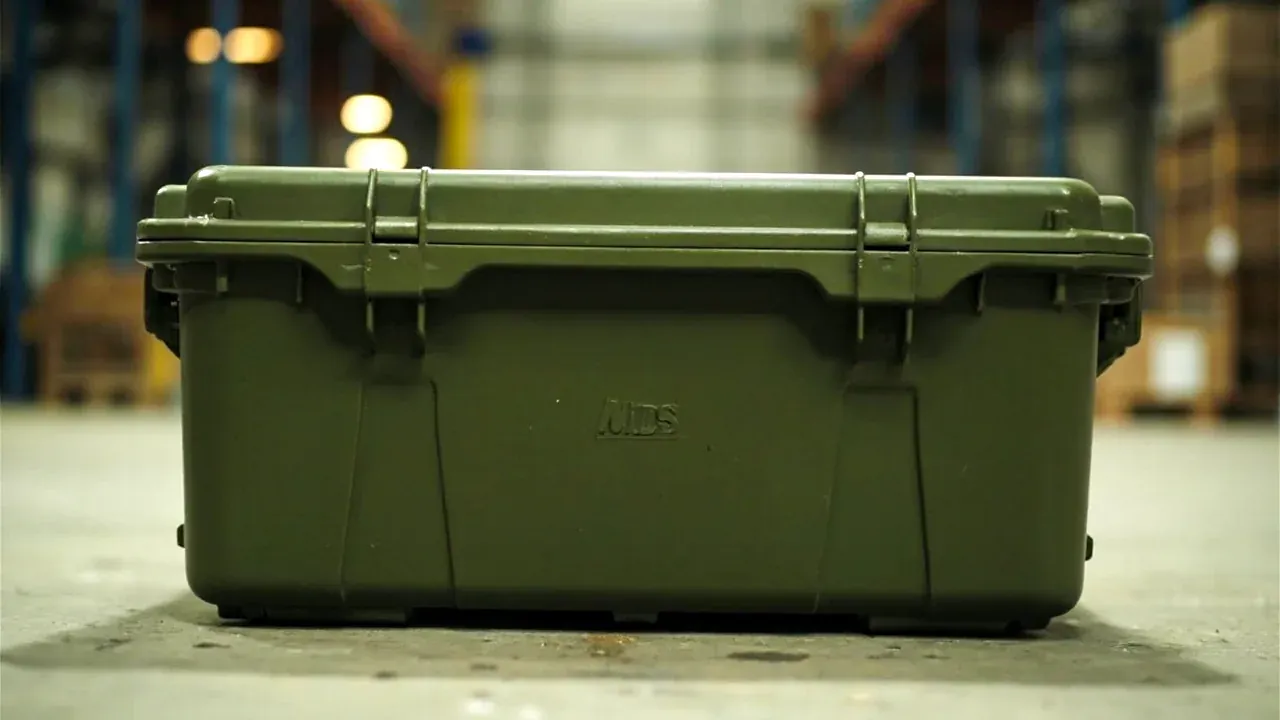
Quick answer: One ammunition storage box serves a warehouse, a covered yard and a vehicle, but each place loads it differently. A warehouse tests stack height and what the bottom case carries; a yard tests sun and drainage; a vehicle tests restraint and tie points. Fix the site first, then the stack, the pallet and the lashing, and let marking follow. Reverse that order and the stack looks right until the bottom case sags under load, out of sight.
Table of contents
- Stack height: load on the bottom case comes first
- Palletising: how many per pallet and how to bind them
- Restraint in transit: tie points, lifting and anti-slip
- Marking and orientation once the stack is up
- Comparing enclosed store, covered yard and vehicle
- FAQ
1. Stack height: load on the bottom case comes first
Stack height is a static load problem. A loaded ammunition storage box at twenty-five kilograms, five high, leaves the bottom case carrying a hundred kilograms for months, before any safety factor is applied to the ribs under the floor.
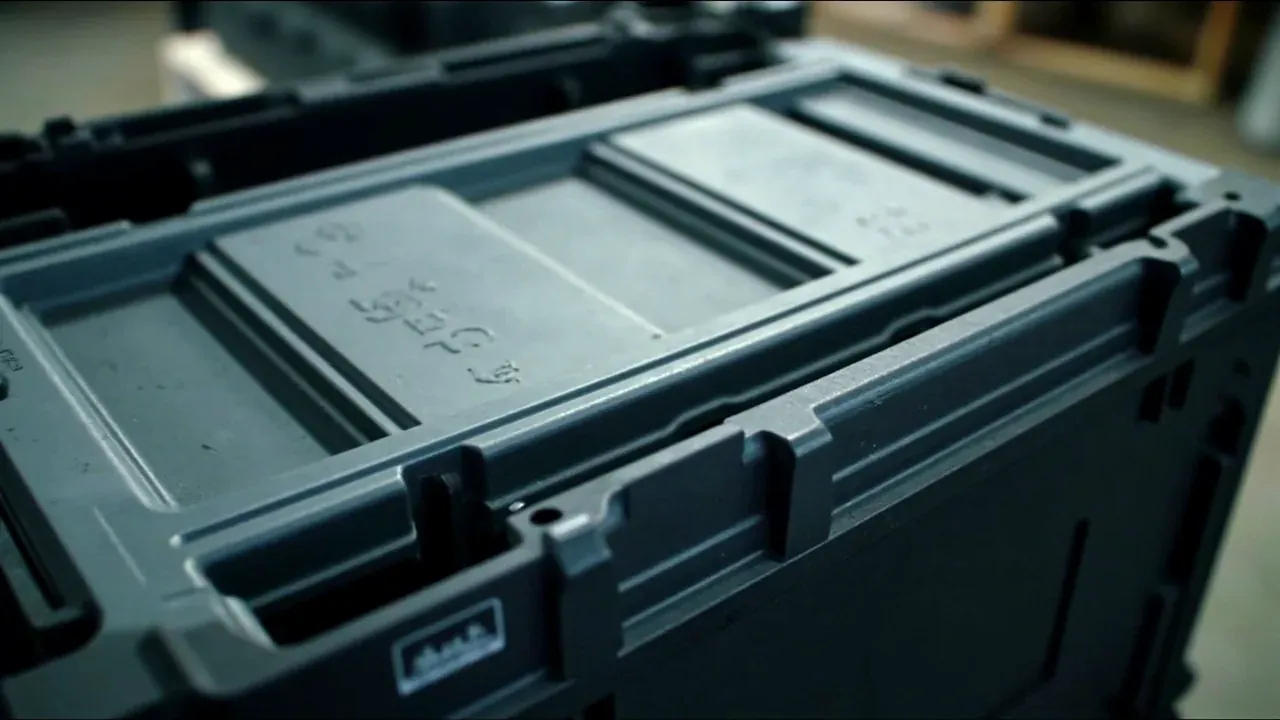
Top and bottom geometry decide whether a stack stays square. A lid groove and matching feet work only past five millimetres; shallower and the third layer shifts until a wall holds it. Anything above 1.8 metres needs a step for every pick.
2. Palletising: how many per pallet and how to bind them
Palletising starts with a count. On a 1200 by 1000 millimetre pallet, four or six ammunition storage boxes fit the footprint; four leaves a gap for strapping and forks, while six must be offset or the load crowns and rocks.
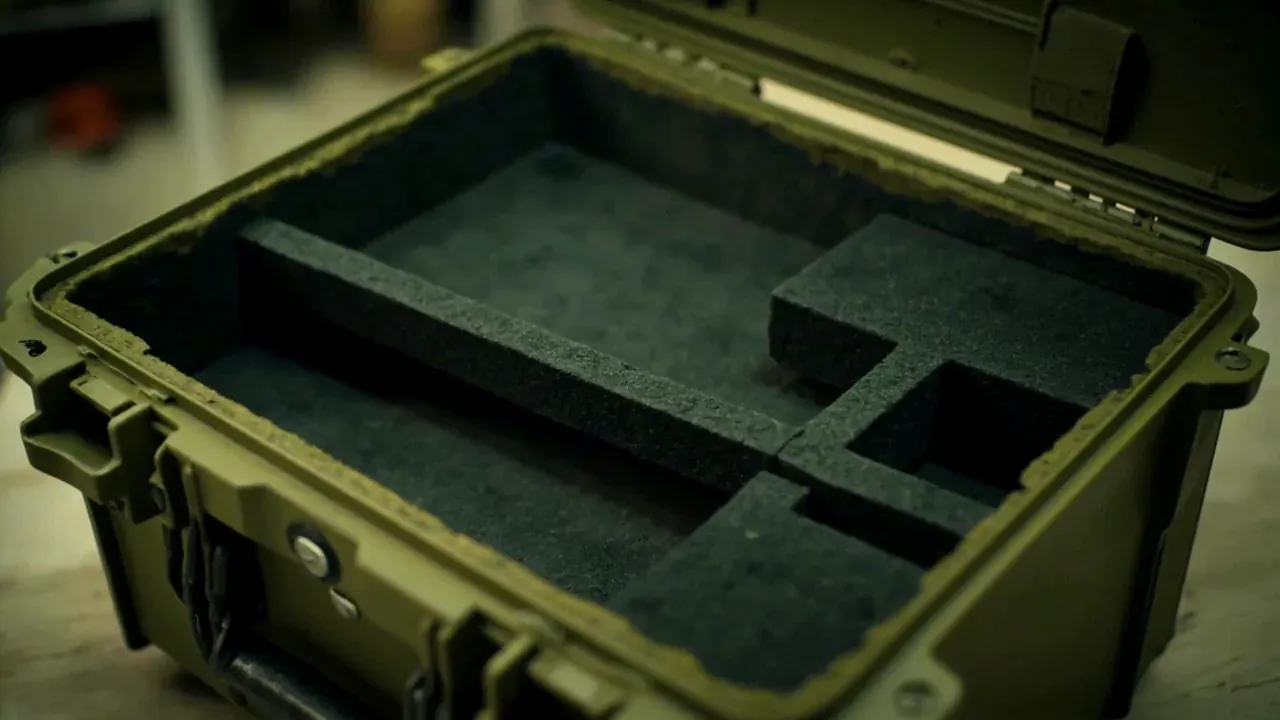
Two straps and a stretch wrap hold it. Run straps over the shoulders, never across the lid, since lid pressure takes a permanent set out of the gasket. The ammunition storage box is wrapped from the pallet feet to two thirds of its height.
3. Restraint in transit: tie points, lifting and anti-slip
A vehicle and a store follow different physics: in a store the case holds itself down, on a truck the lashing does the work. An ammunition storage box takes corner straps at thirty to forty-five degrees; pressure on the lid alone fails in a hard stop.
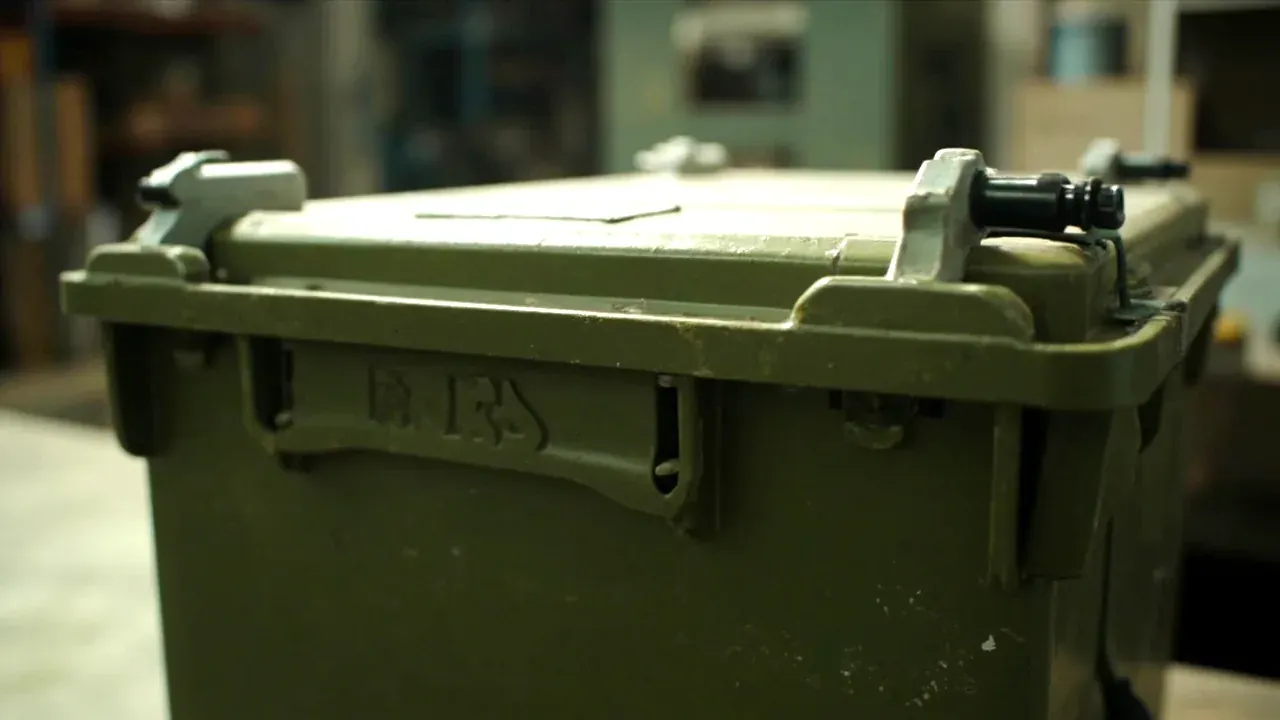
Lift by pallet or sling, never by the handle, which is rated for carrying at about a third of the loaded weight. Lay an anti-slip mat three millimetres thick at least, and keep grit off the ammunition storage box, since one grain grinds a floor rib thin.
4. Marking and orientation once the stack is up
Marking has to survive the stack. An ammunition storage box carries label recesses on four sides, half a millimetre deep so a label sits flush and never scrapes off, plus one on the lid for single-layer storage.
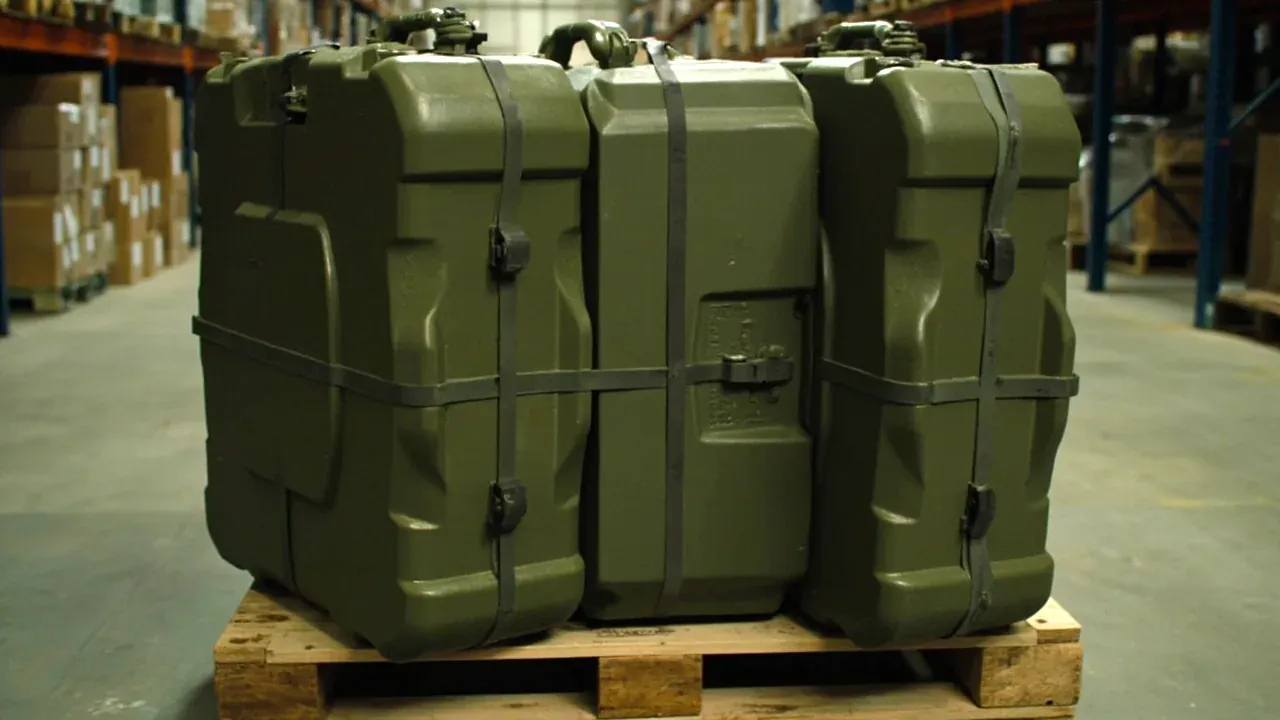
Set the orientation of an ammunition storage box once: handle to the aisle, lid up, no inverted case. Inverted, the rim carries the load and the gasket takes a set. Follow the arrows, or read the handle, and put the rule on the store layout drawing.
5. Comparing enclosed store, covered yard and vehicle
Three sites differ along four lines: stack height, pallet, restraint, sun and drainage. An ammunition storage box goes five high on self-weight in an enclosed store; a covered yard drops to three on dunnage; a vehicle takes one layer held by straps.
List the conversions before moving an ammunition storage box. Store to yard means dunnage and shade cloth; yard to vehicle means straps, an anti-slip mat and fresh marks at the tailgate; vehicle back to store means checking the floor ribs.
| Site | Stack and load | Restraint | Sun and drainage |
|---|---|---|---|
| Enclosed store | five high, bottom rated for four cases | self-weight, locating grooves | none, control store humidity |
| Covered yard | three high, dunnage below | dunnage plus a lean rail | shade cloth, 100 mm clearance |
| Vehicle | single layer, no stacking | four corner straps, 30 to 45 degrees | tarpaulin, anti-slip mat |
Conclusion
Configure in four steps: site, stack height, pallet, restraint. The site caps the height, the height sets the load on the bottom case and the pallet size, the pallet decides the lashing, and the lashing feeds back into marking. The usual mistake is carrying a store stack onto a truck, where self-weight stops working, nothing on the box warns you, and the load shifts at the first bend.
This article covers container-side specifications and design implications only, not the handling, loading or use of the contents.
Related Reading
- Sealing and humidity control for storage boxes
- Packaging and transport marking for small arms boxes
- Transit Cases: Reusable Equipment & Instrument Protection
- Load, sealing and cushioning for shipping containers
Related Products
- 8 Series — Gun Cases; Military Equipment Cases; Camera Equipment Cases; Drone Cases; Watch Cases; Knife Cases; First Aid Cases; Electronics Equipment Cases
- WL8-2812 PP Gun Case — model WL8-2812
- All protective cases and toolboxes: 7 series, 158 models