

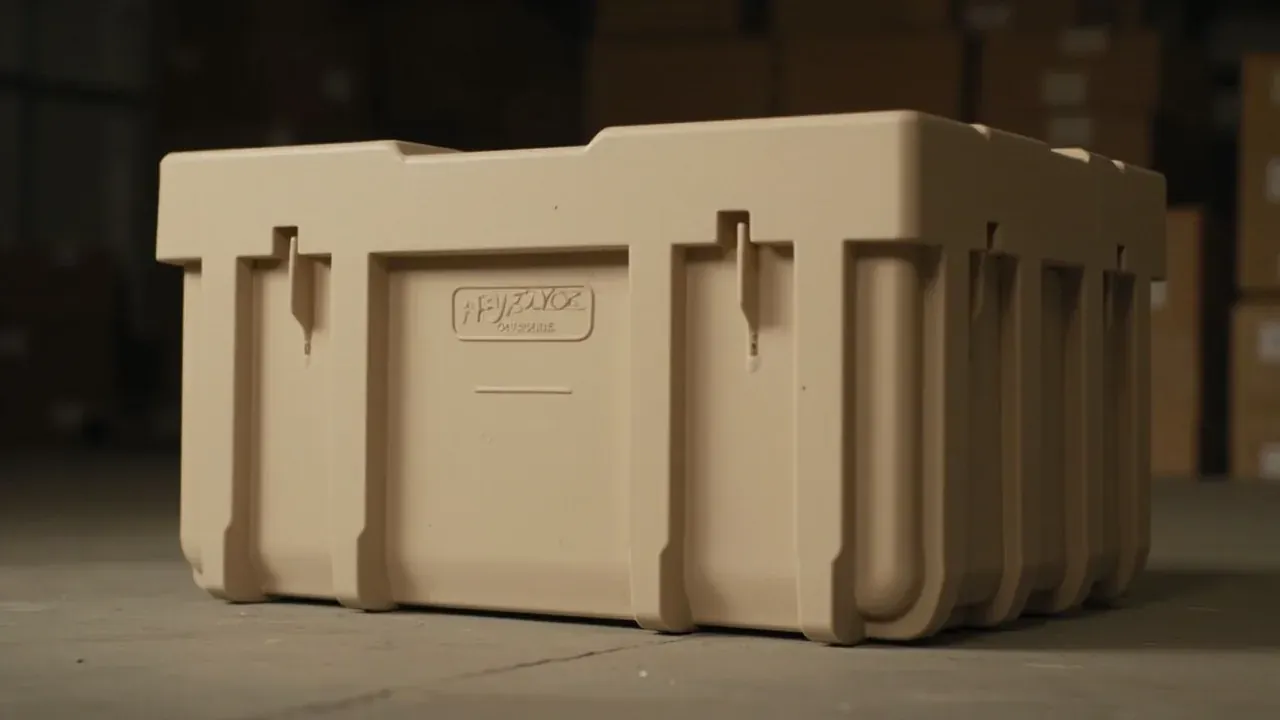
Quick answer: The three specifications of a munitions shipping container are not parallel. Load rating fixes wall and rib thickness, sealing decides whether the rim carries one line or two, and cushion compression must leave room for the gasket to recover. Split unit, stack and lifting loads first, then choose the seal path and whether a breather belongs, and pick cushion material by compression set. Any range is a starting point; the buyer's agreement and an independent report settle the numbers.
Table of contents
- Three load cases, each calculated apart
- One seal line or two, and whether to vent
- Compression and recovery decide a second trip
- Corners and floor: steering impact away
- Reading the ranges without copying them
- FAQ
1. Three load cases, each calculated apart
A single load figure is the first mistake. Unit rating governs the floor and handle, stack load the lid and walls, lifting load the ears. A munitions shipping container fails at the weakest path.
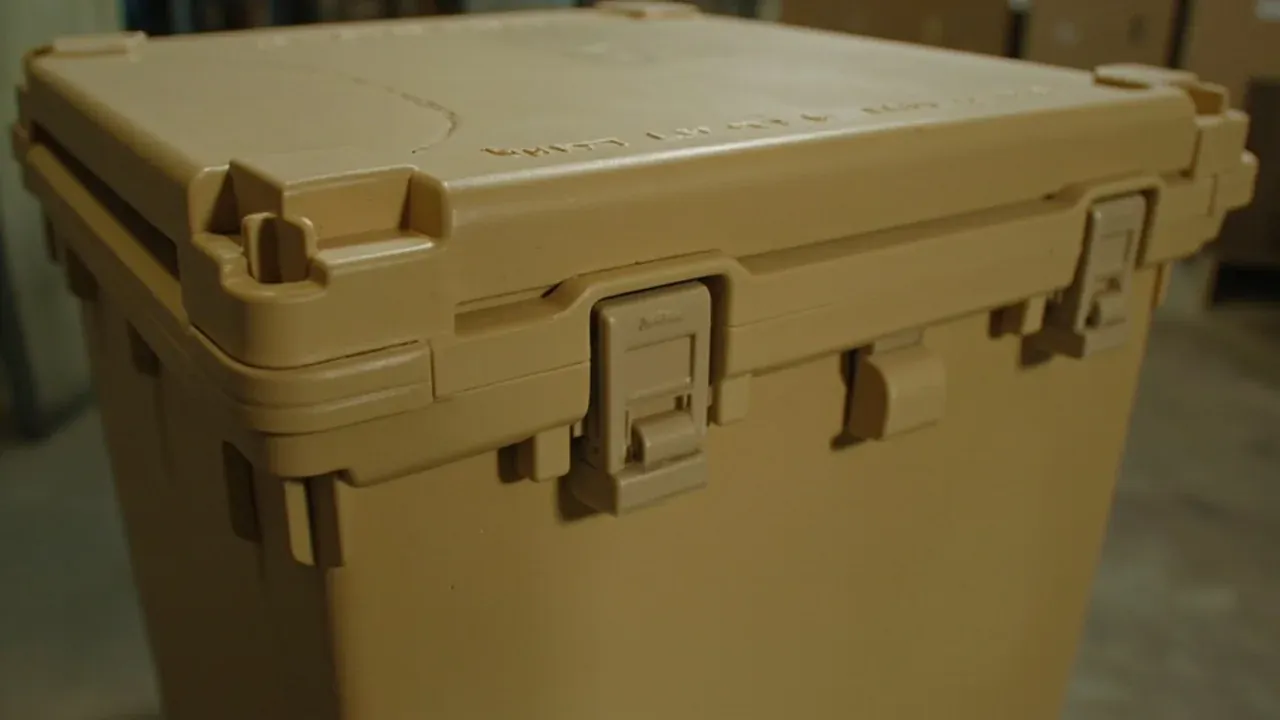
Unit load is contents plus packing, static factor of one. Stack load is filled weight times layers, times 1.5 for creep. Lifting a munitions shipping container runs 1.5 to 2 at two points. The weak spot sits at rib spacing and behind an ear.
2. One seal line or two, and whether to vent
Sealing takes one of two paths. A single line relies on latch preload: simple, light to open, suited to daily access. A double line puts water outside and air inside, with a groove between. A munitions shipping container pays three to five millimetres for it.
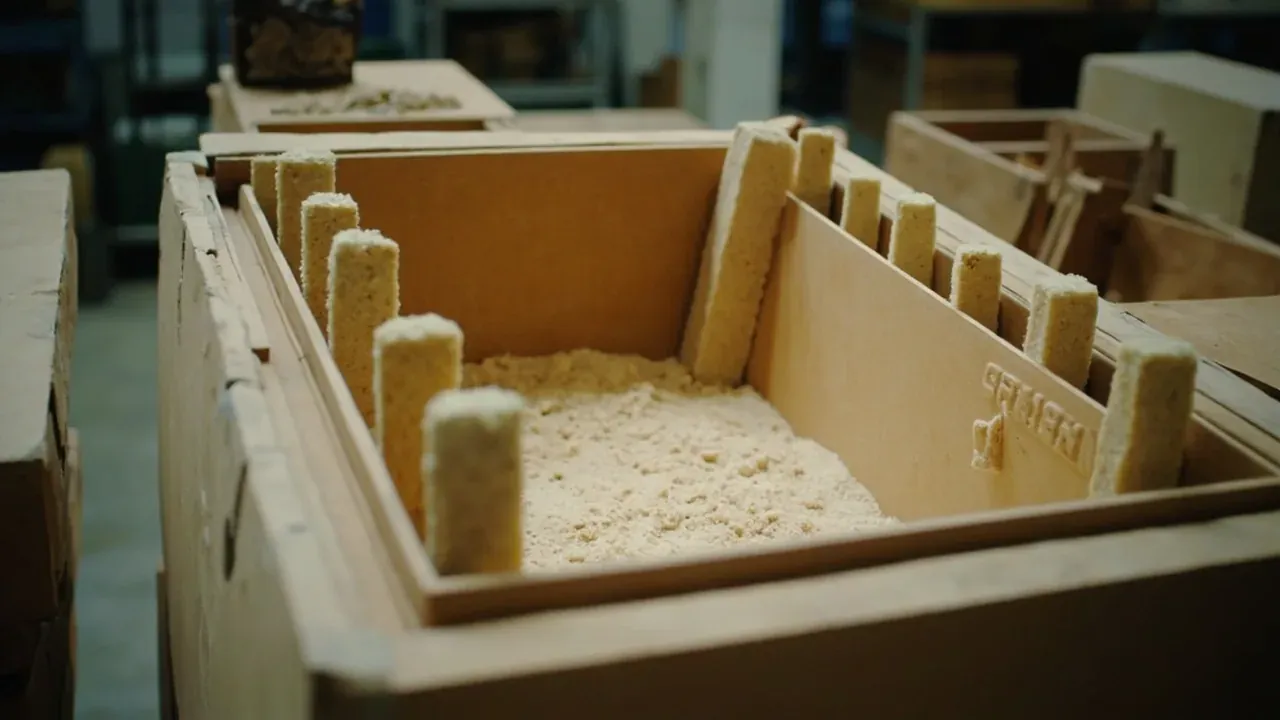
A breather answers temperature swing: sun by day, cold by night, pressure falling until the gasket is drawn in and its lip rolls. A valve flattens that and adds a hole. Decide by the journey.
3. Compression and recovery decide a second trip
Softer is not better. Compression should land between 25 and 35 per cent. Below it, impact reaches the wall before energy is absorbed. Above it, the foam crushes and passes load.
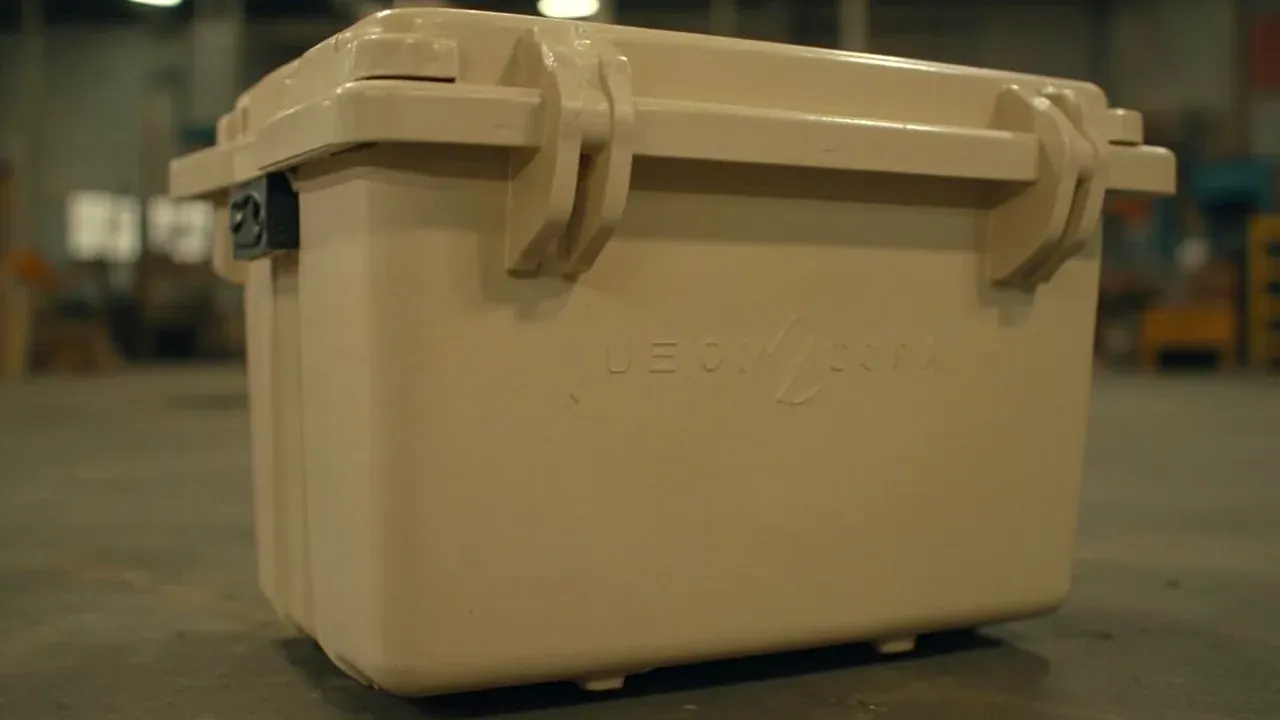
Recovery matters more than hardness. Pressed to thirty per cent and left a day, a cushion in a munitions shipping container should return past ninety; at eighty it has failed while still looking sound.
4. Corners and floor: steering impact away
The four corners of a munitions shipping container fail first. On a rotomoulded part the corner is already a thickness transition, so stress collects and cracks begin inside the curve. Open the radius to 15 or 20 millimetres, then add a bumper 8 to 12 proud.
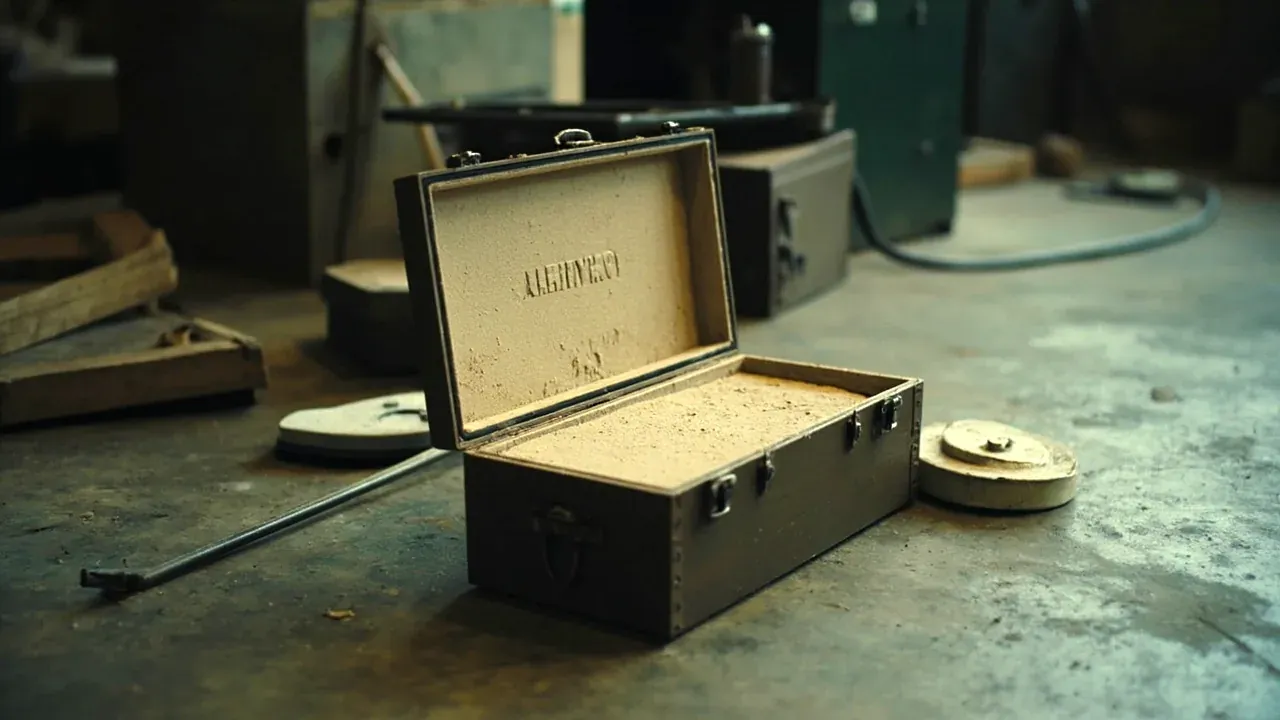
The floor works with the bumpers. Two longitudinal ribs, 6 to 10 millimetres high, lift the base clear of water and abrasion. Stop each rib 30 millimetres short of the edge, or it presses into the lid below.
| Item | Range | Criterion | If exceeded | Verification |
|---|---|---|---|---|
| Unit rating | 40 to 80 kg | weaker of ribs or handle | floor sets, handle whitens | load a day, read deflection |
| Loaded stack | 3 to 5 high | bottom load times 1.5 | lid creeps at mid-span | feeler at the lid seam |
| Twin wall | 4 to 6 mm | tied to rating and stack | wall bulges, latches misalign | ultrasonic, three points |
| Compression | 25 to 35 per cent | 90 per cent recovery a day later | fails on the second trip | measure after pressing |
| Bumper | 8 to 12 mm | meets ground first | crack inside the corner | visual plus feeler |
5. Reading the ranges without copying them
Compress conclusions into ranges, then check structure inside them. Box size, stack height and mode all move the answer, so a change sends you back to the load case, not across to a neighbouring size.
Lay the table out in five columns: item, range, criterion, consequence of excess, and how to verify. Most disputes over a munitions shipping container come from comparing ranges without criteria.
Conclusion
Work in four steps: split unit, stack and lifting loads, then fix the seal path and whether to vent, then choose cushioning by compression and recovery, and finish with bumpers and floor ribs to steer impact away. The first two set structure, the last two set service life. The usual failure on a munitions shipping container is folding three load cases into one number before design starts.
This article covers container-side specifications and design implications only, not the handling, loading or use of the contents.
Related Reading
- Transport compliance framework and marking rules
- Compartments, counting and marking design
- Sealing and humidity control for storage boxes
- Transit Cases: Reusable Equipment & Instrument Protection
- Rotomolded Cases: Rotational-Moulded Shell Structure & Pro…
Related Products
- 8 Series — Gun Cases; Military Equipment Cases; Camera Equipment Cases; Drone Cases; Watch Cases; Knife Cases; First Aid Cases; Electronics Equipment Cases
- WL8-2812 PP Gun Case — model WL8-2812
- All protective cases and toolboxes: 7 series, 158 models