

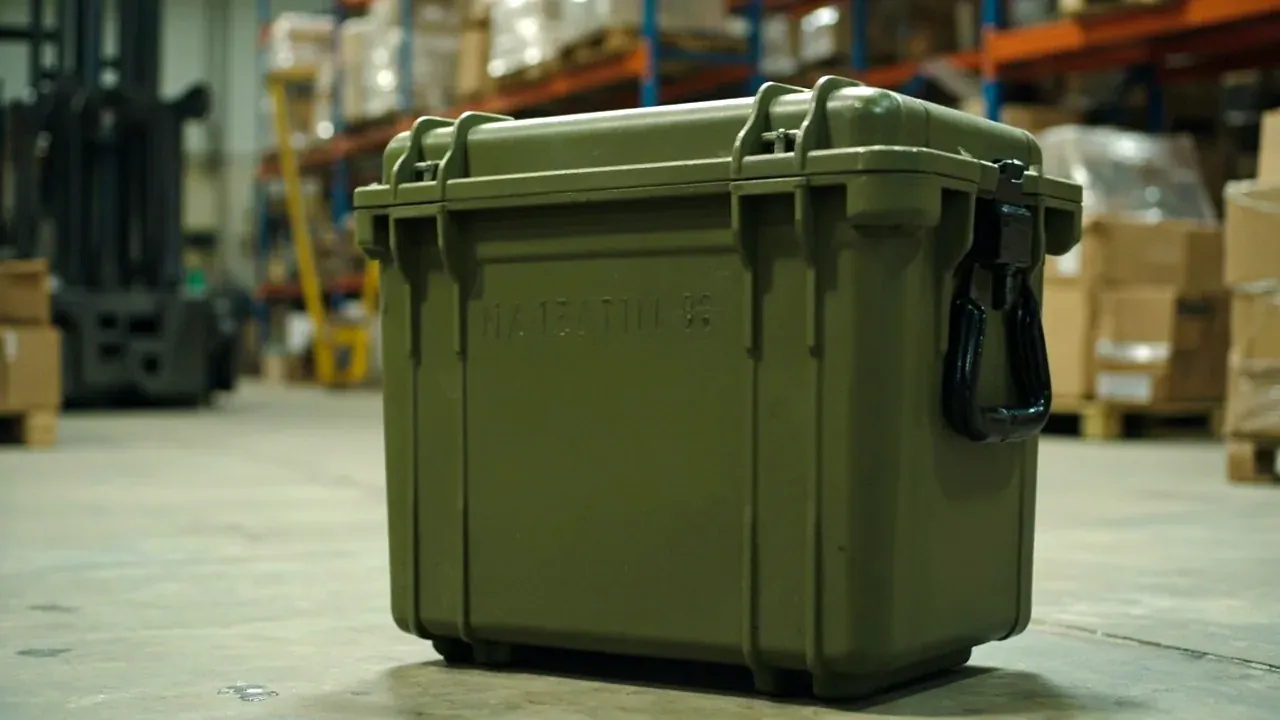
Quick answer: Moisture in an ammunition storage box seldom crosses the moulded wall. It arrives by four routes: a gasket that no longer compresses, a vent membrane gone stiff, condensation on a cold inner face, and air exchanged when the lid opens. Work in that order, keep desiccant as a backstop, and check the log before buying more gel: a sealed box holds its reading for weeks, an unsealed one empties the bag without changing the graph.
Table of contents
- Four routes that let moisture into the box
- The rim gasket: compression, material and when to replace it
- Vent, desiccant and the readings inside
- Checks before storage and the quarterly review
- Ranking the four fixes by cost
- FAQ
1. Four routes that let moisture into the box
Water inside an ammunition storage box is rarely leakage. A rotomoulded wall has no seam, so moisture arrives by four routes: lid gasket, pressure vent, an inner face colder than the dew point, and the air exchanged when the lid opens.
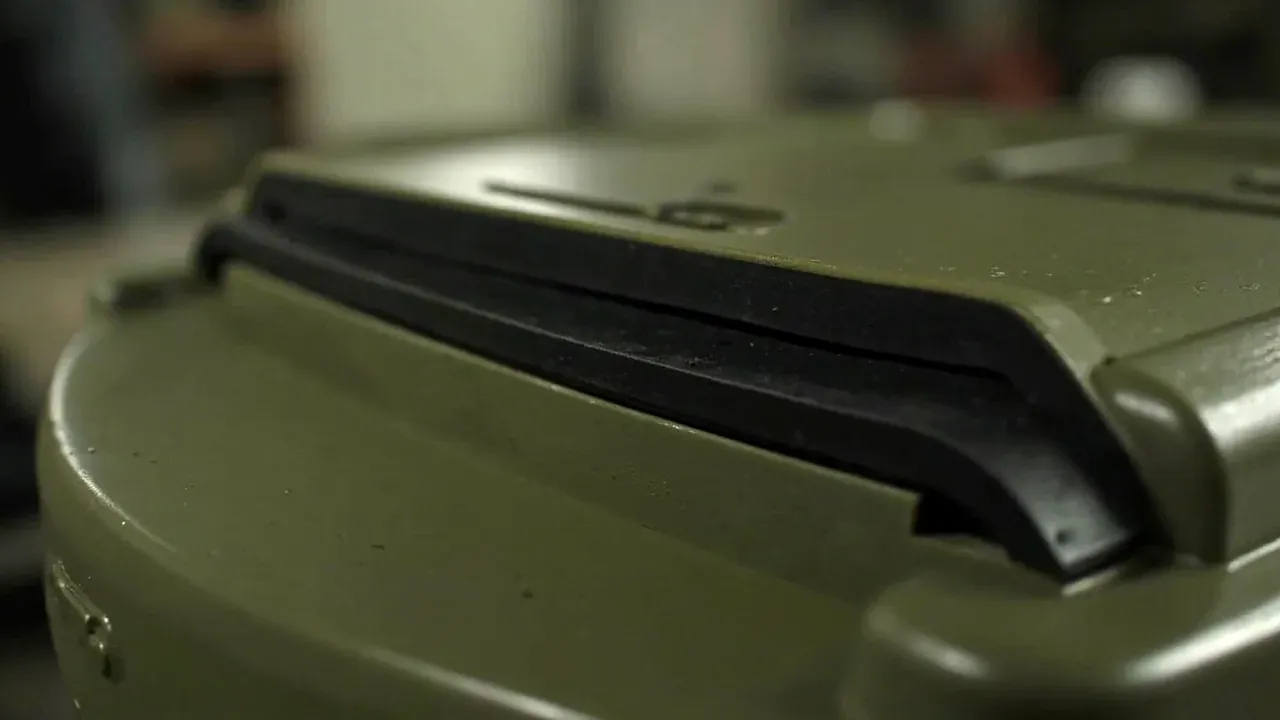
Each route leaves a trace: a tired gasket wets the rim in a line; a hardened vent membrane lets damp night air in, so bottom corners darken first; condensation beads only on cold surfaces; an open lid lifts the interior evenly.
| Route | How it forms | First trace | First move |
|---|---|---|---|
| Lid gasket | low compression, aged rubber | water line along the rim | feeler gauge round the rim |
| Pressure vent | clogged or hardened membrane | damp bottom corners | check it against light |
| Condensation | wall below the dew point | beads on cold faces | raise the box, leave a gap |
| Lid opening | frequent or long openings | humidity rises evenly | fit a strut, open briefly |
2. The rim gasket: compression, material and when to replace it
A gasket works by compression, not thickness. On an ammunition storage box the rim groove holds a cord about a third proud, and closing flattens it level, where rebound presses the body. Too thin never touches; too thick cracks the latch seats.
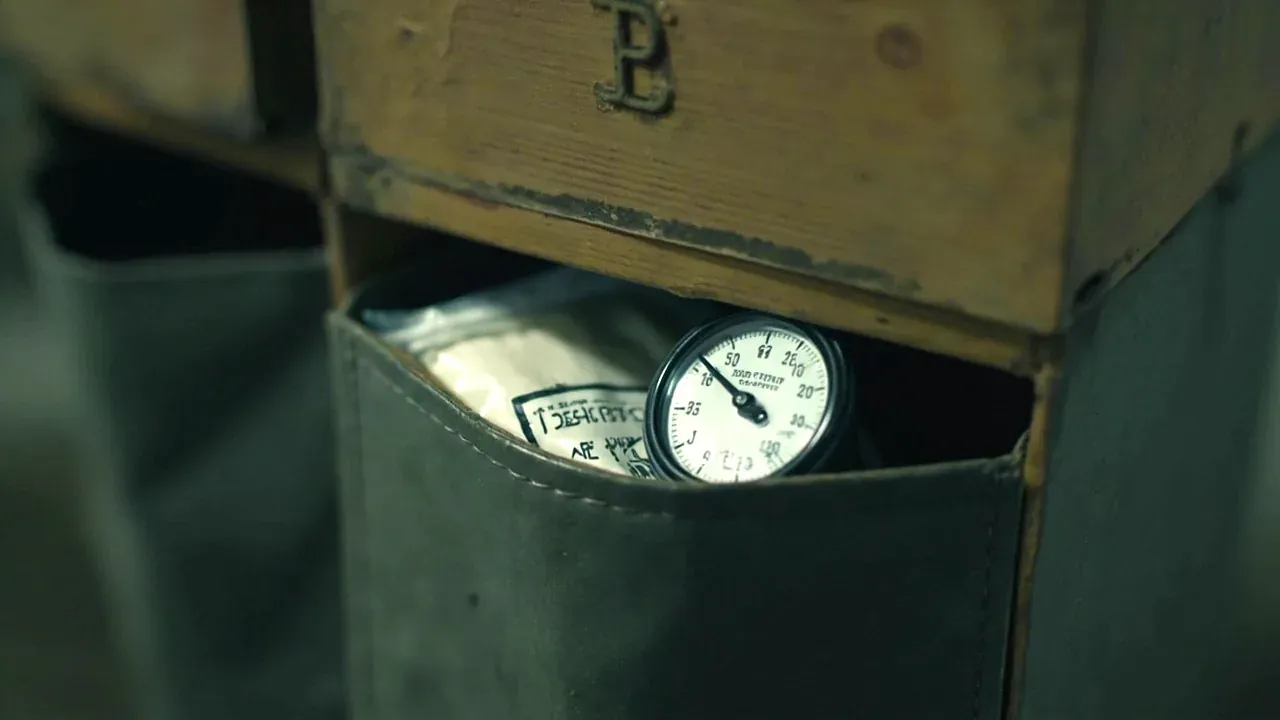
Ethylene propylene rubber resists ozone and suits open storage; silicone takes frost but swells with oil. Specify a continuous ring for the ammunition storage box, or put any joint opposite the hinge. Replace when a cord recovers under seventy percent, or a 0.2 mm feeler slides in.
3. Vent, desiccant and the readings inside
A vent balances pressure, it does not dry air. An ammunition storage box meets altitude and temperature swings, and without relief the rim lifts to admit damp air. The membrane passes air and blocks water until dust turns it into an inlet.
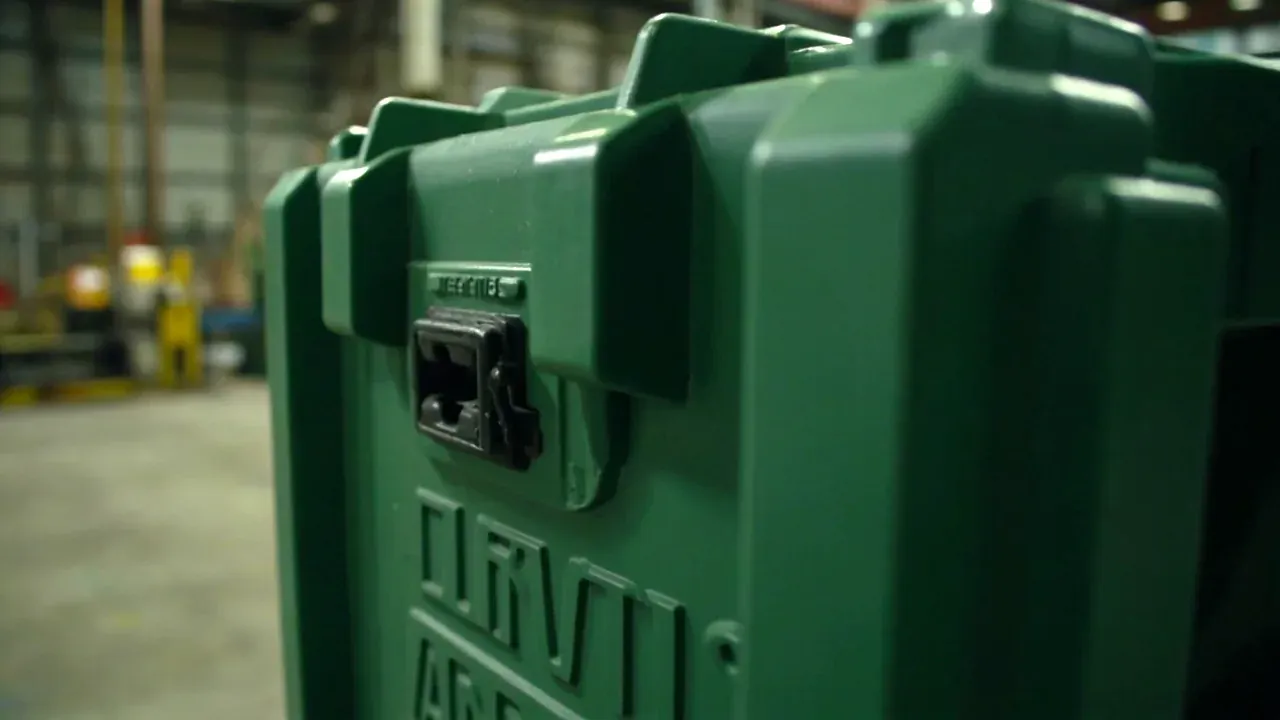
Desiccant is a backstop: five hundred grams of silica gel per hundred litres, seven hundred in a humid store, adjusted monthly. Hang the bag under the lid, clear of walls. A hygrometer above sixty percent means a swap; a logger shows the swing.
4. Checks before storage and the quarterly review
Three checks take ten minutes. Close an empty ammunition storage box and run a feeler gauge around the rim; stand it level and look from inside for light; weigh it and write the figure on the lid label.
Quarterly reviews read change, not absolute values. Plot one reading a week: three weeks of rise points to an open route, while a mild swing that follows outdoor temperature is condensation. Check the cord of the ammunition storage box for score marks left by mould flash.
5. Ranking the four fixes by cost
Rank the fixes by cost: gasket, vent membrane, opening habit, then desiccant and loggers. The first two hold for years; the rest are consumables. Reverse the order and an ammunition storage box eats gel twice a month as humidity climbs.
Opening looks like a rule, is really hardware. With hinges on one side and two latches on the other, the ammunition storage box needs both hands, so the lid stays part open. A strut or lift-off lid brings one opening under ten seconds.
Conclusion
Work in this order: place the symptom on one route, inspect that single part, and only then reach for desiccant. Gasket and vent are hardware, and one replacement buys years. Condensation and lid opening belong to conditions. The log kept with the ammunition storage box verifies the repair: a curve that follows outdoor temperature without climbing means the leak is closed and the desiccant is doing nothing.
This article covers container-side specifications and design implications only, not the handling, loading or use of the contents.
Related Reading
- Stacking and transfer in stores and vehicles
- Ammunition Packing Box Standards and Export Packing Requir…
- Rotomolded Cases: Rotational-Moulded Shell Structure & Pro…
- Marking and compliance for shipping containers
Related Products
- 8 Series — Gun Cases; Military Equipment Cases; Camera Equipment Cases; Drone Cases; Watch Cases; Knife Cases; First Aid Cases; Electronics Equipment Cases
- WL8-2812 PP Gun Case — model WL8-2812
- All protective cases and toolboxes: 7 series, 158 models