

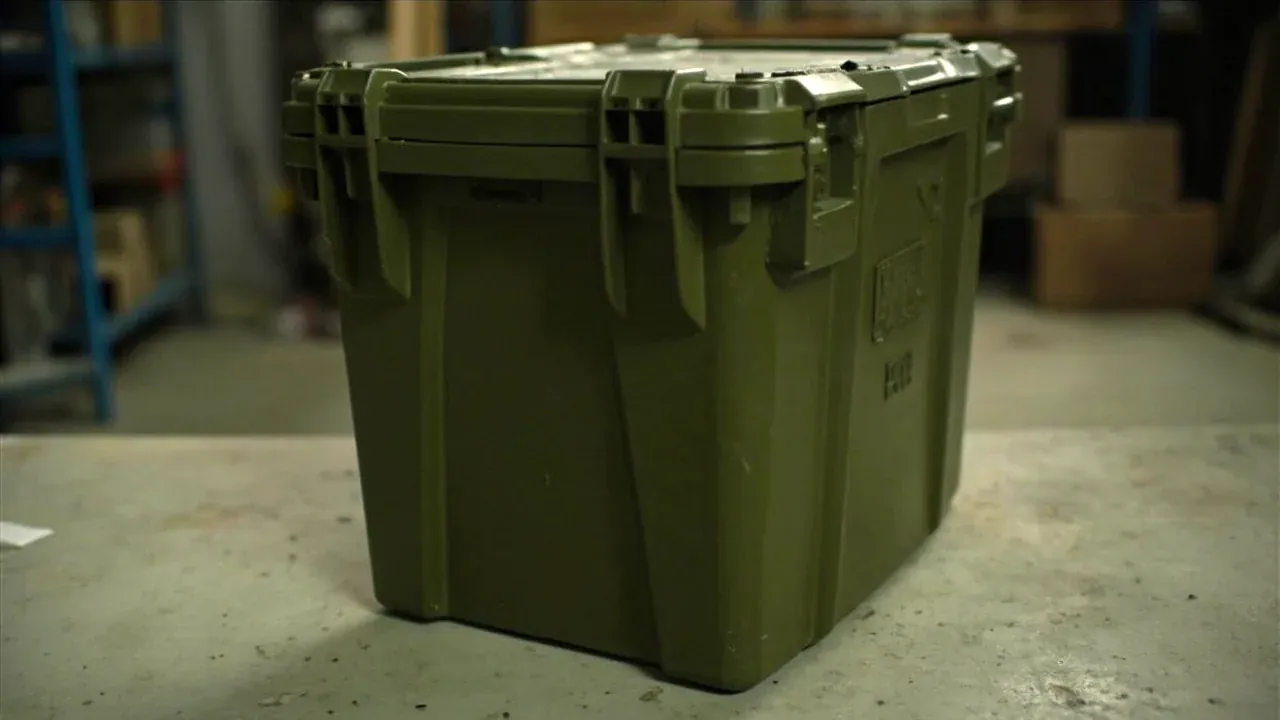
Quick answer: Transport marking is a set of declarations someone can check one by one: how a small arms ammunition box closes and where the seal passes, the stack height it allows, the arrows fixing its attitude, the moisture statement, and the pocket holding its papers. Each needs a physical feature, since a line in a document proves nothing. Where a scheme is silent, the buyer's specification governs, and no clause number belongs in a datasheet without a report behind it.
Table of contents
- Closure, checked point by point
- Stack marking: two numbers, one height
- Arrows and the permitted resting positions
- Moisture statements and where the document pocket goes
- Reconciling buyer specification, test report and despatch check
- FAQ
1. Closure, checked point by point
A marking line says sealed and stops. Four points carry that claim on a small arms ammunition box: latch count and spacing, an unbroken gasket, a seal hole through two parts, a hinge pin that cannot walk out.
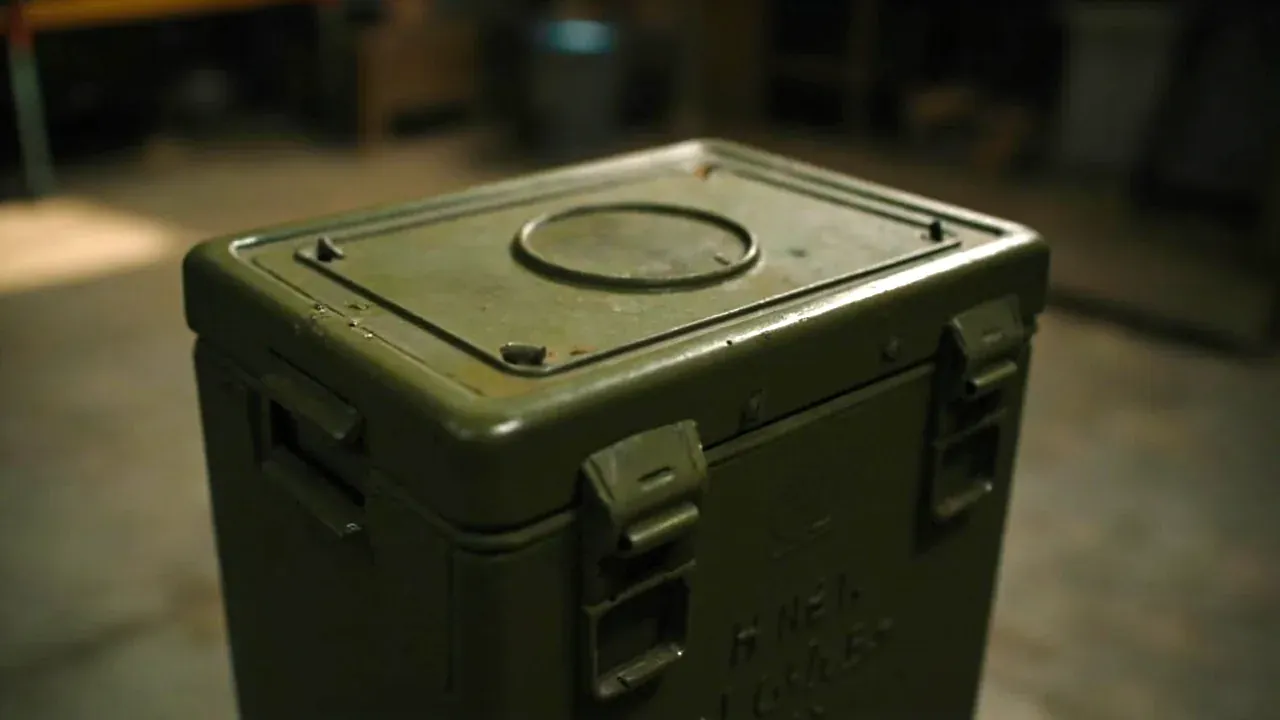
The checks are plain. With the latches closed, run a feeler along the rim and note gaps over a millimetre; see that the gasket joint sits opposite the hinge; a three millimetre hole in the small arms ammunition box must cross both ears.
2. Stack marking: two numbers, one height
A single stack figure is the usual fault. Empty and loaded stacks allow counts two or three apart, and a store reading only the larger one lets the bottom case creep unseen. A small arms ammunition box needs both.
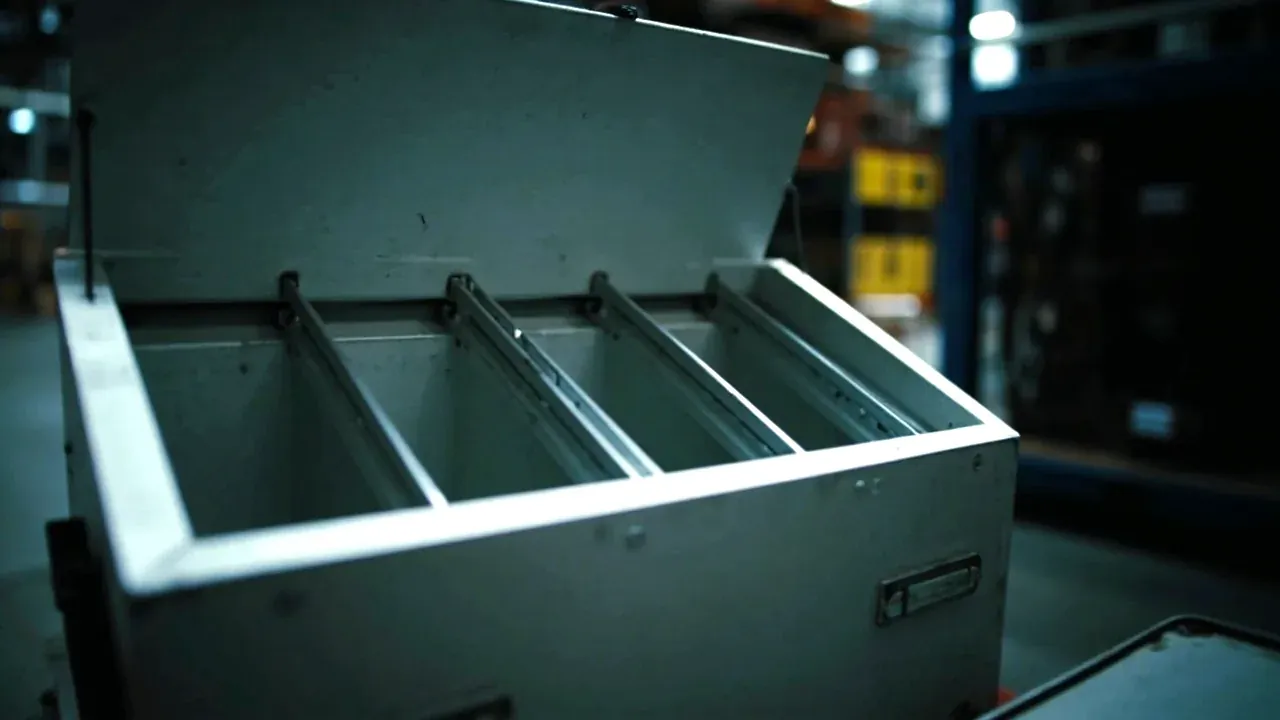
A complete statement carries layers empty, layers loaded, and the load on the bottom case. That load is filled weight times layers above, with a long-term factor of 1.5, printed once at one height on both long sides of the small arms ammunition box.
| Marking item | Where it lives | What the buyer checks | Usual omission |
|---|---|---|---|
| Closure and seal | latch seats, rim ears | latch count, gap, hole through both | sealed stated, no seal point |
| Stack height | both long sides, one height | empty and loaded figures, bottom load | one figure only |
| Orientation arrows | all four faces | arrows agree with handles and ribs | marked on one face |
| Moisture statement | recess on an end wall | claim matches desiccant fitted | claim and build differ |
| Document pocket | inside lid or end recess | pocket clear of the gasket | pocket over the rim |
3. Arrows and the permitted resting positions
Arrows fix attitude. A small arms ammunition box closes on its rim and carries load on its floor, so an inverted box puts the gasket under the stack. Mark all four faces; two are hidden while carried.
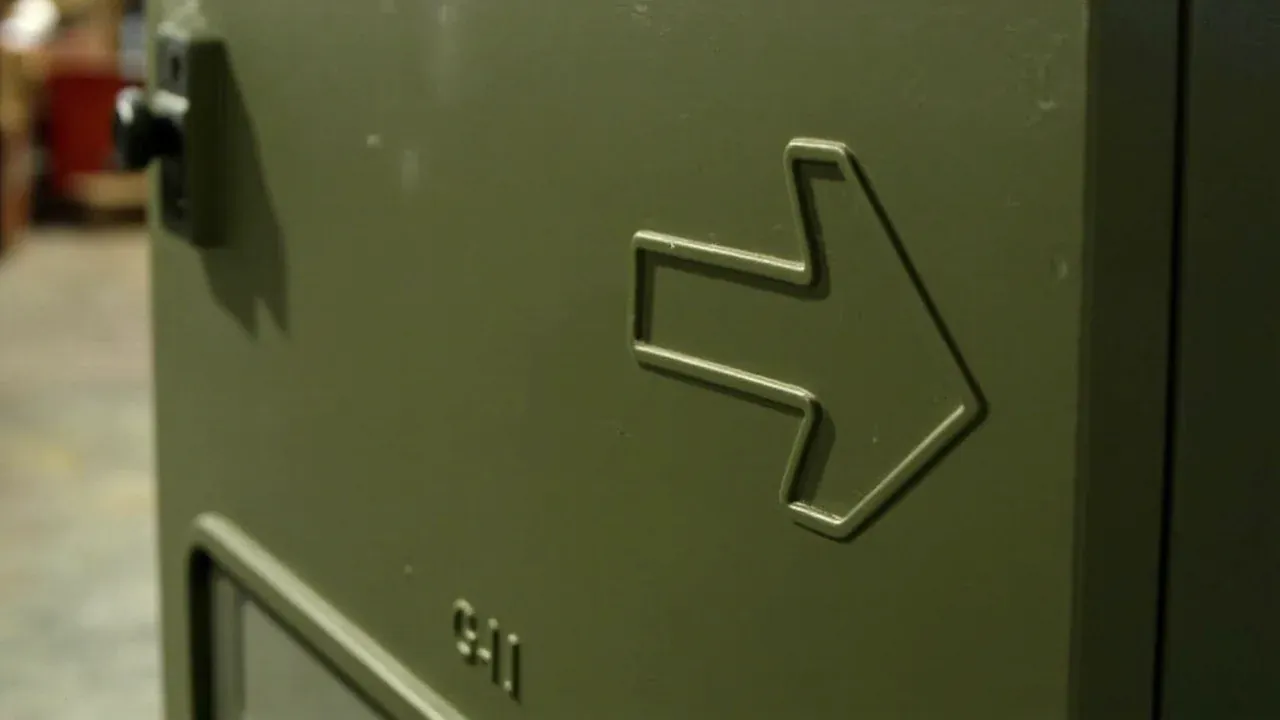
State what is allowed as well as what is not. Side resting suits a small arms ammunition box only where side ribs exist and no latch sits on the loaded face; inversion never. Arrows must stand alone, without a caption.
4. Moisture statements and where the document pocket goes
Three moisture claims exist for a small arms ammunition box, chosen before printing: a structural seal that holds liquid out, a desiccant fit in grams, or an indicator card inside. Blending all three leaves nothing to test.
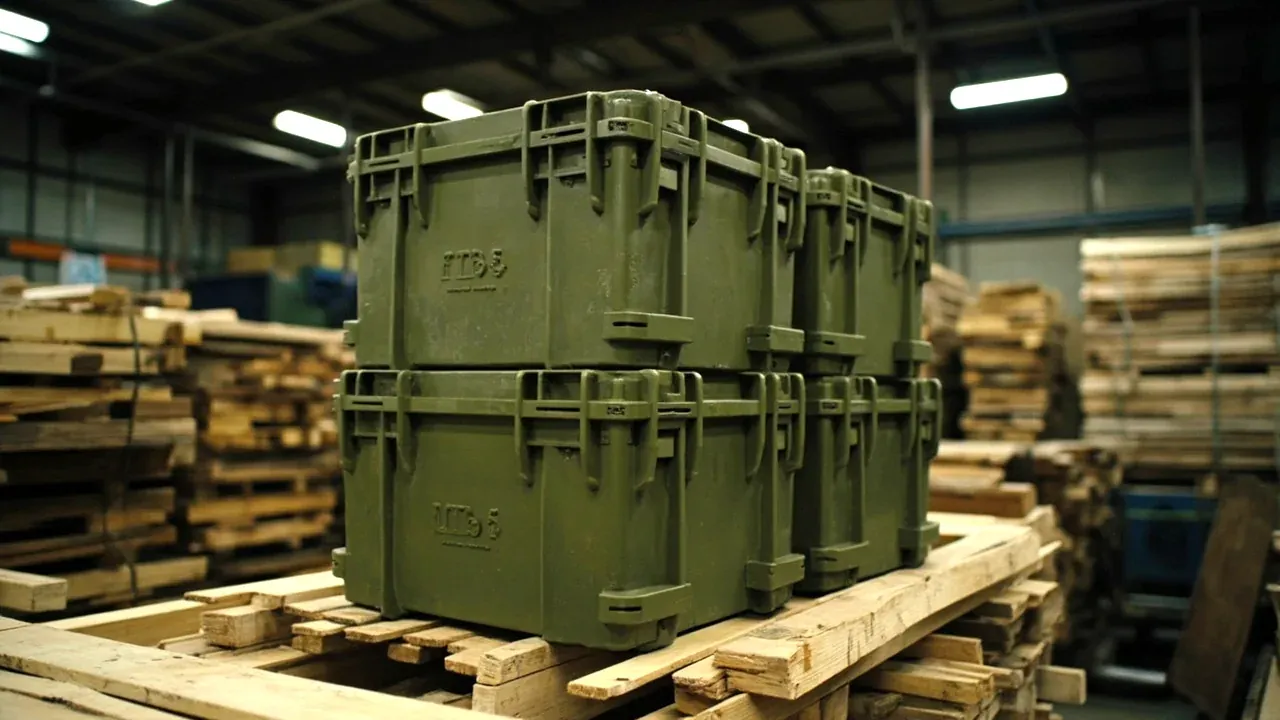
The pocket on a small arms ammunition box is a tooling decision with two homes: a shallow recess under the lid, or one on an end wall. Inside, it clears the ribs and stays under three millimetres.
5. Reconciling buyer specification, test report and despatch check
Three documents do different jobs: the specification states the requirement, an independent report proves the structure, the despatch record ties a batch to the tested sample. Where they disagree, follow the stricter line and note a deviation.
Keep the despatch list to five lines or nobody fills it: rim gap, latch travel, seal hole clear, marks matching the build, pocket position. On a small arms ammunition box, sample and production must share wall thickness and gasket section.
Conclusion
Rank the requirements for a small arms ammunition box by how easily they can be checked: closure and seal first, then whether the stack statement carries both figures, then arrows that hold on all four faces, then the level at which moisture is claimed, and last whether the pocket loads the rim. A gap in the earlier items leaves the consignment unprovable in transit, however complete the paperwork looks.
This article covers container-side specifications and design implications only, not the handling, loading or use of the contents.
Related Reading
- Compartments, counting and marking design
- Marking and compliance for shipping containers
- Load, sealing and cushioning for shipping containers
- Sealing and humidity control for storage boxes
- Transit Cases: Reusable Equipment & Instrument Protection
Related Products
- 8 Series — Gun Cases; Military Equipment Cases; Camera Equipment Cases; Drone Cases; Watch Cases; Knife Cases; First Aid Cases; Electronics Equipment Cases
- WL8-2812 PP Gun Case — model WL8-2812
- All protective cases and toolboxes: 7 series, 158 models