

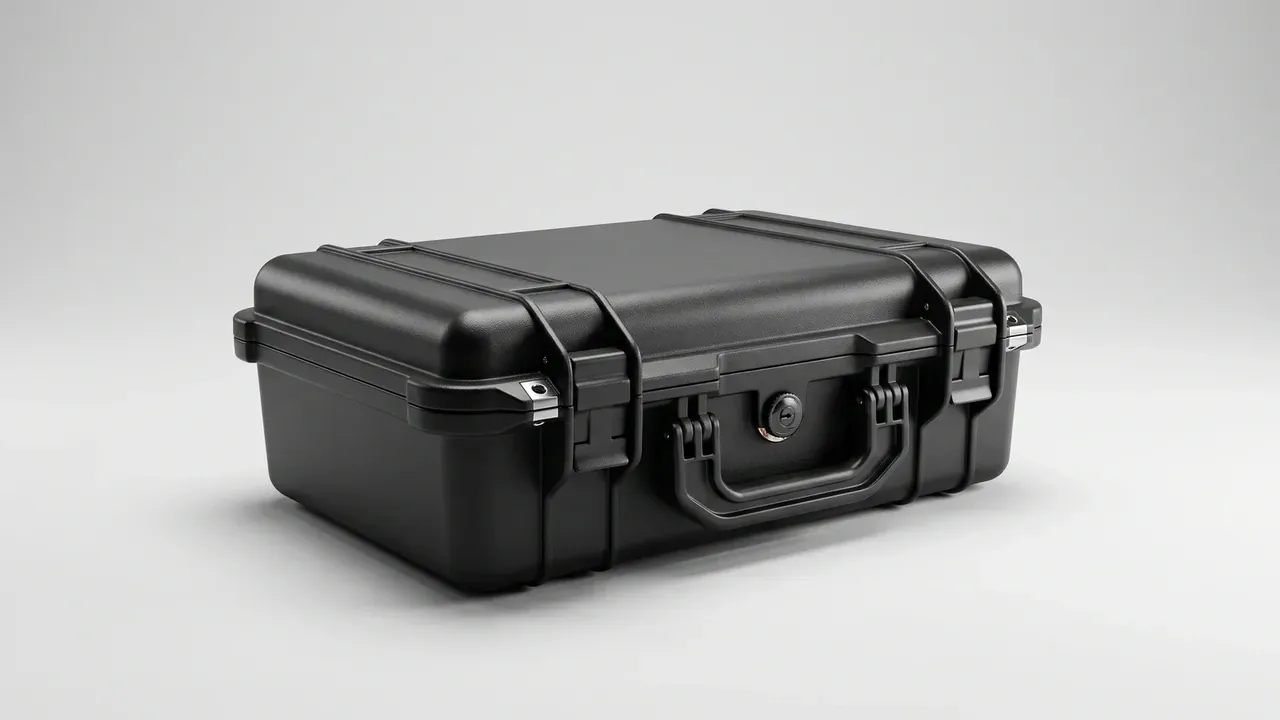
Quick answer: Upkeep of an ammunition container rests on three inspection levels and four replacement limits. The levels are a dispatch look, a quarterly check and an annual teardown; the limits are gasket compression under 15 percent, latch pull below 220 N, remaining wall under 3 mm and a pressure drop above 1.2 kPa. Any one breach means a new part, not a judgement call.
Table of contents
- How to Schedule Inspections for an Ammunition Container
- Gasket Compression Loss and Its Limits
- Latch and Hinge Fatigue Checks
- Grading and Repairing Wall Scuffs
- Humidity Records, Desiccant and Scrap Criteria
- FAQ
1. How to Schedule Inspections for an Ammunition Container
Intervals are back-calculated from how fast parts fail. A gasket sheds four points of compression a year, a latch loses 100 N over five years, so checkpoints fall at each dispatch, three months and twelve months.
The dispatch look takes twenty seconds: lid line closed, latches seated, no fresh damage. The quarterly check presses the gasket and pressure-tests one case, while the annual check is a teardown of gasket section, pin wear and wall thickness.
| Level | Interval | Main items | Decision |
|---|---|---|---|
| Dispatch look | Every trip | Lid fit, latch seating, fresh damage | Any fault moves to quarterly |
| Quarterly check | Three months | Hinge feel, gasket recovery, sample test | Drop over 1.2 kPa moves to annual |
| Annual teardown | Twelve months | Gasket section, pin wear, wall thickness | Any limit breach, replace |
| Climate add-on | By site | Wet sites two months, salt sites hardware at six | Logged in the record |
2. Gasket Compression Loss and Its Limits
The gasket on an ammunition container ages first. A new strip of 8 mm sits in a 6 mm groove for 25 percent compression; ethylene propylene rubber sheds four points a year and reaches 12 percent by month thirty-six, when the lid line starts to breathe.
Field judgement needs no instrument: a free section under 6.8 mm means less than 15 percent is left, and recovery past thirty seconds or hardness at 68 Shore says the compound has hardened. Replace the whole ring, never a splice.
| Months | Compression | Hardness | Action |
|---|---|---|---|
| 12 | 21 percent | 62 | Keep in use |
| 24 | 17 percent | 65 | Inspect more often |
| 36 | 12 percent | 68 | Replace the ring |
3. Latch and Hinge Fatigue Checks
An ammunition container is judged on latch pull and hinge clearance. A new draw latch holds 320 N, and at 220 N it stops pressing the lid line, so it is swapped rather than adjusted. Pull at the tongue centre and average three readings.
Hinges fail at the pin, 4 mm across, which wears 0.3 mm on one side after 5,000 cycles and lets the lid shift. Replace it past 0.5 mm clearance. A pale latch base or a crack at the hinge eye marks stress that a weld only delays.
4. Grading and Repairing Wall Scuffs
A 4.5 mm ammunition container wall is graded on remaining thickness, not on how deep it looks. Three millimetres is the line; below it a drop starts a crack at the bottom of the score.
Grade one stops at 0.5 mm and needs deburring. Grade two, up to 1.5 mm, is hot air welded and sanded. Grade three passes 1.5 mm with under 3 mm left and takes a patch plus a test. Grade four is a through crack or a score over 50 mm, scrapped.
Welding runs at 220 degrees Celsius with matching rod; sand the bead flat, repeat the 30 kPa test, and log the area.
5. Humidity Records, Desiccant and Scrap Criteria
The humidity log of an ammunition container is the eye of the programme: keep the inside below fifty percent and swap desiccant above sixty. A 500 g silica pack saturates once it gains eighteen percent in weight, about three months at room temperature.
Four criteria scrap a case: a through crack over 50 mm, a third repair in one place, a groove too distorted to seal, and a drop still above 1.2 kPa after repair. A record of serial number, results and swaps makes failure visible.
Conclusion
The hard part is not repair but judgement. Gasket, latch, pin and wall each decay on their own curve, and numbers give every check a target. A record ties them together, and only then is the service life of an ammunition container set by the log, not by feel.
This article discusses only the container (case body) side of specifications and design intent, and does not cover any handling, loading or use of the contents.
Related Reading
- Shell materials compared across five resins
- Wall thickness and stacking specifications
- Case hardware and fittings explained
- Rotomoulded case care and patching
Related Products
- 8 Series — Gun Cases; Military Equipment Cases; Camera Equipment Cases; Drone Cases; Watch Cases; Knife Cases; First Aid Cases; Electronics Equipment Cases
- WL8-2812 PP Gun Case — model WL8-2812
- All protective cases and toolboxes: 7 series, 158 models