

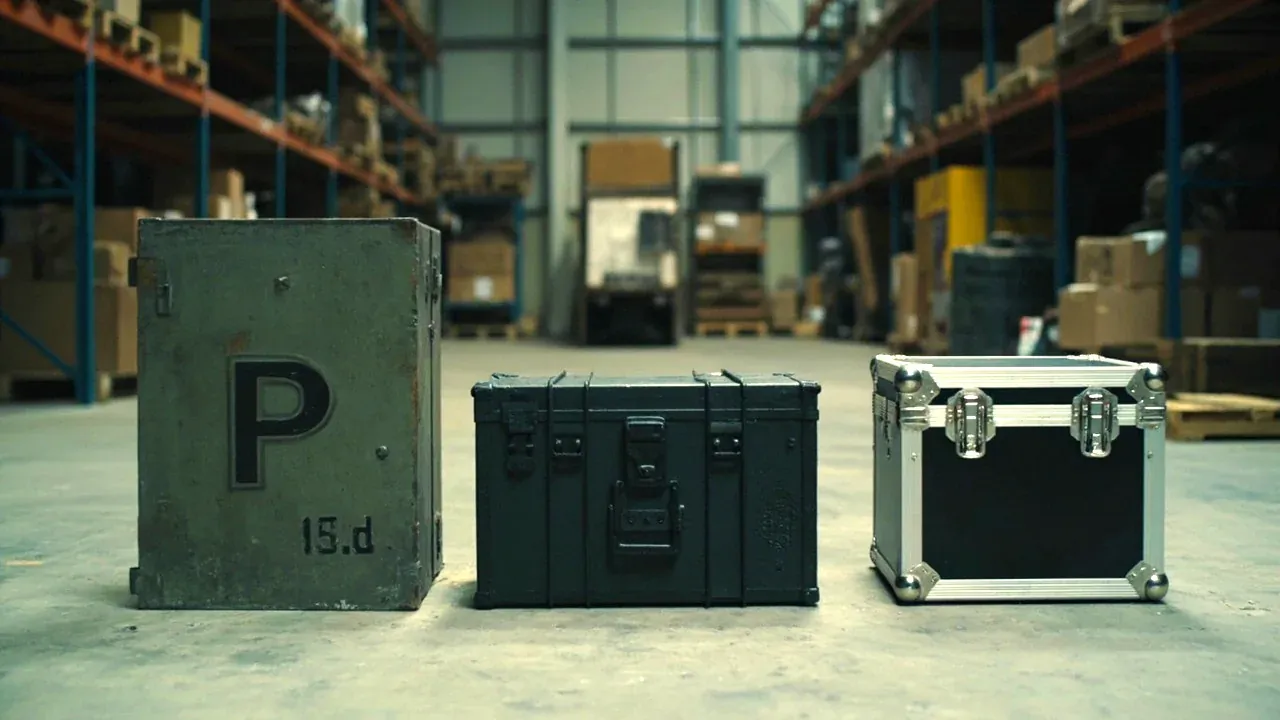
Quick answer: Four materials divide not by strength but by how they fail: steel rusts, aluminium dents, rotomoulded plastic ages, composites delaminate. Choosing a material means choosing a failure mode you can inspect. Damp stores favour plastic, air freight aluminium, permanent stores steel.
Table of contents
- Four materials and their failure modes
- Steel: the most reliable, the most maintained
- Aluminium: lightness paid for in rivets
- Rotomoulded plastic: no rust, but ageing
- Composites: highest strength, hardest inspection
- FAQ
1. Four materials and their failure modes
Steel, aluminium, rotomoulded plastic and composites differ by twenty or thirty percent in strength but enormously in failure. Steel rusts at welds and scratches, gradually and visibly; aluminium dents without piercing but squeezes the contents; plastic ages under UV, starting as surface chalking; composites delaminate after impact, almost invisibly.
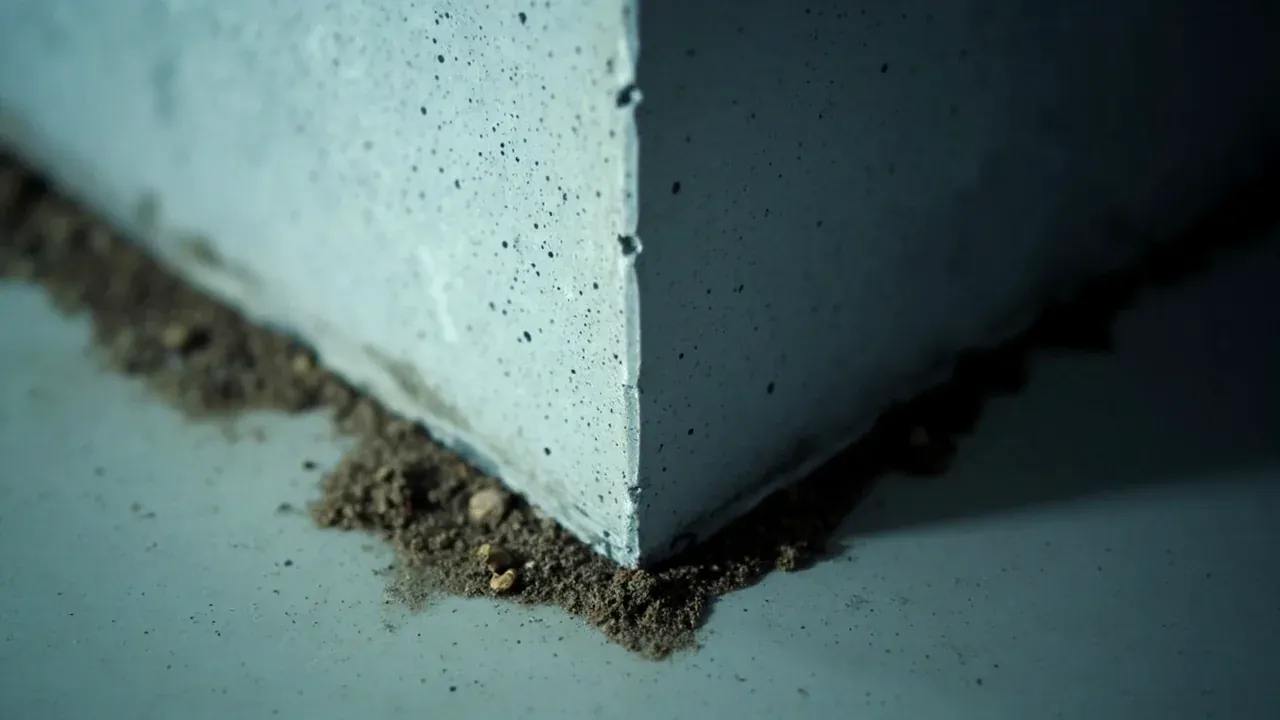
Choosing a material means choosing a failure mode you have the people to inspect. A store that watches for rust can use steel; monthly checks only favour plastic, since ageing is visible; with no inspection at all, every material is risky.
| Material | Strength/weight | Failure | Inspection | Best for |
|---|---|---|---|---|
| Steel | low | weld corrosion, dents | easy | permanent stores |
| Aluminium | high | rivet loosening, distortion | medium | frequent air freight |
| Rotomoulded | medium | UV ageing, gasket failure | easy | damp stores |
| Composite | highest | delamination, exposed fibre | hard | extreme conditions |
2. Steel: the most reliable, the most maintained
Steel offers stiffness and repairability: dents can be hammered out, rust ground and repainted, welds re-run, all in the field. The costs are weight and corrosion — a steel box of the same volume runs thirty percent heavier than rotomoulded.
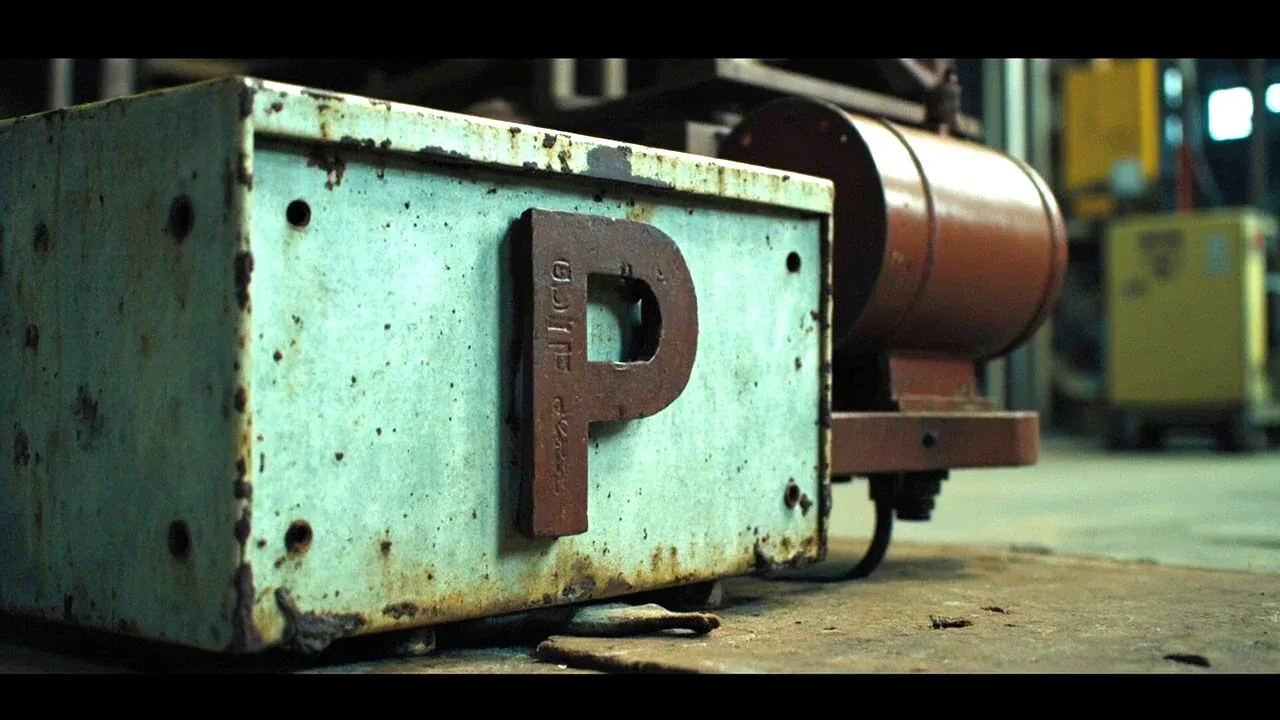
Its life depends almost entirely on coating. Once the interior coating breaks, contents touch bare steel, moisture collects at the breach and corrosion runs outward. Inspect the inside, not the outside: exterior rust is cosmetic, interior rust is not.
3. Aluminium: lightness paid for in rivets
Aluminium runs about half the weight of steel, which suits air freight and manual handling. Its weakness is the rivet line: holes concentrate stress, wear under vibration, and loosen, taking the seal with them.
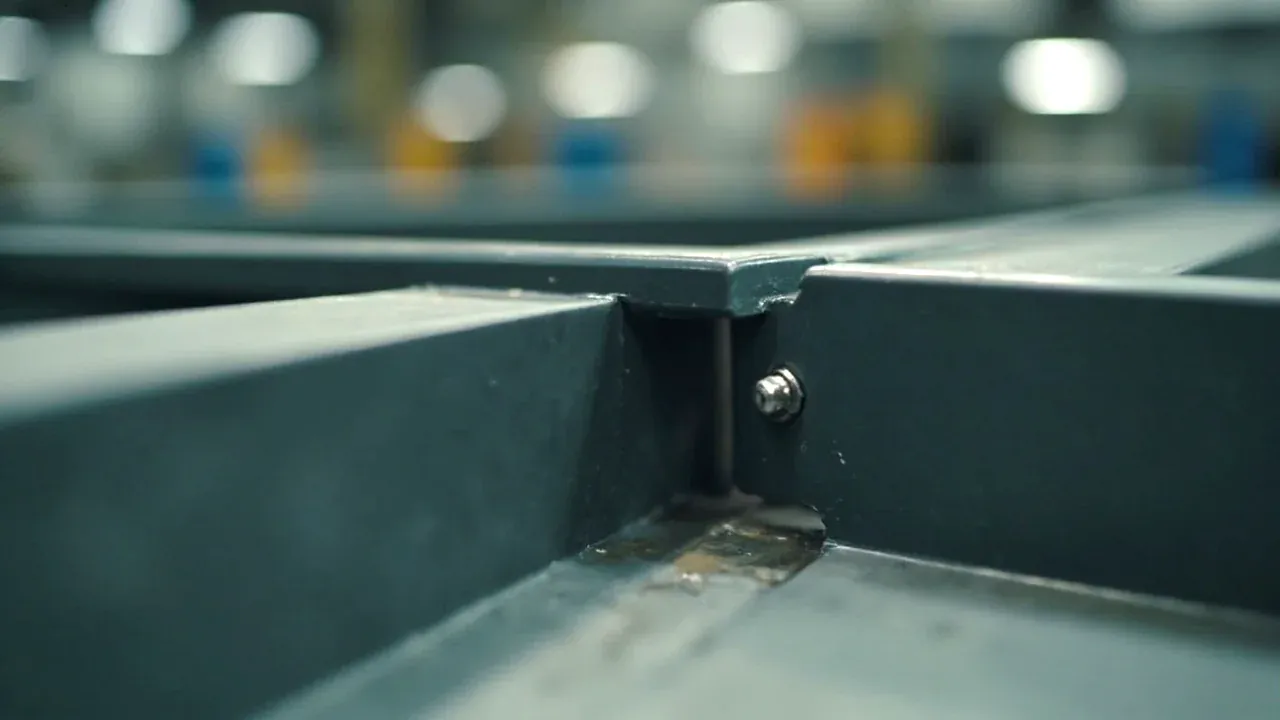
Run a hand along the rivet line looking for looseness and black powder. That powder is electrochemical corrosion between aluminium and rivet, and it appears earlier than a visibly proud rivet.
4. Rotomoulded plastic: no rust, but ageing
Rotomoulded containers are seamless, rust-free and resist denting. They fail by UV ageing and gasket ageing: three to five years outdoors chalk the surface and embrittle it, and gaskets harden under ozone and temperature cycling.
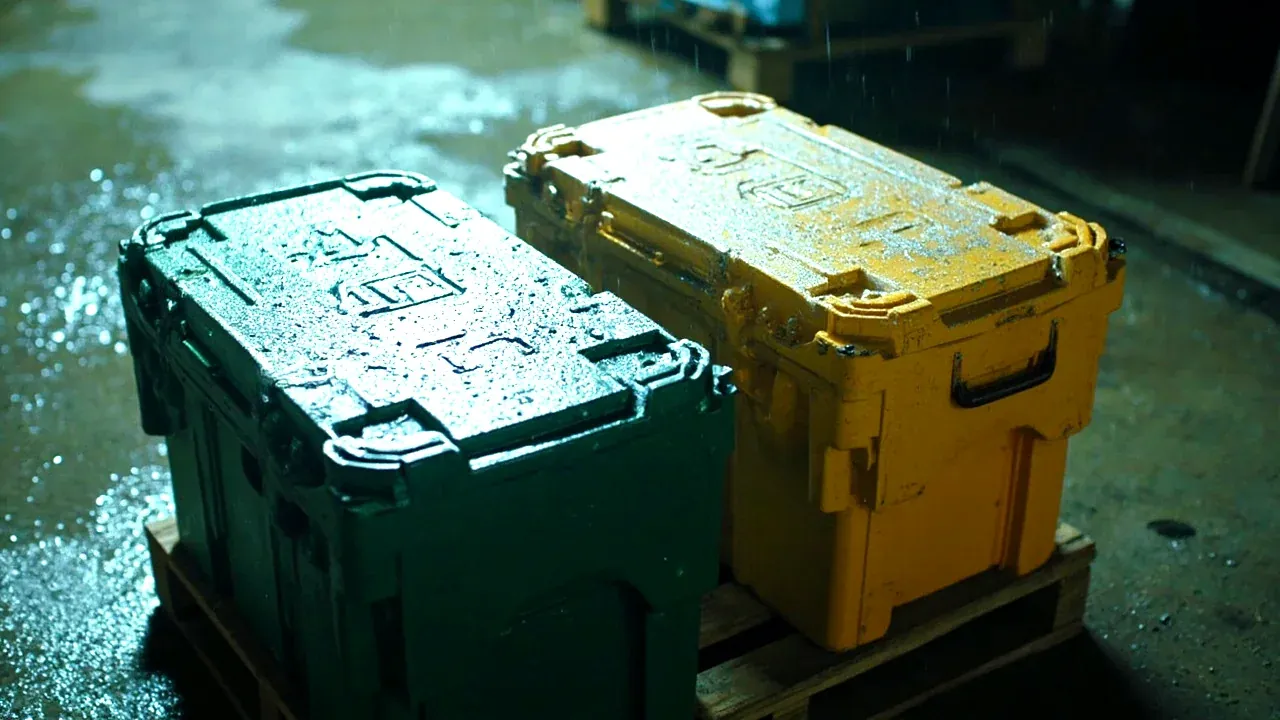
Both can be slowed: UV-stabilised polyethylene lasts eight years outdoors, and a gasket changed every three years costs little. The key is changing the ring, not the box.
5. Composites: highest strength, hardest inspection
Composites give the highest strength per kilogram, suited to extreme conditions such as long air freight into hot humid climates. Their problem is delamination: impact separates layers invisibly while load capacity is already gone, and detection needs tap testing or ultrasound.
So composites require an inspection capability. A crew without tap-test experience is safer with steel, whose failure is visible. Choose materials by inspection ability — the most overlooked rule.
Conclusion
Choose a failure mode you can inspect: steel rusts visibly, aluminium rivets can be felt, plastic ages on the surface, composites hide delamination. Fix the store conditions and inspection capability first; choosing material first usually leaves the inspection gap unfilled.
This article covers container-side specifications and design implications only, not the handling, loading or use of the contents.
Related Reading
- Ammunition container specifications
- What an ammunition box is
- Ammunition storage container maintenance
- Case seal materials
Related Products
- 8 Series — Gun Cases; Military Equipment Cases; Camera Equipment Cases; Drone Cases; Watch Cases; Knife Cases; First Aid Cases; Electronics Equipment Cases
- WL8-2812 PP Gun Case — model WL8-2812
- All protective cases and toolboxes: 7 series, 158 models