

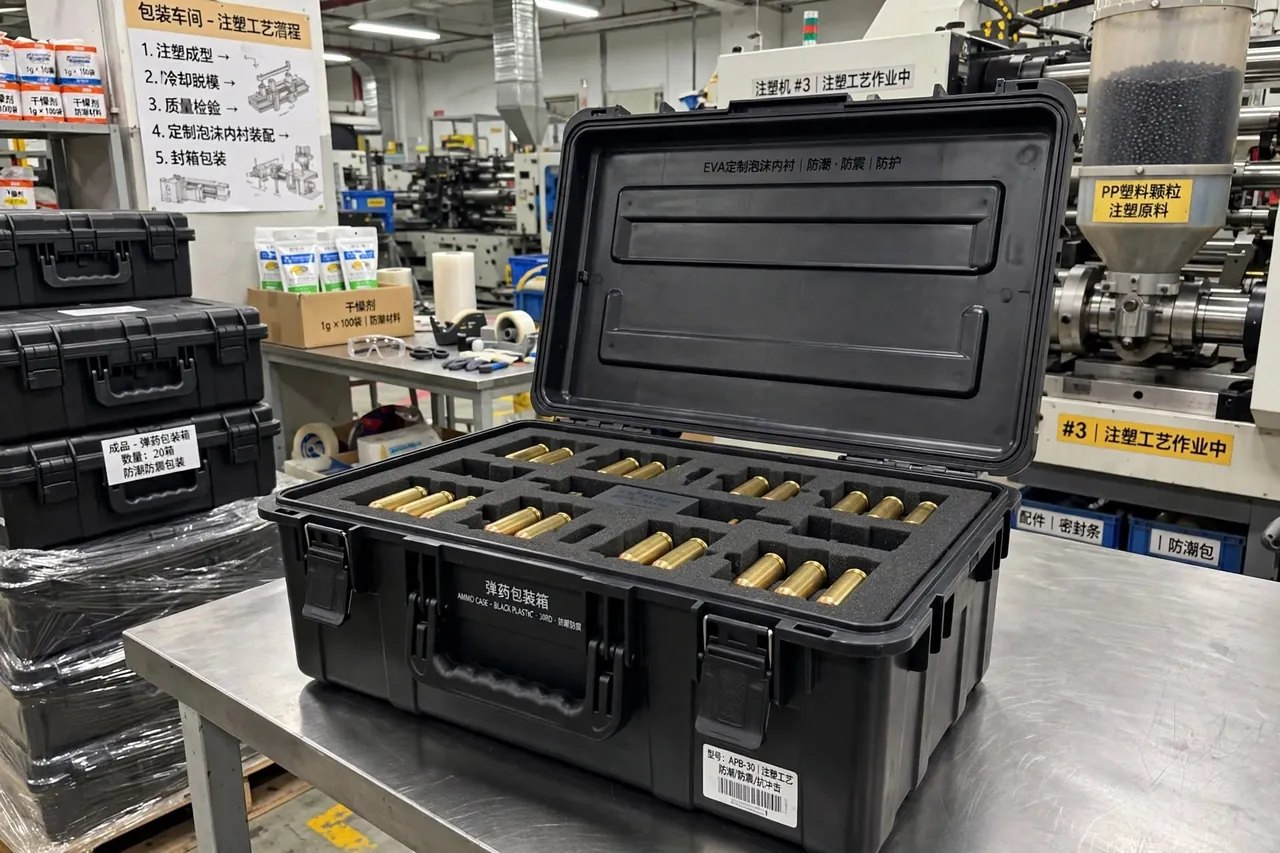
Quick answer: Reading the specifications of an artillery shell box — a heavy-duty container for large-caliber ordnance-type items — means grasping three number systems: load rating (static and dynamic loads are different things), stacking (layer count and load-bearing zones are set by structure, not habit), and dimensions (internal cavity derives from content dimensions plus cushioning allowance; external size must fit logistics modules). This article explains the container side only; it does not address anything about handling the contents.
Table of contents
- Reading the spec sheet: two classes of load
- Load rating: static, dynamic and safety margin
- Stacking: how the layer count is derived
- Dimensions: cavity, external size and logistics modules
- Acceptance checklist
- FAQ
1. Reading the spec sheet: two classes of load
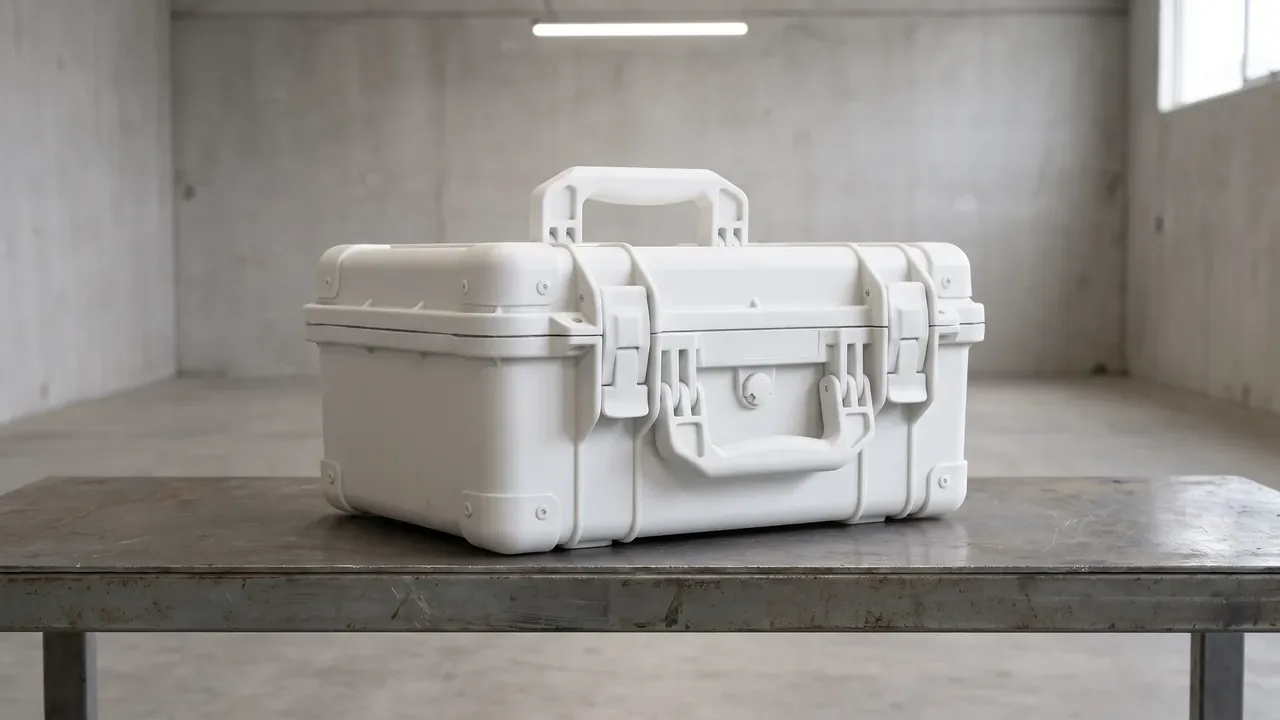
Heavy-duty container spec sheets always list two load figures with different meanings:
- Static load (stacking load): the pressure the case can bear long-term while at the bottom of a stack — this governs stacking capability;
- Dynamic load (payload): the weight the loaded case may be handled, lifted and subjected to drop shocks — this governs how much it can carry.
The most common misreading is using one for the other. A case rated 50 kg dynamic and 350 kg static can carry 50 kg of goods but support 350 kg of stacking on top. Each number serves its own condition; they are not interchangeable.
2. Load rating: static, dynamic and safety margin
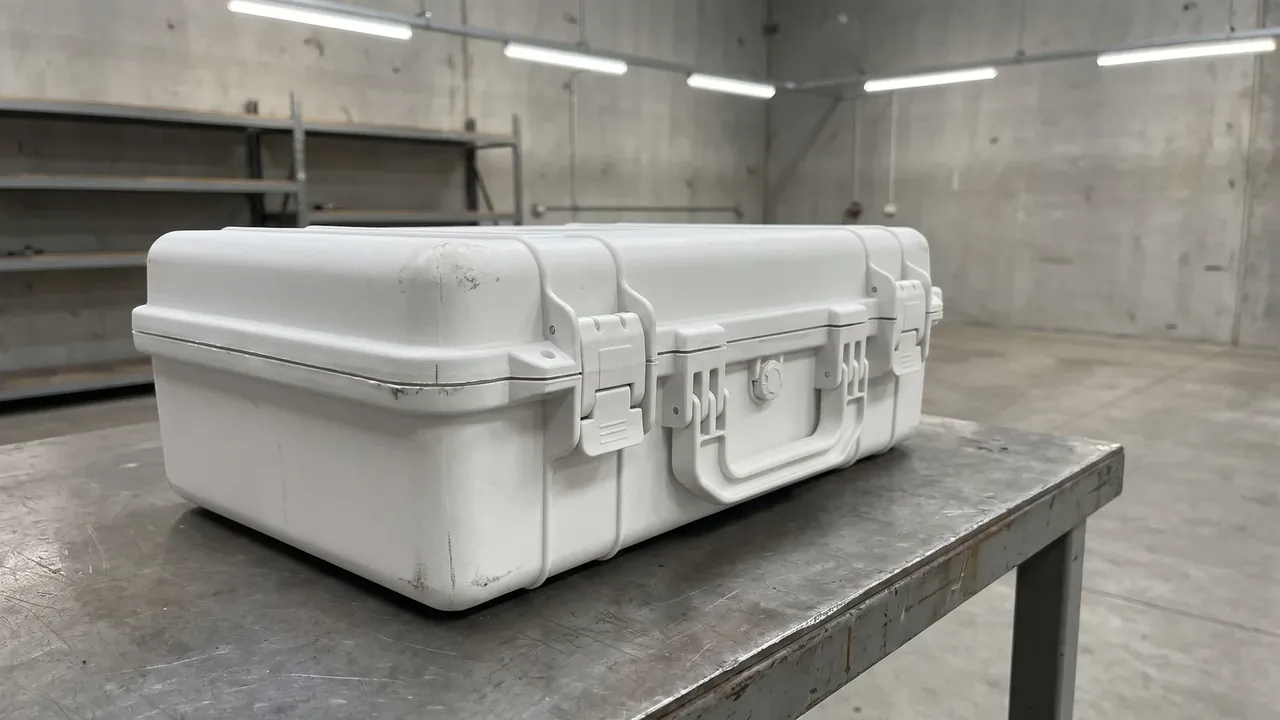
Load rating has three layers:
- Rated value: the figure on the spec sheet, a design target;
- Safety margin: engineering practice leaves headroom above the rated value; the factor depends on material and duty, and should be stated in writing by the supplier;
- Failure mode: overloading does not usually break the case instantly — ribs yield, lid lips deform, and sealing fails. An overloaded case that still "works" has already lost protective performance.
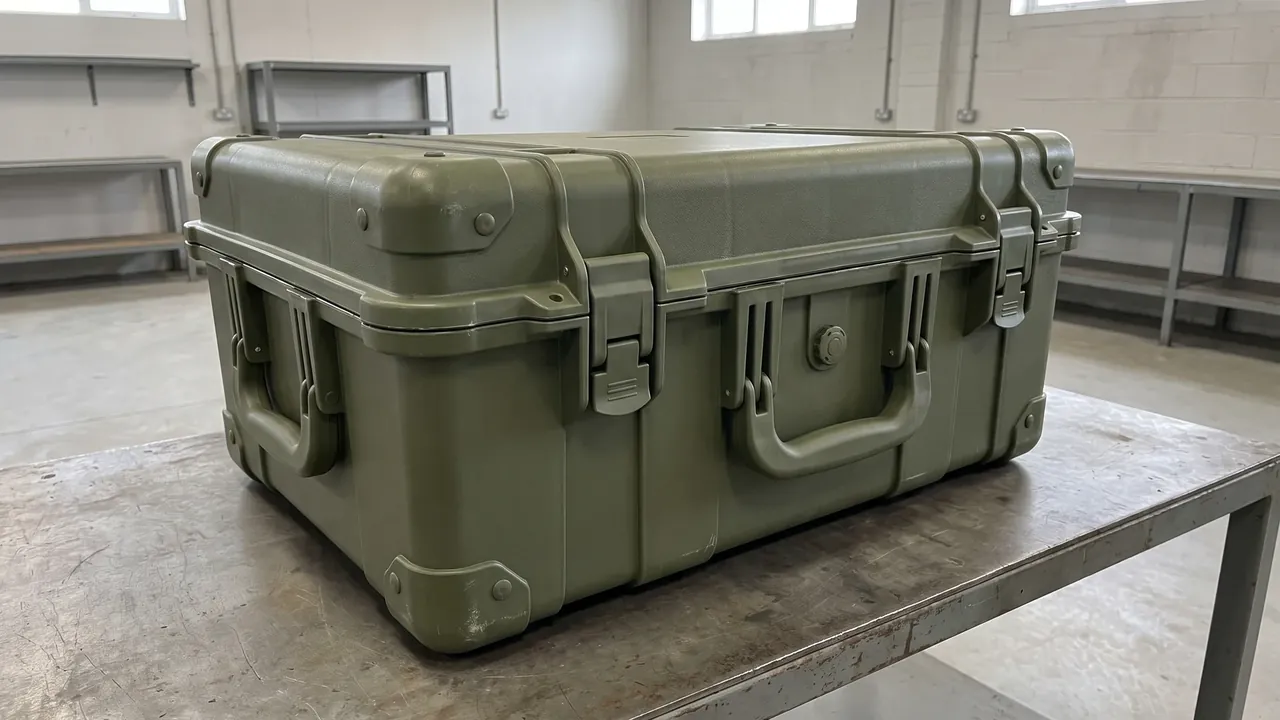
For high-density contents, weight concentration makes bottom structure and corner load paths the design focus — which is why heavy cases use reinforced corners and base skids.
3. Stacking: how the layer count is derived
Stacking layers are a simple division, not folklore:
Max stack layers ≈ base-case static load ÷ (loaded weight per case)
Example: static load 350 kg, loaded weight 45 kg → theoretical 7 layers; keeping 1–2 layers of margin gives a rated 5–6. Three points to confirm at purchase:
- Load-bearing zones: only corner columns and ribs may take load; the unsupported middle of a lid lip must not be loaded;
- Stack orientation: most heavy cases allow stacking in one orientation only; offset stacking cuts the load path;
- Interlocks: stacking ribs or locating slots raise stability substantially above flat stacking.
4. Dimensions: cavity, external size and logistics modules
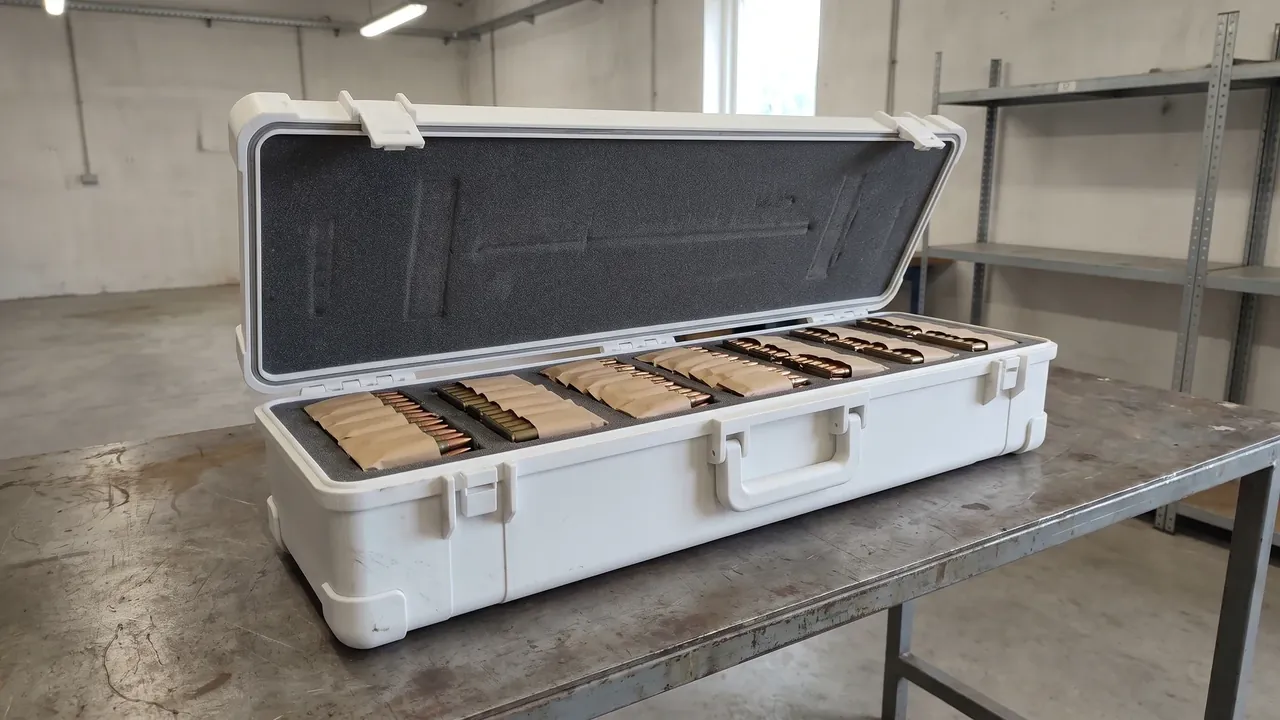
Dimensional specs follow three layers:
| Layer | Determined by | Note |
|---|---|---|
| Internal cavity | Content dimensions + cushioning allowance | Allowance per side set by foam and positioning needs |
| External size | Cavity + wall thickness + structure space | Corners, hinges and latches occupy external space |
| Logistics fit | Pallet/container modules | External L×W should divide into 1200×1000 mm pallet modules |
The logistics module is the most overlooked item in procurement: an external size that does not divide into pallet modules wastes container space and raises transport cost at volume. Common industrial practice is to size cases to divide pallet or container internal dimensions — verify with a simple layout mock-up before ordering.
5. Acceptance checklist
- Both static and dynamic loads stated, with written definitions;
- Stack rating accompanied by a load-zone diagram and orientation requirement;
- Internal cavity verified against the agreed content with cushioning allowance (by physical sample);
- External size verified against pallet/container modules (layout simulation);
- Bottom structure and corner reinforcement documented;
- Empty weight stated (affects manual handling and freight).
Six items make a spec sheet "acceptable". Missing items should be closed during sampling — not argued after mass production.
Conclusion
Reading artillery-shell-box specifications means putting each number back into its own condition: dynamic load governs what it can carry, static load governs what it can support, stack layers are the division of the two plus margin, and dimensions must satisfy both content cushioning and logistics modules. Checking the acceptance list item by item is what turns a spec sheet from decoration into a contract.
This article explains container-side specifications only. It does not address the handling, loading or use of any items placed inside.
Related Reading
- Artillery Shell Box: Dangerous-Goods Packaging Standards and Marking
- artillery-shell-storage-container-structure-design
- Heavy-Duty Protective Case: Structure and Load Design
Related Products
- 8 Series — Gun Cases; Military Equipment Cases; Camera Equipment Cases; Drone Cases; Watch Cases; Knife Cases; First Aid Cases; Electronics Equipment Cases
- WL8-2812 PP Gun Case — model WL8-2812
- All protective cases and toolboxes: 7 series, 158 models