

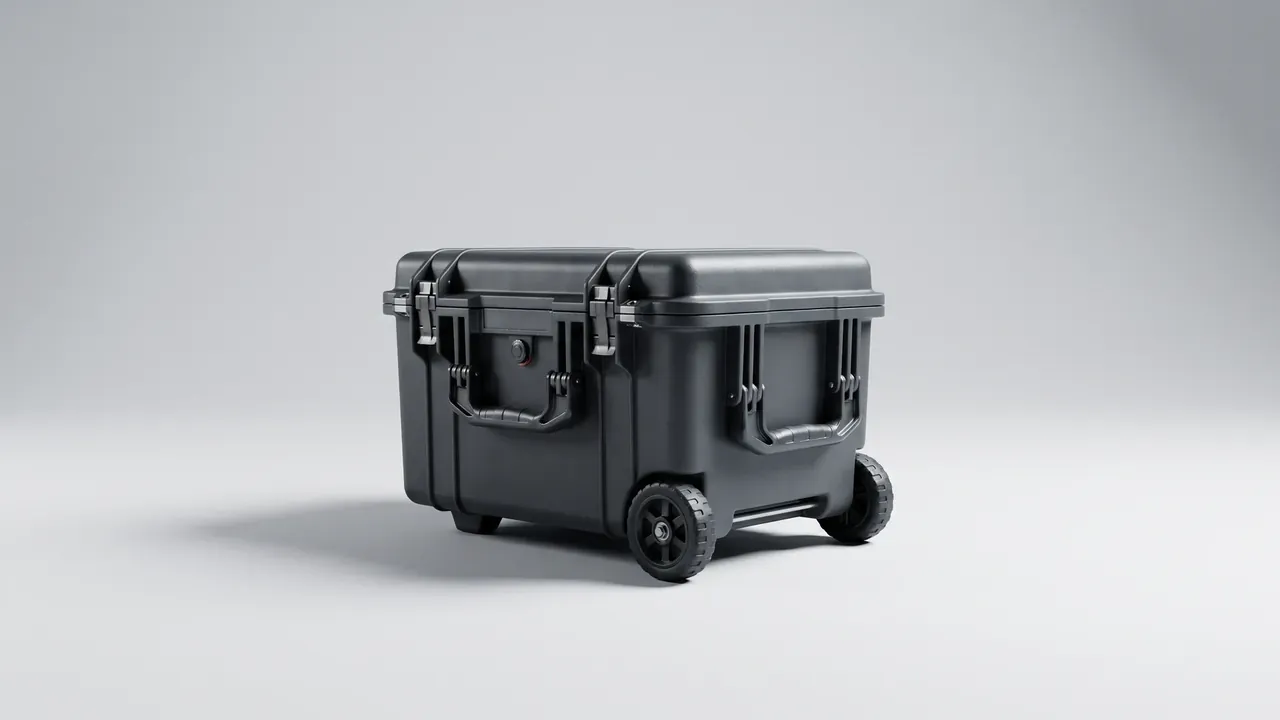
Quick answer: Moisture control for heavy containers rests on three things: gasket condition management (the foundation), in-case micro-environment control (desiccant and humidity monitoring), and a periodic inspection regime (finding hazards before they become losses). This article focuses on three checkpoints unique to heavy cases: gasket compression uniformity over long lids, hidden water pockets around base skids, and top-seal checks in stacked configurations. It covers container maintenance only.
Table of contents
- What makes heavy cases different
- Gaskets: three checks for large seals
- In-case micro-environment: drying and monitoring
- The inspection schedule
- Hidden water pockets: the most overlooked risk
- FAQ
1. What makes heavy cases different
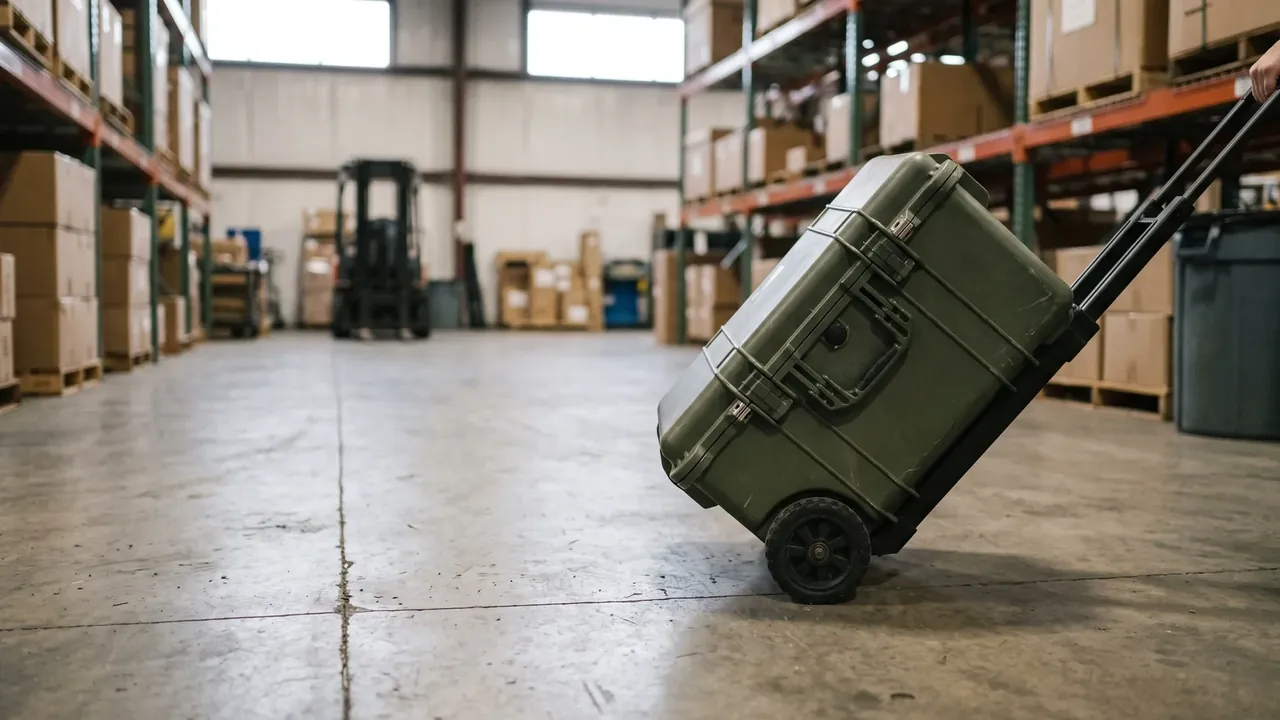
The principles match smaller cases, but three effects amplify in heavy ones:
- Long seal perimeter — a long lid lip means any under-compressed segment is an ingress path; uniform compression gets harder as the perimeter grows;
- High self-weight — case deformation (stacking, uneven floors) directly changes seal-face compression; distortions negligible on small cases can open gaps on heavy ones;
- Costly inspections — each open-and-check costs real labour, so frequency naturally drops — making inspection effectiveness more important than frequency.
These effects push heavy-case moisture management toward engineering: condition monitoring and structural checks, not "open it often."
2. Gaskets: three checks for large seals
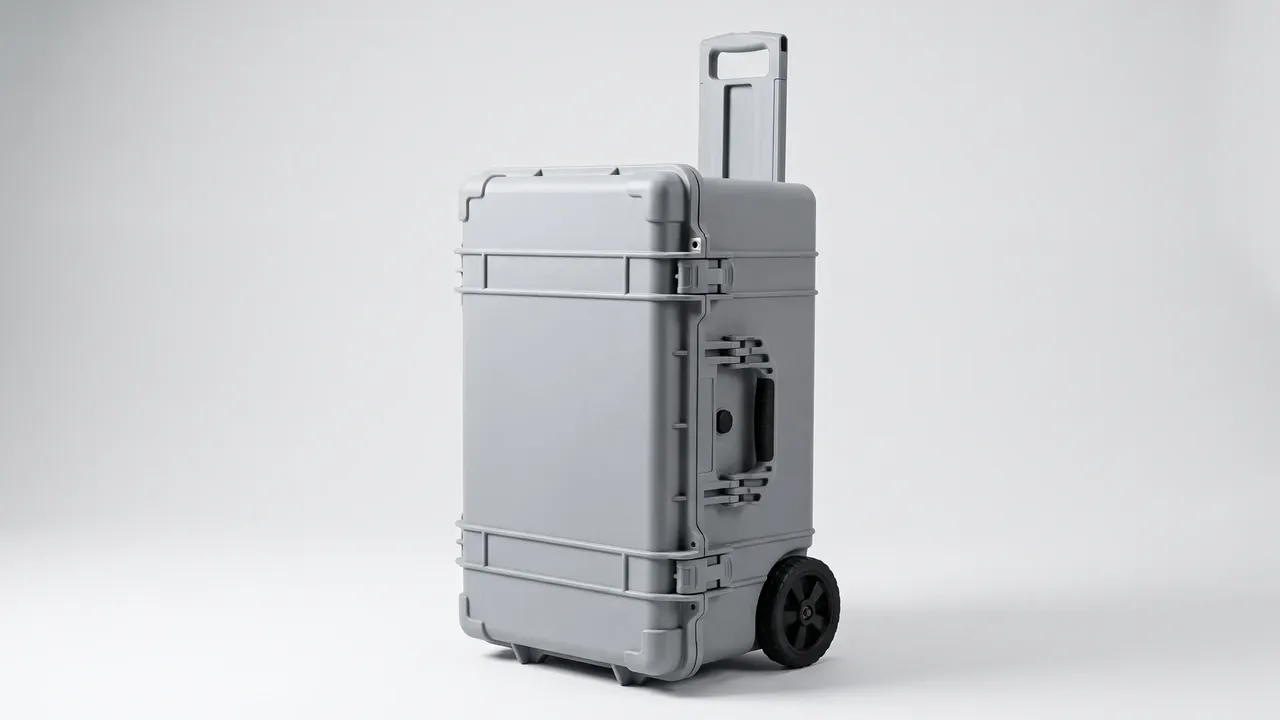
Check 1 — Compression uniformity. Walk the full lid lip; the imprint should be continuous and even. Shallow local imprint (a gap) means insufficient compression; overly deep means local over-compression, which accelerates aging. Uniformity is the core requirement for long-perimeter seals.
Check 2 — Corners and joints. Large gaskets have joints (bonded or vulcanized), the most common aging origin. Check for cracks, debonding and hardening — replace the whole ring if abnormal; patch repairs are not advised.
Check 3 — Cross-section hardening. Press with a finger: quick rebound means good condition; a hard, brittle feel or slow recovery means the material is late in life. Hardening is an earlier failure signal than visible cracks.
When replacing, match the specification: the cross-section (solid, hollow, foam) corresponds to a designed compression; a different section changes the compression behaviour — order like-for-like from the maker.
3. In-case micro-environment: drying and monitoring
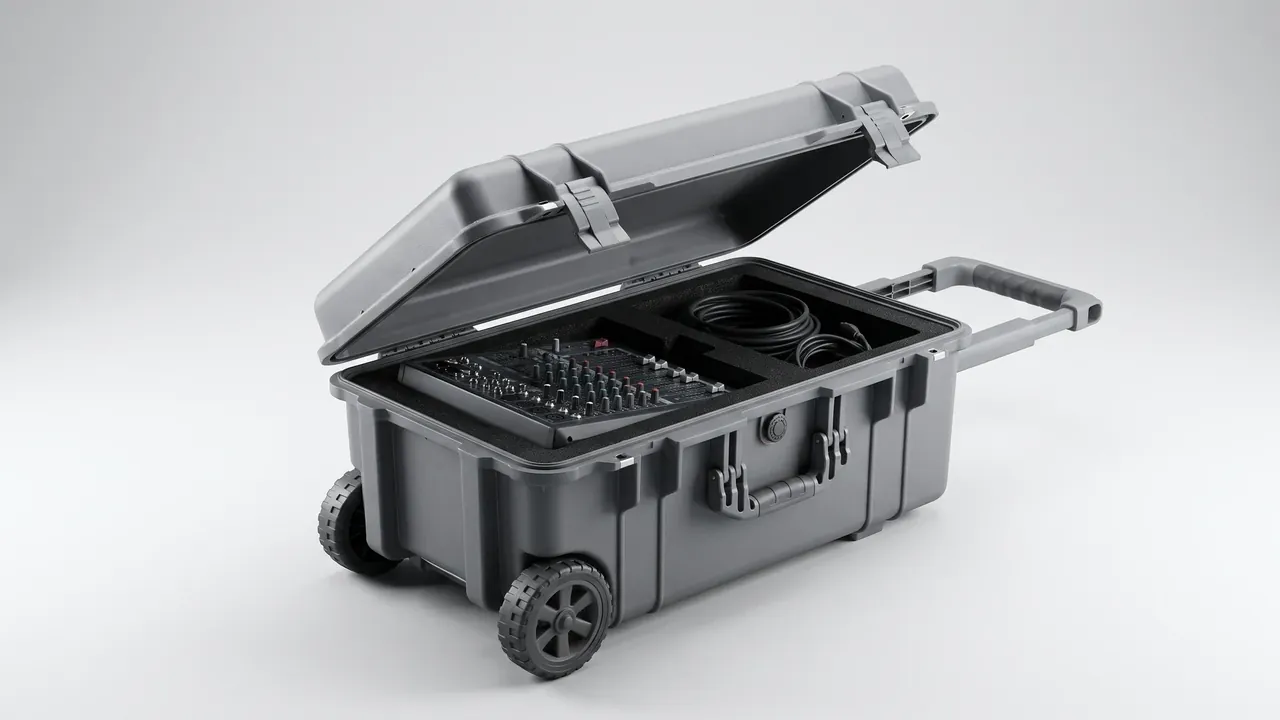
- Desiccant: quantity scales with cavity volume and sealed duration — heavy cases need proportionally more; keep it from touching contents and metal parts;
- Humidity monitoring: indicator cards are the simplest; large stores benefit from data loggers — trends warn better than single readings;
- Venting and relief valves: valve-equipped cases are near-mandatory in high-swing stores; valveless cases should avoid direct sun and its thermal cycling.
Log the monitoring data: a single reading means little; the trend drives decisions — steadily rising humidity usually means the seal or drying system has already failed somewhere.
4. The inspection schedule
| Cycle | Item | Method | Acceptance |
|---|---|---|---|
| Monthly | Humidity reading | Card / logger | Over limit → act and record |
| Quarterly | Gasket visual | Visual | Joints intact, no embedded debris |
| Half-year | Compression uniformity | Observe imprint after closing | Continuous and even |
| Yearly | Cross-section | Press-rebound test | Quick rebound, no hardening |
| Yearly | Skid zone | Flip or low-position check | No standing water, no rust, drains open |
| Every 2 years | Structure and markings | Visual | No rib cracks, marks legible |
Adjust by store environment: humid, coastal, or high-swing stores shorten humidity and seal intervals.
5. Hidden water pockets: the most overlooked risk
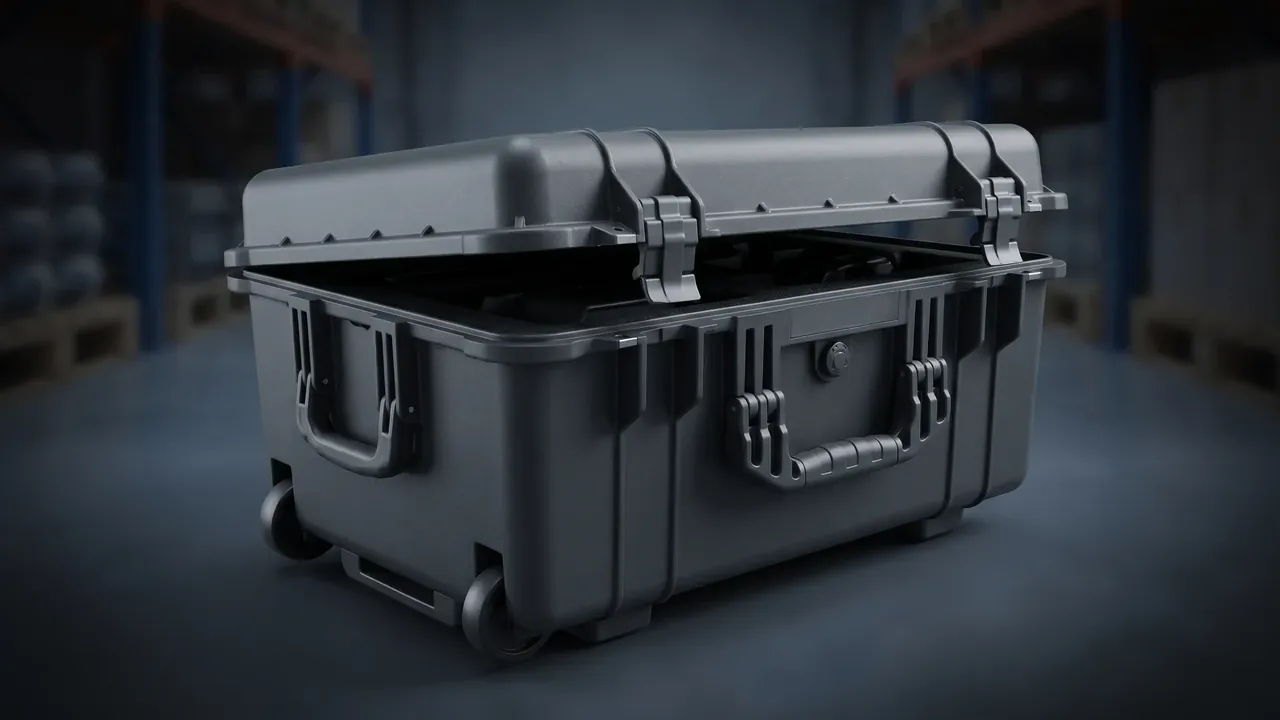
Two "invisible" water locations on heavy cases:
- Between skids and floor — after floor washdown or rising damp, water lingers in skid cavities and slowly evaporates into the bottom seal zone;
- Lid-lip grooves and hinge bosses — rain or condensate pools in these structure pockets; freeze–thaw cycles widen the gaps.
Countermeasures: floor with drainage slope, cases raised off the floor, periodic low-position checks (mirror or borescope into skid cavities), and mandatory drying after any washdown before storage. Hidden water matters because it sits closest to the seal — the signature maintenance focus that separates heavy cases from small ones.
Conclusion
Heavy-case moisture management = gasket condition management + micro-environment monitoring + an inspection regime, plus the heavy-case-specific focus on hidden water pockets. The three amplifying effects (long seal perimeter, high self-weight, costly inspections) dictate that management rely on condition data and structural checks rather than "open it more often." Post the schedule on the store wall and log the humidity readings — and moisture control stops being a slogan and becomes a process.
This article covers container maintenance only. It does not cover anything about the handling of items placed inside.
Related Reading
- Artillery Shell Storage Container: How Wall Thickness, Ribs and Skids Work Together
- Artillery Shell Box: Load Ratings, Stacking and Dimensions
- Ammunition Storage Container and Munitions Shipping and St…
Related Products
- 8 Series — Gun Cases; Military Equipment Cases; Camera Equipment Cases; Drone Cases; Watch Cases; Knife Cases; First Aid Cases; Electronics Equipment Cases
- WL8-2812 PP Gun Case — model WL8-2812
- All protective cases and toolboxes: 7 series, 158 models