

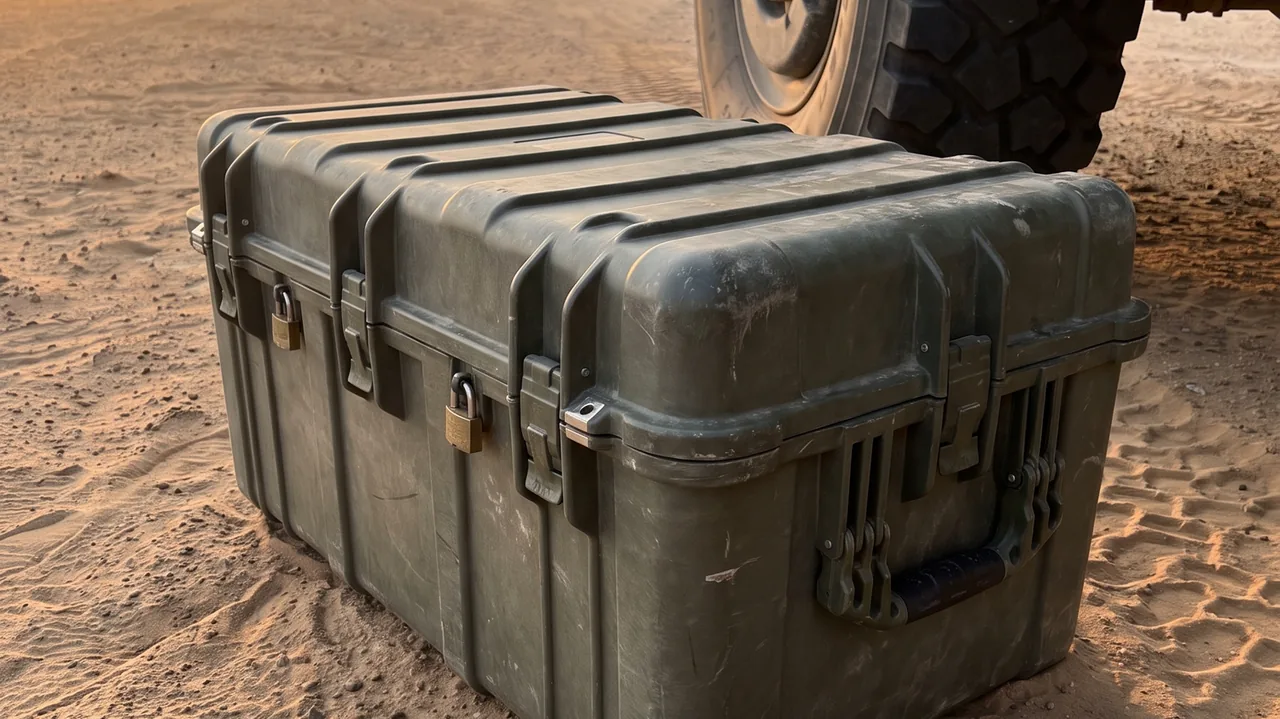
Once a stockpile cycle stretches from months into years, the deciding factor for an Ammunition Storage Container is no longer how much it weighs, but how reliably it seals and how well it carries stacking load. JUNZHIJIA has confirmed this repeatedly in protective case manufacturing: an ammunition storage box that holds a stable internal microclimate through damp warehouses, salt-laden sea freight, and temperature cycling depends on five cooperating subsystems — material, sealing, drying, cushioning, and traceability — not on adding thickness at one point. This article is written for procurement and engineering staff working in readiness stockpiles, defense trade fulfillment, and bulk ammunition warehousing. It walks through the full design logic of a munitions container, from structural shell and interior lining to sealing, pressure equalization, and UN packaging certification. Local regulations and export control requirements govern; this article discusses packaging engineering only, and never the physical or chemical properties of ammunition itself.
A second premise deserves emphasis at the outset: long-term storage does not become safer simply by making a container heavier. The real difficulty is that gaskets age, stacking loads accumulate, pressure differentials act on the shell again and again, and warehouse teams must open, count, and load the containers every day. A Munitions Shipping and Storage Container therefore has to balance four operational needs — repeatable opening, stackability, liftability, and traceability — against protection performance. The sections below work through the engineering trade-offs and acceptance points at each layer.
What an Ammunition Storage Container Is and Where It Fits
An ammunition storage container is a reusable packaging unit that carries, protects, and supports goods through inbound, storage, and outbound handling. It differs from single-use wooden or corrugated shipping crates: the former is designed to survive repeated opening and repeated handling in a full supply chain while holding its protection rating, whereas the latter often serves a single shipment. In industry usage, large-caliber, long-cycle models are often called munitions containers, while models used for bulk stockpiles of small and medium calibers are called ammunition storage boxes. The two share the same design paradigm; the differences lie mainly in size, load capacity, and stacking method.
From a procurement standpoint, there are roughly four use profiles. The first is readiness stockpiles, characterized by long dwell times, infrequent opening, and the highest demands on sealing and corrosion protection. The second is defense trade fulfillment, where contract documentation travels with the goods and the shipping container becomes the unit of load planning, so certification and marking requirements dominate. The third is bulk ammunition warehousing, which turns over quickly and stacks high, so stacking load and forklift efficiency dominate. The fourth is transit and training support, where containers are opened frequently and counted rapidly, so locks and traceability systems dominate. No single container optimizes all four profiles at once, which is why defining the use profile is the first step in selection.
In container engineering terms, those profiles resolve into a handful of quantifiable interfaces: external dimensions and corner fitting positions determine whether the unit matches standard pallets and shipping containers; rated load and stacking tiers determine warehouse utilization; sealing rating and the pressure equalization valve determine whether the internal microclimate can be maintained; and marking and seal systems determine whether accountability can be closed. Writing these interfaces into the RFQ is far cheaper than retrofitting later. When JUNZHIJIA takes on a custom project, it typically requires the client to supply a use profile before structural design begins, avoiding a situation where a container meets a generic specification but cannot match the real warehouse.
The Core Tension of Long-Term Storage: Sealing, Drying, and Pressure Balance
The first tension in long-term storage is between sealing and breathing. The better the seal, the harder it is for outside moisture to enter — but temperature changes inside and outside the container create a pressure differential, and if a container has no pressure compensation path at all, the gasket will be compressed, peeled, and eventually destroyed by repeated positive and negative pressure. This is why mature ammunition storage containers almost always include a pressure equalization valve: while maintaining a moisture barrier, it lets air pass slowly through a hydrophobic membrane so the internal and external pressure difference returns to a controllable range.
The second tension is between corrosion protection and access. An ideal sealed state would let the container remain closed for years; warehouse practice, however, requires periodic counts and sample inspections. Every time a container is opened, the dry internal air is diluted. Designers therefore often separate a high-frequency inspection port from the main sealed chamber: routine checks open only a small compartment or view window, while the main storage chamber stays sealed for the long term, balancing compliant counting against corrosion protection.
The third tension is between stacking load and dead weight. To stack high, the shell and internal supports must be rigid enough; to be movable, the dead weight cannot be excessive. The solution is to reinforce along load paths and remove material outside them — for example, adding ribs at posts and corners, using corrugated or sandwich side panels, and directing load into corner fittings and pallets. These three tensions run through the whole article, and every section that follows is an engineering answer to them.
Shell Material Engineering: Steel, Aluminum, and Composites
Material choice sets the ceiling on strength, the baseline for corrosion resistance, the dead weight, and the cost structure. Three routes dominate in practice: steel, aluminum alloy, and engineering plastics or composites. Steel containers offer the highest stiffness and the strongest stacking resistance, suited to heavy loads and high stacking, but they depend on coating or plating for corrosion protection. Aluminum alloy is light and corrosion-resistant, suited to frequent lifting and to raising warehouse utilization. Engineering plastics and composites resist chemical attack and can be molded in one piece, suited to bulk stockpiles of small and medium calibers and to frequent opening. The table below compares the three routes qualitatively; actual selection must be rechecked against load, environment, and budget.
| Material Route | Strength / Stiffness | Corrosion Baseline | Dead Weight | Typical Fit |
|---|---|---|---|---|
| --- | --- | --- | --- | --- |
| Cold-rolled steel + coating | High | Moderate (coating-dependent) | Heavy | Heavy loads, high stacking |
| Aluminum alloy | Medium-high | High | Medium | Frequent lifting, sea freight |
| Engineering plastic / glass-fiber reinforced | Medium | High | Light | Bulk stock of small calibers |
Material selection also involves a hidden variable: coating integrity. The corrosion performance of a steel container depends heavily on whether the coating is scratched during lifting and forklift handling; once a local breach appears, corrosion often spreads from that point. Heavy-duty steel boxes therefore usually pair with replaceable bumper corners and wear pads, moving the damage-prone point away from the coated body and onto a replaceable part. For a systematic discussion of material evolution, see military storage box material evolution.
Another frequently overlooked point is low-temperature toughness. If a warehouse stays cold for long periods, some plastics become brittle and crack on impact. Selection should require the supplier to provide toughness data for the chosen material across the target temperature range, or to run a low-temperature drop verification along the lines of protective case environmental testing. Material is not better simply because it costs more; it has to match the operating temperature, load, and lifting method.
Interior Cushioning and Positioning Design
If a container is nothing but an empty cavity, the goods inside will shift and collide under transport vibration and stacking shock, both abrading the interior wall and making the load distribution unpredictable. The core task of the lining is therefore threefold — position, cushion, and isolate: position structures fix the goods in a predetermined location, cushion layers absorb impact energy, and dividers keep adjacent units from touching directly.
Three lining routes dominate. The first is molded foam such as EVA, EPE, or PE, which can be CNC-machined to the outer profile; it offers high positioning accuracy and consistent cushioning, suited to stable, high-volume models. The second is a modular divider system, using adjustable bars to form a grid that flexes with size changes and lets the warehouse adjust by batch. The third is honeycomb paper or corrugated structure, which is light, low-cost, and recyclable, suited to scenarios with moderate cushioning needs. In practice, a hybrid of foam and dividers is common, balancing positioning accuracy with flexibility.
Positioning design must avoid two extremes. One is too tight: goods are clamped rigidly, so vertical shock transmits straight into the container structure and raises risk instead of lowering it. The other is too loose: an oversized clearance lets goods strike the cushion repeatedly under vibration, producing micro-displacement fatigue over time. A sound approach keeps displacement in the millimeter range along critical directions and holds cushion compression in the middle of its elastic range. For how to choose between foam and dividers, see divider versus foam.
Sealing Ratings and the Pressure Equalization Valve
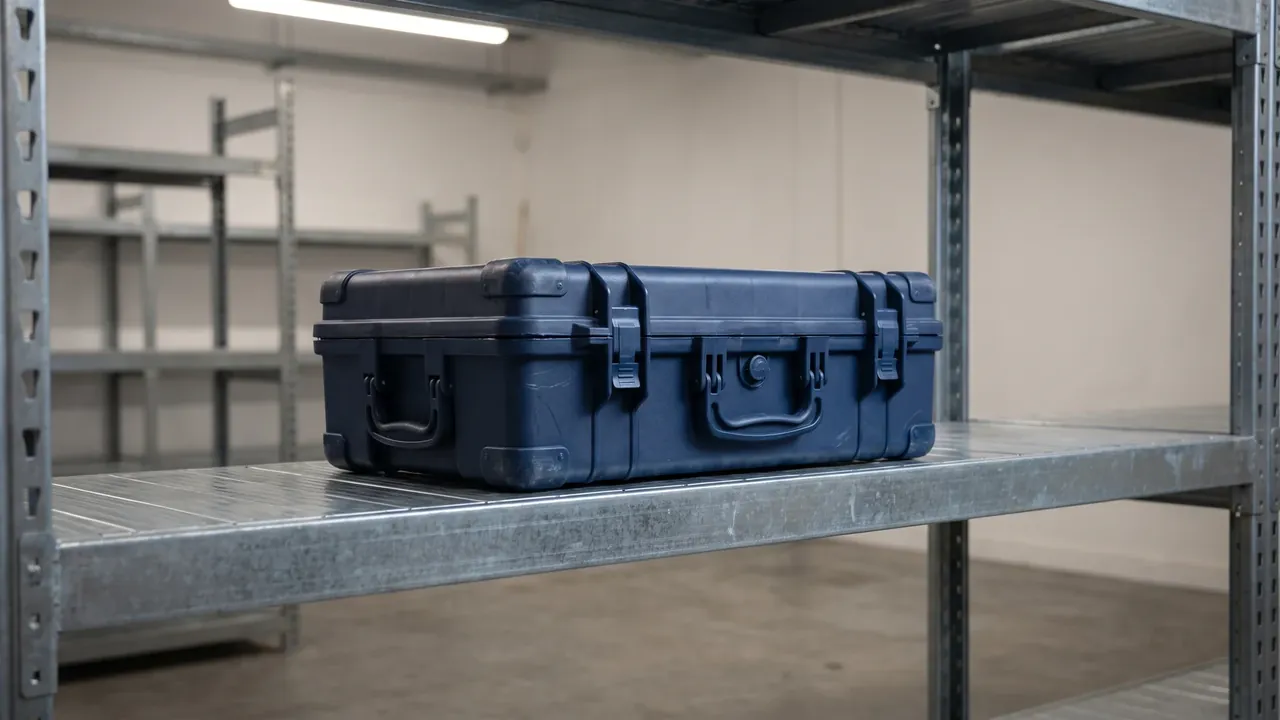
Sealing rating is the first performance indicator of a long-term storage container. Engineering practice usually expresses it through IP ratings such as IP55, IP65, IP67, and IP68, which correspond to different levels of dust and water protection; the relevant test methods are specified in IEC 60529 and GB/T 4208. For an ammunition storage box that must sit outdoors or in a damp warehouse for years, IP67 is typically the baseline, with the requirement that the sealing surface maintain stable compression throughout the design life.
Sealing performance depends on three elements: gasket material, sealing surface geometry, and compression design. For material, nitrile rubber offers good oil resistance at low cost; silicone adapts across a wide temperature range; fluorocarbon rubber excels in chemical and aging resistance; and EPDM performs well in weather and water-vapor resistance. Selection must consider the target temperature range, the contact medium, and the expected life at the same time. For a systematic comparison of sealing materials, see case seal aging.
The pressure equalization valve is the key companion to long-term sealing. It lets the container breathe slowly as temperature changes, preventing the pressure differential from sucking or pushing the gasket open, while a hydrophobic breathable membrane blocks liquid water and dust from entering. Design must consider the valve's venting rate and opening pressure: too low a rate and compensation lags; too high a rate and the valve itself may become a moisture path. Acceptance should verify valve body material, membrane grade, and the mounting seal, confirming the valve is a long-life component matching the shell. For engineering detail, see pressure equalization valve design.
VCI Corrosion Protection and Desiccant Systems
Metal parts sealed inside a container for years will corrode quietly in a low-oxygen, high-humidity microclimate if residual moisture cannot be removed. The answer is to reduce humidity and inhibit corrosion at the same time. Humidity reduction relies on desiccant to hold internal relative humidity below a safe threshold; corrosion inhibition relies on VCI (vapor corrosion inhibitor) material, which forms a molecular adsorption layer on metal surfaces so that even a brief humidity rise can delay the onset of electrochemical corrosion.
Desiccant selection depends on moisture capacity, saturation indication, and release behavior. Silica gel absorbs visibly and pairs with humidity indicator cards; montmorillonite costs less and holds more; molecular sieve absorbs strongly but requires a high regeneration temperature. In practice, desiccant is often combined with an indicator card so warehouse staff can judge internal humidity through a view window without opening the container, then decide whether to replace the desiccant.
VCI has boundaries: it depends on maintaining a concentration of inhibitor molecules within a closed space, so the container must provide basic sealing. When openings are frequent or the seal fails, VCI replenishment cannot keep pace with loss. VCI must therefore work with sealing and drying, not replace them. Acceptance should ask the supplier to state the VCI carrier's service life and replacement method, and to confirm compatibility with the target metal. For related corrosion-control thinking, see sealing and corrosion protection and long-term sealed stockpile.
Stacking Load and Palletized Loading
Warehouse utilization directly determines stockpile cost, and stacking height depends on whether the load path is clear. Engineering requires the load to travel as much as possible through posts, corners, and corner fittings, rather than being carried by the middle of a side panel or the center of a lid. A common approach is reinforced posts at the four corners that channel the stacking force borne by the lid straight to the bottom corner fittings, which then transfer it to the pallet or floor.
Palletization is the bridge between stacking and transport. Uniform pallet dimensions and matching container feet let a forklift move a whole stack at once, reducing the number of single-box operations; the pallet also spreads point loads into area loads, lowering the pressure requirement on the warehouse floor. Load planning must reconcile three sets of data: the rated load per container, the permitted stacking tiers, and the pallet's dynamic and static ratings. If any one of the three is insufficient, it becomes the ceiling on stack height. For planning method, see stackability and pallet planning.
Stacking stability is also affected by center of gravity and friction. If the center of gravity is high, a stack can destabilize under vibration or a light collision; anti-slip feet at the bottom and locating recesses at the top significantly improve the stability of the whole stack. For ammunition containers that must stack high, verification by a full-load stacking test is recommended — apply the real load to the design tier count and hold it for a set period, observing whether the container and pallet show visible deformation or displacement. For related rules, see warehouse storage rules and stacking and moisture control.
Lifting and Forklift Interfaces
Heavy ammunition containers cannot rely entirely on manual handling during inbound, loading, and transfer, so mechanical handling interfaces must be designed in. Lifting interface design has three key points: lifting points must be positioned so the container is loaded symmetrically without torsion; the connection between lifting lugs and shell must route load into the primary structure rather than thin walls; and the rated lifting load must be clearly marked with a safety margin. Lifting operations should also avoid side pulls, sudden stops, and shock, because these conditions generate dynamic loads far above static weight.
Forklift interfaces are mainly fork pockets and the bottom structure. The clear height and depth of the fork pockets must match common forklift tines, and the pocket edges need wear treatment so that repeated insertion does not abrade the coating and become a corrosion starting point. If the container bottom touches the floor directly, wear feet should lift the main body off the ground, easing forklift handling while preventing standing water from soaking the base.
Lifting and forklift handling are the stages where containers are most easily damaged, so these interfaces are best designed as replaceable components: corner fittings, feet, and lugs built as separate parts that can be replaced individually after wear or deformation, without scrapping the whole unit. When evaluating a supplier, ask for load documentation for the interfaces and a replacement plan. For related structural thinking, see case structure design.
Locks and Tamper-Evident Seals
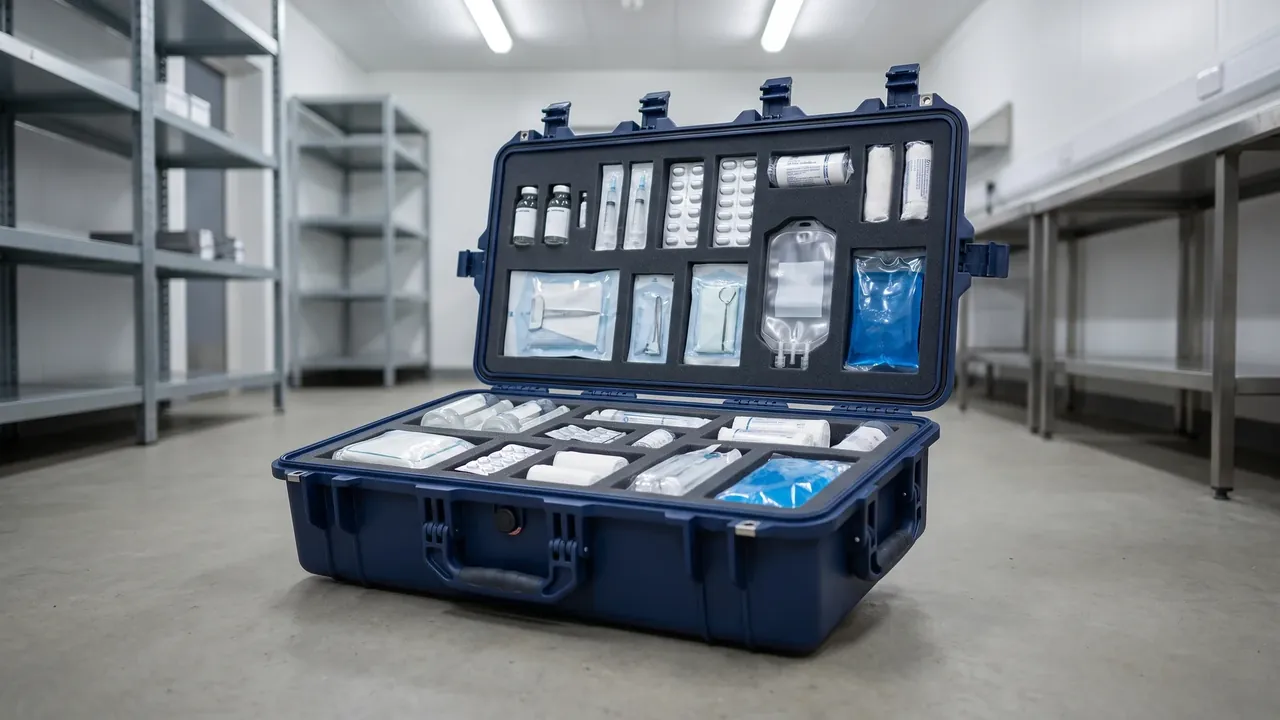
For a long-term stockpile container, the security chain covers not only "the box cannot be opened easily" but also "every opening and closing is recorded and accountability is traceable." The lock system therefore usually has two layers: an operational layer that secures the lid day to day, such as latches, mechanical locks, or combination locks; and a management layer that proves "no opening since the last sealing," such as numbered lead seals, wire seals, or disposable plastic seals.
The value of a seal lies in being irreversible and numberable. Once cut, the seal cannot be restored, and each seal carries a unique number that binds to a ledger for comparison during inventory. For cross-border transport, seals should also meet the relevant strength and tamper-resistance standards so an evidence chain exists when cargo damage is disputed. The combination of lock and seal turns "who opened which box and when" into an auditable event.
Design must consider the wear and maintainability of the lock. In outdoor environments, an exposed lock cylinder jams easily; a latch that is too rigid may be hard to operate at low temperature. A common solution places the main lock in a protected recess and gives the latch a freeze- and dust-resistant design. For selection points, see lock selection and lock customization.
RFID and Barcode Traceability
The hard part of bulk stockpile management is not whether containers exist, but which container is where and in what state. RFID and barcode tracking turn each container into a system-readable asset unit: RFID tags support batch, contactless reading and suit forklift-based counting as a vehicle passes down an aisle, while barcodes and QR codes are low-cost and easy to print, suiting manual scanning for verification and field work.
For a traceability system to deliver value, it must work with the container structure. Tag mounting should avoid being shielded by a metal shell or blocked when stacked; for metal containers, metal-mount tags are often used, or the tag is placed in a reserved non-metal window. A QR code can be placed on the outside of the sealing surface so scanning happens in the same motion as handover, reducing after-the-fact data entry.
Traceability data should also cover content changes and seal changes. When a container is opened and resealed, the system should record the new seal number, operator, and time, keeping the container asset ledger and the seal ledger consistent. At inventory time this allows verification of both container count and sealed state. For related practices, see asset QR code tracking and inventory safety stock.
UN Packaging and Export Certification
Ammunition packaging that crosses borders generally has to meet the applicable packaging performance requirements and carry the specified packaging marks. A common misconception should be clarified here: packaging certification addresses whether the package can withstand drop, stacking, and impact during transport; it does not evaluate the physical or chemical properties of the contents. The container manufacturer is responsible for proving the packaging structure meets the standard, while content compliance is determined by the shipper under local regulations.
Certification preparation typically covers: defining the packaging category and performance level to be declared; selecting a representative configuration for type testing; retaining test reports and a marking scheme; and setting up batch consistency control so production units match the tested unit in material, structure, and process. Because rules differ by destination country and transport mode, the specific plan should follow local regulations and export control requirements.
For the buyer, acceptance should obtain test reports matching the declared category and confirm that the structural description in the report matches the delivered goods. If the delivered structure changes — for example in wall thickness, gasket, or lock — it should be assessed whether retesting is required. For related compliance points, see transport box certifications and military standard compliance.
MIL-STD-810H and GJB Environmental Testing
Environmental testing answers one engineering question: can the container maintain its protection performance in real transport and storage environments? Common tests include drop, vibration, stacking, salt spray, temperature cycling, and low pressure. MIL-STD-810H provides a methodological framework for environmental testing, while the GJB series sets out related requirements for domestic military products; the two differ in methodological detail, and which to adopt should follow the contract and regulatory requirements.
Drop testing examines the impact resistance and seal retention of corners, edges, and faces in an accidental fall. Vibration testing simulates the sustained excitation of long-distance transport, verifying whether locks, gaskets, and lining loosen or wear. Salt spray testing evaluates the corrosion resistance of metal parts and coatings in a marine climate. Temperature cycling and low-pressure testing verify the behavior of the pressure equalization valve and gaskets under temperature swings and at altitude.
The point of testing is not only to obtain a certificate but also to expose weak points. Vibration testing often reveals rattling and loosening from insufficient lock preload, while drop testing often exposes stress concentration where corner fittings join the shell. Feeding those findings back into the structural design is the real value of testing. For systematic compliance pathways, see military standard environmental compliance and structural strength assessment.
Long-Term Environmental Control Strategy
The container is the first line of defense and the warehouse is the second. Even the best seal cannot hold internal dryness indefinitely inside a persistently humid warehouse, so long-term stockpiling needs the container and the warehouse environment to work together. Strategy usually has three tiers: whole-warehouse dehumidification to push ambient humidity into a safe range; zoning so containers are placed by opening frequency and storage cycle; and individual sealing, where very long-cycle units use an enhanced desiccant plus VCI scheme.
Temperature control matters equally. Temperature itself does not directly damage packaging, but sharp swings accelerate gasket aging and drive the pressure equalization valve to cycle frequently. Keeping warehouse temperature in a relatively stable range significantly extends gasket life. In regions with large day-night swings, containers should be stored in an insulated warehouse to reduce the number of temperature cycles.
An inspection regime is where environmental control reaches the floor. A fixed cycle should check the humidity indicator card, seal integrity, container appearance for deformation or rust spots, and stack displacement. On any anomaly, the plan is to replace desiccant, reseal, or adjust the stack. For related warehousing rules, see warehouse storage rules and seal aging.
Procurement and Acceptance Checklist
The goal at procurement is to turn needs into verifiable clauses. An RFQ should specify at least: the use profile and storage cycle; external dimensions and pallet or container matching; rated load and stacking tiers; sealing rating and test methods; lining and cushioning scheme; pressure equalization valve and desiccant configuration; lock and seal requirements; traceability marking scheme; certification and test report requirements; and batch consistency and warranty terms. The more specific the RFQ, the fewer the later disputes.
Acceptance then has to turn paper into physical goods. Incoming inspection typically checks appearance, dimensions, sealing surface condition, lock function, and marking, and performs a sealing spot check by a sampling plan, such as an air-tightness test or immersion check. For critical batches, a full-load stacking test and drop test sampling may be required. Every inspection record should be bound to the seal number and batch, forming a traceable acceptance file.
Supplier evaluation should not look at price alone. It should weigh structural design capability, test facilities, batch consistency control, and after-sales parts supply. A supplier that can provide replaceable corner fittings, seals, and desiccant usually offers a lower total cost of ownership over the container's life. For related methods, see supplier evaluation and incoming inspection.
Ammunition Storage Container FAQ
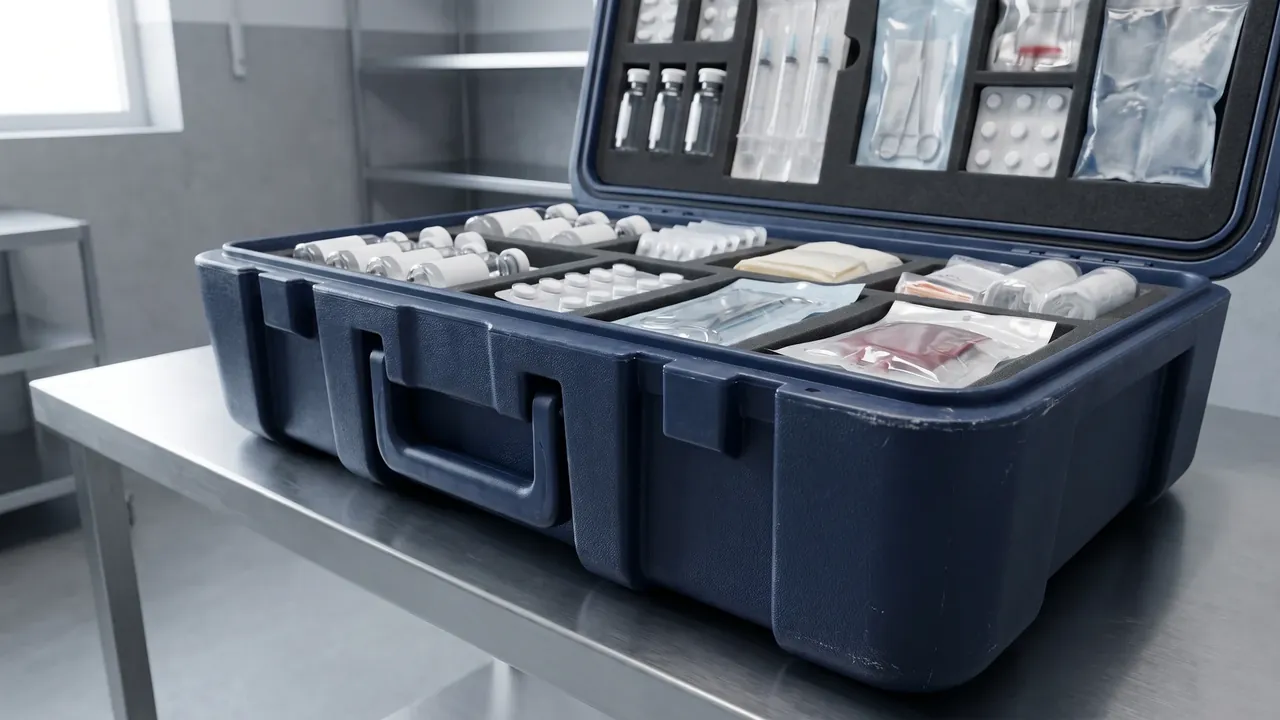
Q: What is the core difference between an ammunition storage container and an ordinary protective case? A: The core difference is longevity and system integration. An ordinary protective case usually assumes a single or short transport, and its main job is to deliver goods intact. An ammunition storage container must survive years of repeated opening, repeated stacking, and repeated lifting, so it has to solve five problems at once: gasket aging, pressure equalization, corrosion inhibition, stacking load, and traceability records. In other words, an ordinary case is judged on whether it protects once, while a storage container is judged on whether it protects over the long term and stays manageable. That is why containers almost always include a pressure equalization valve, desiccant, and a seal system, while ordinary cases may not. A buyer who looks only at shell strength while ignoring sealing and traceability often discovers condensation, jammed locks, or counting difficulties a year into service, when retrofitting costs far more than choosing correctly once.
Treat the distinction as a procurement test: ask a candidate supplier to state the design life of the seal, the hinge and the liner separately, and to back each figure with test evidence. A container built for decades will answer with documents, while an ordinary case will usually answer with adjectives.
Q: Must a long-term storage container be fitted with a pressure equalisation valve? A: For containers with a high sealing rating used in environments with clear temperature differences, fitting one is recommended. The better the seal, the harder it is for air to exchange naturally inside and outside, so the pressure difference caused by temperature change becomes more pronounced. Repeated differential loading compresses the gasket until it gradually loses resilience and eventually fails. A pressure equalization valve compensates pressure slowly while maintaining the moisture barrier, keeping the gasket in a stable condition. If the use environment is highly temperature-stable or the storage cycle is short, the valve may be omitted, but the sealing surface should still be designed with enough compression margin. At acceptance, check the valve venting rate and membrane grade to confirm it is a long-life component rather than an ordinary vent hole.
When you do specify one, insist on a membrane-type valve with a documented air-flow range and a replaceable element, and position it so that rain or hose water cannot sit on the membrane. During acceptance, cycle the valve through a temperature swing and confirm that the case neither bulges nor hisses along the seam afterwards.
Q: Should the desiccant be silica gel, montmorillonite, or molecular sieve? A: Each has different strengths, and the choice should weigh moisture capacity, indication ability, and cost together. Silica gel absorbs visibly and can pair with a humidity indicator card, letting warehouse staff judge status without opening the container, which suits scenarios needing routine inspection. Montmorillonite holds more and costs less per unit, suiting one-time sealing of large-volume containers. Molecular sieve absorbs strongly and can hold a low equilibrium humidity in the low-humidity range, but its regeneration consumes more energy, suiting enclosed spaces with tighter humidity requirements. In practice, silica gel is often the primary desiccant with an indicator card, and other materials may be added as needed. Whichever is chosen, calculate the container's internal net volume and the target storage cycle, provide ample desiccant margin, and state a replacement interval.
For a long-horizon container the practical answer is usually montmorillonite as the workhorse charge, with humidity indicator cards placed where an inspector can read them without opening the case. Record the charge weight against the internal free volume, and log the indicator colour at every inspection so the replacement rhythm is driven by evidence.
Q: Can VCI corrosion protection fully replace desiccant? A: No. The two work by different mechanisms and complement rather than replace each other. Desiccant reduces internal relative humidity to a safe range, suppressing the conditions for electrochemical corrosion at the source. VCI forms a molecular adsorption layer on metal surfaces so that even a brief humidity rise can delay the onset of corrosion. Conversely, if the container seal fails and moisture keeps entering, VCI molecules are lost with the air exchange, the concentration cannot be maintained, and the protective effect declines. Engineering therefore treats sealing, drying, and VCI as one integrated scheme: sealing provides the base barrier, drying controls humidity, and VCI provides tolerance redundancy. At acceptance, ask the supplier to state the VCI carrier type, service life, compatibility with the target metal, and replacement method.
A sound layout puts desiccant near the airflow path and vapour-phase inhibitor close to the metal surfaces, then keeps the two from interfering, because some inhibitor chemistries are moisture dependent and the programme should state which drives which. Validate the combination with a coupon test inside a loaded container rather than on a desk.
Q: How should stacking height be determined? A: Stacking height is set by the smallest of three data points: the rated load per container, the permitted stacking tiers, and the capacity of the pallet and floor. Engineering practice first confirms the container's rated stacking load, usually the maximum static load borne by the top of the bottom container, then checks whether the bottom load, equal to the full weight of one container times the number of tiers above, exceeds it, while also verifying the pallet static rating and the allowable floor pressure. If any one is insufficient, it becomes the bottleneck. Stability also matters: when the center of gravity is high or floor friction is low, stacking should stop at a lower tier even if the load allows, or anti-slip feet and locating recesses should improve whole-stack stability. Verify by a full-load stacking test rather than calculation alone.
Document the allowable stack as a single figure that accounts for the weakest orientation, the highest expected temperature and the ageing of the material, then print it on the case where handlers can see it. Warehouse teams follow numbers visible at the point of use far more reliably than figures buried in a specification file.
Q: What packaging documents are needed to export a container? A: Typically you need type test reports matching the declared packaging category, a marking scheme description, and evidence of batch consistency control such as material and structure records, process control records, and factory inspection records. If the contract or destination country requires more, additional drop, stacking, or sealing test data may be needed. It bears repeating that these documents prove the structural performance of the package; content compliance is determined by the shipper under local regulations. Because rules differ by destination country and transport mode, the exact list should follow local regulations and export control requirements. Write the required documents into the contract at signing and allow enough time for testing and issuance, so a missing file does not delay the sailing date near shipment.
Ask the supplier which documents are issued per production batch rather than per design, because batch-level certificates are what customs and surveyors actually request. Keep a named owner for the document pack inside your own organisation, and rehearse the export file once before the first shipment so gaps surface weeks early instead of hours before loading.
Q: How often do gaskets need to be replaced? A: There is no single interval; it depends on material, operating temperature, opening frequency, and contact medium. A practical approach treats the gasket as a wear part within the maintenance plan: shorten the inspection cycle under high temperature differentials or frequent opening, and extend it under stable, low-differential conditions. Signals that replacement is due include permanent compression marks or cracks on the sealing surface, clearly reduced resilience, a failed sealing spot check, or persistently high humidity indications in the sealed chamber. When replacing, use the same material and cross-section dimensions as the original, and check the sealing groove for damage and contamination. If unsure, follow the manufacturer's life recommendation and combine it with your own test results.
Set the interval from compression-set data rather than from habit: a gasket that has closed against the same latch for years recovers differently from a new one, and a case that lives outdoors ages faster than one in a conditioned store. Inspect at every scheduled opening, replace on measurement rather than appearance, and always stock spares against the fleet.
Q: How can a buyer tell whether a supplier's container truly suits long-term storage? A: Check four dimensions. First, design documentation: does it specify the load path, sealing surface geometry, pressure equalization scheme, and positioning design, rather than only an outline drawing? Second, test capability: can it provide drop, stacking, vibration, and sealing data matching the declared category? Third, batch consistency: can its production control keep units consistent with the tested unit, which directly determines whether certification stays valid over time? Fourth, parts and after-sales: can wear parts such as gaskets, corner fittings, seals, and desiccant be supplied long term? Weighing these four together reveals long-term suitability better than looking at price or wall thickness alone.
Conclusion and Related Reading
The long-term reliability of an ammunition storage container comes from five subsystems working together — structure, sealing, drying, cushioning and traceability. Settle the use profile, stacking load, sealing rating and maintenance plan at the selection stage, and the hidden costs of condensation, corrosion and lock failure largely disappear. JUNZHIJIA, manufactured by Kexin New Materials (Guangdong) Co., Ltd., customises lining, gaskets, valves and marking to the stockpile scenario.
Related Reading