

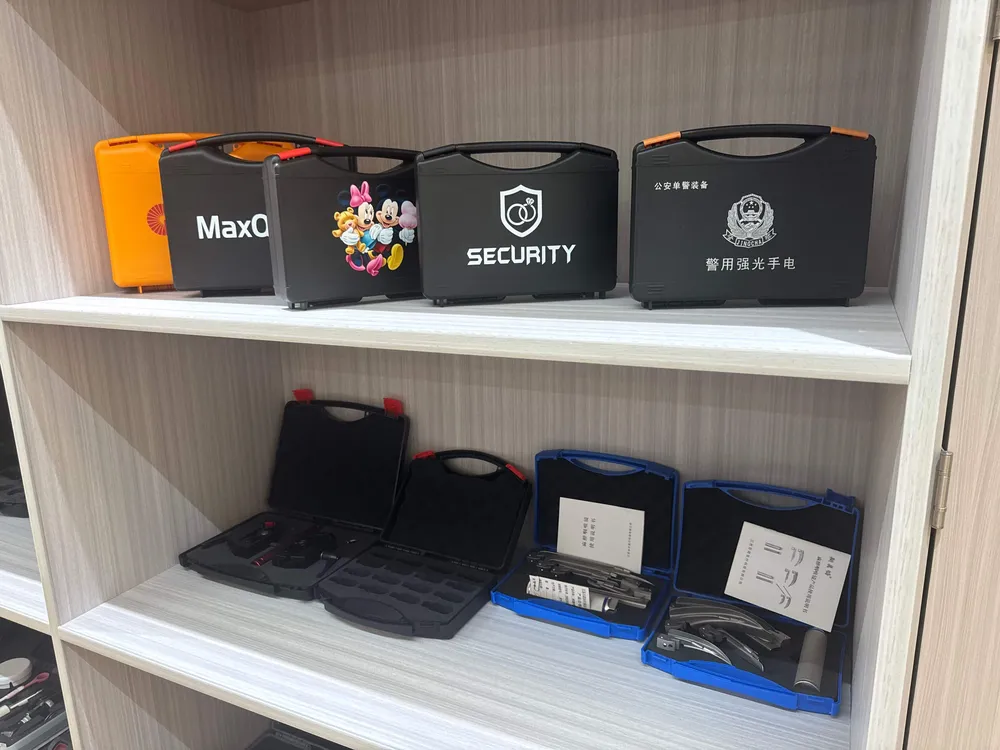
Production equipment cases live a harder life than most: heavy payloads, tight call times, air freight, stacked storage, and a different crew handling them every week. Unlike a personal camera bag, these cases are shared infrastructure, so they are specified for repeatability and speed.
The Four Constraints of Production Work
| Constraint | What it demands from the case |
|---|---|
| Heavy payloads | Wheels with a real duty rating, reinforced wheel housings, balanced handles |
| Air freight | Weight control, dimensional awareness, hardware that survives baggage handling |
| Stacked storage | Interlocking stacking features so loaded cases sit securely on each other |
| Fast turnaround | Interiors that can be reconfigured without remaking the whole case |
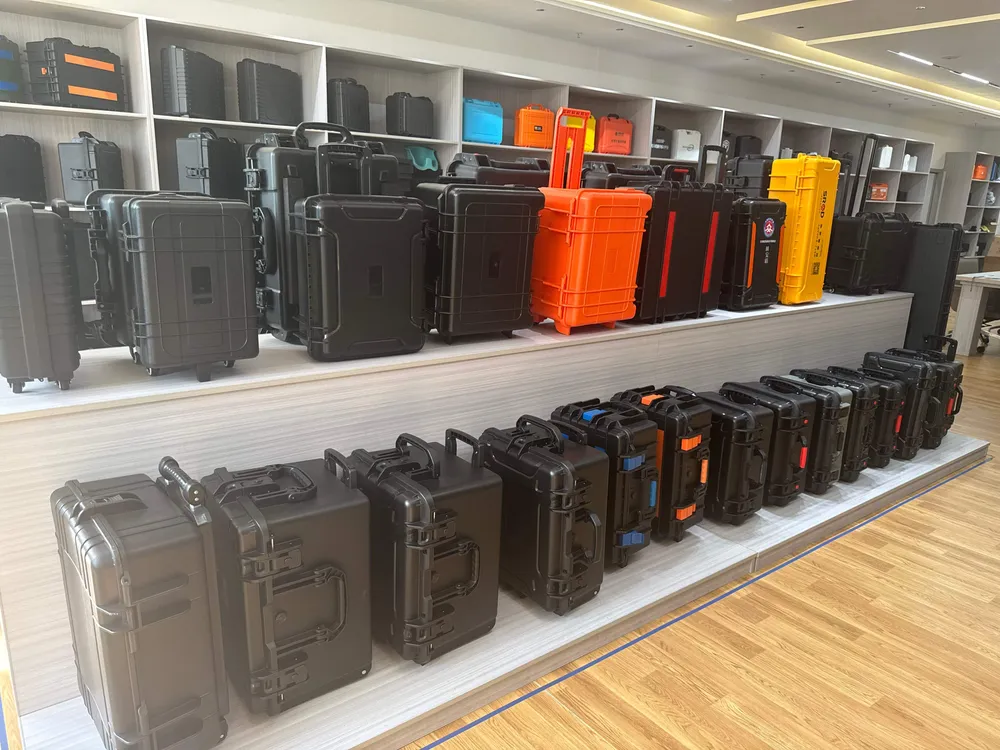
Weight Is the Recurring Argument
Every kilogram of case is a kilogram of allowance not spent on equipment, and air freight charges by weight and volume. This is where moulded polymer has a structural advantage: the same protection at lower mass, with ribs, wheel housings and stacking lugs integrated into the shell rather than bolted on.
But weight alone is not the answer. A lighter case that does not roll properly, or whose handle puts the wrist at a bad angle, creates injuries and slows load-in — which costs more than the freight saving.
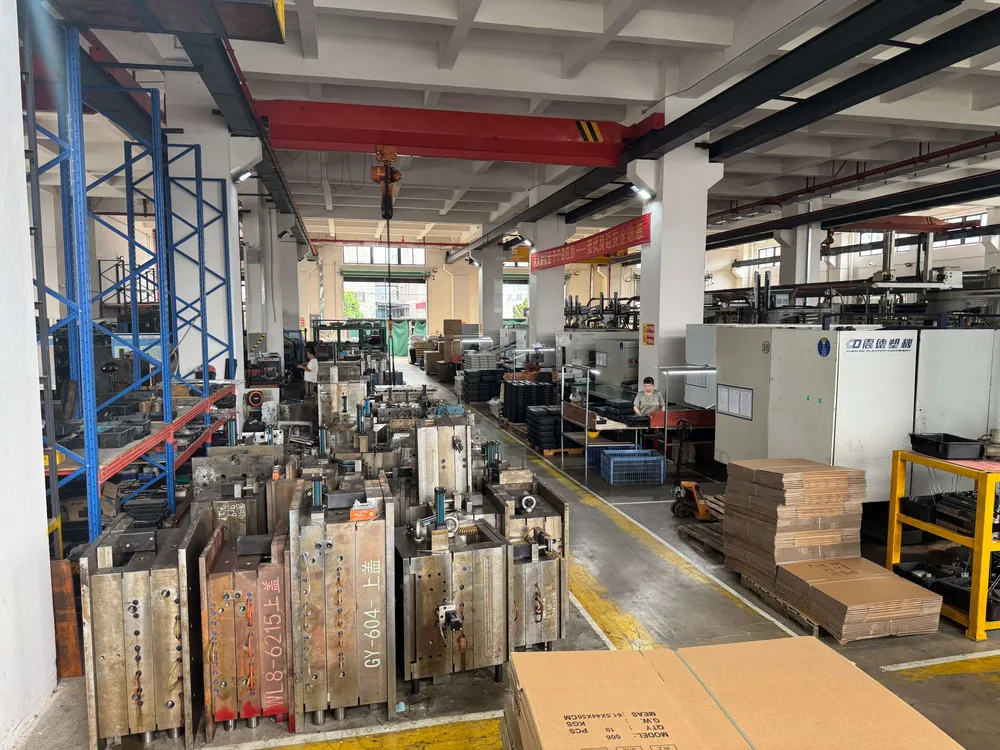
Interiors That Survive Equipment Changes
Production inventories change constantly: a new monitor, a different wireless system, another lens set. Rebuilding a case interior every time is expensive, so specify an interior strategy rather than a one-off cut.
- Modular dividers for compartments that change shape between jobs.
- Standardised cavity sizes across a fleet so items move between cases.
- Labelled or colour-coded zones so a new crew can find things immediately.
- Spare blank cavities for equipment added later.
Handling and Identification
Shared cases need external identity. Durable labelling, colour coding by department and clear orientation markings reduce the two classic production losses: the case that went to the wrong truck, and the case that was stored on the wrong end.
Where the payload is cameras and lenses rather than lighting and monitors, the sizing logic differs — see our camera equipment case guide for that scale of gear. For containers that fly regularly, the categories and test programme in our ATA 300 explainer are the relevant specification.