

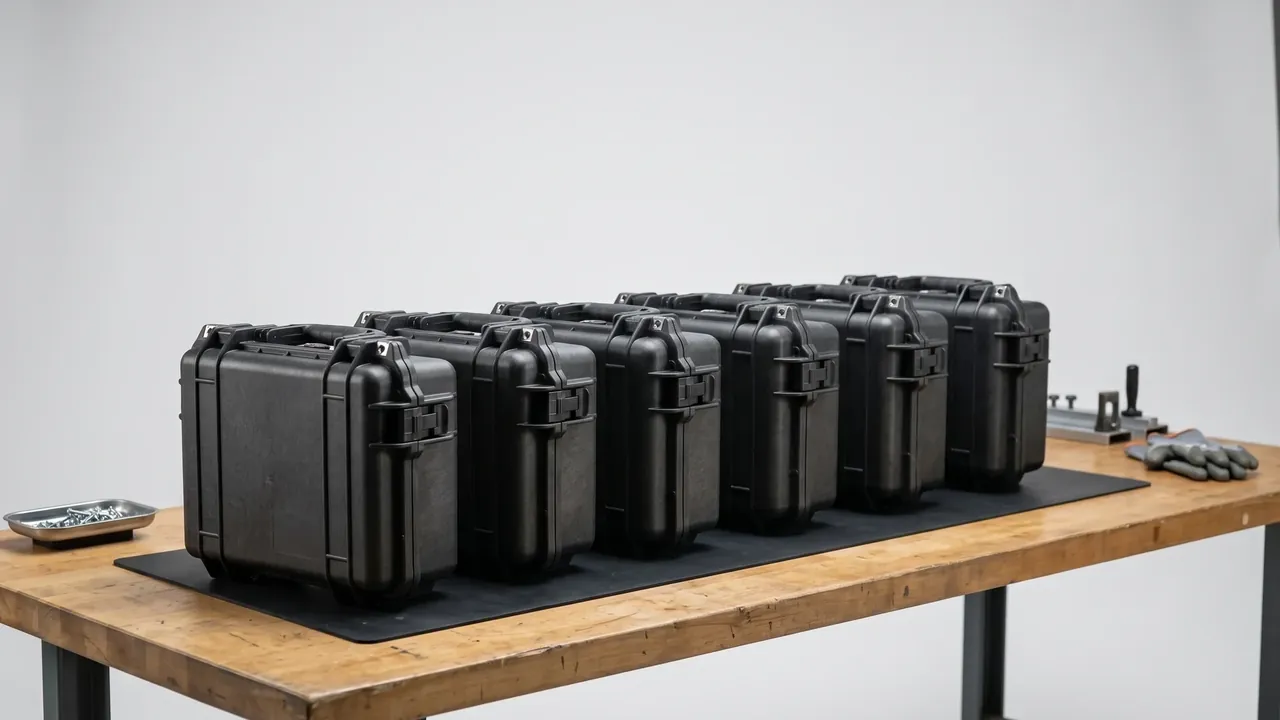
Quick answer: A transport case's capacity is not its cavity volume but the result of a three-stage reduction: theoretical volume × space utilization × weight limit, whichever binds first. That also defines the optimization path — set the cavity aspect ratio from how contents arrange (not the reverse), size the external dimensions to divide pallet/container modules, and check the fill rate against the weight limit. The three parameters pull against each other; optimization means finding their intersection. This article covers container loading logic only.
Table of contents
- Capacity is not volume: the three-stage model
- Space utilization: arrangement decides
- Weight limits: the overlooked ceiling
- Loading efficiency: pallet and container modules
- A worked example
- FAQ
1. Capacity is not volume: the three-stage model
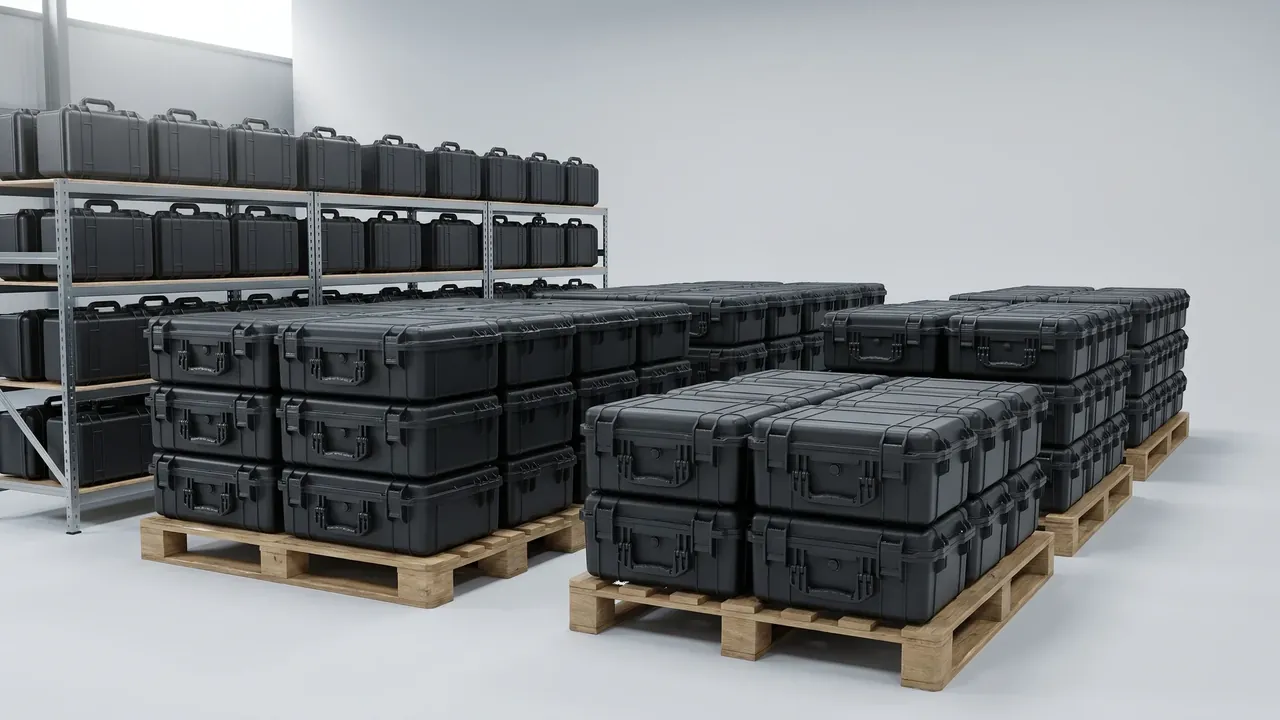
The volume on a spec sheet is theoretical. Usable capacity passes three reductions:
- Theoretical volume: cavity length × width × height;
- Space utilization: the share actually occupied after arranging contents (straight rows, staggered rows and compartment trays all differ);
- Weight limit: the maximum loaded weight allowed by the dynamic rating (payload).
Usable capacity = whichever of the three binds first. Most procurement disputes come from looking at volume and ignoring the weight limit — dense contents hit the weight ceiling long before the case is full, and buying bigger is pure waste.
2. Space utilization: arrangement decides
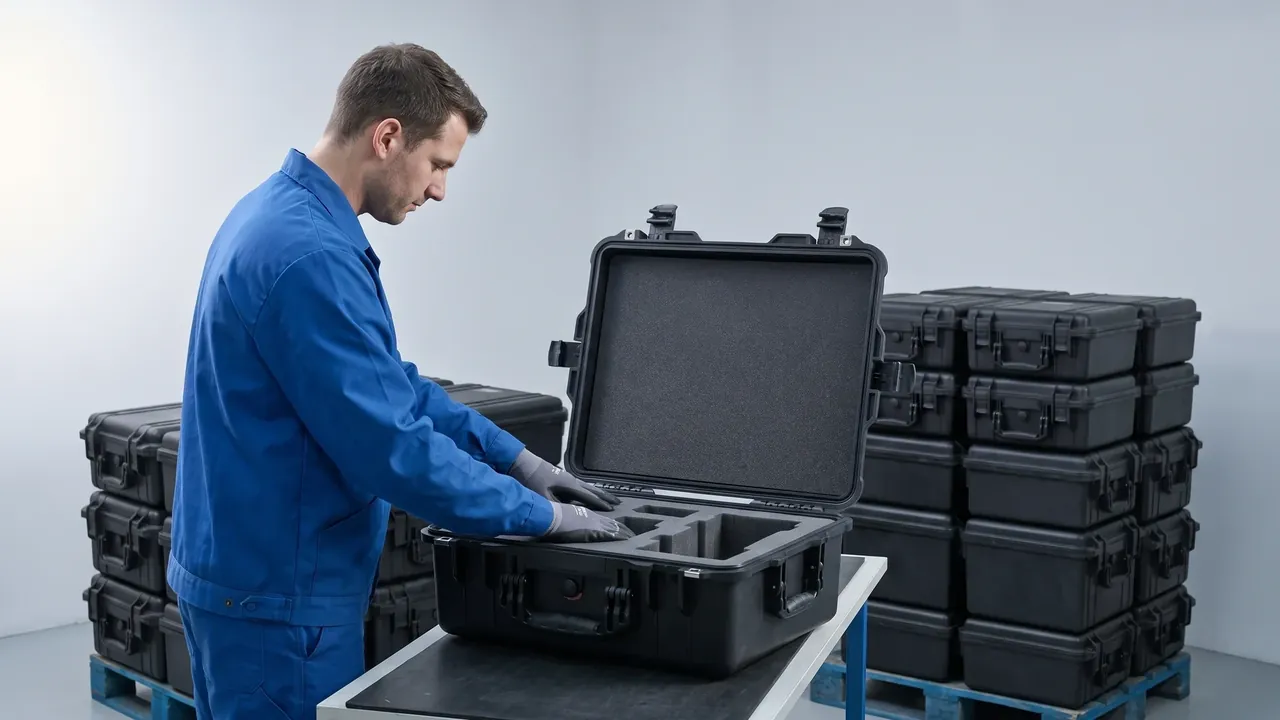
Utilization is set by arrangement, and the spread is large:
| Arrangement | Utilization character | Best for |
|---|---|---|
| Straight rows | Simple to compute, visible corner waste | Regular shapes, fast loading |
| Staggered rows | Notable gain for cylindrical items | Cylindrical contents |
| Compartment trays | Utilization yields to positioning and counting | Item-level management |
| Bulk + foam | Lowest utilization, best cushioning | Precision, fragile contents |
When designing the cavity, fix the optimal arrangement first, then derive the cavity aspect ratio. Deriving the box first and forcing the arrangement in typically loses 10–20 percentage points of utilization — real freight money at volume.
3. Weight limits: the overlooked ceiling
The weight limit is not one number but the minimum of three:
- Container dynamic rating: the loaded weight the structure allows;
- Handling limit: safe single-person weight, or forklift/hoist ratings;
- Transport limit: carrier limits per pallet unit or per container.
Any one of the three can bind before volume does. The correct fill-rate calculation takes the smaller of weight utilization and volume utilization — a case type reaching near 100% on both is well matched; 90% on one and 50% on the other signals a mismatch.
4. Loading efficiency: pallet and container modules
The final layer is divisibility of external dimensions into logistics modules:
- Pallet module: common pallets are 1200×1000 mm or 1200×800 mm; the case footprint should divide cleanly, leaving no dead corners;
- Container internal dimensions: fixed internal sizes mean external height sets the stacking layers — a 1 cm height difference can cost a full layer;
- Loading simulation: before a volume shipment, verify "cases per pallet × pallets per container" by layout simulation; order quantities follow the number, not intuition.
One often-missed detail: pallet-mounted or not — integrated base skids consume stack height but eliminate pallet assembly; compare total loading efficiency across the whole chain, not the case alone.
5. A worked example
An abstract demonstration (illustrative figures, not product data):
- Contents: regular boxed items, 0.2×0.15×0.1 m each, 1.2 kg;
- Theoretical volume: candidate cavity 0.6×0.4×0.3 m = 72 L; straight rows fit 5×2×3 = 30 units, 83% utilization;
- Weight check: 30 × 1.2 kg = 36 kg + case 6 kg = 42 kg, below dynamic rating and manual handling limits → pass;
- Module check: external 0.65×0.45 m; two side by side = 1.3 m exceeds a 1.2 m pallet → not divisible; change case type or pallet orientation;
- Conclusion: volume and weight pass, modules fail — switch to a 0.6×0.4 m external, trading a little cavity for loading efficiency and lower total cost at volume.
Conclusion
Transport case capacity is the intersection of volume, utilization and weight limits, while loading efficiency comes from arrangement and logistics modules together. The correct order: fix the cavity from the optimal arrangement, check against the three weight ceilings, then converge external size on pallet/container modules. Walk those three steps and most "capacity anxiety" turns out to be a mismatch between case type and contents.
This article covers container loading logic only. It does not cover anything about the handling of items placed inside.
Related Reading
- Cartridge Transport Box: What Transport Packaging Requires
- Artillery Shell Box: Load Ratings, Stacking and Dimensions
- Ammunition Packing Box Standards and Export Packing Requir…
Related Products
- 8 Series — Gun Cases; Military Equipment Cases; Camera Equipment Cases; Drone Cases; Watch Cases; Knife Cases; First Aid Cases; Electronics Equipment Cases
- WL8-2812 PP Gun Case — model WL8-2812
- All protective cases and toolboxes: 7 series, 158 models