

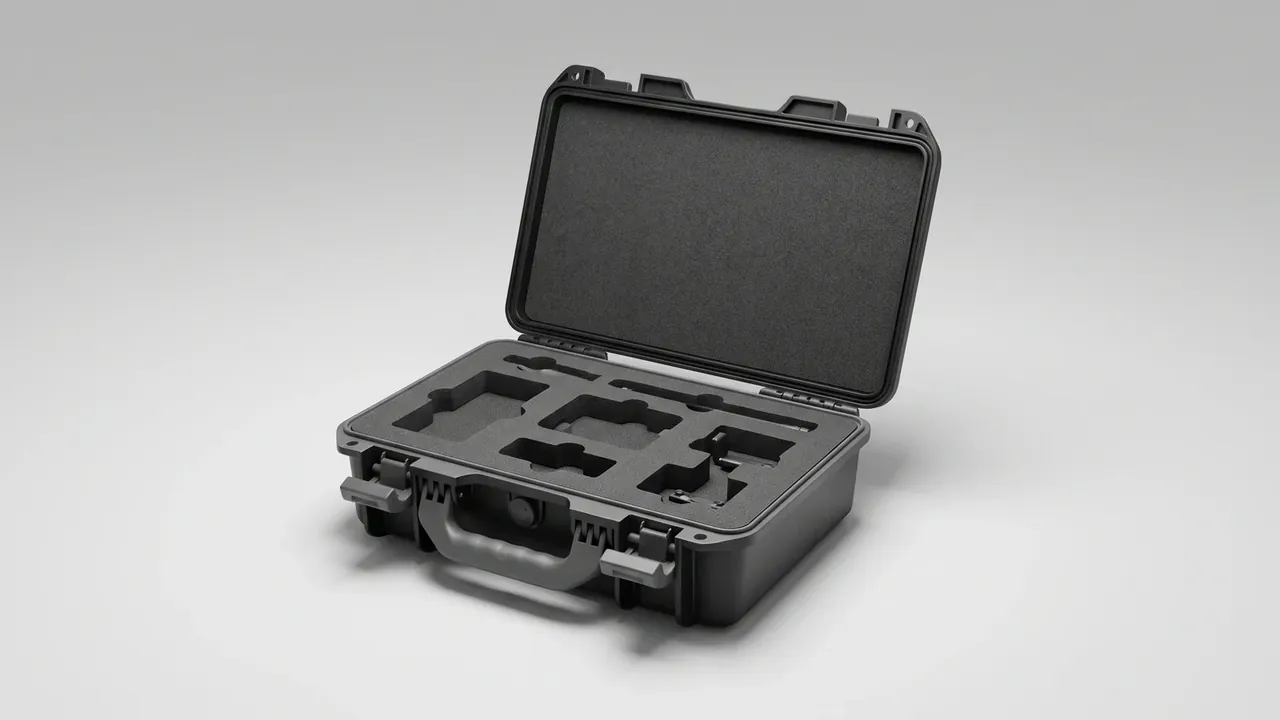
Quick answer: A case fleet stays countable with an eight to twelve character number per shell, a twelve field register and a ten percent monthly sample each quarter.
Table of contents
- Where Case Asset Management Starts: Writing the Number
- Putting the Number on the Case: Label Material and Placement
- The Register: Twelve Fields and How to Fill Them
- Counting: Quarterly Full Count, Monthly Sample
- Closing the Gap: Four Moves Against Loss
- FAQ
1. Where Case Asset Management Starts: Writing the Number
A case that leaves the store four times a year passes a dozen pairs of hands, and by year two nobody can tell two identical shells apart. Case Asset Management begins with one decision: give every shell a string that resolves to exactly one object. Eight to twelve characters is the working range: shorter runs out of numbers, longer never gets copied right.
| Segment | Characters | Rule | Example |
|---|---|---|---|
| Type | 2 | One code per shell family: hand, roto-moulded, tool | HC |
| Year | 2 | Last two digits of the intake year | 26 |
| Serial | 4–6 | Continuous within the year, never reused | 00417 |
| Check | 1 | Weighted sum, remainder of division by eleven | 3 |
A department prefix is the usual mistake: departments reorganise every three years and one rename orphans everything before. Type codes survive that. Serials restart each January, and a retired number stays sealed for twenty-four months.
The check digit earns its place. Weight the leading characters and keep the remainder of division by eleven: one mistyped digit is caught at entry about ninety percent of the time.
2. Putting the Number on the Case: Label Material and Placement
A label is the only physical copy of the number, and the wrong substrate erases it in three years. Laser marking burns 0.05–0.1 mm into the shell and cannot be renumbered without scrapping the case. A 0.5 mm aluminium plate on Ø3 mm rivets survives stacking when the rivet head sits no more than 0.5 mm proud. Weather-resistant PET costs least and holds three to five years outdoors.
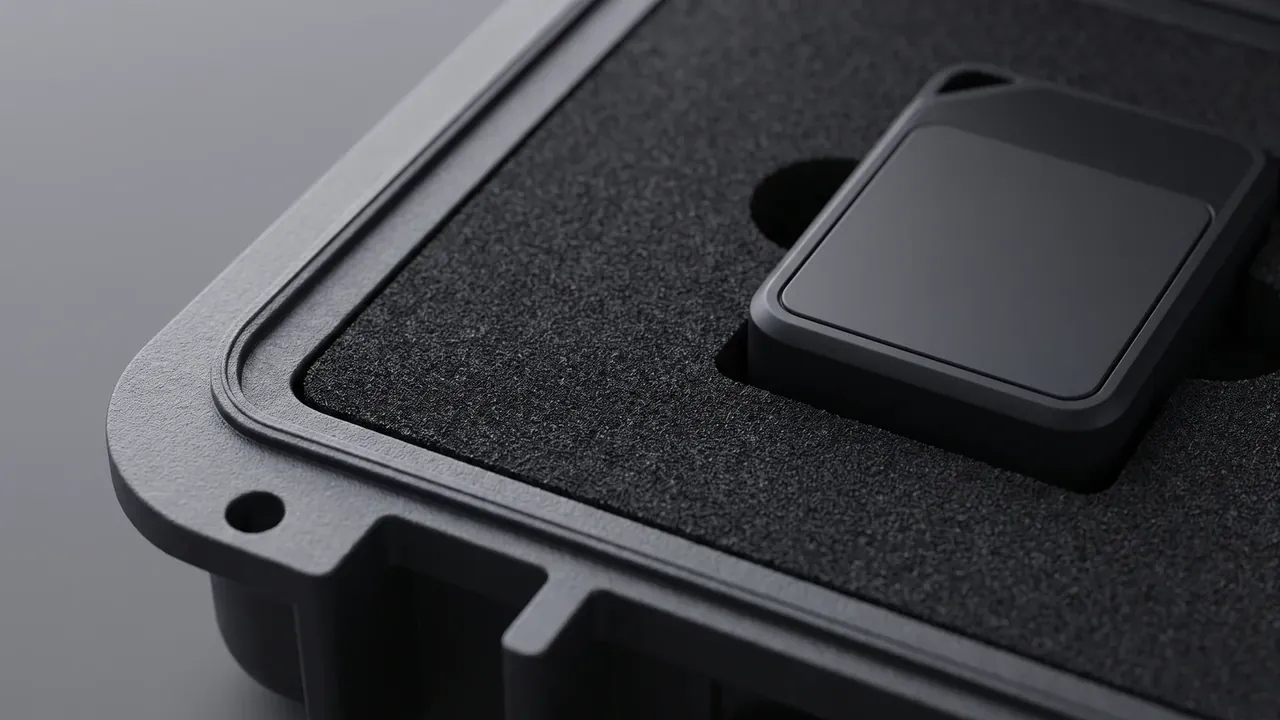
Two constraints govern placement. Keep the label at least 20 mm from any edge, because edges take the first hit in a drop and a label at the rim curls within three months. Keep it out of the 3 mm band on either side of the sealing face as well, since adhesive over the lip compresses unevenly and the leak starts there.
A 0.3 mm QR module is the practical floor. At 300 dpi with error correction level M the code still reads with a corner missing, and 0.2–2 m is the comfortable window. Fifty cycles between -30 °C and 70 °C cut acrylic peel strength by roughly thirty percent, which is why outdoor fleets move to marking or rivets.
| Method | Process | Outdoor life | Renumber | Fits |
|---|---|---|---|---|
| Laser marking | 0.05–0.1 mm surface burn | Life of the shell | No | Owned fleets, stable numbers |
| Riveted plate | 0.5 mm aluminium, Ø3 mm rivets | Over 5 years | Re-rivet | Heavy loads, frequent stacking |
| Weather-resistant PET | Acrylic adhesive plus laminate | 3–5 years | Overlay | Rental pools, changing numbers |
| In-mould label | Formed with the part | Life of the shell | No | Volume runs, single model |
3. The Register: Twelve Fields and How to Fill Them
A register with forty columns looks thorough and sits half empty within a season. Twelve fields is roughly what a team maintains for years: four that identify, four that describe state, four that assign responsibility. Everything else joins through the number.
| Field | Type | Rule |
|---|---|---|
| Asset number | 9 characters | Matches the label exactly, check digit included |
| Shell specification | Option | Outside length × width × height in mm |
| Material | Option | PP, HDPE or engineering compound |
| Intake date | Date | The day it passed inspection, not the order date |
| Location | Text | Zone, row, tier, hyphenated |
| State | Option | In store, on loan, in repair, inspection, retired |
| Holder | Text | Staff number only, no names |
| Issue date | Date | Written by the outbound scan |
| Return date | Date | Written by the inbound scan |
| Repair order | Link | Same key, one to many |
| Gasket change | Date | Most recent seal replacement |
| Retirement record | Text | Date plus disposal reference |
Four of those fields must write themselves. Issue and return dates come from the scan, and state follows location. A register kept by hand drifts about twenty percent within three months.
Repair and gasket history belong under the same key, because that is where Case Asset Management becomes a cost per shell. A case with two gasket changes and one latch repair in five years gives a buyer three line items at the next tender. Field definitions belong in the work instruction too, or half the team types in repair and half sent away.
4. Counting: Quarterly Full Count, Monthly Sample
Two rhythms, not one: a full count every quarter and a random ten percent every month. The full count answers whether the total is right, the sample whether the records still are. At five hundred cases, two people scanning at 8–15 s each finish in about three hours, while handwriting numbers at 40–60 s each takes eight hours and a second pass of entry.
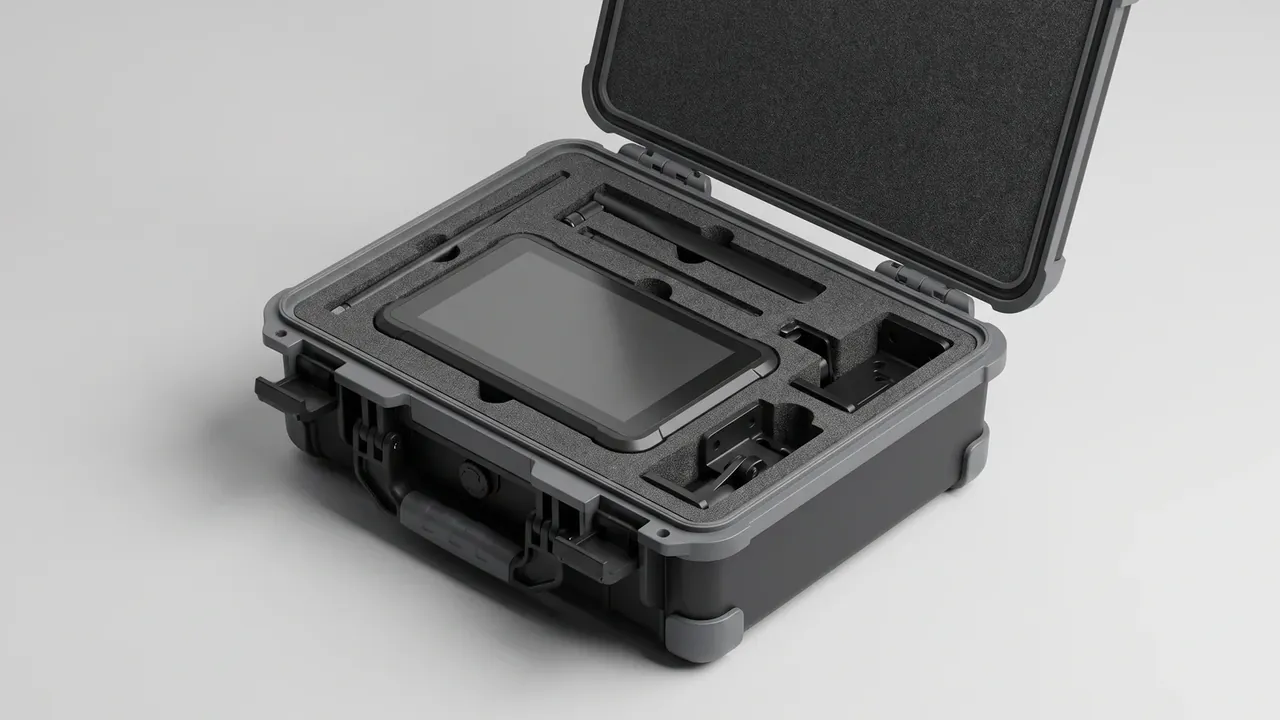
Walk the same route every time, zone then row then tier. A fixed route makes a skipped position surface on the next pass and trims walking distance by roughly thirty-five percent.
Freeze transfers before counting. Cases already out are offset against open loan slips rather than counted, and the tolerance sits at 0.5 percent, which allows two discrepancies in five hundred before the count is reworked. Cache the scans and sync later; a dead corner of the warehouse should not swallow an afternoon.
5. Closing the Gap: Four Moves Against Loss
Fleets without numbers and a register lose two to five percent a year, and the same fleets drop below one percent once numbering, register and count all run. The difference is not shell quality, it is whether anyone wrote down when the case was last seen.
Four moves, in order. Write-off waits for three consecutive misses; the first two stay on the books. Write-off needs two signatures, the custodian and the asset controller. A retired number stays sealed for twenty-four months. The quarterly review then asks which zone the discrepancies cluster in, and a zone that fails twice gets a storage change before anyone is blamed.
Label wear belongs on the count sheet too. A missing corner over 3 mm, more than twenty percent of modules gone, or three failed scan attempts means replacement on the spot, with the old number retired and linked to the new one.
RFID deserves arithmetic first. Beside a metal shell the tag detunes and read range falls from three to five metres to 0.3–0.8 m, which rules out a portal read.
Conclusion
Number, register, count: the order matters more than the software. A nine character string makes the label possible, twelve fields make the register survivable, and a quarterly count with a monthly ten percent sample holds records and reality within half a percent. Case Asset Management pays back in the second year, when someone can say where a shell is and what it has cost. Cutting per-case checking from 40–60 s to 8–15 s while pushing loss below one percent is where those curves cross.
This article discusses only the container (case body) side of specifications and design intent, and does not cover any handling, loading or use of the contents.
Related Reading
- Spare parts stocking list: which hardware to keep
- Warranty negotiation points and claim boundaries
- Latch hardware: material, pull strength and service life
- Case repair and spare parts: replace the part or the case
Related Products
- 8 Series — Gun Cases; Military Equipment Cases; Camera Equipment Cases; Drone Cases; Watch Cases; Knife Cases; First Aid Cases; Electronics Equipment Cases
- WL8-2812 PP Gun Case — model WL8-2812
- All protective cases and toolboxes: 7 series, 158 models