

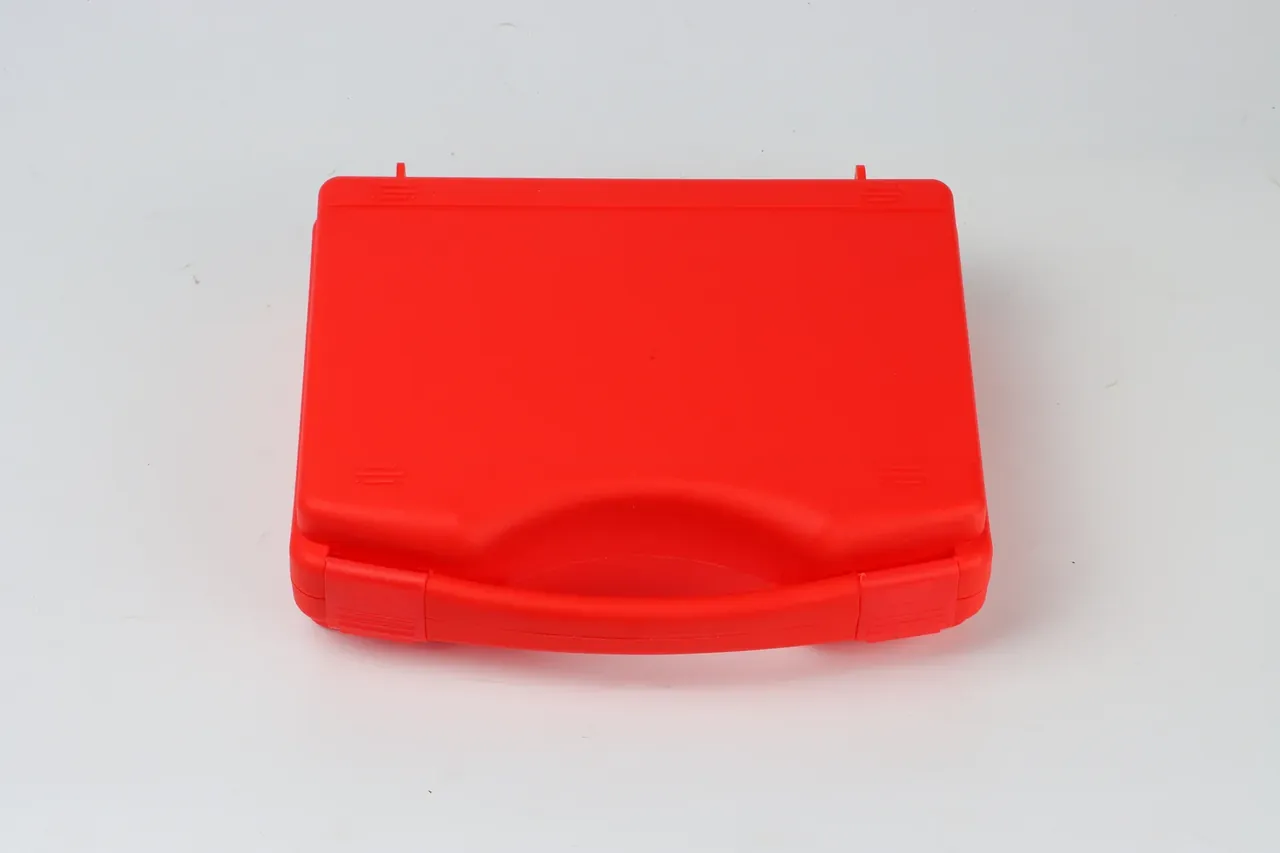
Quick answer: One case profile shipped four ways needs four routines — loading order for a full sea box, low tare for air freight, a barrier layer at damp sites, a reuse count for returns. Case Export Packaging then lands between $0.8 and $2.6 a case.
Table of contents
- Full Loads: The Assembly Order for Case Export Packaging
- Air Freight Top-Ups: Packing Small, Frequent Batches
- Damp Sites: Which Layer Carries the Barrier
- E-commerce Returns: The Cost Ledger for Reusable Packaging
- Five Field Mistakes and How to Correct Them
- FAQ
1. Full Loads: The Assembly Order for Case Export Packaging
Loading day goes wrong on sequence, not on strength. Pallets go down two abreast, and the crew builds from the nose toward the doors, bracing each row with timber as it lands. Work from the doors inward and the last row has nothing behind it: one shunt and the row folds. That unbraced row sits behind most Case Export Packaging damage in full loads.
A 40 ft high cube runs 12.03 m by 2.35 m, so 2 rows of 1200 x 1000 mm pallets sit ten deep — 20 positions. Three people fill one in 95 minutes. Two fixings do the work: airbags at 0.2 bar, and 50 x 100 mm timber between pallet and wall, 2 pieces per row.
| Workflow | Carton | Cushioning | Barrier | Cost per case |
|---|---|---|---|---|
| Full sea load | 5-wall AB carton | Corner board | 6 wraps of film | $1.6 |
| Air top-up | 5-wall carton, 2 PET straps | 10 mm EPE | 1 PE bag | $0.8 |
| Damp site | 5-wall BC carton | 20 mm EPE wrap | 0.12 mm foil | $2.6 |
| Returns | Reusable hard case | Removable insert | Case seal | $0.65 per trip |
2. Air Freight Top-Ups: Packing Small, Frequent Batches
Air freight bills on volumetric weight, so Case Export Packaging on this lane gets thin. A 15 mm plywood crate weighs 9 kg empty; a 5-wall carton with 2 PET straps drops to 3.4 kg, and 12 units cut 67 kg of chargeable weight, about $260 at $3.90 per kg.
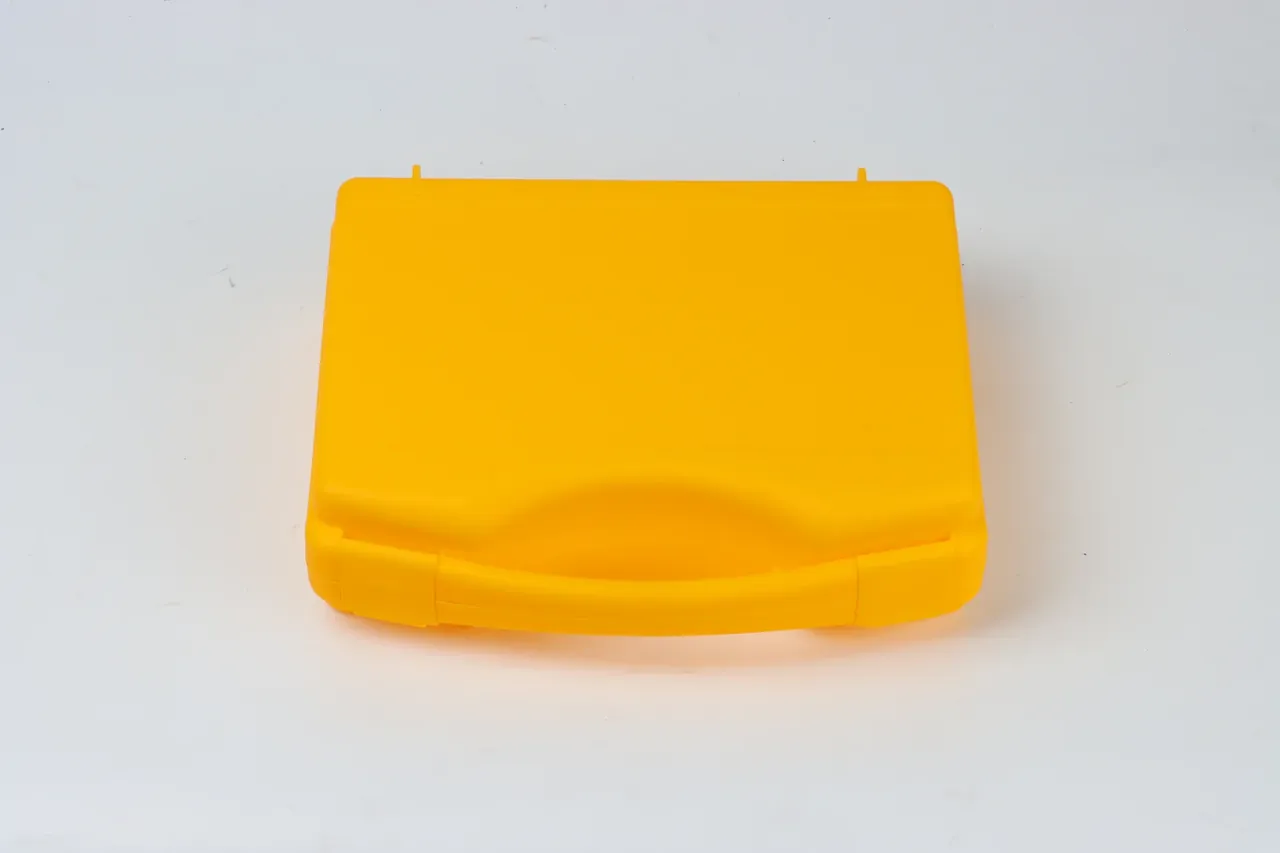
Fix the sequence so speed holds: PE bag, 5 mm foam on 4 corners, case into carton, 10 mm EPE top and bottom, seal, 2 straps — 4 minutes a case, 30 an hour with 2 people. A 1.2 m pallet built to 1.58 m takes 4 layers of 6 and leaves 30 mm for the net.
3. Damp Sites: Which Layer Carries the Barrier
Salt air and humidity arrive together at a coastal site, so Case Export Packaging there adds 1 barrier: a 0.12 mm foil bag, heat sealed, 250 g of desiccant inside, air pressed out first. Residual oxygen under 5% holds condensation off for 30 days.
Day and night swing 12 C, so the dew point lands on metal hardware. Layer order beats bag thickness: foil inside the foam keeps the bag dry while the foam takes the moisture; foil outside keeps the foam dry but punctures, and corners need 3 mm board.
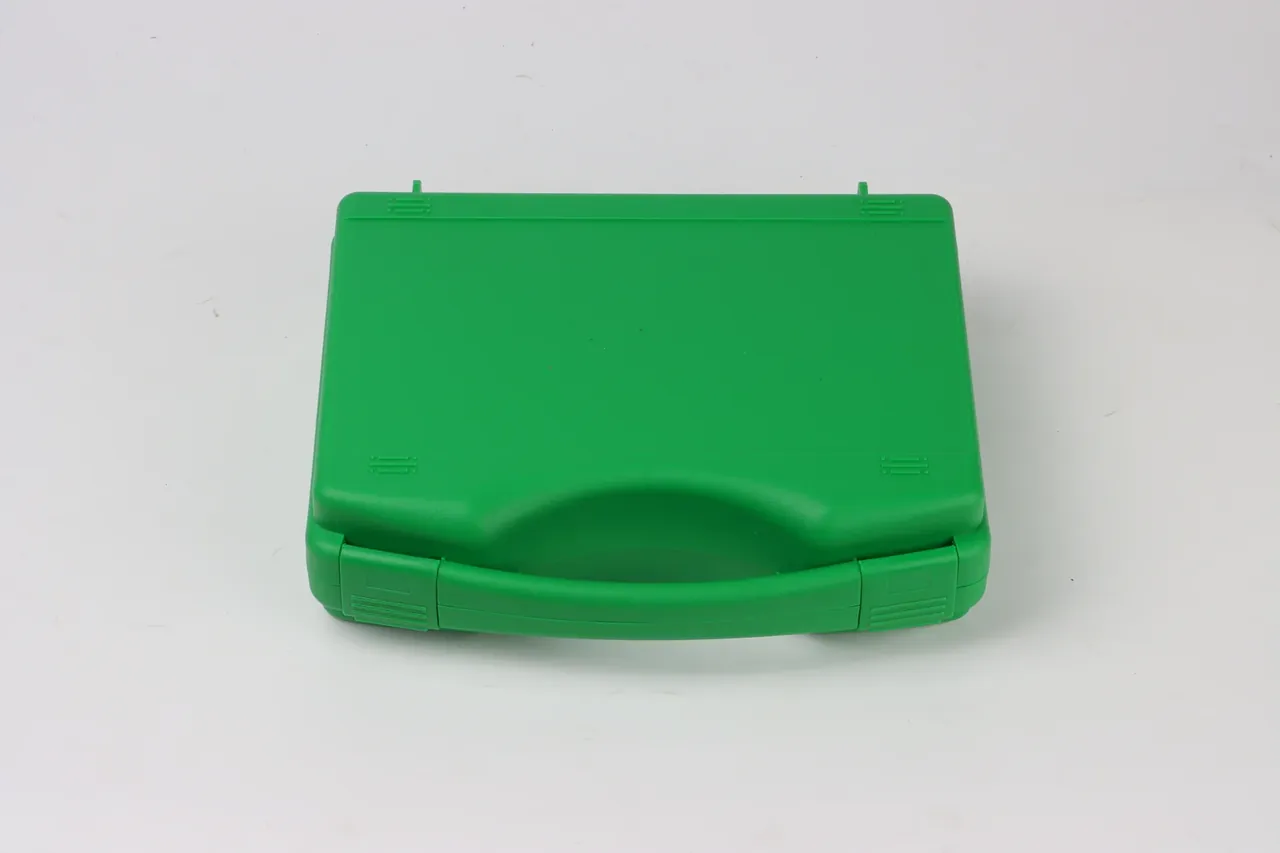
One seal is the usual shortcut. Two seals at 8 mm take leakage from 12% to 1%; a single seal across a crease reaches 20%.
4. E-commerce Returns: The Cost Ledger for Reusable Packaging
Returns are costed per trip, not per unit. A reusable case at $2.50 over 4 trips is $0.65 a trip; a one-way carton is $0.70 plus $1.70 of labour each time a return is repacked. At 800 shipments a month and a 6% return rate that is 48 returns: $642 monthly one-way against $520 reusable, $1,460 a year.
The return leg is the line most quotes leave out. Loose-load freight back runs $0.55 a case, or $0.85 when the truck is not full; across 800 cases that adds about $440. Include it and reusable Case Export Packaging moves from $0.65 to $1.20 a trip.
Three design lines keep a case in circulation: 2 stainless hinge pins, 4 catches, an insert that lifts out in one piece. Unpacking should take 40 seconds and repacking 70; past 90 seconds crews reach for the one-way carton.
5. Five Field Mistakes and How to Correct Them
What matters on the floor is not whether packaging exists but whether the routine was followed. Two crews on one specification differ threefold on damage rate, and the gap sits in actions. These 5 fill most Case Export Packaging rework tickets, at $0.40 to $6 each.
| Step | Action | Time per case | Failure point |
|---|---|---|---|
| Bagging | Case into PE bag, opening down | 15 s | Opening up, water enters |
| Corner foam | 5 mm foam on 4 corners | 40 s | Only 2 corners done |
| Cartoning | Case centred, even gaps | 25 s | Shifted to one side |
| Sealing | H-seal plus 2 straps | 60 s | Buckle on an edge |
| Mistake | Result | Cost | Correction |
|---|---|---|---|
| Label on a vertical edge | Barcode dead after film | $0.40 | Flat face, 20 mm in |
| Insert on 1 face only | Paint chipped on a drop | $6 | Full 6-face wrap |
| Desiccant under the load | Condensation unchanged | $3.70 | Hang at the top |
| Strap over an edge | Carton crushed | $1.70 | 3 mm board underneath |
| Mixed profiles on one pallet | Load rebuilt at the airport | $4.30 | One profile per pallet |
Correct in cost order: label first, insert second, carton last. A label takes 3 minutes, an insert 20, and a carton means rebuilding a $1.70 box.
Conclusion
Four workflows, four ledgers: full loads save loading hours, air freight saves chargeable kilos, damp sites save rework, returns save trips. Put both numbers into the work instruction, and Case Export Packaging stops failing on execution after the specification was already right.
This article discusses only the container (case body) side of specifications and design intent, and does not cover any handling, loading or use of the contents.
Related Reading
- How three-layer export packing is built
- Loading and unloading moves for transit cases
- Packaging setups for cold-chain medical cases
Related Products
- 8 Series — Gun Cases; Military Equipment Cases; Camera Equipment Cases; Drone Cases; Watch Cases; Knife Cases; First Aid Cases; Electronics Equipment Cases
- WL8-2812 PP Gun Case — model WL8-2812
- All protective cases and toolboxes: 7 series, 158 models