

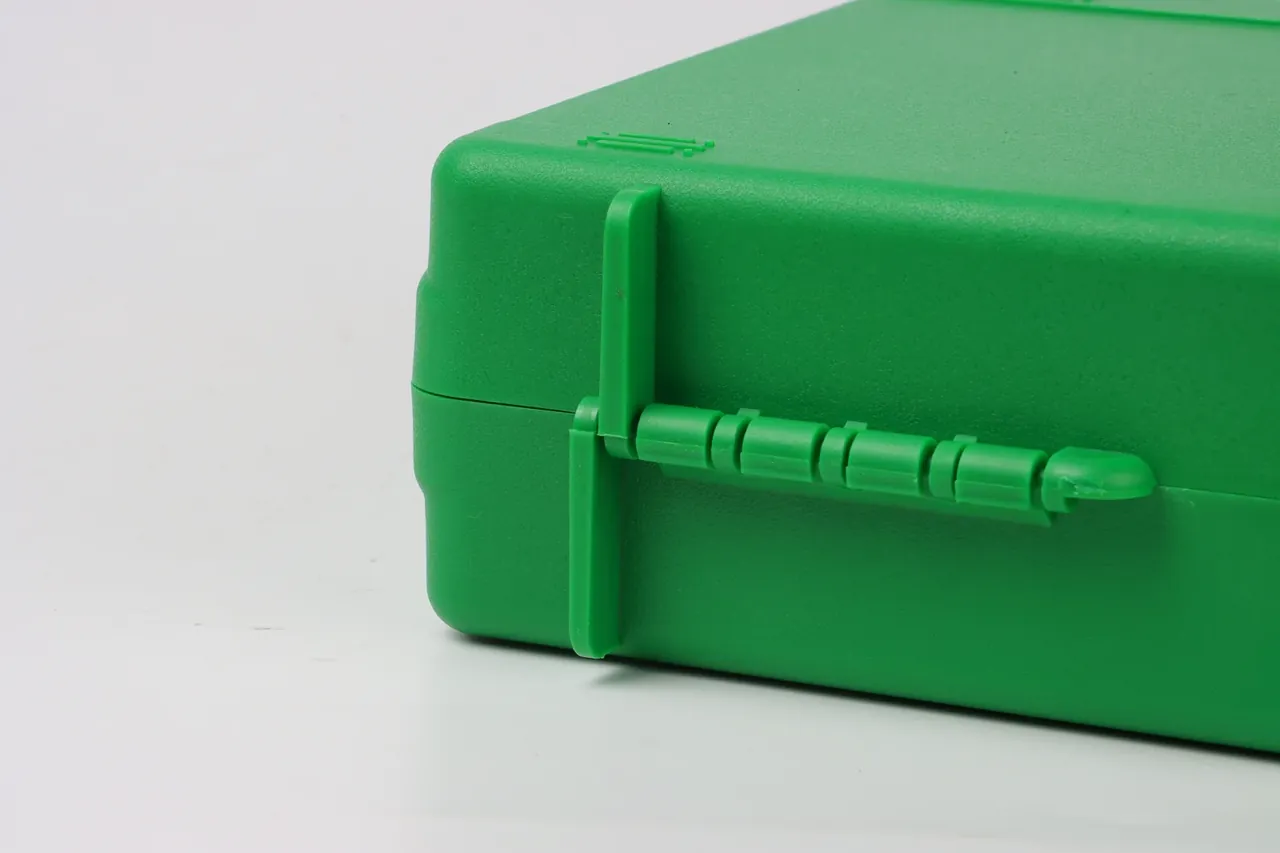
Quick answer: Case export packaging specs run backwards from the load: a 26 kg payload stacked 4 high sets a 520×380×210 mm interior, a 2.5 mm deflection limit sets a 3.2 mm wall, and 900 N of gasket force sets 4 latches.
Table of contents
- Case Export Packaging Specs: From Load to Wall
- Deriving the Interior from Load and Stacking
- Wall Thickness from a Deflection Limit
- Sharing Force Across Latches, Hinges and Gasket
- Prototypes and Four Validation Tests
- FAQ
1. Case Export Packaging Specs: From Load to Wall
In April 2026, 620 export cases shipped to Rotterdam at 26 kg, 4 high. Three lids arrived dished 6 mm: the wall was set at 2.6 mm for 23 °C, ignoring a 35% modulus drop at 60 °C. The rework rebuilt 5 links, from load to interior to span to wall to rib pitch.
| Link | Input | Output | This run |
|---|---|---|---|
| Load | Payload, stack | 104 kg | 26 kg, 4 high |
| Interior | Volume, clearance | 520×380×210 mm | 41.5 L |
| Wall | Span, deflection | 3.2 mm | 2.5 mm limit |
| Ribs | Wall, sag | 90 mm pitch | 6 mm high |
Shipping space closes the envelope first: 2.35 m of container width fits 4 cases at 536 mm, 10 rows along 5.9 m.
2. Deriving the Interior from Load and Stacking
The first gate is the human hand: two workers top out at 26 kg, and 30 kg needs a helper panel. Gross weight is pinned at 27.5 kg, leaving 26 kg of payload.
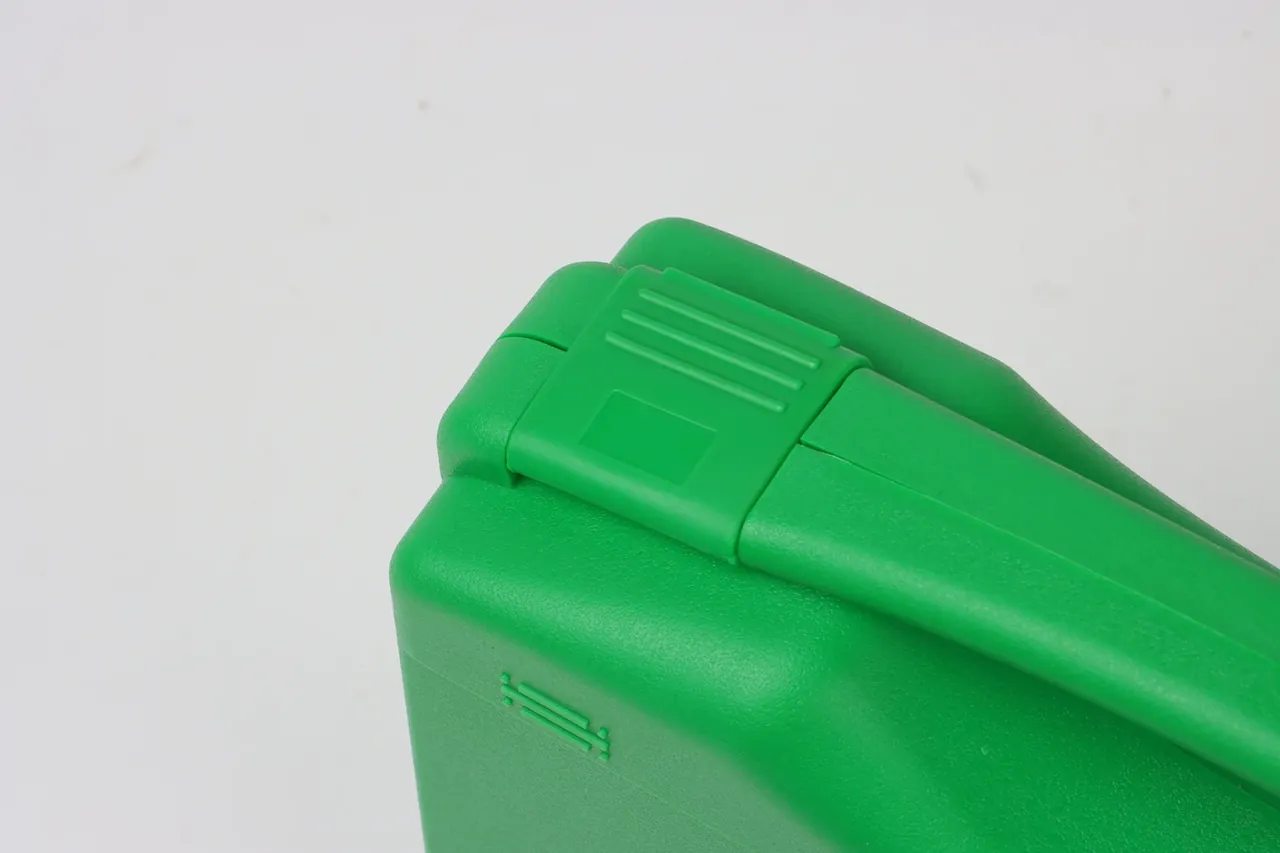
A net 41.5 L rounds into 520×380×210 mm with diagonals within 2 mm. Depth follows the stack: 4 cases plus pallet reach 1.86 m and clear a door header.
Stack height, not volume, fixes bottom compression. The lowest case carries 3 above plus itself, or 104 kg.
The 8 mm per side is 3.2 mm wall, 6 mm rib and 1.2 mm draft. Interior tolerance is ±1.5 mm; past that, cases touch at points and corners spall.
The envelope lands at 536×396×226 mm: 4 per layer, 20 over 5 layers, 550 kg against a 1000 kg pallet rating.
3. Wall Thickness from a Deflection Limit
Treat the lid as a simply supported plate: 520 mm span, 26 kg uniform, 2.5 mm allowed. A 2.6 mm sheet sags 2.1 mm at 23 °C, then 3.4 mm at 60 °C, missing by 36%.
At 3.2 mm the second moment rises 1.9 times and sag returns to 1.8 mm, leaving 0.7 mm. That costs 0.4 kg per case, 248 kg across the run.
Ribs do the rest: pitch from 120 mm to 90 mm removes 0.6 mm of sag for 0.15 kg, at 6 mm height and a 2 mm root radius.
| Wall | Rib pitch | Sag at 60 °C | Payload |
|---|---|---|---|
| 2.6 mm | 120 mm | 3.4 mm | 18 kg |
| 3.2 mm | 90 mm | 1.8 mm | 26 kg |
| 3.8 mm | 75 mm | 1.2 mm | 34 kg |
4. Sharing Force Across Latches, Hinges and Gasket
A gasket squeezed 30% pushes back with 900 N, all of it on the latches. Four take 225 N each against a 320 N rating, a factor of 1.42; two take 450 N and pop open within 2 hours of sea vibration.
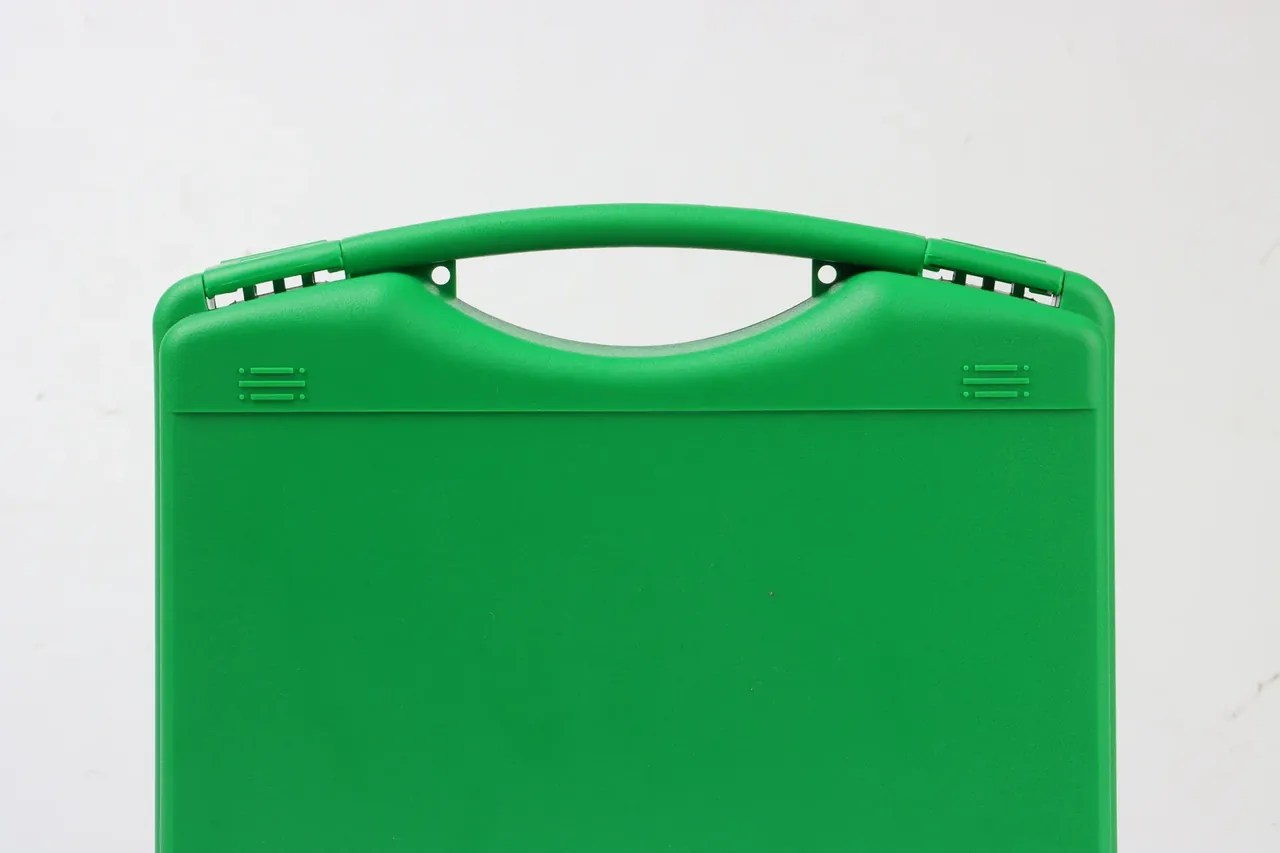
Two hinges run 5 mm pins in 304 stainless, and 8000 cycles must add no more than 0.2 mm of play. The hinge boss is 1.5 mm thicker than the latch boss.
The gasket is 8 mm EPDM, and 30% squeeze means 2.4 mm. A 0.05 mm feeler should not enter past 10 mm around the rim; 20 mm means that stretch leaks.
Hardware takes 48 hours of salt spray, and red rust means new plating. The handle is rated 40 kg static, 1.5 times payload.
5. Prototypes and Four Validation Tests
Three hand samples take 7 days, machined from 3.2 mm sheet with bonded ribs: good for dimensions and latch feel, silent on blow-moulded wall spread.
Four tests follow: a 1.2 m drop, 10 drops across one corner, three edges and six faces; a 480 kg stack for 24 hours with sag capped at 2.5 mm; 30 minutes of rain at 100 mm per hour; 4 hours each at -25 °C and 60 °C.
Tooling is 2 cavities at 180 t clamp and a 95 s cycle: 300 pieces minimum, ¥86,000, 35 days. The first shot reads 5 wall points, thinnest above 2.9 mm.
| Test | Method | Pass line | If failed |
|---|---|---|---|
| Drop | 1.2 m, 10 drops | No structural crack | 0.4 mm at corners |
| Stack | 480 kg, 24 hours | Sag ≤2.5 mm | Pitch to 75 mm |
| Rain | 30 min, 100 mm/h | No trace inside | More squeeze |
| Thermal | -25 °C and 60 °C | Shift ≤0.3% | More draft |
Conclusion
The 620 cases ended at a 520×380×210 mm interior, 3.2 mm wall, 90 mm rib pitch and 4 latches at 320 N, with lid sag of 1.8 mm after rework. A spec is a chain from 26 kg of payload to 3.2 mm of wall, and any skipped link returns at goods-in inspection. Write all 5 into the drawing and case export packaging becomes reproducible.
This article discusses only the container (case body) side of specifications and design intent, and does not cover any handling, loading or use of the contents.
Related Reading
- Three-layer export packing and its material list
- Shock case cushioning and wall values
- Instrument case dividers and panel cutouts
Related Products
- 8 Series — Gun Cases; Military Equipment Cases; Camera Equipment Cases; Drone Cases; Watch Cases; Knife Cases; First Aid Cases; Electronics Equipment Cases
- WL8-2812 PP Gun Case — model WL8-2812
- All protective cases and toolboxes: 7 series, 158 models