

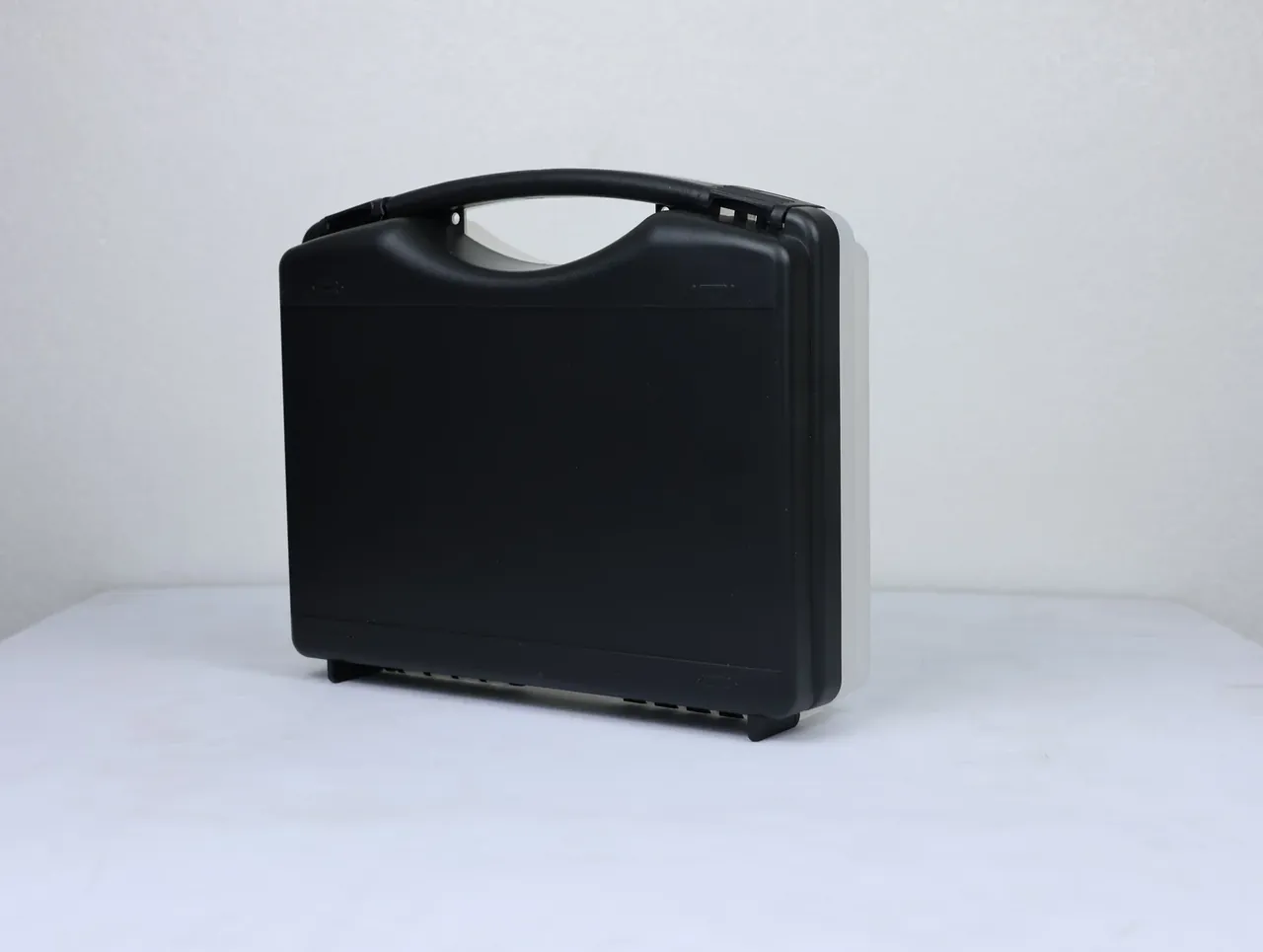
Quick answer: Price gaps on moulded cases rarely come from resin grade. They come from the tonnage, mould ownership and changeover time behind a case injection molding machine. Put those three on the enquiry sheet and a 4.2 yuan spread narrows to 1.1 yuan.
Table of contents
- Four quote lines the machine decides
- Clamp force and mould ownership: the cost of quoting low
- MOQ is arithmetic, not policy
- The 25 days of lead time that will not compress
- Audit and sample retention: three documents, two signatures
- FAQ
1. Four quote lines the machine decides
Two plants quoted the same 420×320×180 mm case with a 3.0 mm wall, and the gap was 4.2 yuan a unit. Neither changed resin: one ran a 630-tonne press at a 52-second cycle, the other a 530-tonne press at 61 seconds.
Nine seconds a unit is 20 hours of press time a year at 8,000 units a month, enough for an urgent run of 2,000.
| Quote line | Usual wording | What to pin down | Common trap |
|---|---|---|---|
| Resin | 6.8 yuan a unit | Grade, regrind share, 1.9 kg shot | 20% regrind billed as virgin |
| Press time | Folded into unit price | Tonnage, cavities, cycle seconds | Slow cycle recovered later |
| Mould | 80,000 yuan up front | Who owns it, over how many units | Charge continues after payback |
| Secondary work | 0.8 yuan a piece | Trimming, printing, assembly | Quoted late, added at volume |
Resin moves least. Press time plus mould amortisation can reach 70% of the price, so a supplier handed only a drawing can cut tonnage, stretch the cycle and recover the margin downstream. Four numbers on one sheet make the ranking obvious and stop a quiet resin swap three months in.
2. Clamp force and mould ownership: the cost of quoting low
Clamp force follows projected area. A 420×320 mm face covers 0.134 m², and 40 MPa cavity pressure needs 5,360 kN, or 536 tonnes. A case injection molding machine quoted at 530 tonnes looks close enough; the missing 6 tonnes appear as a 0.25 mm flash ring opposite the gate.
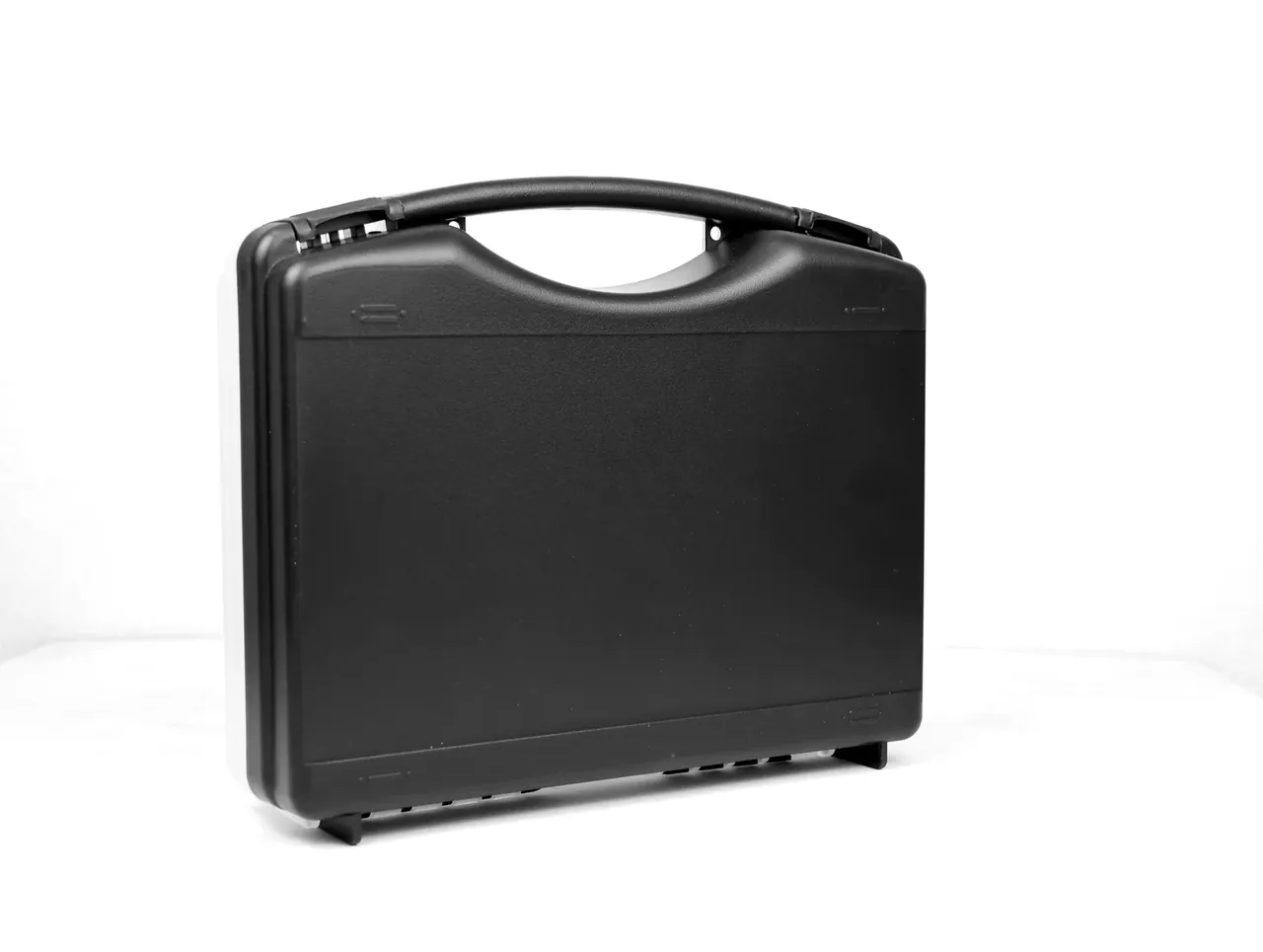
Flash is not cosmetic. Trimming climbs from 12 seconds to 26 seconds a unit, secondary work costs 0.6 yuan more, and the parting face work-hardens until it sinks.
Ownership slips past buyers more easily than tonnage. One clause lets the 80,000 yuan tool travel with the order; the other leaves it with the supplier, and leaving costs a second tool.
| Tonnage | Projected area | Typical inside size | Time per unit | Sensible batch |
|---|---|---|---|---|
| 250 t | 0.06 m² | 300×220×120 mm | 28 s | from 500 |
| 530 t | 0.13 m² | 420×320×180 mm | 52 s | from 3,000 |
| 780 t | 0.20 m² | 520×380×230 mm | 74 s | from 5,000 |
Over-quoting costs too. A 780-tonne press on a 300 mm case turns a 38-second job into 54 seconds and adds 0.7 yuan. Fit beats headroom, and that argument belongs in the enquiry.
3. MOQ is arithmetic, not policy
A plant with 2 case injection molding machines spends 4 hours on a changeover and 200 shots flushing colour. Spread over an order, 3,000 units is the break point: below it, changeover eats 12% of scheduled time and the price climbs 18%.
Reaching 500 units is possible on other terms:
- Shared tooling: one bolster, swappable inserts, two small cases to a changeover.
- Queue position: accept a 15-day wait and take a gap in the schedule.
- Colour: natural instead of white saves the 200-shot flush.
MOQ is amortised changeover under another name. Six presses quoting from 1,000 units is slack, not generosity; one press quoting from 300 folds changeover into a line the buyer cannot see.
4. The 25 days of lead time that will not compress
Of a 45-day lead time, 25 go to tooling: 12 for the bolster, 9 for cavity machining, 4 for polish and assembly. The other 20 split into 3 trial rounds at 6 days, 12 days of production, 2 days of packing.
Only overlaps compress. Staging material during the second trial round returns 3 days; running nights takes production from 12 days to 9 for 0.15 yuan a unit.
| Stage | Days | Who waits | Room to move |
|---|---|---|---|
| Bolster and cavity | 25 | Tool room | 8% fee, down to 19 days |
| Trials | 6 | Case injection molding machine | 3 rounds to 2 |
| Production | 12 | Press schedule | Night shift, down to 9 days |
Payment terms move price more than lead time. Thirty percent down with 60-day terms carries about 1.8% financing cost; 100% up front buys another 2%.
5. Audit and sample retention: three documents, two signatures
An audit needs three documents: press specification sheet, material certificates, a full first-article report. The sheet should carry tonnage, screw diameter and 780 g maximum shot; "large machine" is not a specification.
Two signatures matter too. Seal the trial sample, sign off the first production part, keep 3 samples for 12 months.
A 96-hour run tests the stability of the case injection molding machine, not one part's accuracy. Wall thickness between part 1 and part 900 has to stay inside 0.08 mm; drift beyond that points at the screw or the temperature control.
Conclusion
Buying moulded cases means buying scheduling slack: the right tonnage, a mould whose ownership is written down, an MOQ that matches the presses on the floor, all of it decided by the case injection molding machine.
This article discusses only the container (case body) side of specifications and design intent, and does not cover any handling, loading or use of the contents.
Related Reading
- Deriving wall thickness from tonnage
- Audit and sampling checklist for a moulding plant
- What to check after a press stops
Related Products
- 8 Series — Gun Cases; Military Equipment Cases; Camera Equipment Cases; Drone Cases; Watch Cases; Knife Cases; First Aid Cases; Electronics Equipment Cases
- WL8-2812 PP Gun Case — model WL8-2812
- All protective cases and toolboxes: 7 series, 158 models