

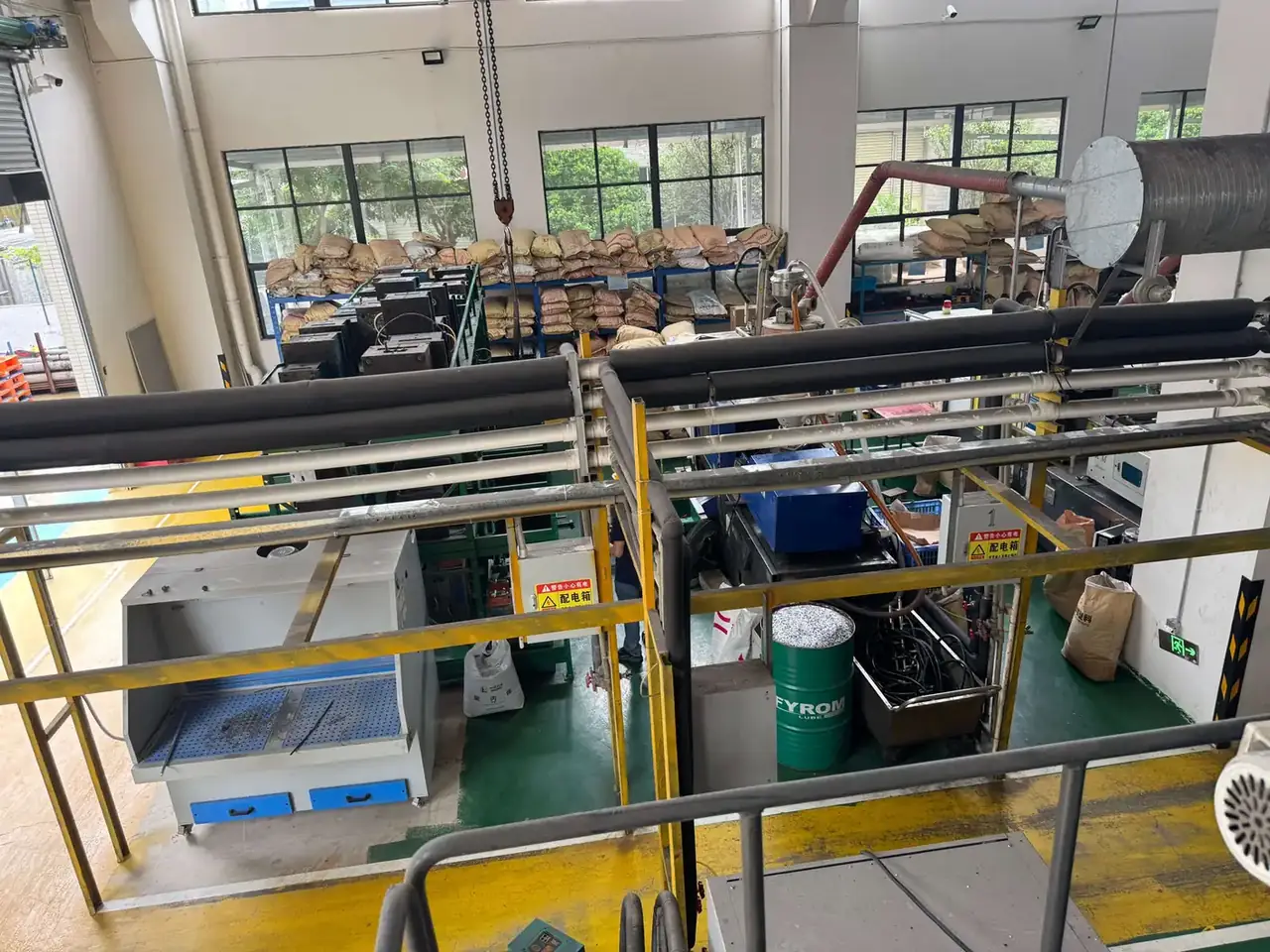
Quick answer: Size a Case Injection Molding Machine from three sums, not from part weight. A 600 by 400 mm body projects 2,400 square centimetres; at 350 kg per square centimetre that needs 840 tonnes, and a 15 percent margin lifts it to 966. Cavity count scales the same area, and the screw must fill the part at 30 to 70 percent of rated shot.
Table of contents
- Where Case Injection Molding Machine Tonnage Starts
- Clamp Force: Projected Area Times Cavity Pressure
- Cavity Count Against Platen Size
- Screw: L/D Ratio and Shot Weight
- Tonnage Table and Selection Margin
- FAQ
1. Where Case Injection Molding Machine Tonnage Starts
Tonnage has three entry points, and skipping one oversizes or undersizes the press. Clamp force comes from projected area times cavity pressure. Cavity count multiplies that area and grows the mould base with it. The screw decides whether the barrel fills the part in one shot. Take the largest, apply 1.15.
Part weight enters none of them: two 3 kg bodies can differ 60 percent in clamp demand. A 600 by 400 by 230 mm polypropylene body, 3 mm wall, 3.6 kg, one cavity returns 966 tonnes, an 800 by 650 mm tie-bar clearance and a 4.5 kg shot. Clamp governs, so a 1,000 tonne Case Injection Molding Machine with 810 by 760 mm between tie bars and a 90 mm screw.
2. Clamp Force: Projected Area Times Cavity Pressure
Projected area is the largest parting-line outline, length times width; ribs and draft add nothing.
Cavity pressure follows wall and flow ratio. Here the melt runs 540 mm from gate to far edge through 3 mm, a ratio of 180, calling for 350 kg/cm². A 2.2 mm wall raises pressure to 450; a 5 mm wall needs 300.
Short clamp shows as flash along mid-length, farthest from the gate and where the platen deflects most. Excess clamp crushes 0.02 mm vents.
| Wall | Flow ratio | Pressure (kg/cm²) | Tonnes per 1,000 cm² |
|---|---|---|---|
| 3.0 mm | 180 | 350 | 403 |
| 5.0 mm | 110 | 260 | 299 |
3. Cavity Count Against Platen Size
Extra cavities buy labour, not tonnage. A 320 by 220 mm lid covers 704 square centimetres, 283 tonnes in one cavity; four cavities need 1,133 tonnes and force 1,250. Clamp per part barely moves.
Spacing drives the base: 70 mm between cavities at 230 mm depth, an 8 mm runner, 220 mm more width. Platen clearance follows base plus 50 mm each side.
| Cavities | Projected area | Tonnage | Tie-bar clearance | Output |
|---|---|---|---|---|
| 1 | 704 cm² | 283 tonnes | 500 by 450 mm | 1 part |
| 2 | 1,408 cm² | 567 tonnes | 650 by 550 mm | 2 parts |
| 4 | 2,816 cm² | 1,133 tonnes | 900 by 800 mm | 4 parts |
4. Screw: L/D Ratio and Shot Weight
Polypropylene runs on a 20:1 to 22:1 general screw, compression ratio 2.5 to 3.0. Below 18:1 the melt mixes poorly; above 24:1 residence time yellows thick corners first.
At 3.6 kg with a 1.25 factor the barrel must deliver 4.5 kg, so rated shot should sit between 6.4 and 15 kg, keeping fill at 30 to 70 percent of capacity. Above 70 percent, holding pressure cannot pack out sink.
An 80 mm screw holds 4.4 kg and fills 82 percent, leaving no reserve. A 90 mm screw holds 5.6 kg, drops fill to 64 percent, and base sink marks disappear. Diameter follows part weight on any Case Injection Molding Machine.
5. Tonnage Table and Selection Margin
Tonnage tracks the square of the outline: double the dimensions, quadruple area and tonnage, while weight only triples.
| Body size | Projected area | Part weight | Tonnage | Machine |
|---|---|---|---|---|
| 300 by 200 by 150 mm | 600 cm² | 0.9 kg | 242 tonnes | 280 tonnes |
| 600 by 400 by 230 mm | 2,400 cm² | 3.6 kg | 966 tonnes | 1,000 tonnes |
| 800 by 500 by 300 mm | 4,000 cm² | 6.2 kg | 1,610 tonnes | 1,800 tonnes |
The 1.15 factor covers oil warming from 30 to 50 degrees Celsius, worth 8 percent of system pressure, platen sag of 0.05 mm, and a masterbatch that shifts flow.
One shop ran the body on an 800 tonne press and fought 0.12 mm flash mid-length; gauge conversion showed 760 tonnes. The same mould on a 1,000 tonne Case Injection Molding Machine cut flash to 0.02 mm.
Conclusion
The sums: 2,400 square centimetres times 350 kg/cm² gives 840 tonnes, a 1.15 factor sets 1,000, and a 90 mm screw keeps a 3.6 kg body at 64 percent of shot. Run them before signing, and the Case Injection Molding Machine will be neither starved nor wasteful.
This article discusses only the container (case body) side of specifications and design intent, and does not cover any handling, loading or use of the contents.
Related Reading
- Injection Molded Protective Case
- Rotomolding vs Injection Cases
- Injection Molding Parts Case Study
- Custom Case Mould Cost Analysis
Related Products
- 8 Series — Gun Cases; Military Equipment Cases; Camera Equipment Cases; Drone Cases; Watch Cases; Knife Cases; First Aid Cases; Electronics Equipment Cases
- WL8-2812 PP Gun Case — model WL8-2812
- All protective cases and toolboxes: 7 series, 158 models