

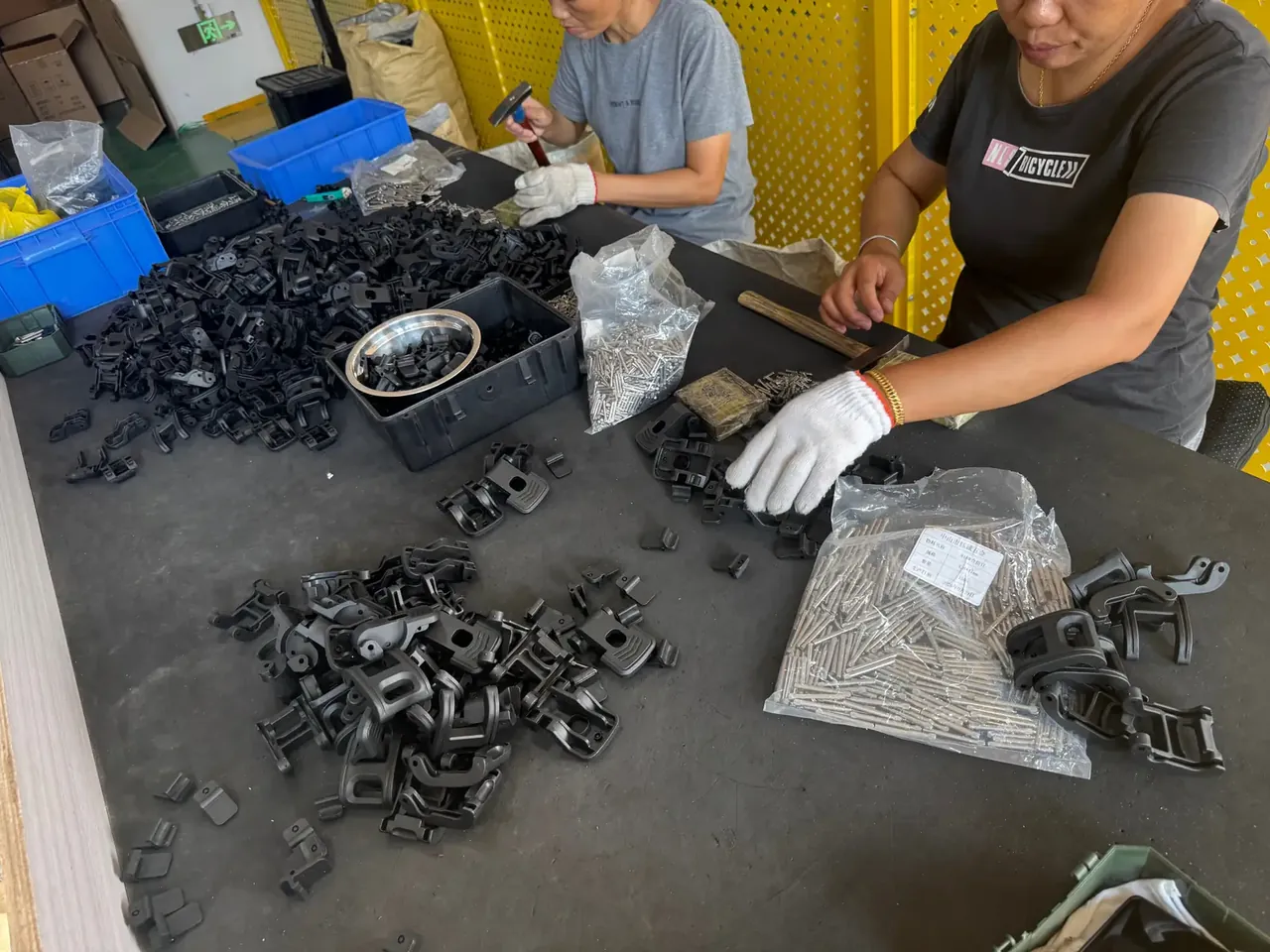
Quick answer: A Case Mould is accepted against a table that names each item, gauge and limit: 0.05 mm on critical cavity dimensions, 0.08 mm flatness at the split line, HRC 48 to 52 in the cavity steel, and 0.6 MPa held for 30 minutes in the water circuit.
Table of contents
- Why a Case Mould Needs a Decision Table
- First-Article Dimensions: Three Faces, One Band
- Steel and Heat Treatment: Hardness, Soundness, Stamp
- Judging a Failure: Grades and Sequence
- FAQ
1. Why a Case Mould Needs a Decision Table
Most arguments at acceptance are not about how strict the standard is. They are about who measures, where, and what counts as a pass. One side reads the mouth width with a caliper and calls it oversize, the other waves a coordinate report that says it is inside the band, and both are right, because the basis was never fixed.
A decision table has to answer the question on its own, so every row carries four things: item, reference document, gauge and limit. Drop one and the row turns into a discussion.
| Item | Reference | Gauge | Limit |
|---|---|---|---|
| Critical cavity dimensions | Drawing and 3D model | CMM | plus or minus 0.05 mm |
| Split line flatness | Assembly drawing | Straight edge and feeler | within 0.08 mm |
| Cavity surface | Appearance sample | Roughness tester | Ra 0.4 |
| Cavity steel hardness | Heat treatment report | Leeb hardness tester | HRC 48 to 52 |
| Water circuit seal | Assembly drawing | Hand pump | 0.6 MPa for 30 minutes |
| Open and close action | Action sheet | Manual, dial gauge | 500 cycles, no binding |
Sign it before the steel is cut.
2. First-Article Dimensions: Three Faces, One Band
Take five first articles and let them rest four hours at 23 C plus or minus 2 C. Parts straight off the press are still shrinking, and that skipped wait is the first reason a re-measure never matches.
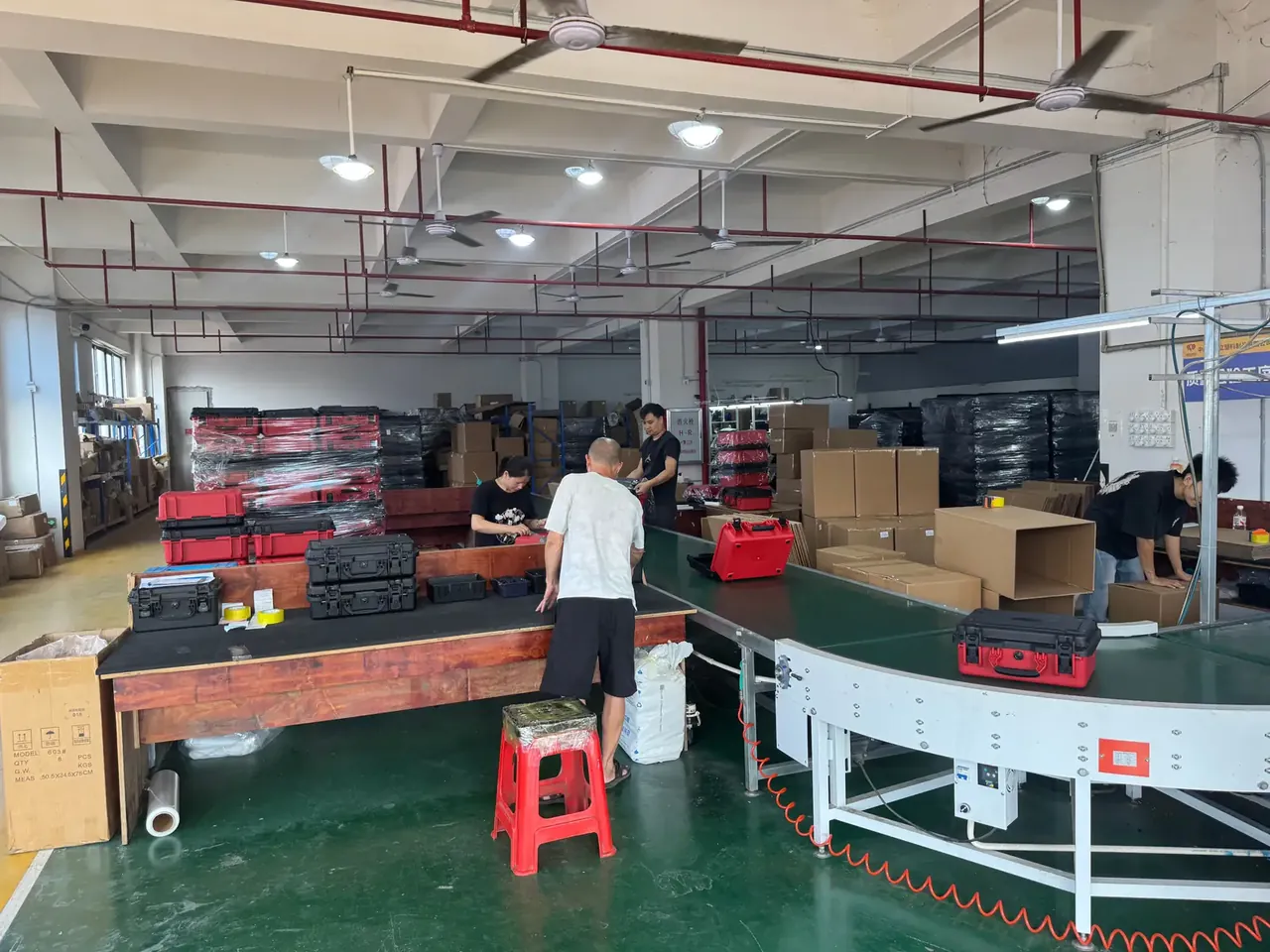
Three faces always get measured: length and width at the mouth, both diagonals on the base, and height plus wall section on the sides. The mouth is the assembly datum, and a diagonal difference beyond 0.3 mm means the lid will not seat. The base shows warp, so each corner goes on a surface plate and any feeler that enters gets a number. The sides show wall uniformity, and a 0.15 mm spread between three points on one side means the area opposite the gate is starved. Mark the three points on the part and number them in the record.
A failed first article is not a signal to start cutting steel. Seven out of ten failures come from measurement: short soak, a caliper that was never zeroed, or a datum taken on flash. Re-measure before touching the Case Mould.
3. Steel and Heat Treatment: Hardness, Soundness, Stamp
Hardness is the item most often promised by word of mouth. A cavity specified at HRC 48 to 52 that measures 44 is not rare, and a soft cavity starts rounding its corners around shot thirty thousand, long after the point where it could be fixed.
| Item | Method | Location | Limit |
|---|---|---|---|
| Cavity steel hardness | Leeb tester | Three points on the cavity side | HRC 48 to 52, spread within 2 |
| Internal soundness | Ultrasonic test | Four corners and centre | Indication under 2 mm equivalent |
| Stamp and heat number | Visual check | Mould base side | Grade and heat match the mill certificate |
| Heat treatment record | Document review | Supplier file | Quench and temper curves complete |
Read three points, average them, and look at the spread. A spread beyond 2 HRC points means uneven treatment, and that Case Mould wears first in production. Soundness work belongs at the four corners, where stress concentrates; an indication above 2 mm equivalent should not be accepted.
A stamp that does not match the certificate is the commonest trick and the easiest to catch. If the base reads 718H and the certificate belongs to another grade, no later process will repair it.
4. Judging a Failure: Grades and Sequence
Rejecting a Case Mould is not about sending it back; it is about giving the disposition a basis. At acceptance we grade findings three ways: A affects sealing or safety, B affects assembly and life, C affects appearance only.
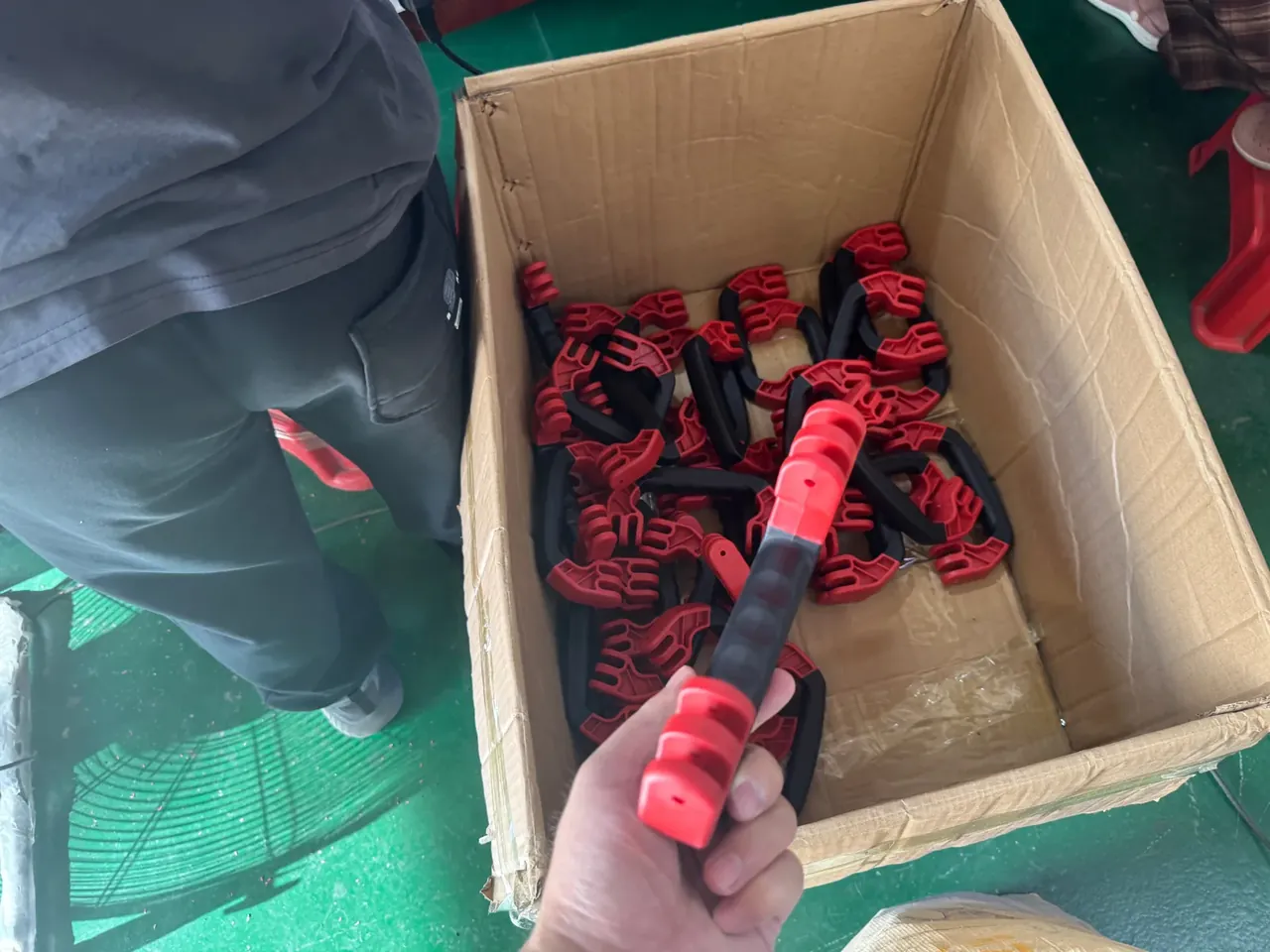
Once graded, the order is fixed:
- Isolate and red-tag; nothing from that batch goes to trial
- Raise a nonconformity sheet with item, measured value, limit and sampling point
- Re-measure with a second gauge and a second operator
- Set the disposition: rework, concession or replacement
- After rework, repeat every item against the original limit before release
Concession has an edge. Grade C appearance issues can be negotiated; grade A sealing and safety items cannot. A Case Mould on that edge usually has a design margin problem, not a machining one.
Conclusion
Accepting a Case Mould means turning verbal agreement into records a second party can re-check: a table that names item, gauge and limit, a first article measured cold on three faces, a steel check covering hardness, soundness and stamp, and a failure path graded A, B or C through isolation, re-measure, disposition and re-check. With those records in place, an argument lands on numbers instead of people. Only then does a Case Mould earn the word repeatable.
This article discusses only the container (case body) side of specifications and design intent, and does not cover any handling, loading or use of the contents.
Related Reading
- How a case production SOP is written
- Drop and seal clauses for airdrop cases
- Pallet and case marking requirements
Related Products
- 8 Series — Gun Cases; Military Equipment Cases; Camera Equipment Cases; Drone Cases; Watch Cases; Knife Cases; First Aid Cases; Electronics Equipment Cases
- WL8-2812 PP Gun Case — model WL8-2812
- All protective cases and toolboxes: 7 series, 158 models