

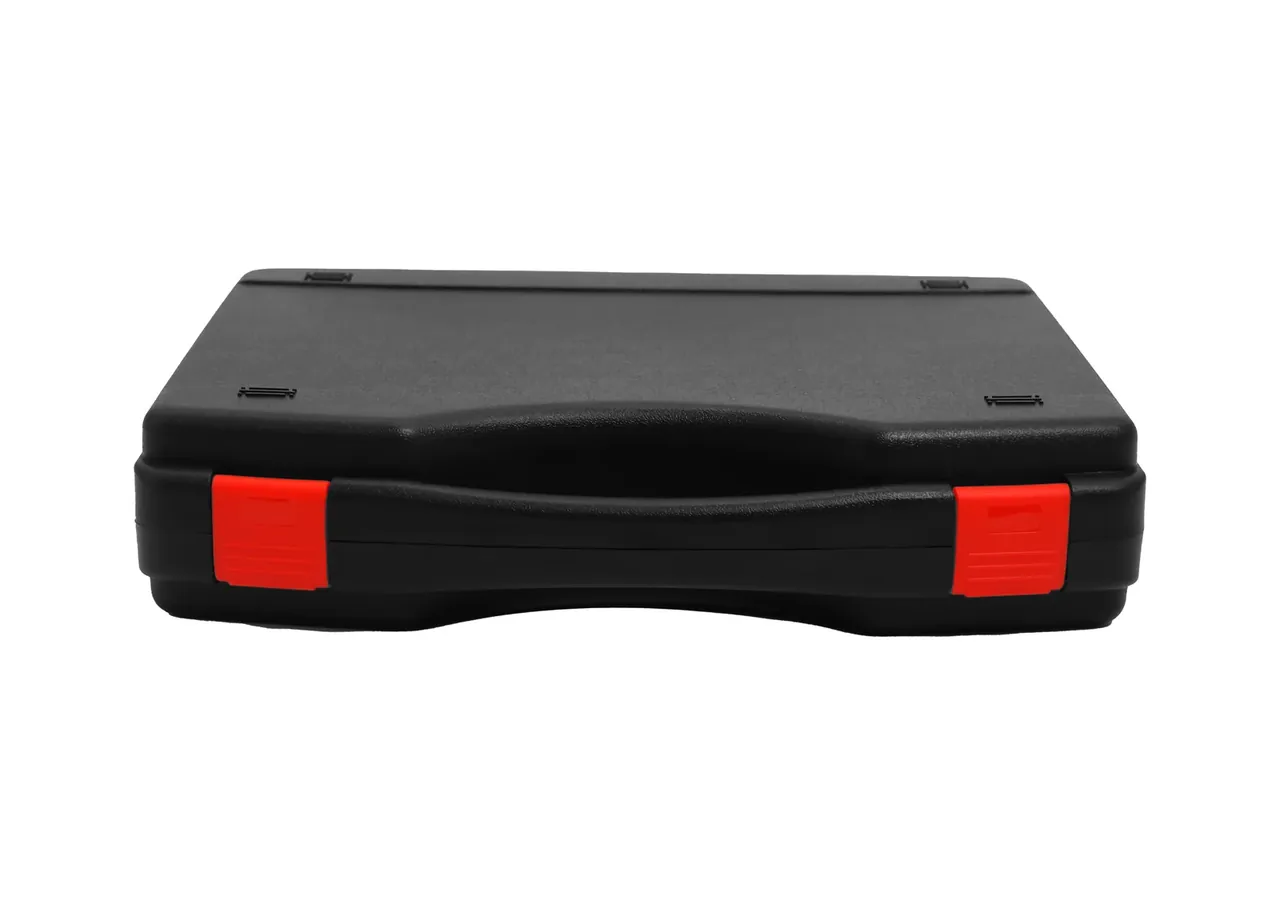
Quick answer: Case After-Sales Abroad runs on a 6-part kit at 2% of units in service, a three-tier fault clock and remote video lifting first-time fix to 85%.
Table of contents
- What goes into the spare-parts kit
- A 2% stocking ratio and how to layer it
- Fault tiers and the warranty line
- Remote guidance and the cost of return freight
- FAQ
1. What goes into the spare-parts kit
A standard kit holds 6 parts: 2 latches, 1 gasket, 1 pressure valve and 2 hinge pins. Those four families sit where field failures concentrate, and across a 3-year record they cover 80% of claims. The remaining 20% — cracked shells, broken wheels, lifted liner — go back for repair or ship as single parts.
Size decides freight more than unit price does. A full kit weighs 0.35 kg in a 240×180×60 mm carton, so it moves as a small parcel at 12–25 USD a shipment. For Case After-Sales Abroad that freight line usually outweighs the part cost itself.
A kit prices at 28–45 USD on 2026 quotes, packaging and label included.
Code SKUs as model-part-version, for example CX-60-LATCH-B, and pool spare barcodes apart from finished-case barcodes. One cross-scan sends the wrong variant to site, and a single return costs more than 5 kits.
| Part | Name | Qty | Failure covered | Price |
|---|---|---|---|---|
| CX-LATCH | Latch assembly | 2 | Will not clamp, cracked | 8–14 USD |
| CX-GASKET | Gasket | 1 | Leak, no compression | 10–16 USD |
| CX-VALVE | Pressure valve | 1 | Blocked equalisation | 5–9 USD |
| CX-PIN | Hinge pin | 2 | Stiff lid, pin loss | 2–4 USD |
| CX-KIT | Carton and label | 1 | — | 3–5 USD |
2. A 2% stocking ratio and how to layer it
Case After-Sales Abroad stocks spares at 2% of units in service. At 5,000 units that is 100 kits, 600 pieces; against a 4.5% annual failure rate it covers roughly 225 pieces a year and turns over in 2.7 years. The ratio holds between 3% and 6% and must be recalculated outside that band.
Layer the stock rather than piling it in one warehouse: 60% regional, 30% with service partners, 10% packed inside new units. That cuts A-tier pick time from 9 days to 2 and B-tier from 15 days to 5, which makes a response promise credible.
Reorder on a 12-month rolling forecast placed quarterly, and move the next order once consumption drifts 20% from it. Keep stock-outs under 5%; past that, partners buy generic parts and the model mix drifts.
The 10% inside new units is the layer most often skipped: one kit in the carton lets a customer swap a loose latch without a cross-border call, and first-year returns fall 2–3 points.
3. Fault tiers and the warranty line
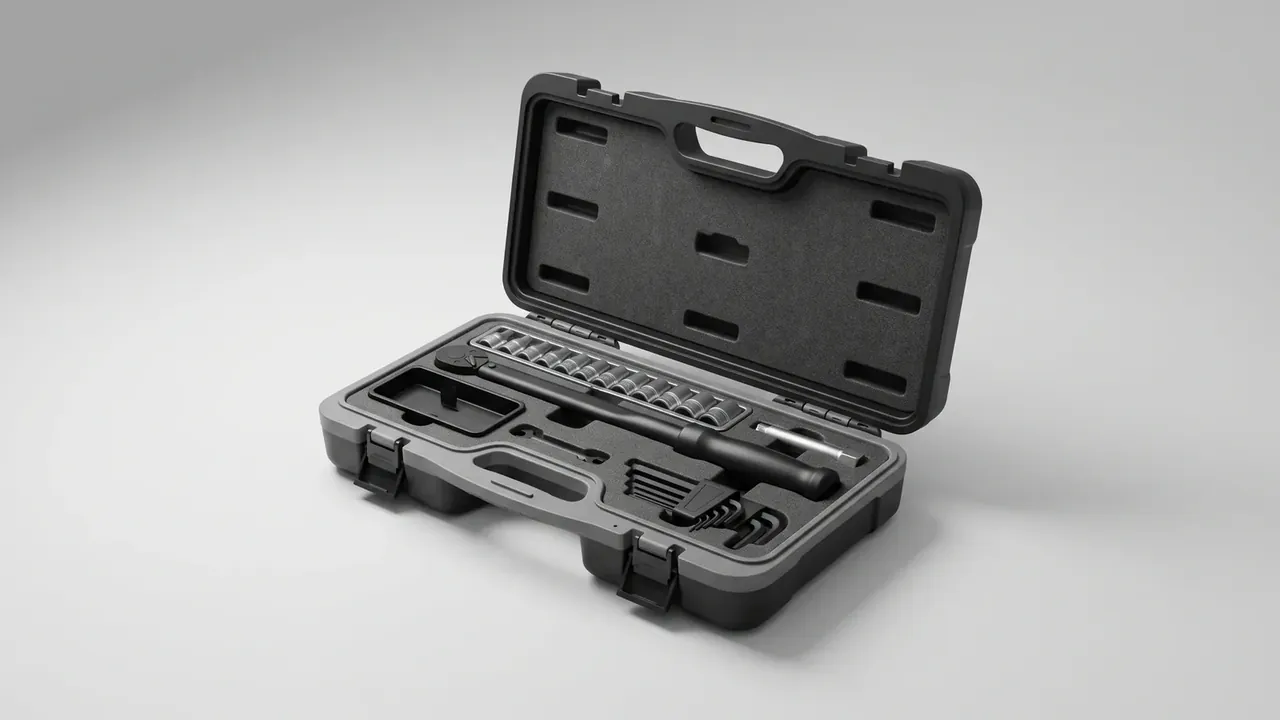
Tiering decides who gets rescued first. A-tier means sealing is compromised or the case will not close — a split gasket, a shattered latch — with a 24 h response and a plan inside 48 h. B-tier is degraded but usable, such as a weeping valve, answered in 5 working days. C-tier is cosmetic: scuffs, colour drift, a mis-set label, rolled into the next batch.
Case After-Sales Abroad needs the warranty line in the contract rather than in conversation. Material and moulding defects run 24 months; wear parts run 6, covering gasket, latch spring, wheels and valve diaphragm. Split the two and disputes roughly halve, since nearly every argument is about a part wearing out.
Evidence is a photo and a batch number, not a description. Ask for 3 shots: the failed detail, the whole case, the batch stamp inside the base. Rejecting tickets without them looks pedantic and lifts first-time fix by more than 10 points.
Freight on claims for Case After-Sales Abroad should be fixed in advance: A-tier both ways on the supplier, B-tier split, C-tier on the buyer.
4. Remote guidance and the cost of return freight
The standard remote pack for Case After-Sales Abroad is a 15 min video, one graphic card and an AR overlay set. The video spends 3 min on model and batch, 10 min on the swap, 2 min re-testing the seal. The card runs 6 panels, one action each, printed A5 and shipped with the kit. AR needs 3 datum points — latch, valve, hinge — at 2 Mbps.
For Case After-Sales Abroad that combination moves first-time fix from 62% to 85%. The gain comes from sequence: confirm the model, then work, then re-test. Tickets that skip the re-test come back at 4 times the rate of those that finish it.
Return freight splits 3 ways. Whole-case return runs 120–180 USD over 4–6 weeks; a drop to the regional depot runs 60–90 USD over 2–3 weeks; ship-parts-and-scrap runs 45–70 USD over 3–7 days. The gap reaches 135 USD, so one wrong call eats the margin on that order.
| Route | Cost per claim | Lead time | Fits |
|---|---|---|---|
| Whole-case return | 120–180 USD | 4–6 weeks | Cracked shell, structural |
| Regional depot | 60–90 USD | 2–3 weeks | Several parts at once |
| Parts and scrap | 45–70 USD | 3–7 days | Single A or B fault |
The rule is a ratio: when the repair costs more than 40% of the case value, ship parts and scrap the unit. Below that line, return freight still makes sense.
Conclusion
Whether Case After-Sales Abroad holds up comes down to two early decisions: kit structure and the 2% stocking ratio, then the clock behind each fault tier. Four part families in one 28–45 USD kit absorb 80% of field failures, and a 15 min video lifts first-time fix from 62% to 85%. Structural cases go to the freight sum: past 40% of case value, ship parts and stop paying for returns.
This article discusses only the container (case body) side of specifications and design intent, and does not cover any handling, loading or use of the contents.
Related Reading
- Repair sequence and part replacement in the field
- How to build a spare-parts stocking list
- Where responsibility sits in a warranty clause
Related Products
- 8 Series — Gun Cases; Military Equipment Cases; Camera Equipment Cases; Drone Cases; Watch Cases; Knife Cases; First Aid Cases; Electronics Equipment Cases
- WL8-2812 PP Gun Case — model WL8-2812
- All protective cases and toolboxes: 7 series, 158 models