

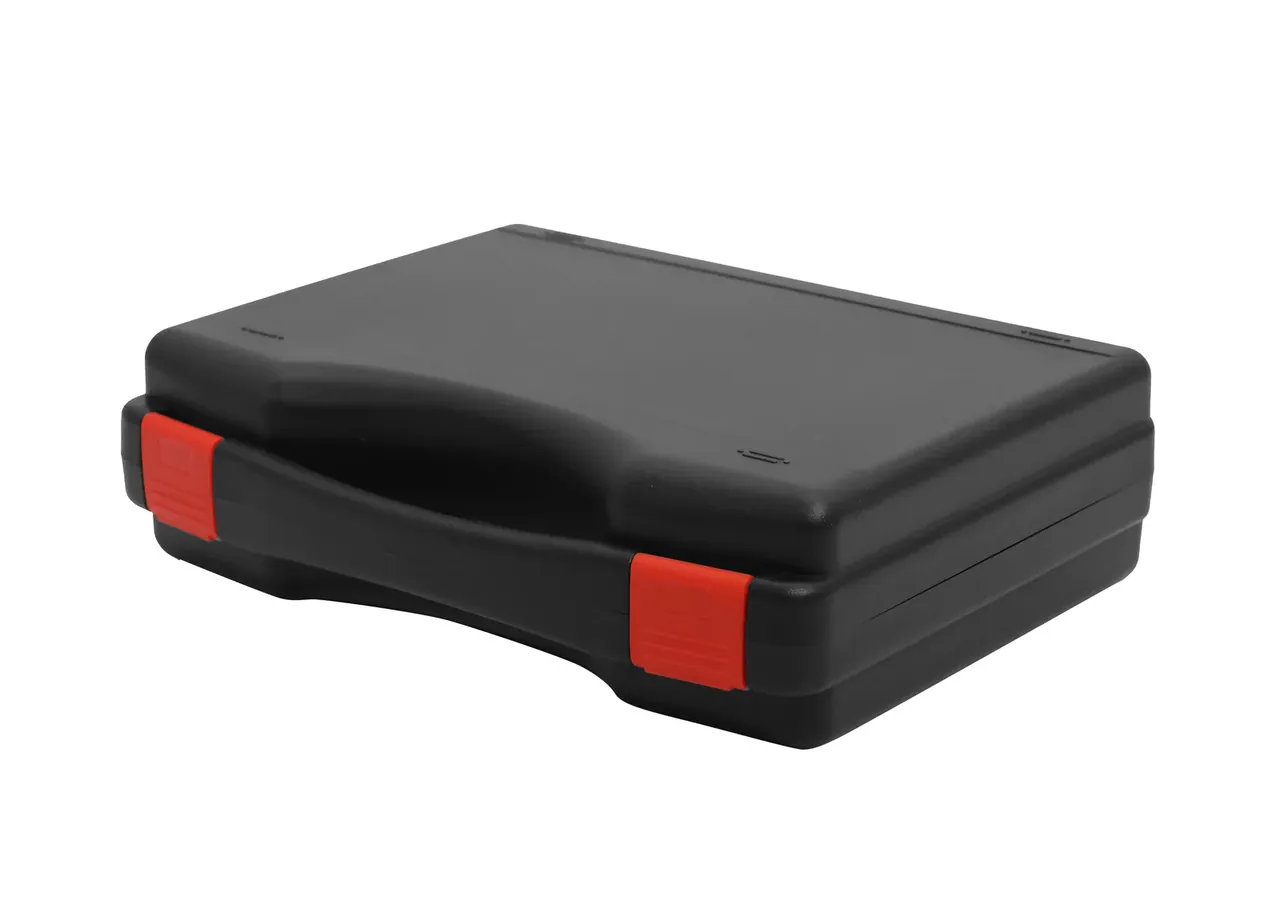
Quick answer: End-of-Life Cases go by material first: water floats PP from ABS, regrind sells at 40–60% of virgin, and a 30% recyclate load costs 15% of impact.
Table of contents
- Reading End-of-Life Cases: Density, Float and Flame
- Teardown: How Much Metal Comes Out
- Regrind: MFI and Recyclate Ratio
- Three Routes: Refurbish, Regrind, Ship Out
- Records and Paperwork
- FAQ
1. Reading End-of-Life Cases: Density, Float and Flame
A 90 L case coming off service poses one question before any grinder is booked: which polymer it is. PP sits at 0.90–0.91 g/cm³, HDPE at 0.94–0.96, ABS at 1.04–1.07 and PC at 1.20. The spread matters: PP and ABS regrind differ enough in value that a mixed batch sells at the bottom grade.
A water float is the cheapest cut. PP and HDPE rise, ABS and PC sink, and a 20 L bucket settles it in 30 s. Swap the water for brine at 1.15 g/cm³ to lift ABS off the bottom; flame behaviour separates the rest.
| Polymer | Density | Water | Brine | Flame |
|---|---|---|---|---|
| PP | 0.90–0.91 | Floats | Floats | Yellow over blue, wax |
| HDPE | 0.94–0.96 | Floats | Floats | Yellow, little smoke |
| ABS | 1.04–1.07 | Sinks | Floats | Orange, heavy smoke |
| PC | 1.20 | Sinks | Sinks | Black, sparks |
Burn a sliver under 10 mm: PP burns yellow over blue with a wax smell, ABS orange with heavy black smoke and a styrene note, PC black and self-extinguishing.
The moulded mark on the base saves half the work: a triangular loop and polymer code, 4–6 mm tall, legible once the dust is wiped off.
2. Teardown: How Much Metal Comes Out
Hardware is the only part of an End-of-Life Case that sells by weight. A 90 L aluminium-frame case yields 1.8 kg of 6063 extrusion plus 0.8 kg of stainless pins and latches, 2.6 kg, against 0.3–0.6 kg of steel in an all-plastic shell — a fourfold gap for the same retirement.
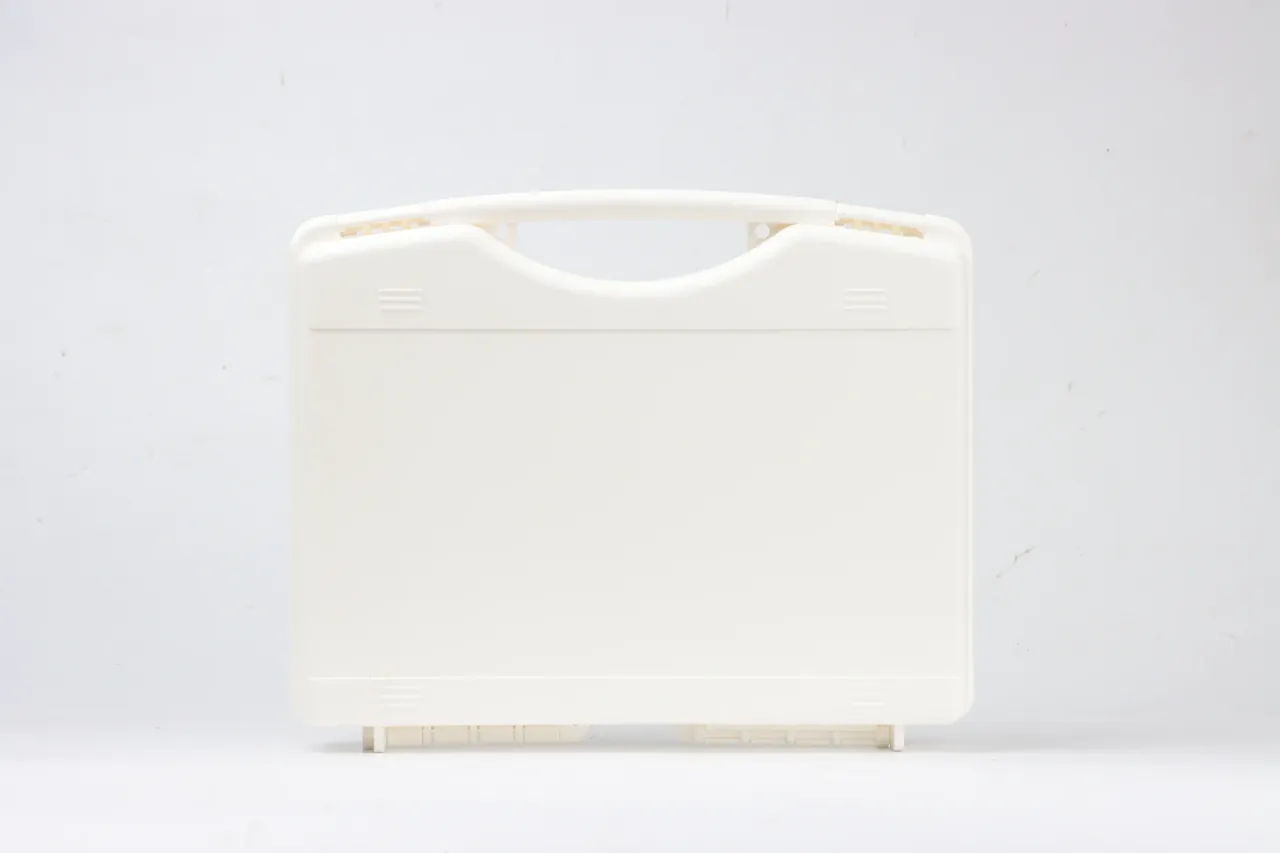
Teardown runs 3–5 min per case, and the clock stops at seized screws: moisture down the thread reddens steel in six months, and torque splits the boss. Warming it with 60 ℃ air for 60 s drops breakaway torque from 12 N·m to 5 N·m.
Sort into aluminium, stainless and plated steel: mixed, the buyer weighs the lot at the lowest rate and the loss per case equals 2 min of labour. Bag by stream, marked with polymer and weight.
An ultrasonic gauge then reads four corners and four edge midpoints: six of eight points above 0.5 mm with no through-crack means refurbishment, anything less goes to the grinder.
3. Regrind: MFI and Recyclate Ratio
Grade comes before granulation, because melt flow decides where regrind can go. Virgin PP sits at 3–5 g/10 min; one moulding cycle plus three to five years outdoors pushes regrind to 8–12, and shorter chains mean better flow with worse impact. Above 15 g/10 min it suits only low-end parts, under 40% of virgin price.
Run an 8 mm screen. At 12 mm melt time lengthens by 20% and energy climbs; at 5 mm fines pass 12% and bridge in the hopper. Flake bulks at 0.32–0.40 g/cm³, so a 30 m³ trailer carries 9–12 t — volume-limited, which is why the radius stops near 200 km.
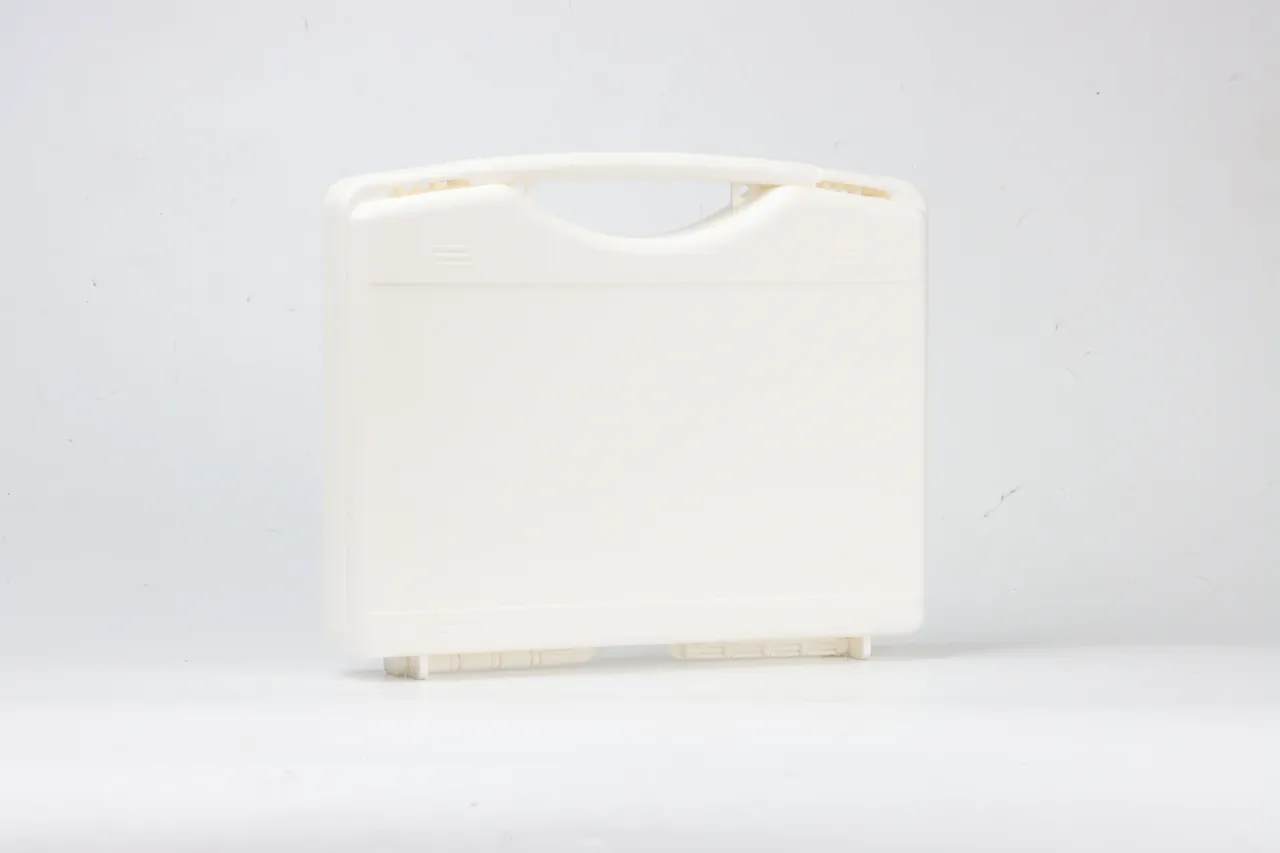
Moulders hold recyclate at 20–30% of the blend. Notched impact drops 10% at 20% and 15% at 30%; beyond that, low-temperature drop leaves the specification. At 40% recyclate a case cracked at the corner in a −20 ℃ drop from 1.2 m, while the virgin control dented 1.5 mm.
White shells show colour first: at 25% recyclate the difference reaches ΔE 2 in daylight, while grey and black absorb 30% without a trace. Dry the regrind an hour at 90 ℃ to pull moisture from 0.3% to under 0.05%, or silver streaks cost 30 parts in 500.
4. Three Routes: Refurbish, Regrind, Ship Out
End-of-Life Cases leave by one of three doors: refurbish and reuse, granulate, or ship out as general industrial solid waste. The dividing line is not age but remaining wall and contamination history.
Refurbishment has the clearest gate: six of eight gauge points above 0.5 mm, no through-crack, hardware replaceable as a set. Two latches, two pins and a handle cost around 60 yuan and 25 min, and the unit must re-pass 20 kPa for 60 s with no more than a 2 kPa drop.
Granulating suits shells that are thin but single-polymer and clean: a 6.2 kg PP case yields 5.8 kg of flake, a 6% loss. An aluminium frame comes off first, because extrusion in the chamber damages rotor knives at 1,800 yuan a set.
Shipping out is for shells that held chemicals, carry residue, or mix polymers that will not separate. A case that held chemicals should be washed and screened for residue first, with the disposal category confirmed by the local solid waste authority. That is the only route of the three needing a third party.
| Route | Precondition | Return | Risk |
|---|---|---|---|
| Refurbish | Wall over 0.5 mm | Cost down 50% | Aged gasket missed |
| Regrind | Single polymer | 40–60% of virgin | Batch downgraded |
| Ship out | Residue or mixed resin | Fully cleared | Paperwork gaps |
5. Records and Paperwork
Once a case leaves the gate its destination must be provable: keep the despatch note, weighbridge ticket and receiver acknowledgement, with counts and polymer codes agreeing across all three, for 3 years.
Eight fields cover it: batch number, quantity, polymer code, unit weight, total weight, disposal route, receiving party, operator. Quantity and weight go together, because count alone cannot reveal loss when walls differ.
Reconcile quarterly: pull 5% of records and compare weighed tonnage with the theoretical weight of the same model; a deviation above 5% means hardware went in un-stripped or polymers were mixed.
Conclusion
End-of-Life Cases follow a fixed order: material, remaining wall, destination. Mix PP at 0.90–0.91 with ABS at 1.04–1.07 and the load sells at the bottom grade; six of eight gauge points above 0.5 mm makes refurbishment worth half the replacement cost; a clean shell granulates at 40–60% of virgin; a contaminated one ships out with 3 years of paperwork. The test is whether the shell still holds pressure, and what it carried.
This article discusses only the container (case body) side of specifications and design intent, and does not cover any handling, loading or use of the contents.
Related Reading
- Tooling life and per-case amortisation
- Buying and accepting refurbished cases
- Case repair and the spare parts list
- How cases are packed: single box, pallet, container
Related Products
- 8 Series — Gun Cases; Military Equipment Cases; Camera Equipment Cases; Drone Cases; Watch Cases; Knife Cases; First Aid Cases; Electronics Equipment Cases
- WL8-2812 PP Gun Case — model WL8-2812
- All protective cases and toolboxes: 7 series, 158 models