

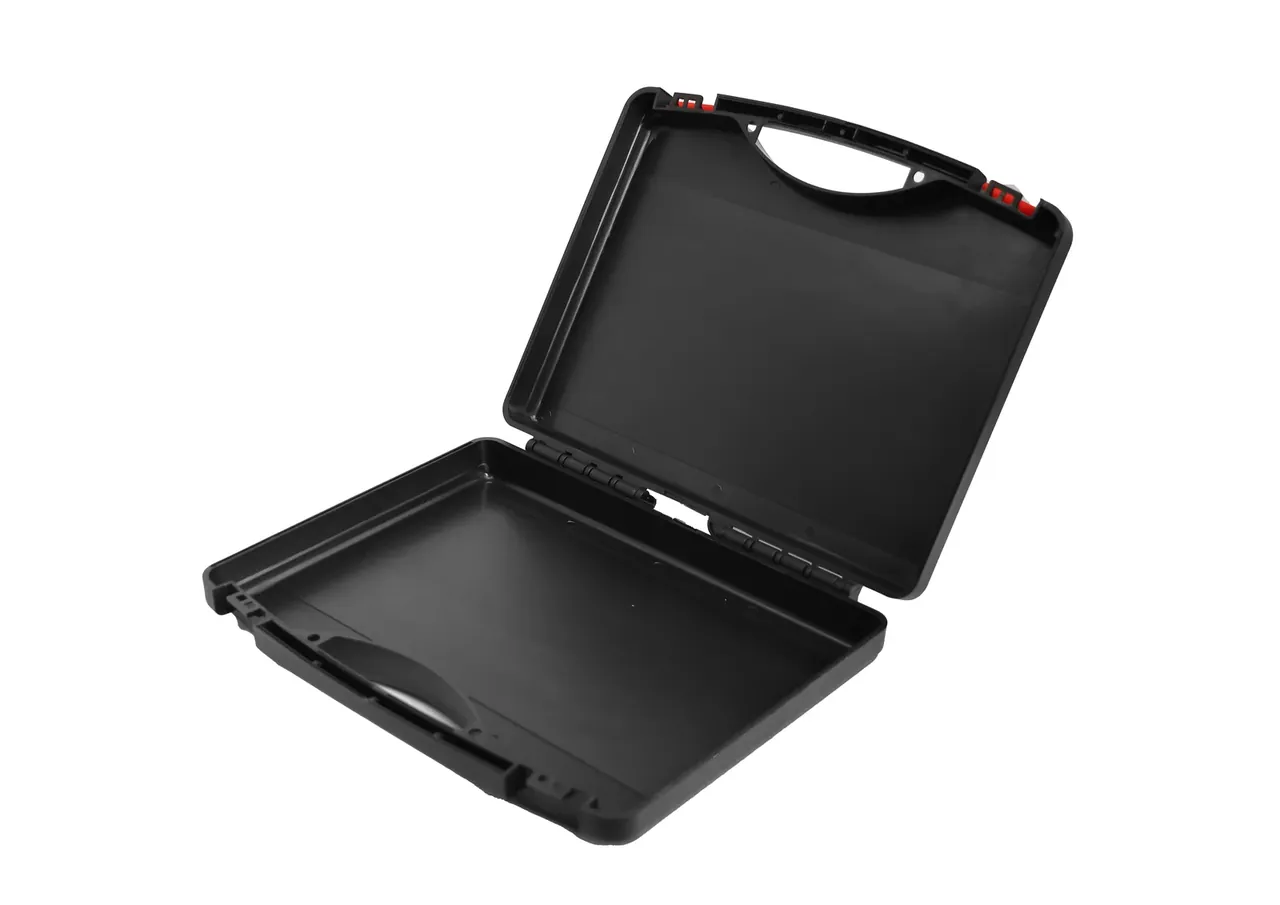
Quick answer: Case printing with UV ink gives 8–15 μm of film that passes a 5B cross-cut, 50 alcohol rubs and 500 h of QUV at ΔE ≤5, for 0.8 CNY a unit. In-mould labels cost 2.5 CNY a unit but last as long as the shell, from 1,000 pieces up, which is why orders under 500 pieces stay on screen printing.
Table of contents
- Three Durability Tests Case Printing Must Pass
- Screen, Squeegee and Ink on Curved Walls
- In-Mould Labels: Same Life, Modified Tooling
- Cost Structure and the Order-Quantity Trade
- FAQ
1. Three Durability Tests Case Printing Must Pass
Case printing is judged on adhesion, solvent resistance and ageing before colour. Adhesion follows ISO 2409: 1 mm spacing, a 6 × 6 grid, tape pulled at 60°, and 5B means nothing lifted. The curved corner of a rotomoulded shell usually lands at 4B, where the film is 30% thinner. Solvent resistance comes next. A 500 g load, one stroke per second, 50 rubs with anhydrous ethanol, and no substrate showing through. Sites that wipe with acetone need a separate trial, because most UV inks break through within 20 rubs.
Ageing runs 500 h of QUV with UVA-340 lamps at 0.76 W/m², 8 h at 60 °C followed by 4 h of condensation at 50 °C, and must finish at ΔE ≤5 with a grey card of 3 or better to ISO 105-A02. Outdoors, ageing fails before adhesion does.
| Test | Condition | Pass line |
|---|---|---|
| Adhesion | ISO 2409, 1 mm | 5B |
| Ethanol rub | 500 g, 50 cycles | No substrate |
| Ageing | QUV 500 h | ΔE ≤5 |
| Abrasion | 500 g eraser, 100 cycles | Film intact |
Substrate colour changes coverage: pale type on dark grey needs 250 mesh and two passes to reach 18 μm, while the same logo on ivory holds at 10 μm.
Release agent is the hidden variable: silicone residue lifts the whole film, so an IPA wipe plus 40 s at 50 °C takes the cross-cut from 3B back to 5B.
2. Screen, Squeegee and Ink on Curved Walls
Film thickness in case printing is set by mesh and tension: 300–350 mesh at 18–22 N/cm deposits 8–15 μm per pass. For 20 μm, print twice with a 3 min bake at 60 °C between passes.
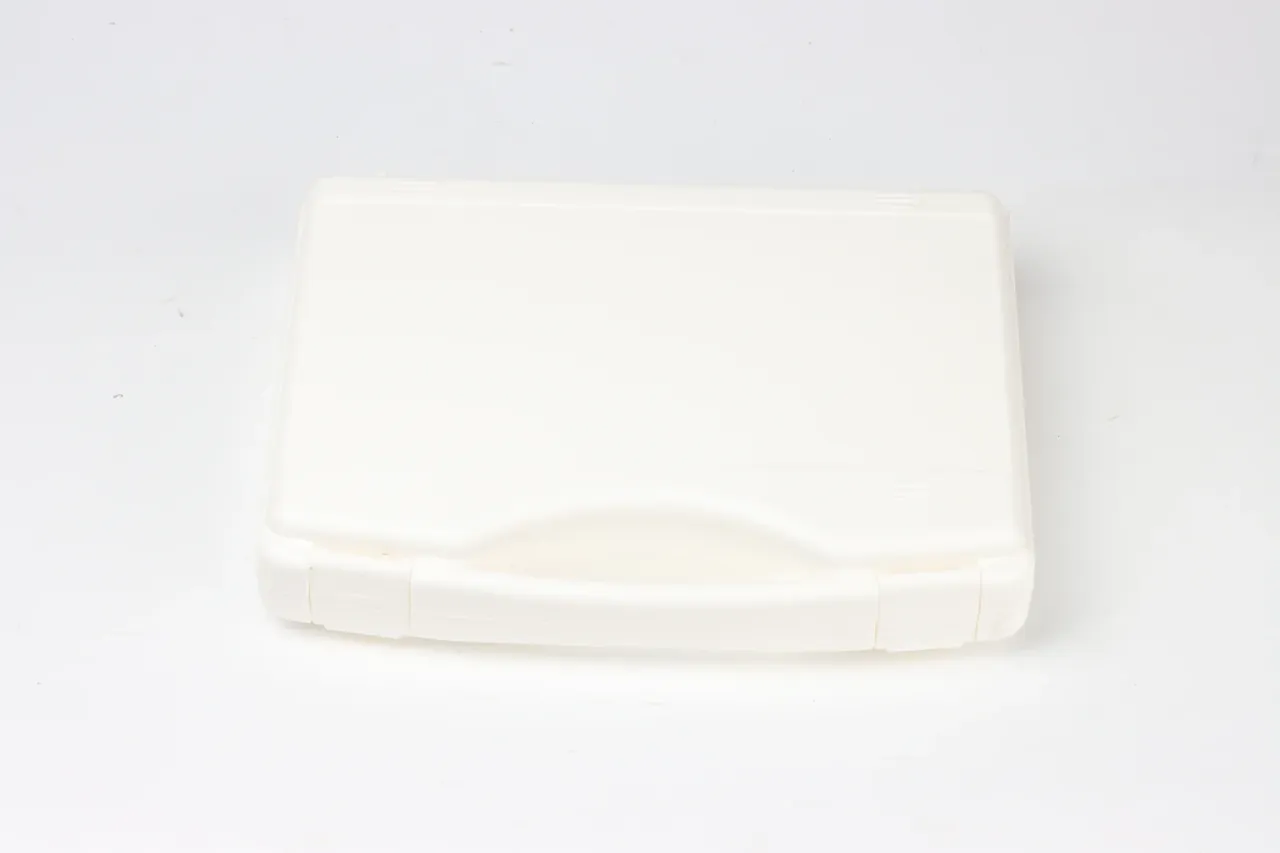
Curved walls are the hard part: a 2°–3° draft needs 0.3 mm of screen compensation, 2–3 mm off-contact, a squeegee at 70–80 Shore A and a 75° angle. At 60° the deposit rises 25% and pools at the edges.
Below an 8 mm corner radius the screen stretches and the image distorts 0.2–0.4 mm across. Under R5, move to pad printing or a label rather than accepting a 15% scrap rate.
Screen care decides how far the plate fee spreads. A dedicated opener is fine; acetone attacks the emulsion, pinholes appear on the second run and the screen dies at 8,000 impressions instead of 30,000.
Colour count drives registration at ±0.15 mm between passes; beyond that a 0.3 mm white gap opens, which is why most protective case printing stays at three colours. Keep the logo 20 mm from the wall edge too: closer than 15 mm the frame cannot seat on the radius.
3. In-Mould Labels: Same Life, Modified Tooling
In-mould labelling drops a 0.3–0.5 mm PP label into the cavity so it fuses with the shell, and it then lasts as long as the case. The cost sits in the tool: Ø0.8 mm vacuum ports, a gate moved clear of the label, a cavity polished to Ra 0.4 μm.
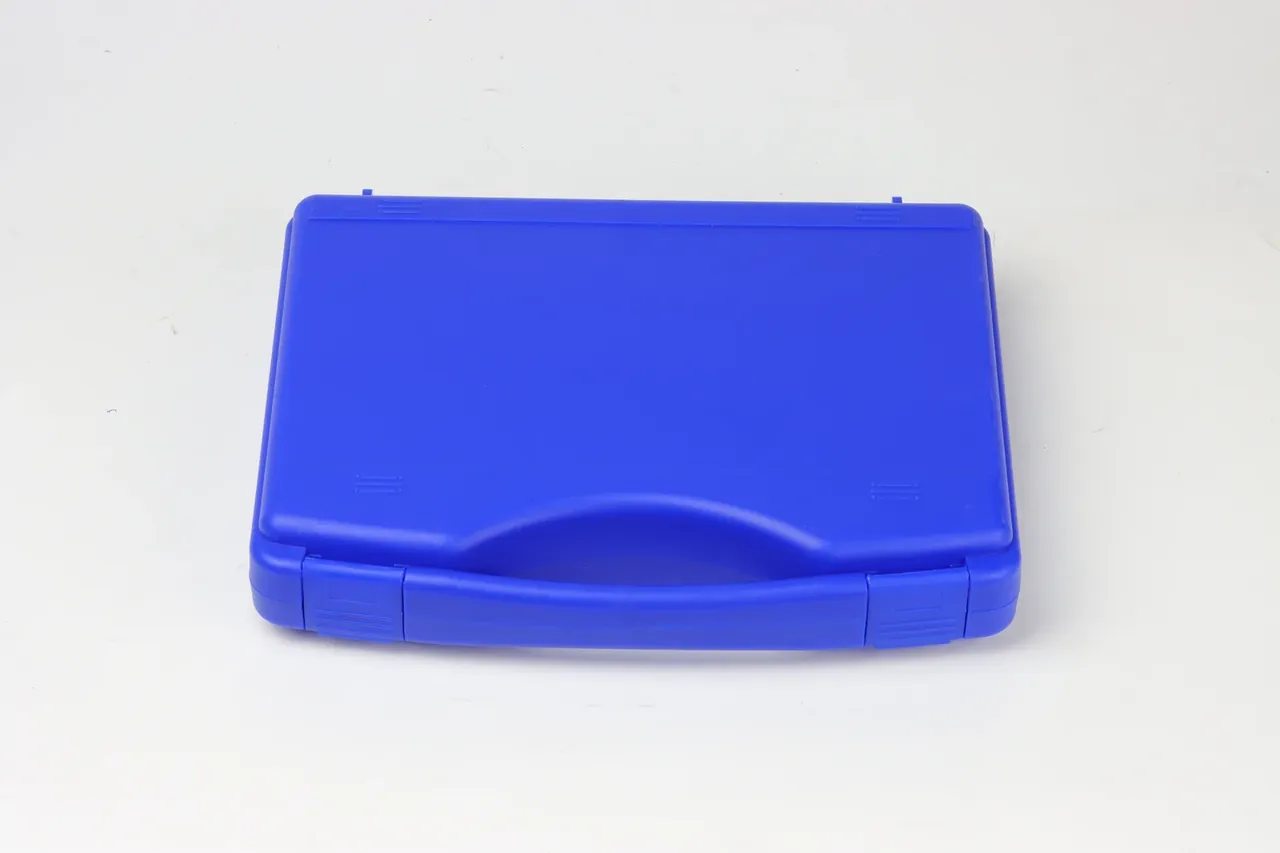
Volume is the gate. Labels need their own plate at 2,000 CNY and a 1,000-piece minimum, so below that the amortised plate costs three times what a screen does.
IML is an injection-moulding route only. In rotational moulding the powder fuses while the mould turns, and a label placed inside is simply washed away.
Laser marking is the other branch, and on PP or PE contrast is too low: ΔE under 2, invisible at arm's length. A masterbatch at 0.3%–0.5%, about 2 CNY per kg, adds roughly 0.6 CNY per case.
Warped edges are the common defect: keep 1.5 mm between label and parting line, then run 2 h at 80 °C within 24 h and reject anything lifting past 0.3 mm.
4. Cost Structure and the Order-Quantity Trade
Case printing splits into plate and unit cost: 600 CNY of screens plus 1.6 CNY a unit for two colours, 2,000 CNY plus 2.5 CNY a unit for IML, and 0.05 CNY a unit for inkjet.
| Quantity | Screen, 2 colours | In-mould label | Inkjet |
|---|---|---|---|
| 300 pcs | 3.6 CNY | Not quoted | 0.05 CNY |
| 1,000 pcs | 2.2 CNY | 4.5 CNY | 0.05 CNY |
| 3,000 pcs | 1.8 CNY | 3.2 CNY | 0.05 CNY |
The table says one thing: IML is dearer at every quantity, by at least 0.9 CNY a unit, and what it buys is a lower rework rate. At 2.5% returns and 40 CNY per repair, screen work carries 1 CNY of risk per unit; at 0.2% the label carries 0.08 CNY, closing the gap near 1,000 pieces.
| Condition | Route | Note |
|---|---|---|
| Under 500 pcs | Screen | Plate spread at 300 CNY per colour |
| 3 colours or fewer, flat | Screen | Registration ±0.15 mm |
| Over 1,000 pcs, same life | In-mould label | Tool and gate changes |
| Batch code only | Inkjet | Wipes off with alcohol |
| Radius under 5 mm | Pad print or label | Screen distorts at corners |
Lead time often decides before price: screens take 3 days to proof and 7 to run, IML needs 10–15 days of tool work plus 7 of label platemaking, so the first batch lands at 25 days.
Conclusion
Case printing and in-mould labelling are two delivery rhythms rather than rivals. Screens trade 300 CNY a colour and 1.6 CNY a unit for flexibility; labels trade 2,000 CNY of plate and a 1,000-piece minimum for a life matched to the shell. Judge quantity and colour count first, then ask whether the rework rate absorbs the 0.9 CNY gap, and compare unit price last. Write 5B, ΔE ≤5 after 500 h and 50 alcohol rubs onto the drawing, or the cheapest quote has conceded one of them.
This article discusses only the container (case body) side of specifications and design intent, and does not cover any handling, loading or use of the contents.
Related Reading
- Four marking methods besides case printing
- Case printing against pad and heat-transfer
- Writing a logo spec for a custom hard case
- Logo specification list for moulded tool cases
Related Products
- 8 Series — Gun Cases; Military Equipment Cases; Camera Equipment Cases; Drone Cases; Watch Cases; Knife Cases; First Aid Cases; Electronics Equipment Cases
- WL8-2812 PP Gun Case — model WL8-2812
- All protective cases and toolboxes: 7 series, 158 models