

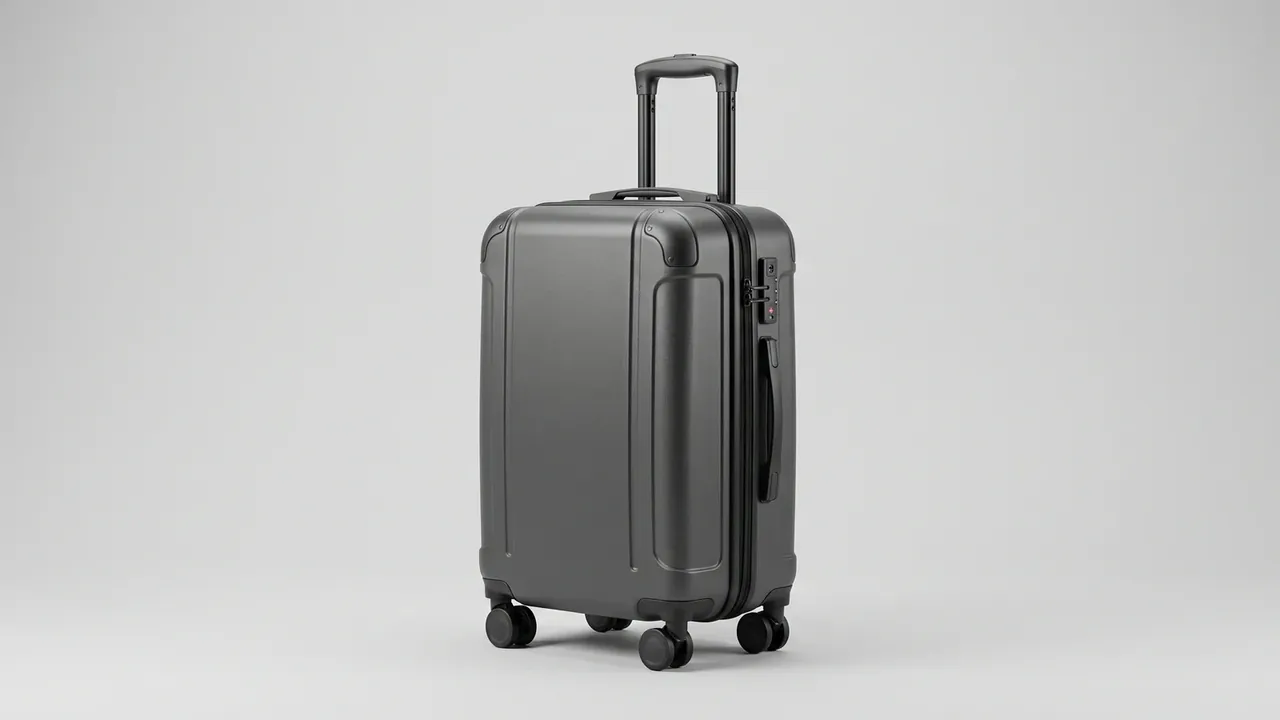
Quick answer: Rank the criteria of a commercial plastic luggage trolley case by repairability: shell first, since a crack cannot be fixed; handle and wheels next; appearance last. Hard lines are a 2.2 mm wall, 3 mm play and 50 mm wheels.
Table of contents
- Ranking Criteria for a Commercial Plastic Luggage Trolley Case
- Shell Material and Wall Thickness
- Handle and Wheel Set Checks
- Interior Layout and Opening Type
- Appearance, Marking and Batch Consistency
- FAQ
1. Ranking Criteria for a Commercial Plastic Luggage Trolley Case
A cracked shell cannot be fixed, a worn wheel set swaps in ten minutes. That order is why a commercial plastic luggage trolley case is weighted from the shell down.
Shell 40 percent, handle and wheels 35 combined, interior 15, appearance 10. On a tight budget, spend on wall thickness first, bearings second, finish last.
| Criterion | Weight | Deal breaker | Field check |
|---|---|---|---|
| Shell | 40% | wall under 2.0 mm | caliper at three rim points |
| Handle | 20% | play over 3 mm | extend and shake sideways |
| Wheels | 15% | loose axle, drift | push 20 m at 45 degrees |
2. Shell Material and Wall Thickness
Three compounds dominate: ABS holds shape but turns brittle in cold, PC springs back at a price, PP is toughest yet too flexible for large shells.
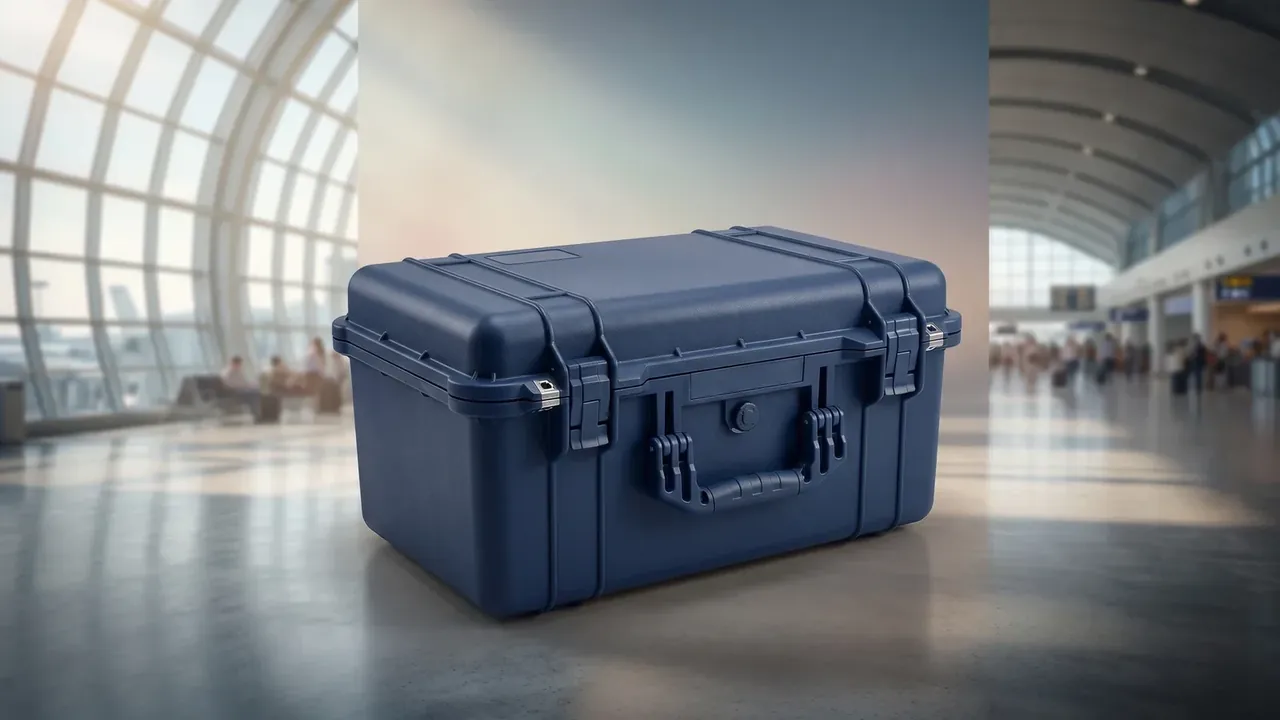
Set the wall at 2.2 mm with a 2.6 mm rim where latches concentrate load. Measure two rim midpoints and one base corner; under 2.0 mm fails.
Spec minus 20 °C for northern winters and 60 °C for a southern car boot, four hours at each end before a drop test.
| Material | Wall | Rebound | Range | Weight |
|---|---|---|---|---|
| ABS | 2.2 mm | whitens on hard hits | -10 to 70 °C | 3.4 kg |
| PC | 2.0 mm | dents recover | -30 to 80 °C | 3.0 kg |
| PP | 2.6 mm | low stiffness | -20 to 70 °C | 3.2 kg |
3. Handle and Wheel Set Checks
A 22 mm three-stage tube with a 1.2 mm wall is standard; play at full extension stays under 3 mm. Run 8,000 cycles, checking button return every 1,000.
At 50 mm the wheel sits at the lower limit for pavement joints; tread near Shore 90A balances wear against noise. Twin wheels track better but catch in escalator gaps.
The field test takes two minutes: load 18 kg, extend fully, push 20 m at 45 degrees along tile. Drift, rattle or a hot axle fails the set, and after 5 km the tread should stay under 45 °C.
4. Interior Layout and Opening Type
More dividers is not better. A commercial plastic luggage trolley case carries catalogues, gauges and a laptop, so three pieces suffice: one adjustable divider, two cross straps, one zipped pocket. Spec 5 mm honeycomb board and metal buckles.
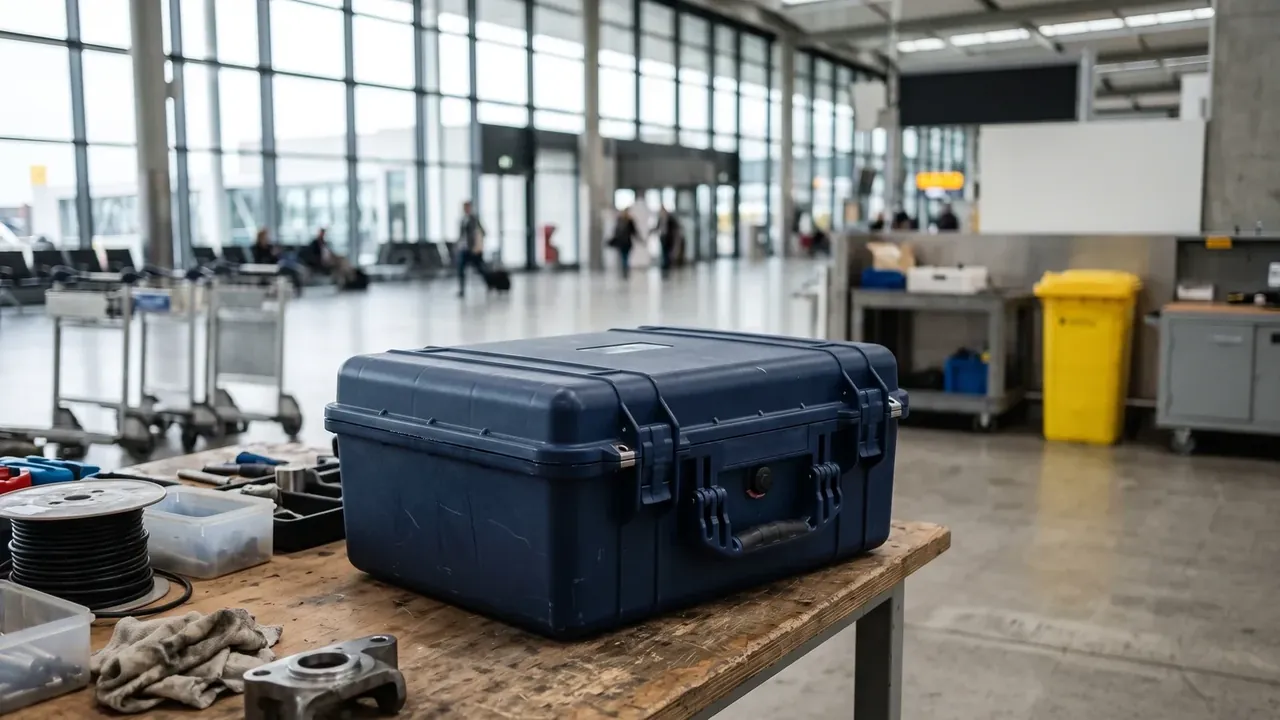
A zip around the middle is light but weak on water; an aluminium frame with latches seals better and adds 0.4 kg. Test 5,000 open and close cycles either way.
Locks are a scene question: exhibition halls accept a combination lock with a hasp, while cross-border travel needs a customs-recognised lock.
5. Appearance, Marking and Batch Consistency
Appearance only becomes a problem in volume; twenty cases in a row show what one hides. Hold colour within ΔE 1.5 inside a lot and 2.5 across lots under D65.
Press 3M tape down on the print, rip it fast, and allow no more than 5 percent to lift. Record the texture number, since one re-polish shifts depth by 0.02 mm.
| Item | Method | Limit |
|---|---|---|
| Wall | caliper at rim and base | min 2.0 mm |
| Handle play | sideways push, extended | max 3 mm |
| Static load | 60 kg on lid, 24 h | set under 2 mm |
| Colour | 20 units under D65 | ΔE max 1.5 |
A six-digit moulded code, two for month and four for press and shift, must survive 50 ethanol wipes. Sample eight units on delivery; a gap means reworked stock.
Conclusion
Choosing a commercial plastic luggage trolley case means ranking five criteria by repairability and putting a number on each: wall, cold drop, handle play, wheel diameter, ΔE. With numbers on all five, the choice stops being a matter of feel, and that is how a commercial plastic luggage trolley case is chosen.
This article discusses only the container (case body) side of specifications and design intent, and does not cover any handling, loading or use of the contents.
Related Reading
- Hard shells and wheels for cabin bags
- Cabin bag outline and wheel dimensions
- Selection criteria for wheeled protective cases
- Wheel size and load rating for rolling tool cases
Related Products
- 8 Series — Gun Cases; Military Equipment Cases; Camera Equipment Cases; Drone Cases; Watch Cases; Knife Cases; First Aid Cases; Electronics Equipment Cases
- WL8-2812 PP Gun Case — model WL8-2812
- All protective cases and toolboxes: 7 series, 158 models