

Quick answer: Acceptance for a Communication Equipment Case must convert a vague requirement into three things: check items, judgement values and sampling rules. Give every value a number and a measuring condition, and split sampling by batch size and defect class.
Table of contents
- The Four Gates of a Communication Equipment Case Acceptance
- Appearance and Structural Checks
- How Dimensions and Fit Are Judged
- Ingress and Air-Tightness Testing
- Batch Sampling and Disposition
- FAQ
1. The Four Gates of a Communication Equipment Case Acceptance
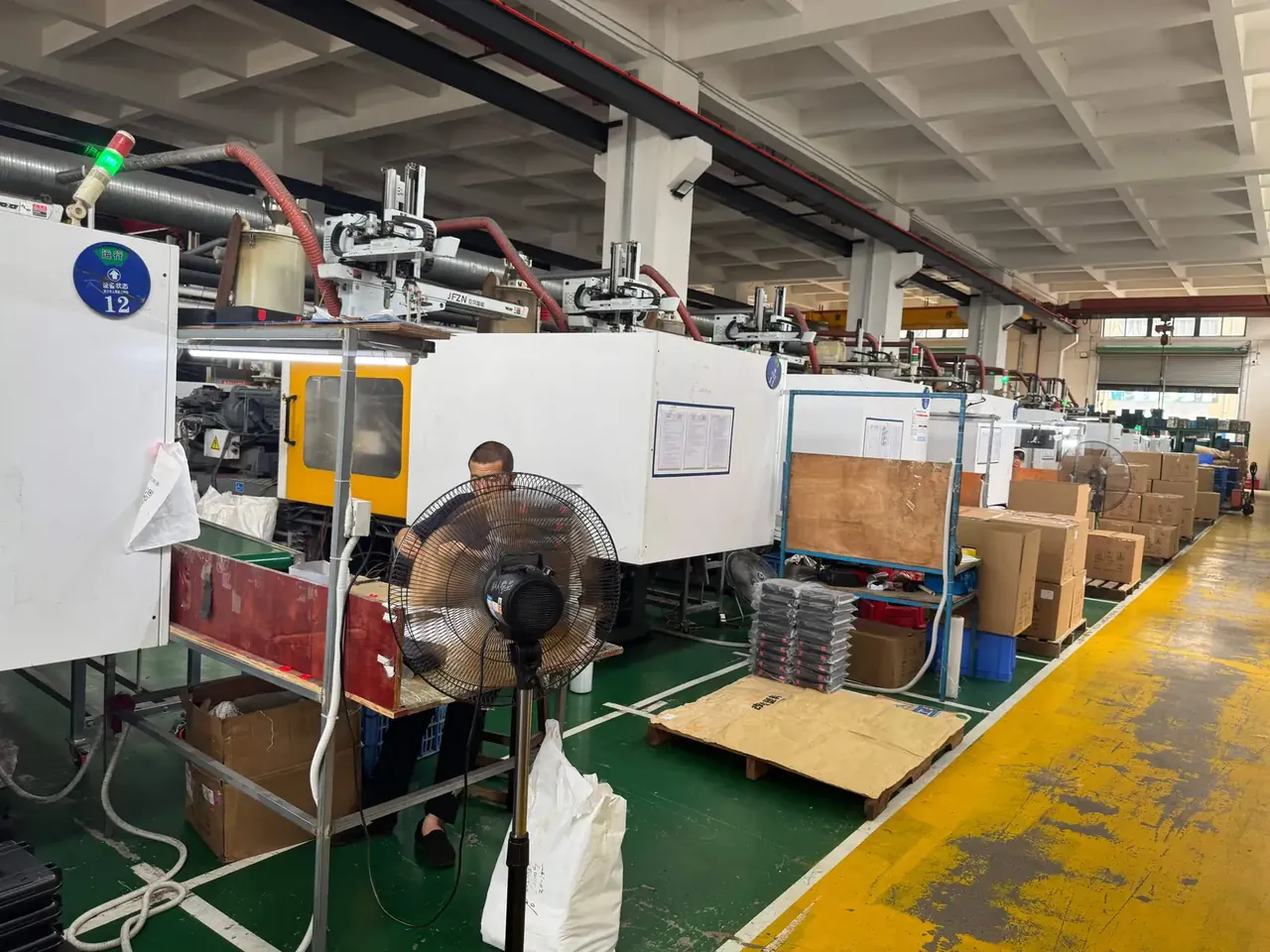
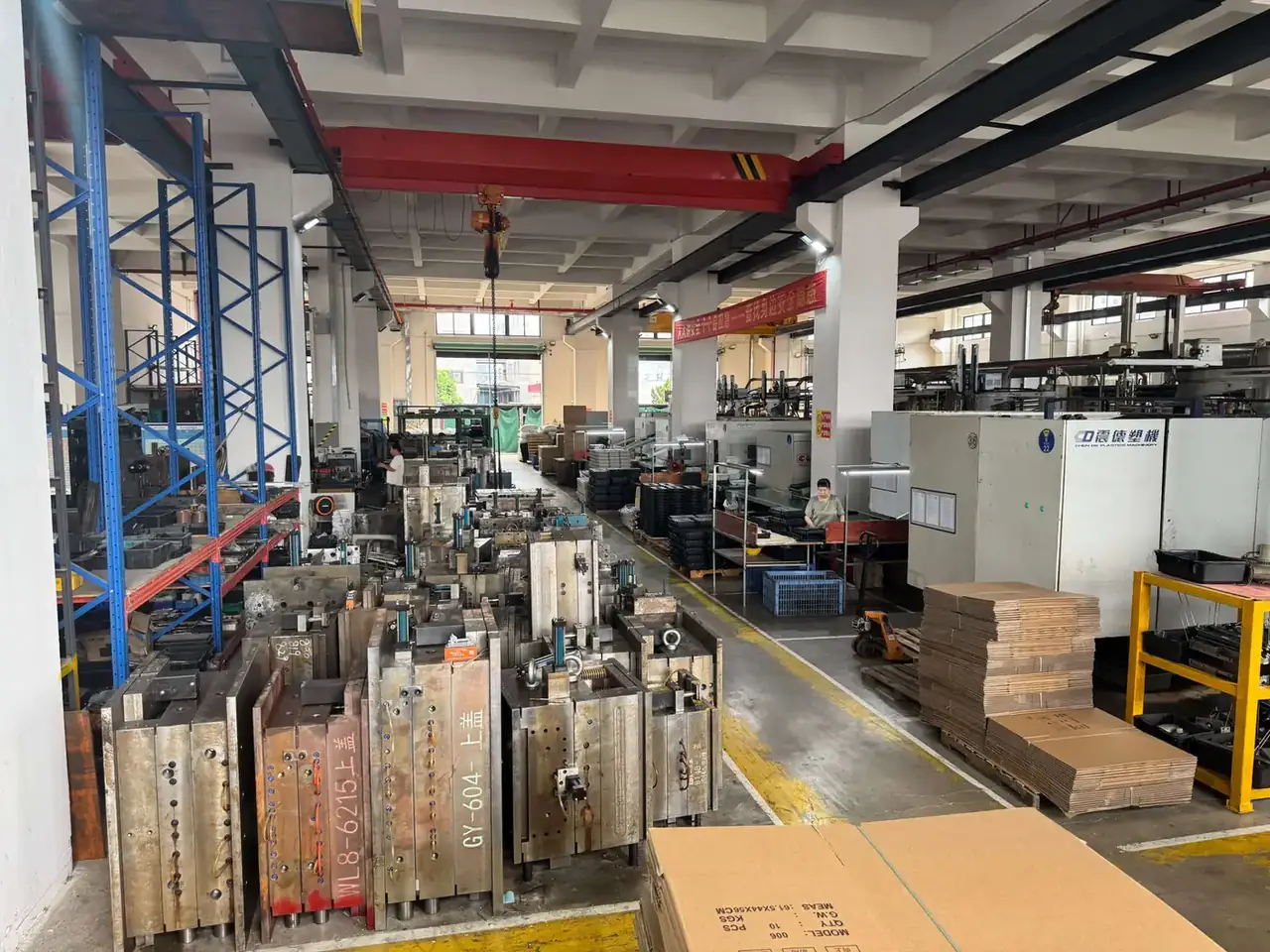
Acceptance of a Communication Equipment Case runs through four gates: incoming material, first article, patrol and release. Incoming checks resin grade and regrind, first article checks mould and process window, patrol watches drift, release checks consistency. Pool them into one sheet and a passed first article becomes a scrapped batch.
Keep three first-article samples: one cut for walls and inserts, one for the air test, one as reference, since colour, texture and flash cannot be argued from words.
| Gate | Timing | Checks | If it fails |
|---|---|---|---|
| Incoming | Each resin lot | Grade, melt index, regrind | Reject lot |
| First article | After setup | Wall, inserts, air test | Stop, redo |
| Patrol | Every 2 hours | Appearance, gap, weight | Quarantine shift |
Patrol is skipped most often: mould temperature needs 40 minutes to stabilise, and walls then run 0.2 mm thinner than the first article.
2. Appearance and Structural Checks
The hard part is the line between a defect and a process signature. Weld lines cannot be removed from dark shells, so limit them: never across the sealing face, never over 30 mm.
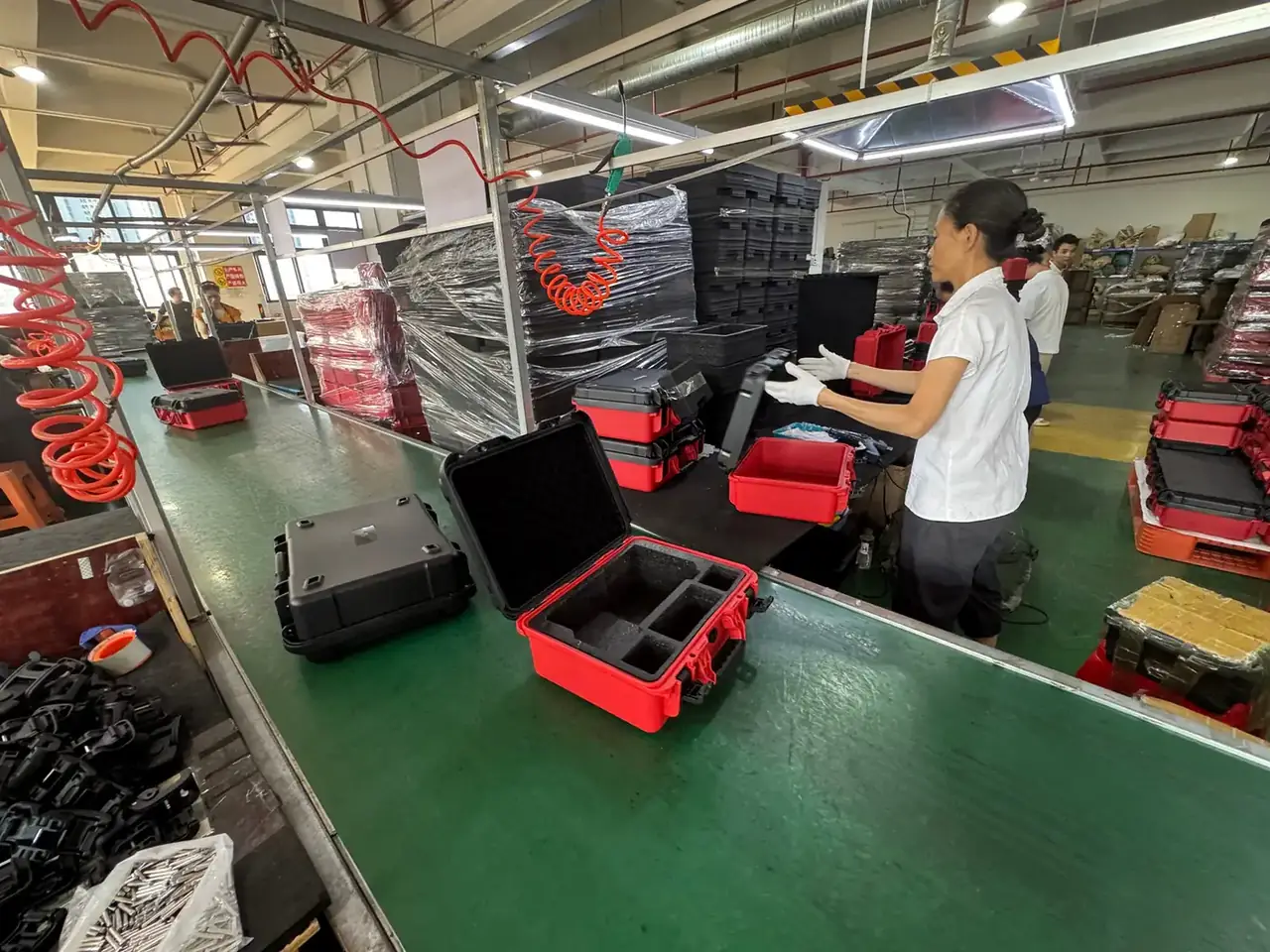
Structural parts are worked, not looked at: latch and listen, hang the lid by the hinge, pull the handle to 800 N, torque inserts to 8 N·m.
| Check | Value | Method | Class |
|---|---|---|---|
| Colour shift | Delta E 1.5 max | Spectrophotometer, D65 | Major |
| Flash | 0.5 mm, zero on seal face | Feeler gauge | Major |
| Handle pull | 800 N, 1 minute | Load cell | Critical |
3. How Dimensions and Fit Are Judged
Separate out-of-tolerance from out-of-tolerance but usable. A cavity 0.8 mm small keeps the equipment out, which is fatal; an envelope 1.5 mm large only disturbs pallet layout, which is a concession. The scheme has three levels: critical at Ac=0, so one failure holds the batch; major at AQL 2.5; minor at AQL 4.0. At a sample of 20 that is Ac=1, Re=2 and Ac=2, Re=3.
Judge fit in the working state. Close every latch before measuring the lid gap, since a loose lid reads 0.3 to 0.5 mm wide; measure flatness unloaded, one gap under 1.5 mm.
4. Ingress and Air-Tightness Testing
The order cannot be shuffled: air, then spray, then immersion. Air screens fast, spray proves the gasket route, immersion proves the shell. Backwards, water from immersion reads as a shell leak.
Air is 20 kPa held 60 seconds, dropping 0.6 kPa at most. Most failures come from swarf in the valve or a poorly bonded gasket joint, not the shell.
| Test | Condition | Pass | Sampling |
|---|---|---|---|
| Air | 20 kPa, 60 s | Drop 0.6 kPa max | 100 percent |
| Immersion | 1 m, 30 min | No water inside | 1 per batch |
| Cold drop | -40 C, 4 h, 1.2 m | Corners intact | 2 per batch |
Life tests run on schedule, not per batch: at four openings a day, 5000 cycles covers about three and a half years.
5. Batch Sampling and Disposition
Sampling starts with batch size. For 501 to 1200 pieces, level II gives a sample of 80; a Communication Equipment Case run of 30 to 50 is better served by a fixed sample of 20, if the document says so.
Disposition has three routes: rework for appearance and minor dimensions, with the item rechecked; concession for deviation that affects neither assembly nor ingress, with amount and approver recorded; rejection for critical dimensions and failed ingress.
Add a closing clause: two occurrences of one defect in a batch count as loss of process control, suspending supply until corrective action arrives.
Conclusion
An acceptance standard earns its keep through consistency, not severity: fixed check items, values carrying measuring conditions, sampling rules with a written substitution, disposition that leaves a trail. Written that way, every inspector measures a Communication Equipment Case alike.
This article discusses only the container (case body) side of specifications and design intent, and does not cover any handling, loading or use of the contents.
Related Reading
- Common problems with communication equipment cases
- Ingress ratings for waterproof hard cases
- Writing a case production SOP
- Quality control on the assembly line
Related Products
- 8 Series — Gun Cases; Military Equipment Cases; Camera Equipment Cases; Drone Cases; Watch Cases; Knife Cases; First Aid Cases; Electronics Equipment Cases
- WL8-2812 PP Gun Case — model WL8-2812
- All protective cases and toolboxes: 7 series, 158 models