

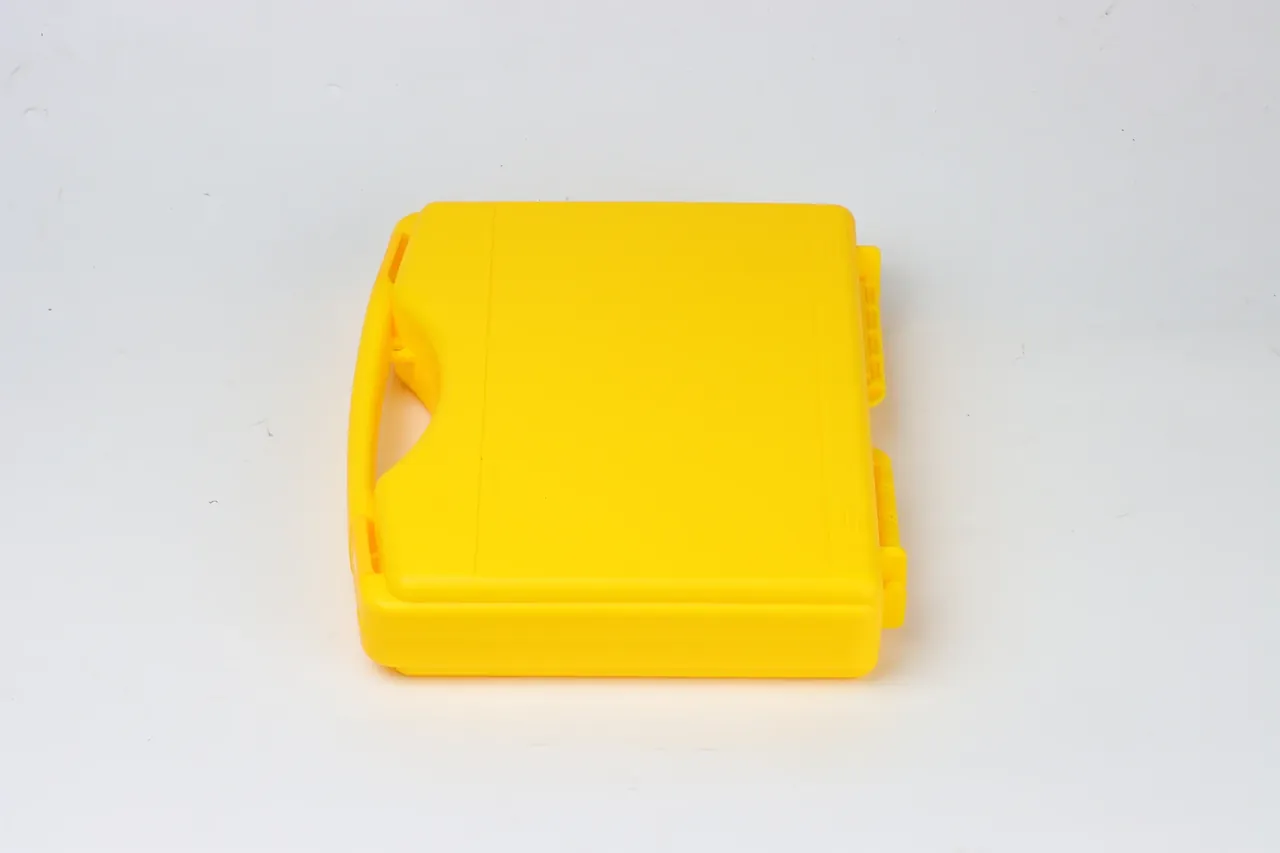
Quick answer: A Core Sample Case is rated on core weight plus case weight, never on litres. An NQ box holds 9 m at 43.2 kg of core and 49.7 kg all-in, inside the two-person limit; HQ reaches 71 kg and needs wheels.
Table of contents
- Load Baseline: Counting Core, Not Litres
- Stacking: Base Ribs, Pallets and the Three-High Line
- Numbering and Barcode Panels
- Against Plywood: Weight, Reuse and Water Uptake
- A Sizing Checklist by Diameter and Depth
- FAQ
1. Load Baseline: Counting Core, Not Litres
Suppliers quote a Core Sample Case by volume, often 145 litres, which says nothing about handling: rock sits at 2.7 grams per cubic centimetre, so a full box passes 100 kg. Work backwards from diameter to metres per box.
NQ cuts 47.6 mm, HQ 63.5 mm and PQ 85.0 mm, at 4.8, 8.6 and 15.3 kg per metre; one interior serves one rig.
| Size | Core diameter | Weight per metre | Slots × length | Core per box | Box plus core |
|---|---|---|---|---|---|
| NQ | 47.6 mm | 4.8 kg | 6 × 1.5 m | 43.2 kg | 49.7 kg |
| HQ | 63.5 mm | 8.6 kg | 5 × 1.5 m | 64.5 kg | 71.0 kg |
| PQ | 85.0 mm | 15.3 kg | 4 × 1.5 m | 91.8 kg | 98.3 kg |
The 6.5 kg tare is a 3.0 mm PP moulding with a 1560 × 420 × 230 mm interior; 4.0 mm adds 1.9 kg and lifts drop height from 1.2 m to 1.8 m.
Handling runs in three bands: 23 kg solo, 50 kg for two, above 70 kg on a trolley. NQ sits inside the two-person band, HQ crosses it, PQ is machine work, which decides a 75 kg handle or 100 mm fork openings.
2. Stacking: Base Ribs, Pallets and the Three-High Line
Stack height comes from ribs and lid, not the wall alone. Four ribs stand 12 mm proud and matching grooves locate the box above, so a stack holds while the offset stays under 15 mm.
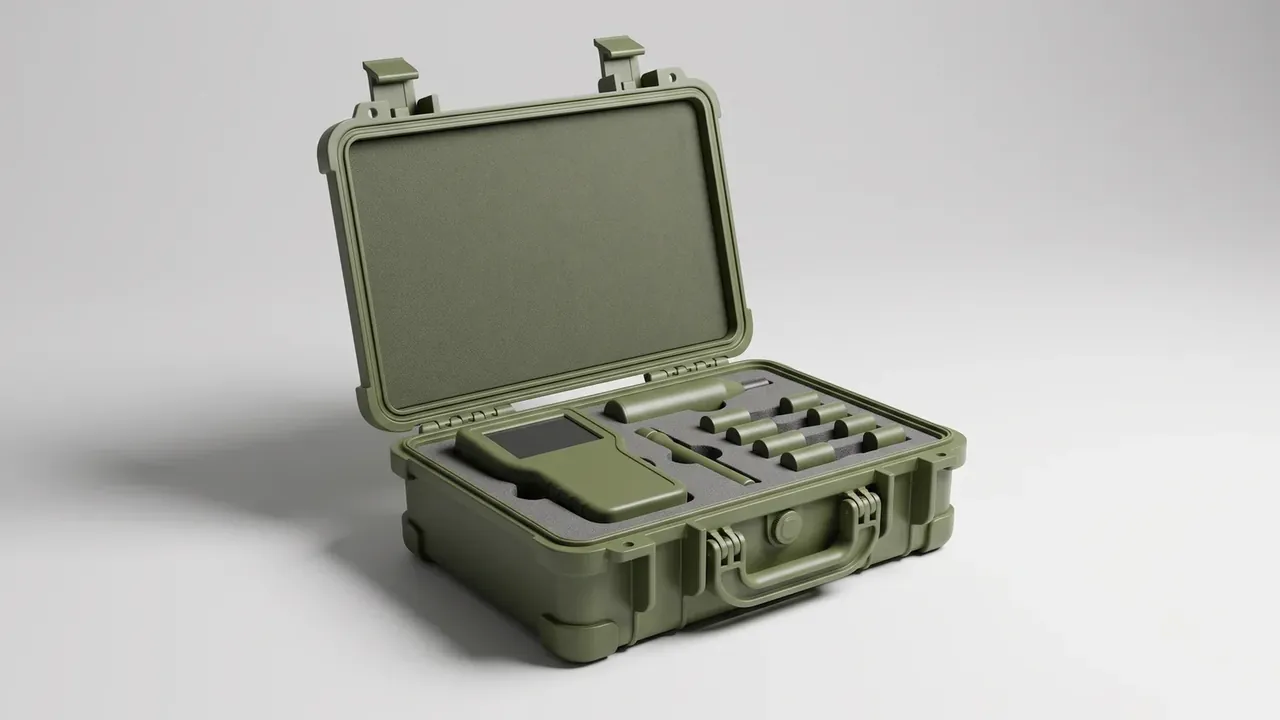
At 50 kg loaded, three high puts 150 kg on the bottom box, which pallets take. A fourth layer puts 200 kg down; the lid sags 3 mm, flattens the gasket and drops one IP grade. Empty, it stacks eight high.
A 1560 mm box pairs with a 1600 × 1200 mm pallet at 600 kg, two across, for three layers; a 3 mm rubber mat filters road vibration. At −20 °C PP keeps 30 percent of its impact strength, so loaded stacks go to two layers.
3. Numbering and Barcode Panels
Label positions belong in the tool drawing, since a mould change starts at 2,000: a 210 × 297 mm lid area for hole and block, an 80 × 120 mm barcode panel for Code 128, and 60 × 40 mm write-on strips at both ends.
Keep the barcode 30 mm clear of latches and handle, which take the hit in a roll. Hold the code to 18 characters, six for the hole and four each for box, top and bottom depth; longer strings read poorly in sun.
| Method | Cost per box | Outdoor life | Change route | Batch |
|---|---|---|---|---|
| In-mould label | 6–9 | over 5 years | new label film, 800 | 500+ |
| Screen print | 2–4 | about 2 years | new screen, 200 | 100+ |
| Adhesive sleeve | 0.6–1.2 | one wet season | reprint paper | any |
An in-mould label fuses into the wall and cannot be scuffed off, at the cost of a new film per revision; screen print fades after two summers.
4. Against Plywood: Weight, Reuse and Water Uptake
Plywood has served core sheds for decades, so a swap needs three numbers: tare, reuse and water uptake. Tare is paid every shift, not once.
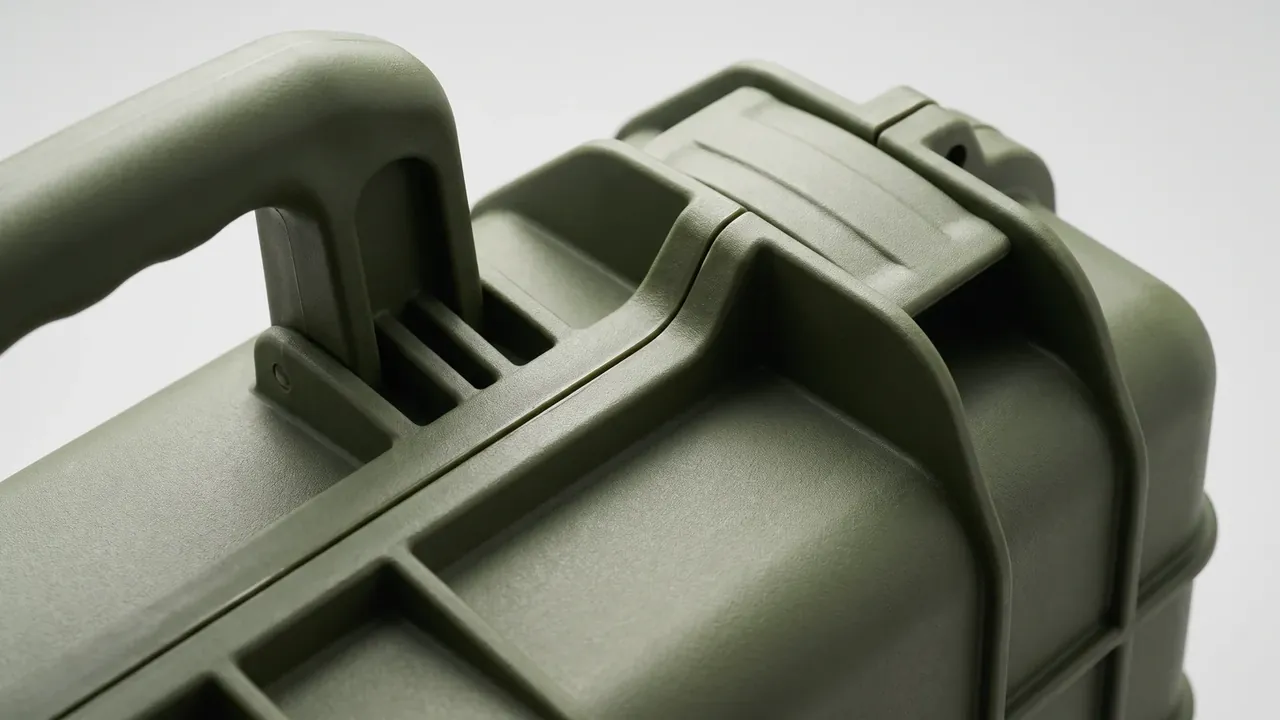
A 12 mm plywood box of the same interior weighs 11 kg, 4.5 kg more than the moulding. At NQ payload the total climbs from 49.7 kg to 54.2 kg, past the two-person line, and those kilos get lifted some 30 times a shift.
Nailed plywood loosens at the corners and lasts 3 to 5 trips, while a moulded Core Sample Case runs 50 or more; latches are the only wear part, 12 a pair.
Water decides where the box may go. Plywood swells 8 percent and the lid stops seating; PP absorbs 0.2 percent in 24 hours, which matters where mud is hosed off weekly.
| Item | 12 mm plywood | 3.0 mm PP moulding |
|---|---|---|
| Tare | 11.0 kg | 6.5 kg |
| Loaded NQ weight | 54.2 kg | 49.7 kg |
| Reuse | 3–5 trips | 50+ trips |
| 24-hour uptake | 8% swell | 0.2% |
| Cost per trip | 45 | 8.4 |
That last row follows from 180 over 4 trips against 420 over 50: 300 boxes a year close the gap in ten months, and under 50 a year plywood still wins on cash.
5. A Sizing Checklist by Diameter and Depth
Sizing starts from hole depth. A 300 m NQ hole at 90 percent recovery yields 270 m, or 30 boxes at 9 m each; three holes a month need 90 in rotation.
Six entries drive a Core Sample Case order: diameter, depth, recovery, metres per box, handling and stack height; the first four fix slots, the last two fix ribs and fork openings.
Transport is the entry most often missed: on a pickup, boxes ride two high with straps through the lid grooves; under a helicopter the limit is 50 kg and the sling goes to corner blocks, never the handle.
Label rules belong on the list too: who issues numbers, who prints labels, how boxes are reconciled on return. Without them, an accurate Core Sample Case still holds core that cannot be matched to a depth.
Conclusion
Four numbers settle a Core Sample Case: diameter sets slots, depth sets box count, handling sets the load ceiling, transport sets stack height. At 49.7 kg the NQ box fits a two-person lift; HQ and PQ need forks.
This article discusses only the container (case body) side of specifications and design intent, and does not cover any handling, loading or use of the contents.
Related Reading
- How a core box interior is laid out
- Case sets for geological exploration crews
- Choosing cases for field geology work
Related Products
- 8 Series — Gun Cases; Military Equipment Cases; Camera Equipment Cases; Drone Cases; Watch Cases; Knife Cases; First Aid Cases; Electronics Equipment Cases
- WL8-2812 PP Gun Case — model WL8-2812
- All protective cases and toolboxes: 7 series, 158 models