Home / Boxknow / Field Research & Geology Cases: Protect Samples and Instruments Outdoors
Field Research & Geology Cases: Protect Samples and Instruments Outdoors
Published 2026-09-05
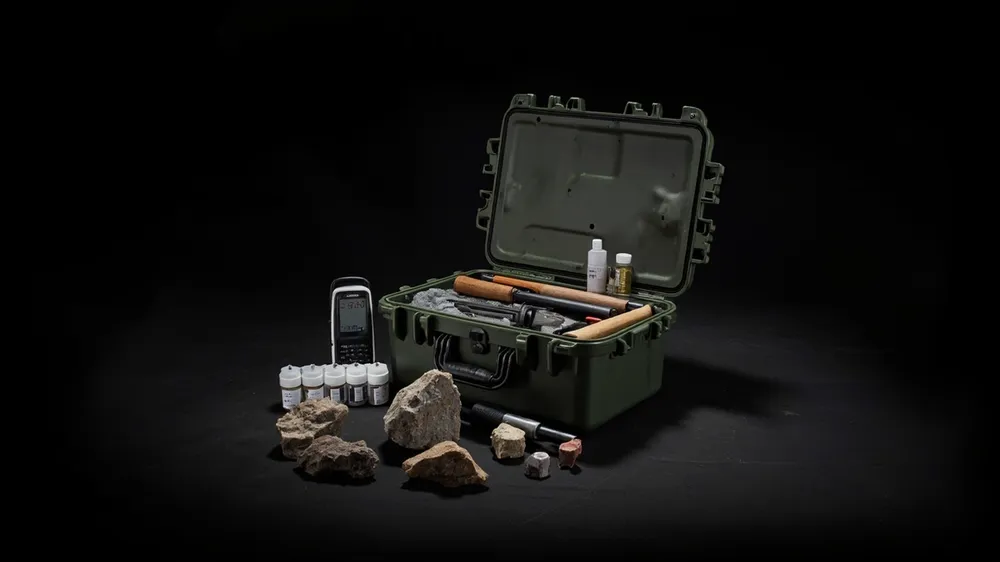
Field research and geology gear faces three hazards at once: dirt, shock and moisture. A rock hammer is heavy, sample vials are fragile, and a handheld GPS and sensors fear dust, damp and drops. A soft bag resists dust but not falls; bare gear is both damaged and cross-contaminated. A qualified sample case fixes the kit, isolates fragile vials, controls humidity and protects instruments and specimens while being carried across terrain. This guide covers choice and use from a field view.
Two Kinds of Gear Risk
Sample loss: glass vials and specimens fear crush and shake; broken means lost data.
Instrument loss: GPS and sensors fear dust, damp and drops.
Cross-contamination: mixed samples contaminate each other.
Priority: sample isolation > instrument care > heavy-item fix.
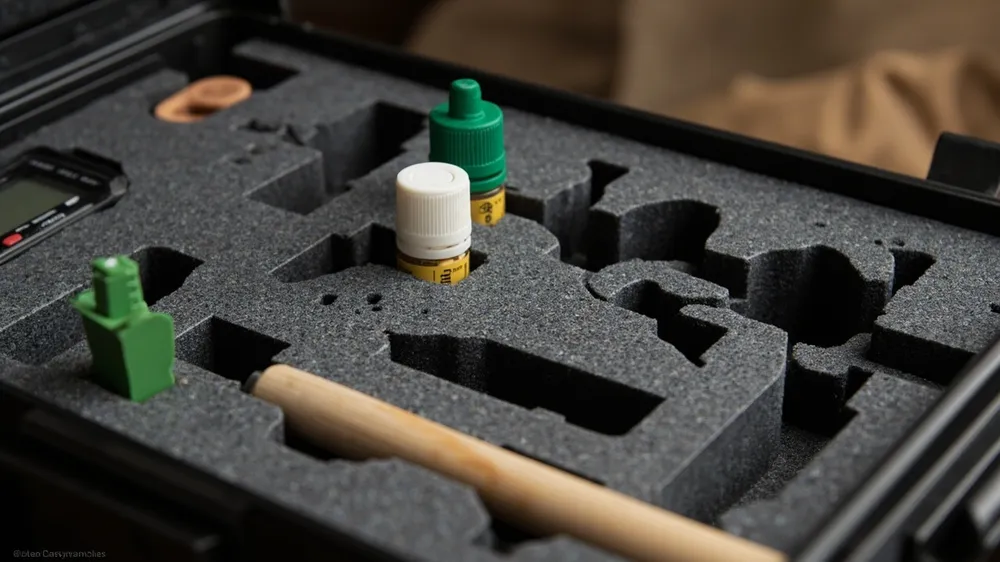
Cutouts fix the hammer and isolate each fragile vial from crush.
Samples are research assets and must sit in independent hard cavities, not crushing, not puncturing, not mixing odors. The compartment idea follows lab sample transport cases; the cavity method is in custom foam. In transit, fragile vials are fixed separately and glass bottles get sleeves against cracking.
Instrument Care and Heavy Fix
GPS and sensors must float without shake. Methods:
First, mixed samples cross-contaminate. Second, no floating cracks instruments. Third, no metal pin loosens after thousands of cycles. Fourth, recycled resin, see virgin vs recycled. Fifth, no humidity control grows mold. Sixth, no weight tag hurts the back.
Summary
The key to a field research and geology case is 'isolate samples, care for instruments, fix heavy items, control humidity': independent hard cavities keep glass vials and specimens intact, floating cavities protect GPS and sensors, the rock hammer settles without shake, and metal latches survive expedition bumps. At order time, write the sample list (with vial counts), instrument models and travel mode as clauses, then ask the supplier to show material and test proof. With the habit of 'samples isolated alone, instruments floating in place, dust off after camp, desiccant replaced regularly', field gear stays precise across many trips. For isolation and floating, cross-read lab sample cases and drone foam design.
Field cases share the same rugged discipline as expedition boxes.
Q1: How to stop vials breaking? A: Each vial in its own hard cavity, no crush; glass gets a sleeve, fragile parts float.
Q2: GPS fears damp? A: Condensation control in condensation; gasket in gasket.
Q3: Fly with it? A: Check-in TSA lock in TSA case; standard in standard.
Q4: Fix the heavy hammer? A: Rock hammer in its own cavity, see heavy tool case; floating fit in foam design.
Q5: How to size? A: Measure the longest item and vial count, see how to size.
What is the difference between a field geology research case and an ordinary toolbox?
An ordinary toolbox only solves fitting things in, while a field geology research case must also handle carry shocks, rain, snow, sand and dust, day-night temperature swings and long cross-country transfers. Structurally it needs impact, dust and water resistance, and its liner must locate and cushion geological hammers, compasses, magnifiers, GPS units and analyzers separately while reserving load-bearing, breakage-resistant space for rock samples and drill cores. Field sites are often far from any repair point, so once an instrument takes on moisture or a sample shatters the whole trip is affected. The case is therefore a whole solution of protection, sorting and traceability, not just a storage container.
Why do rock samples and drill cores need a dedicated case for transport?
Rock samples and drill cores are the core output of a survey and most fear collision, shattering, mixing and loss. An ordinary bag cannot carry the load, and long vibration lets specimens strike each other while cores may snap under compression, destroying stratigraphic information. A dedicated case uses compartments, dividers and soft padding to fix each specimen independently, organized by sampling point number to avoid cross-contamination and confusion. The case must also be stiff enough to survive stacking and drops and offer moisture protection for wet or weathering-prone specimens, so that samples reach the laboratory still analysable.
How are field instruments such as GPS units and portable analyzers protected from dust and water?
The key is to put instruments in a sealed case meeting an IP rating and add secondary cushioning inside. The gasket must be continuous and replaceable and the latches must compress it evenly, with waterproof plugs at cable and connector openings; instruments sit in moulded foam cut-outs that hold them firm against movement, and the foam itself should be dried periodically after absorbing moisture. Specify IP65 to IP67 against GB/T 4208 or IEC 60529 for rain, wading and dust. For battery-powered instruments, note that cold reduces capacity and add insulation where necessary.
How should geological hammers and sampling drills be secured for safety?
Geological hammers, sampling drills and core tubes are heavy with sharp edges and are the most likely to injure people or damage the case in transport. Fix them in dedicated tool positions with clips, cover the heads and bits and orient them down or inward so no sharp face is exposed; separate tools from instruments with a rigid divider to prevent knocking; and make sure handles and latches carry the full loaded weight so nothing shifts and destabilizes the carry. For heavy tools, add metal reinforcement and a load-bearing base plate, and design handles or casters ergonomically to reduce single-person lifting risk.
What IP rating does a research case need?
It depends on the scenario. For short transfers between a vehicle and a tent, dust and moisture protection is enough; for rain, snow, dust and wading, choose a water- and dust-resistant case stated on the GB/T 4208 or IEC 60529 IP scheme, for example IP65 or IP67. IP67 means fully dust-tight and able to survive short immersion at one meter, suited to river crossing, heavy rain and sandstorms. Note that high sealing can bring condensation, so add a desiccant inside and replace it regularly, and use a moisture barrier bag for precision instruments to form a double safeguard of sealing plus humidity control.
How should foam liner be chosen to protect both instruments and rock samples?
Material should be chosen by zone: instrument zone, tool zone and specimen zone. Use low-rebound, high-density moulded foam with cut-outs for instruments to cushion and locate them; use firmer EVA or a compartment tray in the tool zone for load-bearing and anti-knock; and use soft padding and dividers in the specimen zone to combine cushioning with breakage resistance. Foam thickness should be estimated from instrument weight and drop height, avoiding foam so soft it bottoms out or so hard it stops cushioning. For cases adjusted often, use pluckable grid foam; for long field use, watch moisture and check the foam periodically.
What are the requirements of high and low temperatures, rain and snow, and sand and dust on the case?
The field is a combined test for a case. Low temperature makes ordinary plastics brittle and stiffens gaskets until they lose elasticity, while strong heat accelerates ageing and distortion; rain and snow demand leak resistance and no meltwater ingress; sand and dust work into gaps and abrade sealing faces. Choose weather-resistant material and a wide-temperature gasket so the case stays tough in the cold and the latches work with gloves on. A light colour or insulation reduces heat gain. For long exposure, add a dust cover and clean the gasket groove regularly so grit does not scratch the seal and reduce protection.
What is most often overlooked when procuring a field geology research case?
Four items are most often overlooked. First, capacity is quoted without load rating, so handles or the base fail once rock samples are loaded. Second, the replaceability and wide-temperature performance of the gasket are ignored, and the case leaks as soon as it turns cold. Third, instrument location is only checked visually, without a loaded bump and drop displacement test. Fourth, zoning and numbering of specimens and instruments is not planned, making traceability hard back in the laboratory. Write use and equipment list, protection rating, liner scheme, load and handling configuration, material certificates and sampling rules into the procurement file and agree a first-article confirmation.