

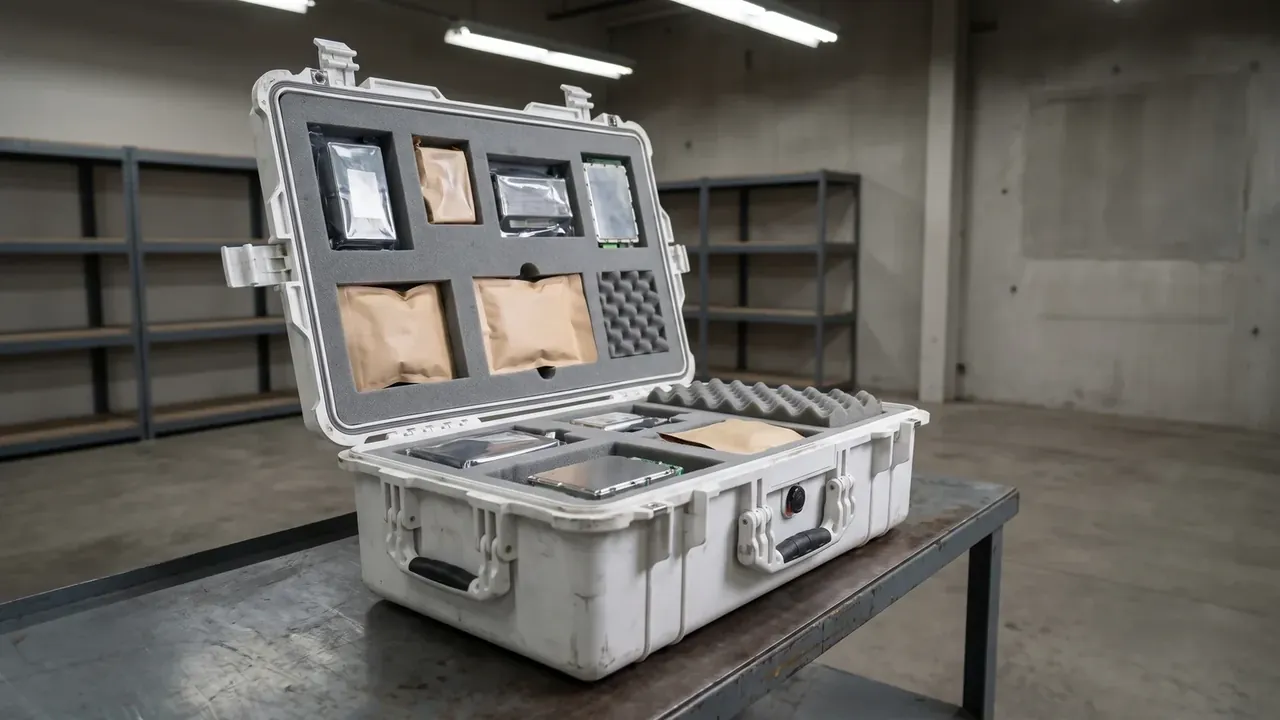
Quick answer: A custom size protective case is specified as a four-level dimension chain, cavity to envelope, with its own tolerance on each level, a shrinkage allowance behind the mould, and a pallet module that decides where the outside faces land.
Table of contents
- How the Size Chain Is Built
- Allocating Cavity and Envelope Tolerances
- How Thickness and Shrinkage Move Dimensions
- Aligning the Envelope with Pallet Modules
- Writing the Dimensional Report
- FAQ
1. How the Size Chain Is Built
A single dimension cannot be inspected: two millimetres of deviation and nobody can say whether the mould drifted or the note was wrong. A custom size protective case needs a four-level chain, each level carrying a tolerance.
| Level | Definition | Example | Tolerance |
|---|---|---|---|
| Cavity clearance | Floor to lid inner face | 640 × 440 × 300 mm | ±2.0 mm |
| Usable cavity | After ribs, bosses, draft | 618 × 418 × 274 mm | ±2.5 mm |
| Envelope | Outline with latches | 690 × 490 × 340 mm | ±1.5 mm |
| Shipping unit | Envelope plus clearance | 700 × 500 × 358 mm | reference |
The 50 mm gap is 25 mm per side: 6.0 mm wall, 8.0 mm rib crown, 11 mm lid seat and gasket groove. Keep them apart: wall changes move the first, seal the third.
2. Allocating Cavity and Envelope Tolerances
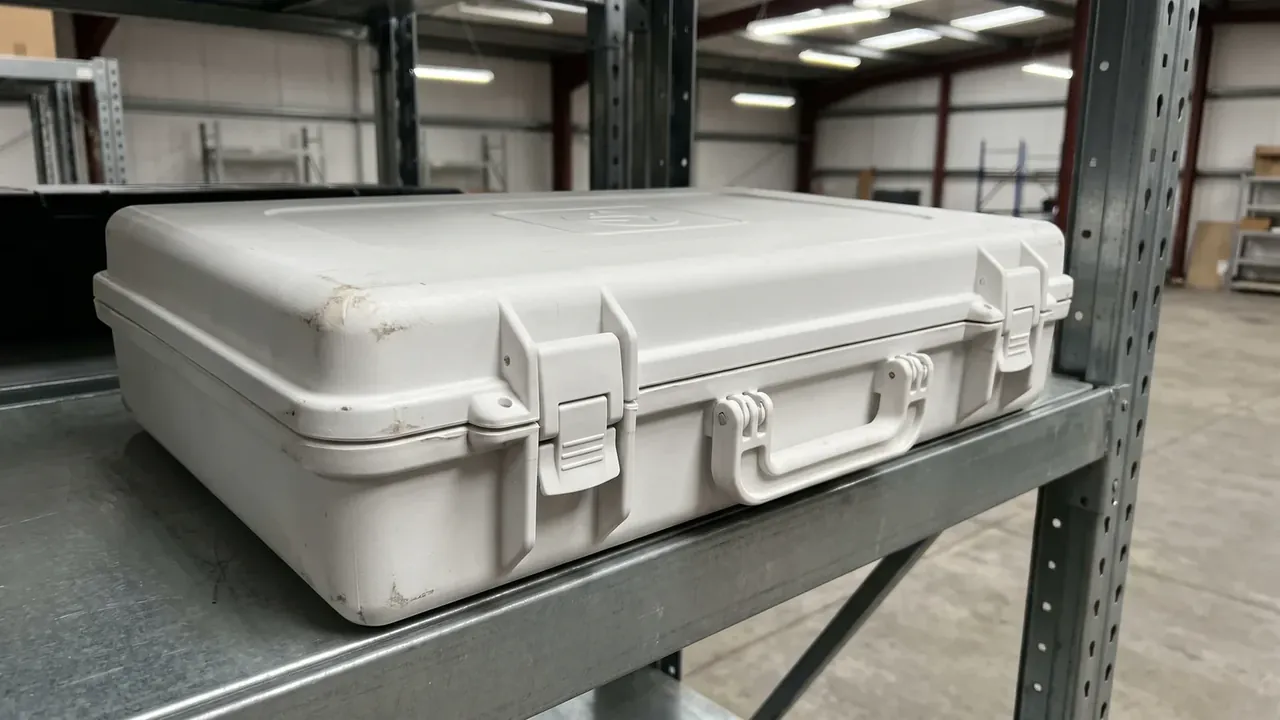
Tolerances on a custom size protective case follow function: the envelope governs pallet fit, the cavity must clear ribs and draft, and depth follows the seat.
| Item | Nominal | Tolerance | Method |
|---|---|---|---|
| Envelope length and width | 690 × 490 mm | ±1.5 mm | callipers |
| Cavity length and width | 640 × 440 mm | ±2.0 mm | CMM sampling |
| Cavity depth | 300 mm | ±1.2 mm | depth gauge |
| Lid seat gap | 1.8 mm | 1.5 to 2.5 mm | go/no-go plug |
| Diagonal difference | — | 3.0 mm max | tape |
Each tightening has a price. Holding the envelope to ±1.0 mm needs extra cooling and slides, about thirty percent more tooling; holding the cavity there leaves no room for ribs.
3. How Thickness and Shrinkage Move Dimensions
Polypropylene shrinks about 1.8 percent along flow and 2.1 percent across it. That 0.3 point spread is 2 mm on a 690 mm edge, so the steel is scaled per direction: 12.4 mm on the long edge, 10.3 mm on the short one.
Walls decide whether shrinkage stays even. Main wall 6.0 mm, base 7.0 mm, lid face 6.5 mm, corner posts 9.0 mm: past a 2.5 to 1 ratio the thin zone sets while the thick zone shrinks, and sink marks follow.
Shrinkage is corrected from measurement: mould the first batch at 1.8 percent, measure 686 mm on a 690 mm edge, and the real figure is 2.4 percent.
4. Aligning the Envelope with Pallet Modules
Freight shows as soon as a custom size protective case leaves the pallet module. On a 1200 × 800 mm pallet, a 600 × 400 mm footprint tiles four per layer, twelve cases over three layers; a 690 × 490 mm footprint fits one per layer at 35 percent.

Layout gives the tolerance meaning. A 600 × 400 case measuring 604 mm jams against the bearers, so it is held to ±1.5 mm; a 690 × 490 case owning a pallet can run to ±2.5 mm.
5. Writing the Dimensional Report
Inspecting a custom size protective case means stating the environment, instrument and number of points. Measure 24 hours after demoulding at 23 degrees Celsius plus or minus 2, since a fresh part still shrinks and reads 1 to 2 mm oversize.
The first article goes to a CMM; production samples two units per 300 and re-checks envelope, depth and diagonals. A trend column matters: an envelope walking from +0.4 to +1.3 mm means mould temperature is drifting.
Conclusion
A custom size protective case is held together by four sets of numbers: the chain that decides whether the item fits, the grades that decide what must be tight, the shrinkage allowance, and the pallet module that fixes where the envelope stops. With a tolerance and a method behind each line, a custom size protective case becomes a specification a supplier can be held to.
This article discusses only the container (case body) side of specifications and design intent, and does not cover any handling, loading or use of the contents.
Related Reading
- Dimensions to confirm at trial moulding
- From drawing to mass production
- Structure and process of injection moulded cases
- How pallet specifications are marked
Related Products
- 8 Series — Gun Cases; Military Equipment Cases; Camera Equipment Cases; Drone Cases; Watch Cases; Knife Cases; First Aid Cases; Electronics Equipment Cases
- WL8-2812 PP Gun Case — model WL8-2812
- All protective cases and toolboxes: 7 series, 158 models