

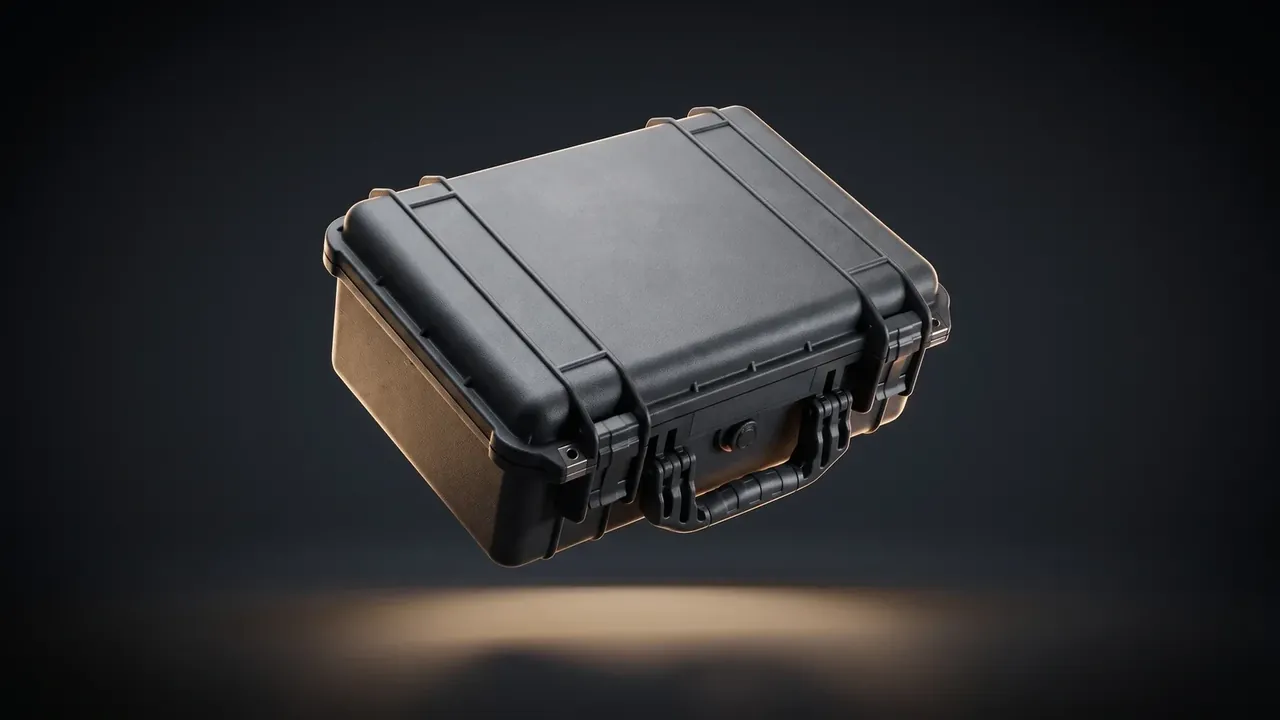
Quick answer: Judge a durable plastic hardware box on five numbers: minimum wall, rib spacing, latch force, hinge cycles and cold drop. Minimum wall, not average, is what counts.
Table of contents
- The Five Measurable Traits of a Durable Plastic Hardware Box
- Wall Thickness, Ribs and Body Stiffness
- Where Latches, Hinges and Handles Fail
- Material and Environmental Resistance
- Matching the Box to Scene and Volume
- FAQ
1. The Five Measurable Traits of a Durable Plastic Hardware Box
Durable is not an adjective but five numbers: minimum main wall, rib spacing, latch force, hinge cycles and a cold drop. Weight reads as thickness to most buyers, yet cracks start at the latch boss within a season.
Wall and rib pitch set stiffness, latch and hinge set service life, cold drop decides whether a box survives a freezer. Ask for minimum wall and its measuring points.
| Criterion | Measure | Pass line |
|---|---|---|
| Minimum wall | ultrasonic, five points | 2.5 mm or more |
| Rib spacing | centre distance | 60 to 80 mm |
| Latch force | pull to release | 120 N or more |
| Cold impact | drop at −20 °C | 1 kg from 1 m, no crack |
2. Wall Thickness, Ribs and Body Stiffness
Read thickness by location. Load sits at base corners, latch boss roots and handle mounts, so those run 0.3 mm thicker than the side wall: 2.5 mm side, 2.8 mm base, 3.0 mm boss. A uniform 3.0 mm adds 20 percent weight.
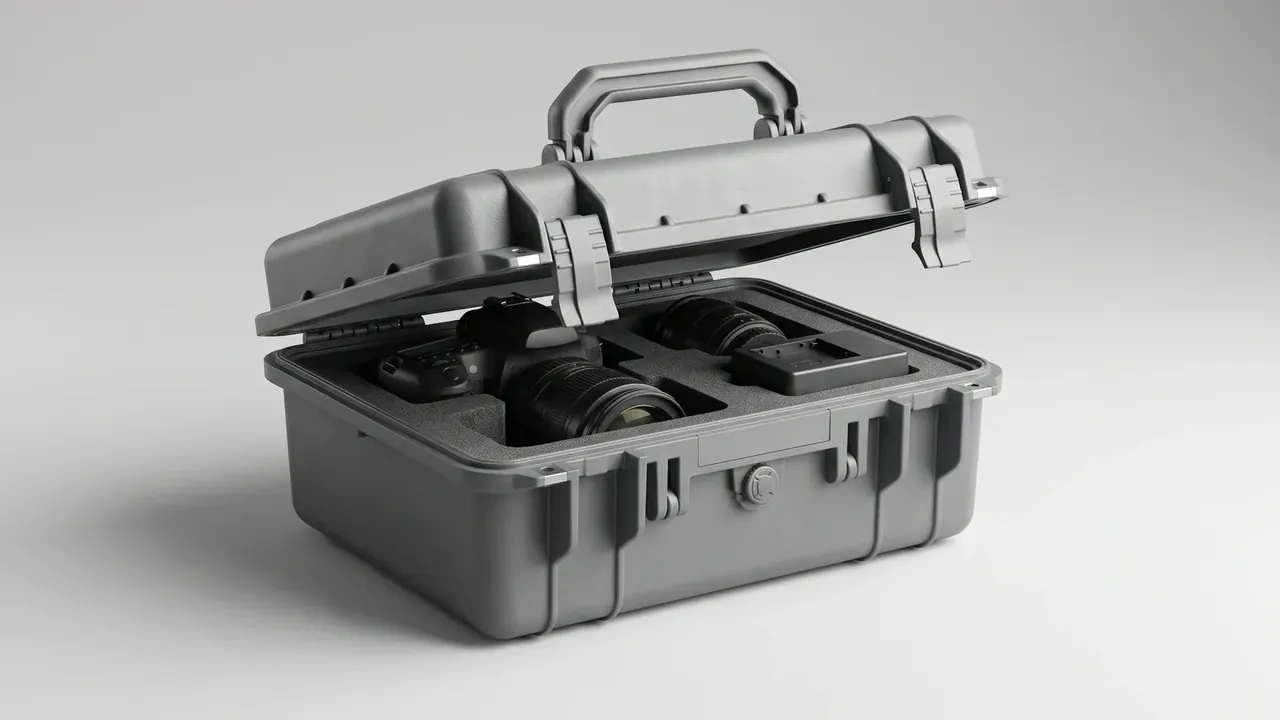
Rib spacing beats rib height. Past 80 mm the wall bulges before it cracks; under 60 mm venting suffers and sink marks appear at the rib roots. Load the box, leave it flat 24 hours, then check the gap against a straight edge.
The base is where designs get lazy: a flat base sags permanently under 25 kg in a week, so mould a grid 8 mm deep with R3 corners.
| Wall set | Weight | Rating | Use |
|---|---|---|---|
| 2.2 / 2.5 / 2.6 mm | 1.1–1.4 kg | 12 kg | cabinet spares |
| 2.5 / 2.8 / 3.0 mm | 1.6–2.1 kg | 25 kg | workshop transit |
| 3.0 / 3.3 / 3.5 mm | 2.4–3.0 kg | 40 kg | stacked storage |
3. Where Latches, Hinges and Handles Fail
Failures cluster at connections: a cracked latch boss, a worn hinge pin, a torn handle mount. Turn a durable plastic hardware box over and read its thickness at those three points.
Latch force runs 120 to 180 N on common designs. Below 120 N a loaded drop releases it; above 250 N gloved hands stop closing it. An all-plastic hinge shows 0.3 mm of play after 10,000 cycles, a stainless pin still holds at 20,000.
Handle ratings are often written at 20 kg when they should be twice the loaded weight, so 40 kg for an hour, with the mount at 3 mm and M5 screws at 1.2 N·m.
4. Material and Environmental Resistance
Material sets the floor, structure the ceiling. PP brings toughness and chemical resistance cheaply; ABS is harder but brittle in cold; HDPE takes impact best; PC is strongest and dearest.
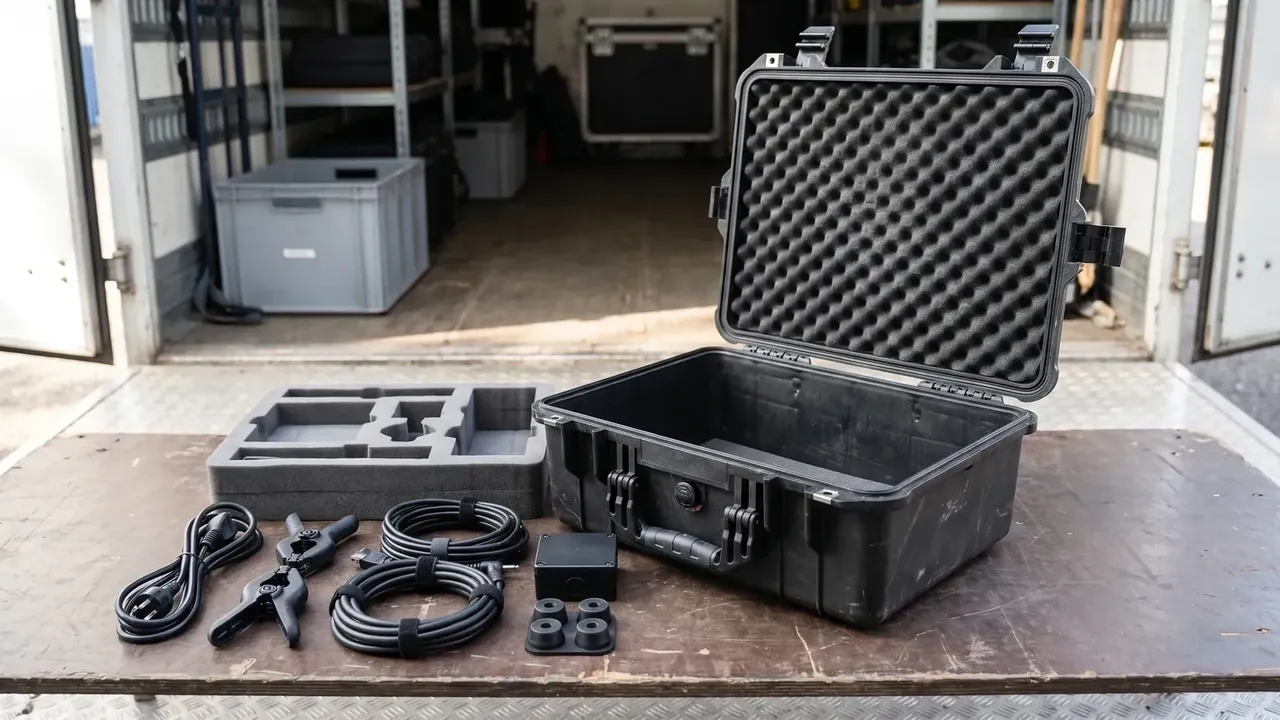
Cold breaks most claims. PP at −20 °C under a 1 kg drop from 1 m may dent but must not crack; ABS raises the odds of a split at the boss. Hardware runs 48 hours salt spray at grade 9, the body 500 hours xenon.
| Material | Density | Cold impact | Cost |
|---|---|---|---|
| PP | 0.90–0.91 | good | baseline |
| ABS | 1.04–1.06 | fair | +15% |
| HDPE | 0.94–0.96 | excellent | near baseline |
| PC | 1.20 | excellent | +80% |
5. Matching the Box to Scene and Volume
Sequence the choice for a durable plastic hardware box: scene, then wall set, then latch type. Workshop transit lives on handles and latches, stacked storage must hold five layers for 72 hours without creep, and outsourced delivery faces drops where latch force and corner cushioning decide.
Volume sets the process, and the durability. Under 300 pieces only colour changes; above 1,000 the rib pattern can be revised; only past 5,000 does a dedicated latch tool pay off.
Conclusion
Choosing a durable plastic hardware box comes down to five numbers: minimum wall, rib spacing, latch force, hinge life and cold impact. Put them in the enquiry, match wall set and latch to the scene, and the decision moves from price to data. Two boxes of identical outline differ entirely in those five figures, and specifying a durable plastic hardware box means setting their ceiling.
This article discusses only the container (case body) side of specifications and design intent, and does not cover any handling, loading or use of the contents.
Related Reading
- Common applications for hardware tool boxes
- How to select a hardware tool box
- Lid and sealing problems to expect
- Material comparison for portable cases
Related Products
- 8 Series — Gun Cases; Military Equipment Cases; Camera Equipment Cases; Drone Cases; Watch Cases; Knife Cases; First Aid Cases; Electronics Equipment Cases
- WL8-2812 PP Gun Case — model WL8-2812
- All protective cases and toolboxes: 7 series, 158 models