

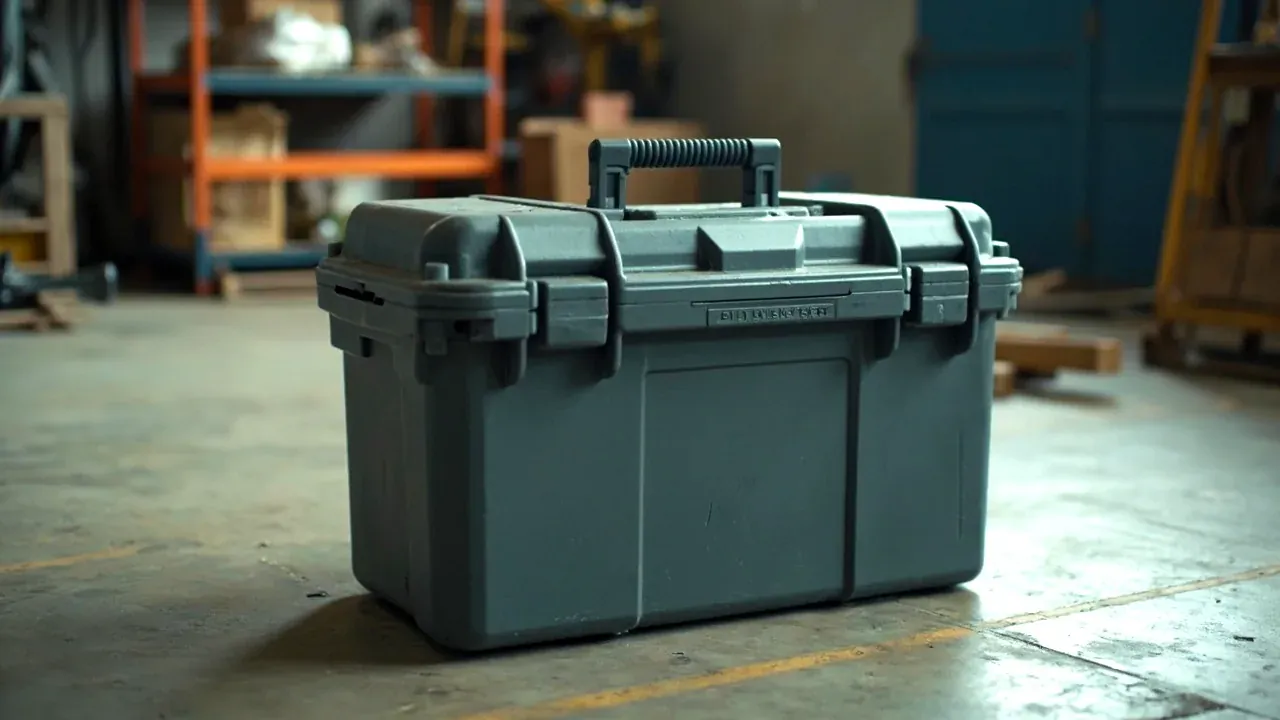
Quick answer: A plastic tool box is specified in two passes: process first, performance second. Rotational moulding is mature only with polyethylene powders; PP shrinks unpredictably as it crystallises and ABS or PA are far too viscous for the cycle, so those grades arrive as injection-moulded parts. Among polyethylenes, HDPE keeps usable notched impact at minus twenty and shrugs off diesel, yet it creeps under sustained load. Walls and ribs therefore follow a ten-year load case, not a catalogue figure.
Table of contents
- Screen the process before comparing grades
- Four grades on one grid
- Where rotationally moulded PE stops working
- Additives, blends and regrind
- Four questions that settle the grade
- FAQ
1. Screen the process before comparing grades
Material talk about a plastic tool box usually opens with a strength table, but the first filter is mouldability. Rotomoulding fuses powder against a heated tool and is routine only with polyethylene. PP shrinks as it crystallises and traps voids; ABS and PA are far too viscous for the cycle.
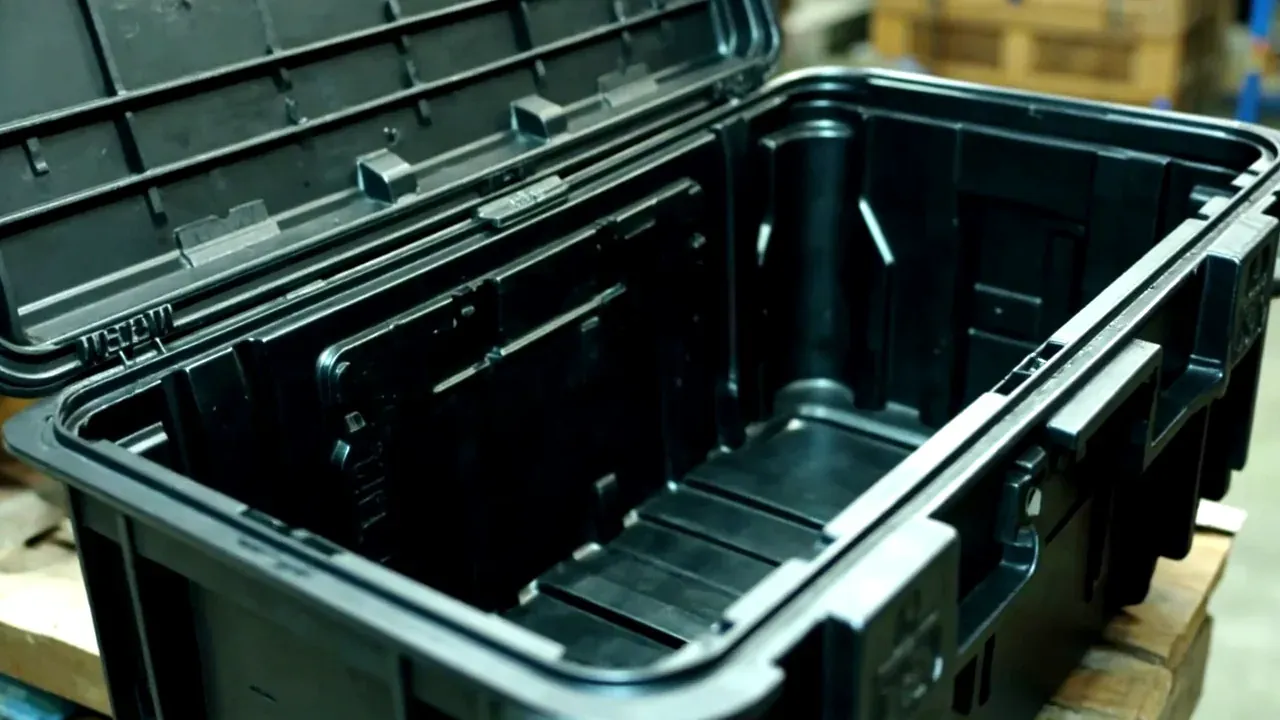
The second filter is duty. Cold stores ask for notched impact at minus twenty, machine shops for swelling in coolant, rental fleets for a weldable split. Weight those by trade; a plastic tool box has no universal grade, only a ranking for the job.
2. Four grades on one grid
Four grades fill one grid: brittle point, chemical resistance, impact, weldability and cost. Figures are typical ranges; confirm them against supplier data.
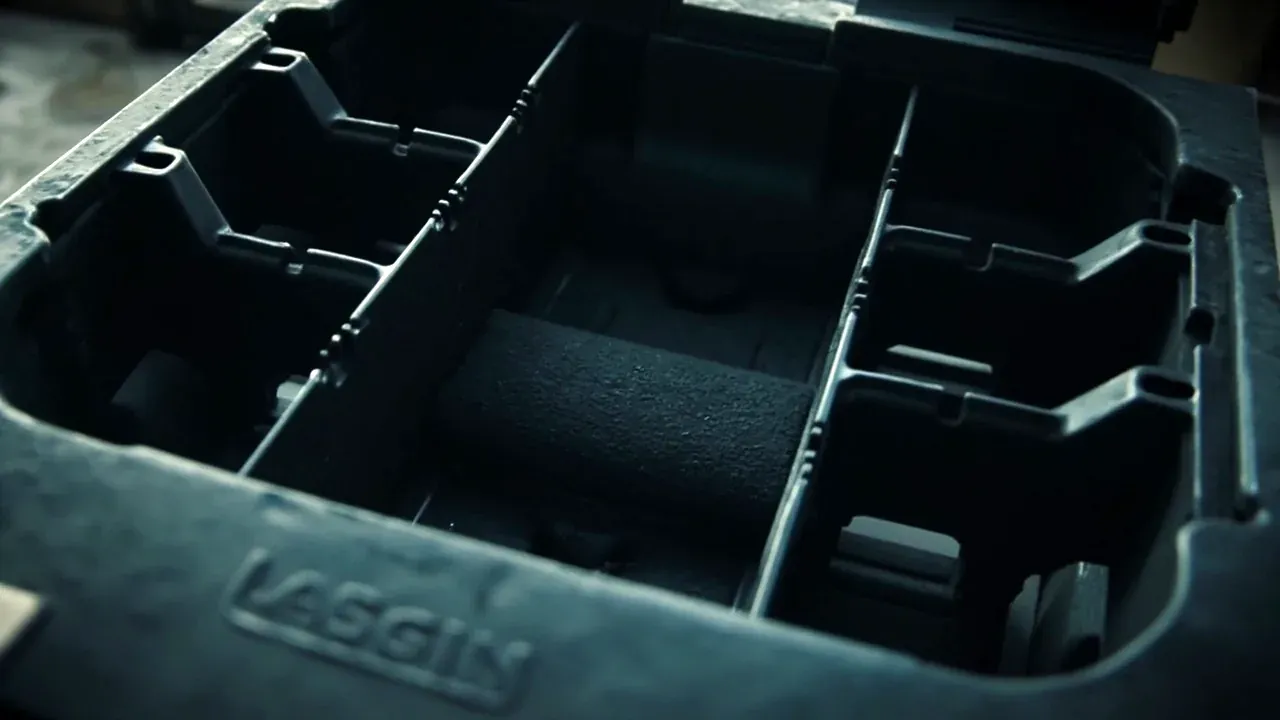
The grid rewards three readings. PP is cheapest and weakest in cold, ruling it out of cold chains. ABS looks balanced until weather and solvents are counted. PA holds impact well but costs more than twice HDPE, and HDPE leads because no column is its worst.
| Grade | Brittle at −20 °C | Chemical resistance | Weldability | Cost index |
|---|---|---|---|---|
| HDPE | slight, impact holds 70% | good against acids, alcohols, diesel | hot-air weld, joint at 70% | 1.0 |
| PP | marked, brittle near 0 °C | good, attacked by strong oxidisers | weldable, narrow window | 0.9 |
| ABS | moderate, impact halves | fair, ketones and esters attack | solvent bonding only | 1.4 |
| PA | good, flexibility retained | fair, moisture shifts properties | weldable after drying | 2.6 |
3. Where rotationally moulded PE stops working
Rotomoulded PE gives a seamless twin wall with generous radii; the penalty is stiffness. Polyethylene modulus is a fraction of steel's, so a three millimetre wall creeps under a two-high stack. The fix is geometric: five millimetre walls, a ribbed floor, ribs every eighty millimetres.
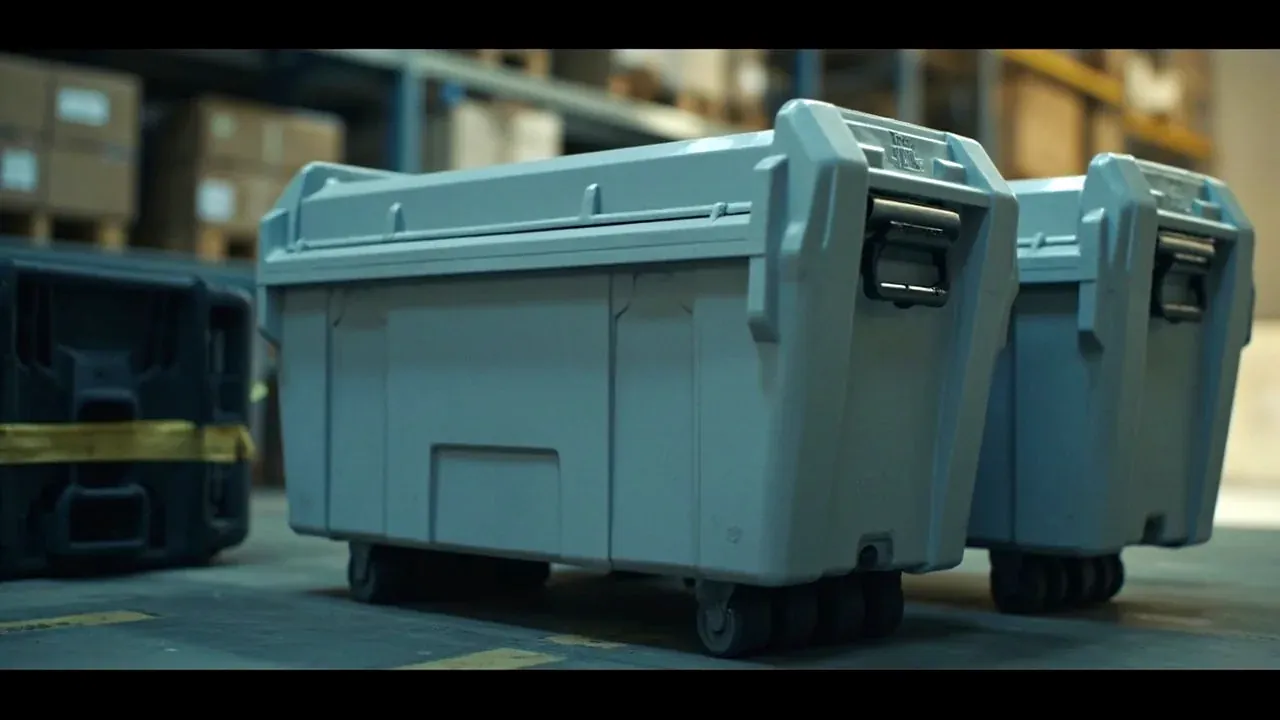
Temperature and wear set the limits. Above sixty degrees the wall softens, so a bay near an oven needs metal or a heat shield. Below minus forty the impact reserve falls. Hinge bores wear fast, which is why a plastic tool box takes metal inserts there.
4. Additives, blends and regrind
Outdoor service on a plastic tool box needs carbon black or a hindered amine stabiliser sized for three years. Antistatic agents lower surface resistance but migrate and fade. Flame retardant masterbatch weakens welds, so a patch is peel-tested before release. Add the one the duty demands.
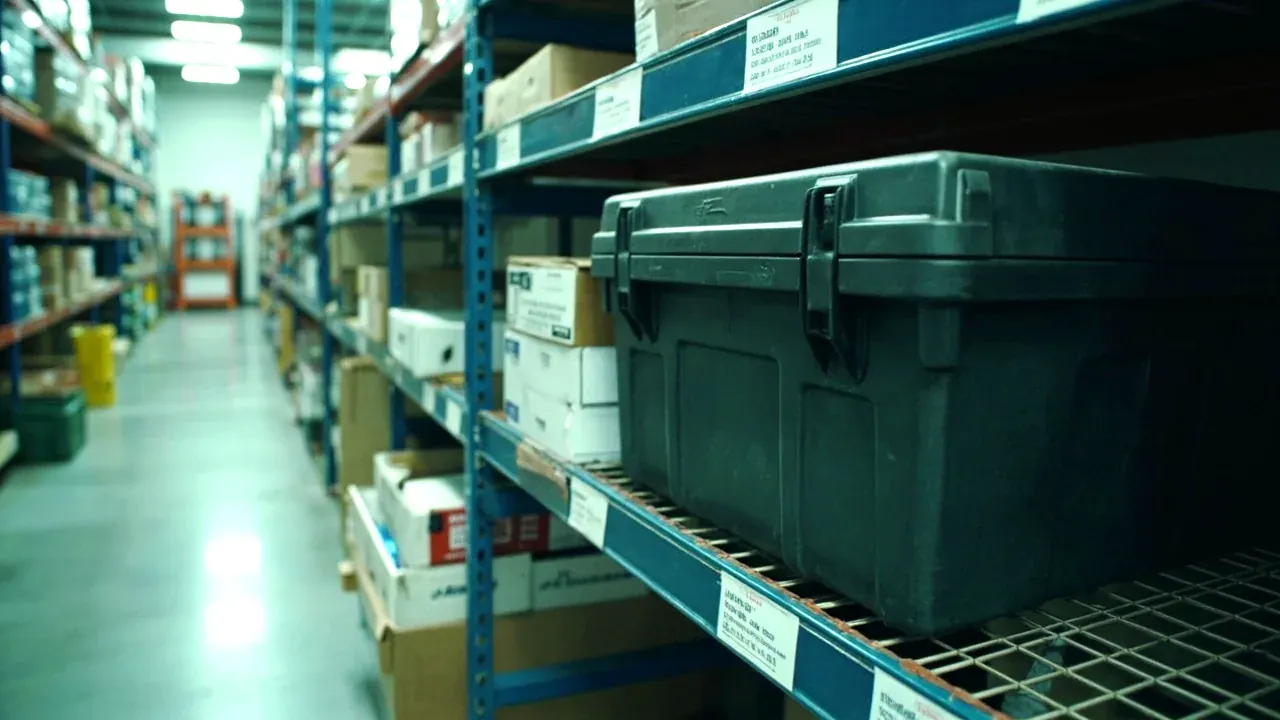
Regrind trades cost against consistency. Clean single-source trim can reach thirty per cent with a tenth of the mechanical loss; mixed scrap shows colour drift and thin spots by twenty per cent, and a thin spot starts a crack. A chalky section with grain boundaries means poor fusion, so a plastic tool box claiming ten years keeps the ratio on the drawing.
5. Four questions that settle the grade
Fix the low temperature limit first; it decides whether rotomoulding is viable. Then chemical exposure: dilute acids and diesel barely touch PE, while ketones swell ABS. Then repair, since only thermoplastics weld. Then batch size, because below two hundred units tooling dominates.
Two mistakes recur. One copies injection-moulded wall thickness into a rotomoulded plastic tool box, where stiffness comes from section depth. The other reads a moulded ABS surface as weather resistance; it chalks in two years while matte PE stays stable.
Conclusion
Judge a plastic tool box in four moves: low temperature limit, chemical exposure, repair route, batch size. Process eliminates candidates first and price last. Between minus ten and fifty degrees, with oil but no strong solvents and a requirement that splits can be welded, rotomoulded HDPE is the cheapest workable answer. Beyond that, change the material or the structure instead of thickening the wall further.
This article covers container-side specifications and design implications only, not the handling, loading or use of the contents.
Related Reading
- Rotomolded Cases: Rotational-Moulded Shell Structure & Pro…
- Plastic tool box against metal
- Tool box lid structure and latches
- Tool Kit Chest: Set-Based Organization Logic
Related Products
- 8 Series — Gun Cases; Military Equipment Cases; Camera Equipment Cases; Drone Cases; Watch Cases; Knife Cases; First Aid Cases; Electronics Equipment Cases
- WL8-2812 PP Gun Case — model WL8-2812
- All protective cases and toolboxes: 7 series, 158 models