

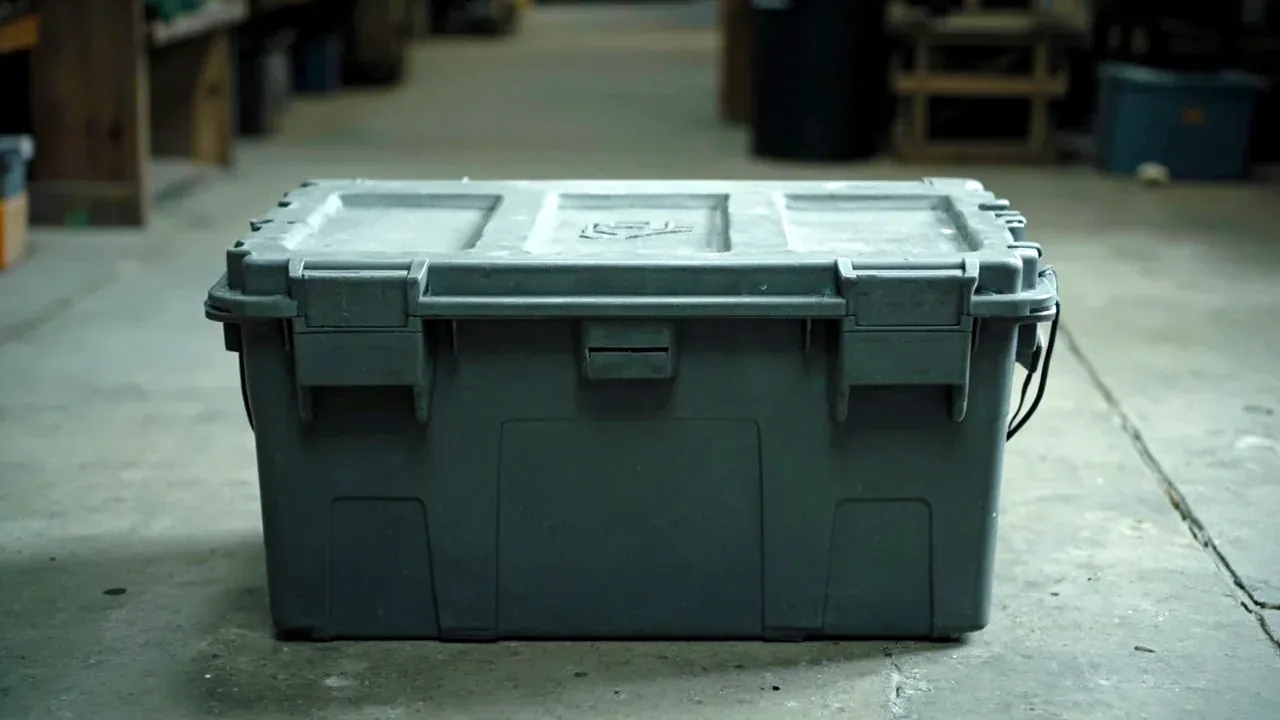
Quick answer: Both advantages of a plastic tool box hold, with conditions. Insulation depends on how metal parts bridge the shell: hinges, draw latches and screws form a path, and no resin compensates for short creepage. Weight depends on handling: a same-volume shell weighs about half, turning a two-person lift into one, yet it slides in wind and needs interlocking feet to stack. Where grounding, shielding, sustained heat or a rigid surface is required, metal still wins.
Table of contents
- Insulation is creepage, not a material name
- Weight and rebound: two faces of light
- Corrosion and repair: two failure paths
- A five-row decision table
- Where metal remains the right answer
- FAQ
1. Insulation is creepage, not a material name
A plastic tool box shell is an insulator, with surface resistance far above ten to the sixteenth ohm, which is not an insulated case. Steel hinges, latches, rivets and screws tie the faces into one path, and a film of rain completes it. Measure the shortest surface distance, not the volume resistivity.
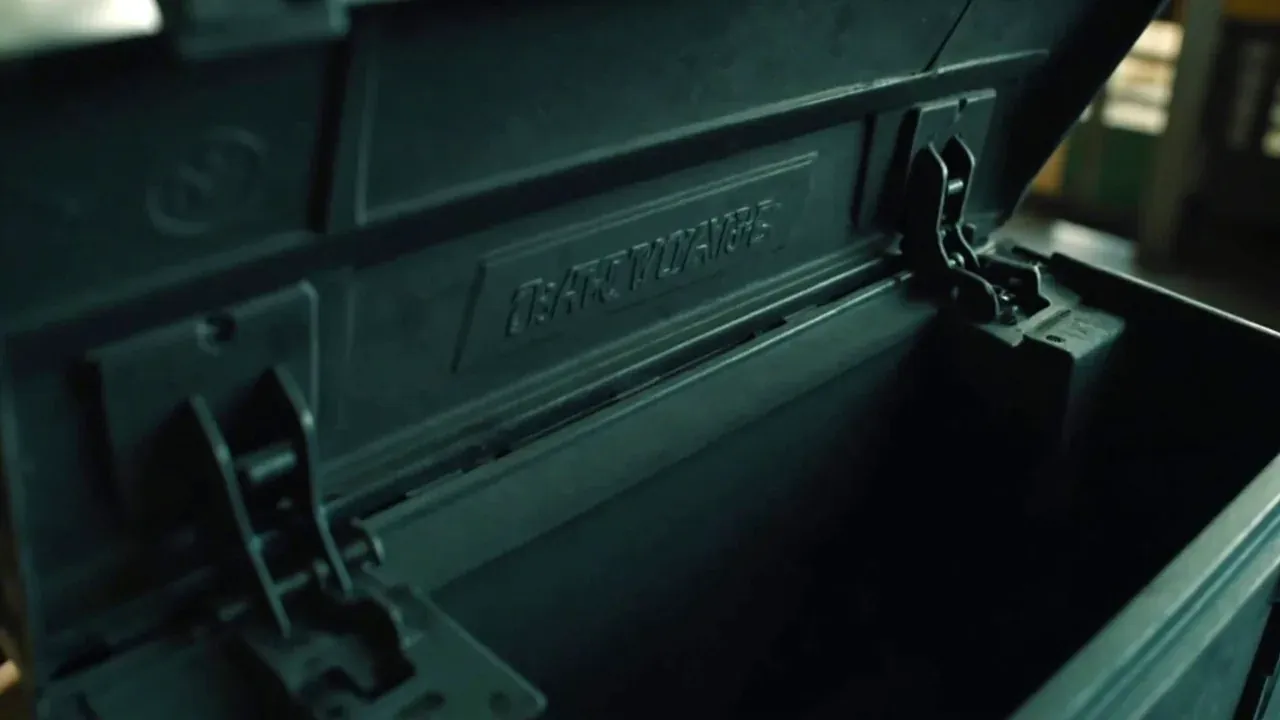
Three details decide the margin: recess screw heads two millimetres below the surface, rib the shell either side of each hinge to break a water film, and drain the floor. Where bonding is needed, the polymer shell cannot supply it, so add a plate or use metal.
2. Weight and rebound: two faces of light
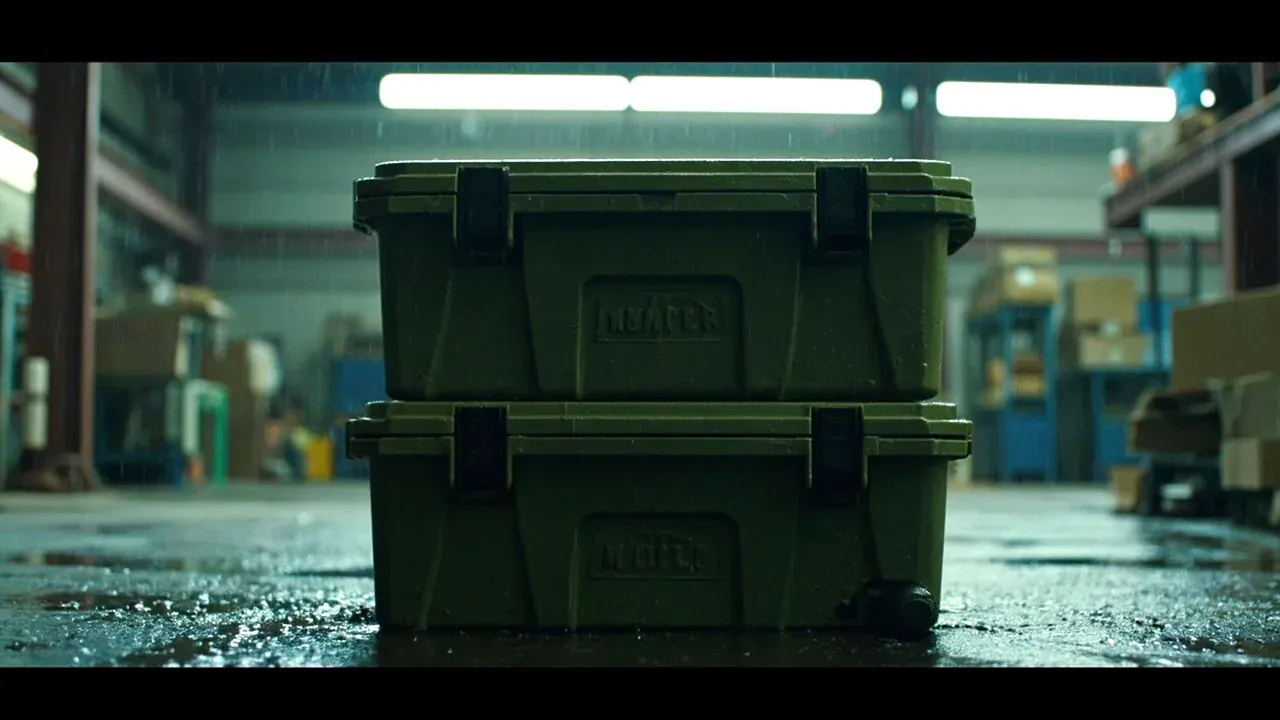
A sixty litre shell weighs five to seven kilograms in rotomoulded PE against twelve to sixteen in steel, turning a two-person lift into one. Lightness also lowers the energy released against a machine base. The cost is stability: an empty plastic tool box slides in side wind, and stacked cases have little friction.
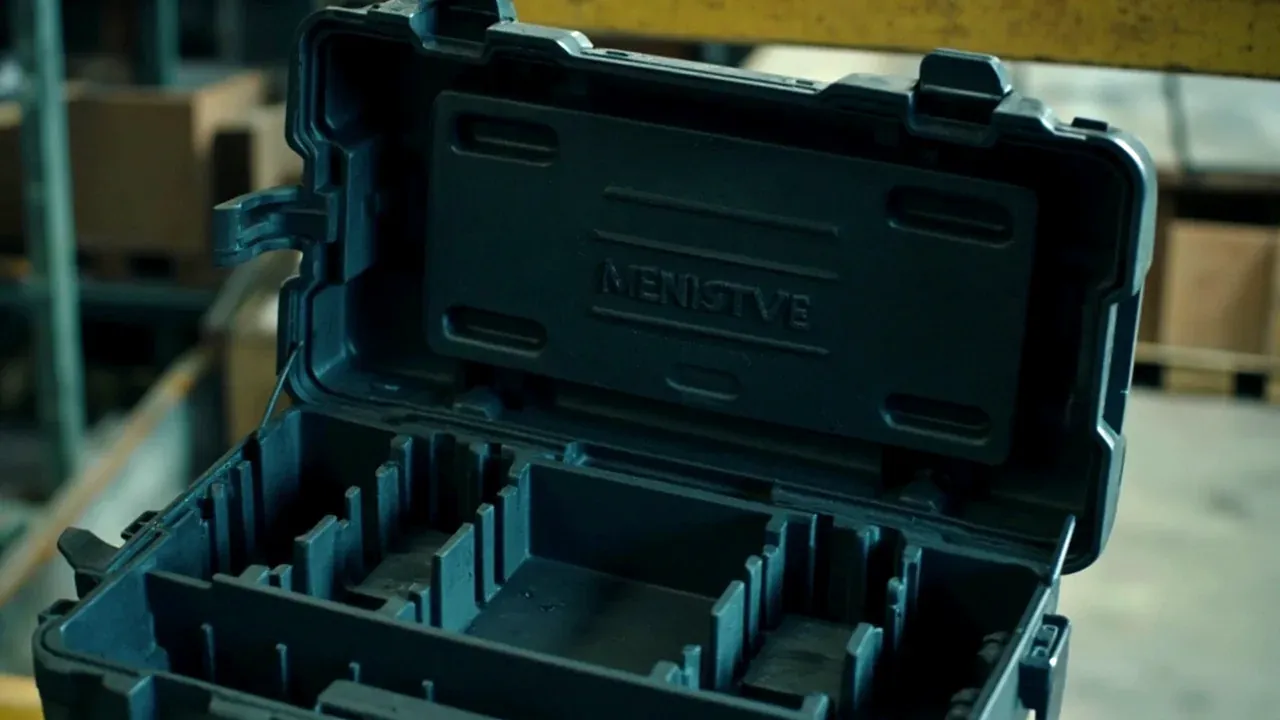
Rebound separates them. PE deflects and mostly returns, and with no paint there is no scar; steel yields and stays dented, yet rarely splits. The polymer problem is that damage hides in the crease left after rebound, so judge by impact count.
3. Corrosion and repair: two failure paths
Steel fails from the coating inward: paint chips at an edge, rust runs along a weld, and the wall perforates from inside while a small stain shows outside. A plastic tool box fails differently: stress whitening, then chalking under ultraviolet, then a split at a folded corner.
Repair differs too. PE takes hot-air or extrusion welding at about seventy per cent of parent strength, needing a gun, rod and practice; steel takes straightening and paint with ordinary tools. Polymer repair patches a section out; metal repair reshapes it.
4. A five-row decision table
The five rows do not point one way: insulation and weight favour polymer, rebound and corrosion are conditional, and repair depends on whether a welder is on site. The table exposes weights rather than a score, since the same plastic tool box ranks differently in a switch room.
| Dimension | Plastic tool box | Metal tool box | Where it dominates |
|---|---|---|---|
| Insulation | inherent; metal parts isolated | needs added insulation | live bays, outdoor switchgear |
| Weight | about half at equal volume | heavy, two-person lift | frequent moves, no gear |
| Rebound | returns; damage hidden | dents and stays | cases strapped in vehicles |
| Corrosion | none, but UV and solvents bite | rust follows a coating breach | coastal, wet, washdown |
| Repair | hot-air weld, needs skill | straighten and repaint | remote sites, no welder |
5. Where metal remains the right answer
Four duties rule polymer out. Sustained heat above seventy degrees softens and creeps PE, so bays near drying lines or welding stations belong to metal. Bonding or shielding needs a conductive path the shell lacks. A case used as a bench dishes under point load. Non-combustible linings are beyond any thermoplastic.
Two partial cases exist. Where a forklift nudges the same corner daily, a steel skid saves the base at half the weight advantage. Where outdoor storage must resist theft, a metal hasp is more direct than a polymer latch. In low-voltage rooms and washdown bays, the plastic tool box has no substitute.
Conclusion
Three questions settle most comparisons: is grounding or shielding required, what is the sustained temperature, and does the case double as a bench. Any yes sends the choice to metal before weight is discussed. With three noes, rank by transfer frequency and washdown: a plastic tool box suits moving, washing, rust-averse duty, while fixed heavy duty with a padlock goes to metal in a fixed bay.
This article covers container-side specifications and design implications only, not the handling, loading or use of the contents.
Related Reading
- Material comparison for plastic tool boxes
- Rotomolded Cases: Rotational-Moulded Shell Structure & Pro…
- Tool Bag and Tool Satchel: Carry Comparison for Field Work
- How to Choose a Tactical Storage Box: A Multi-Scenario Gui…
Related Products
- 8 Series — Gun Cases; Military Equipment Cases; Camera Equipment Cases; Drone Cases; Watch Cases; Knife Cases; First Aid Cases; Electronics Equipment Cases
- WL8-2812 PP Gun Case — model WL8-2812
- All protective cases and toolboxes: 7 series, 158 models