

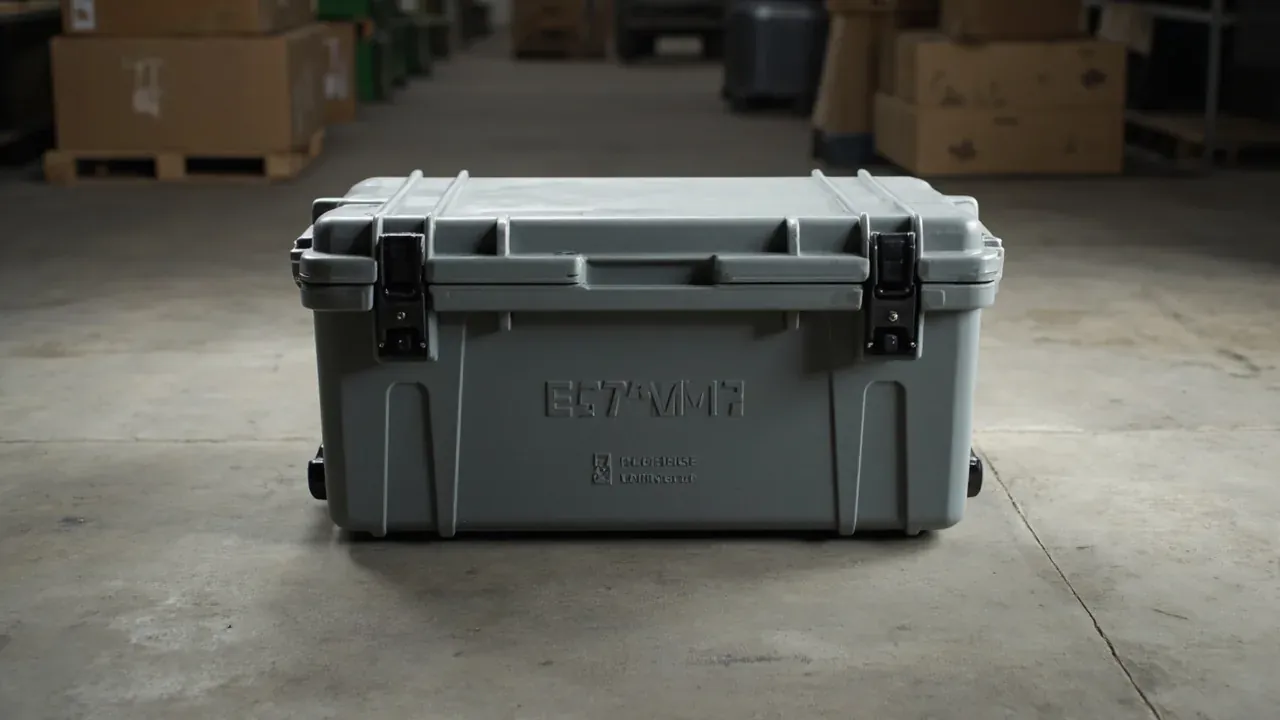
Quick answer: A tool box lid does four jobs: it closes the opening, carries stacked load, seals the rim and stops travel at a usable angle. An integral version relies on a thin living hinge and a moulded groove, and stops near one hundred degrees. A detachable tool box lid locates on four corner lips before the latches pull down. A double-wall lid is stiffest, yet needs a vent or sun will bow the panel, and the groove shape follows whichever type you choose.
Table of contents
- Four jobs a tool box lid performs
- Section through the lid: skins, air layer, groove
- Three lid types and how each one hinges
- Field checks on travel, stop and seal
- Matching the lid type to cycles and stack height
- FAQ
1. Four jobs a tool box lid performs
The first duty of a tool box lid is closing the opening; three others decide whether it works. The panel takes the top tier of a stack, the rim is the only seal path, and the hinge fixes where travel stops.
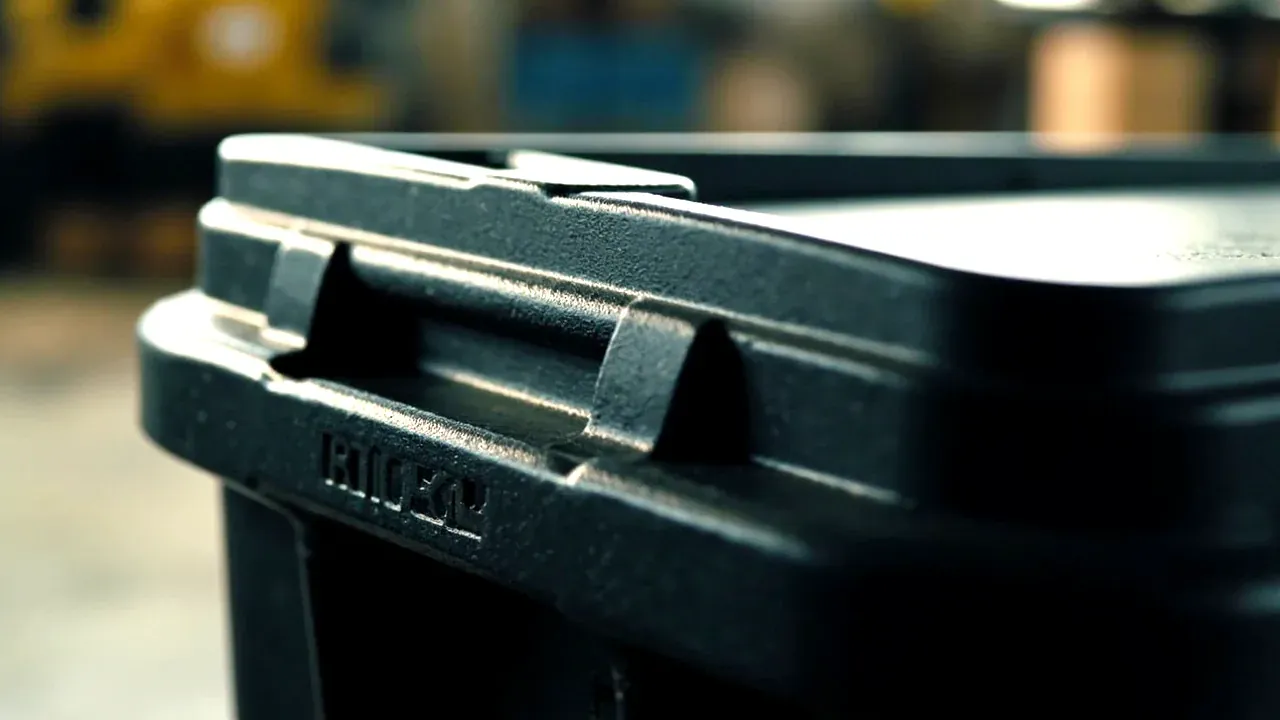
The demands fight each other. A thicker panel bends less but adds weight and moulding time. A deeper groove seals better until closing force runs out. A strap stops tip-back yet eats space inside the lid.
2. Section through the lid: skins, air layer, groove
Section shows where a tool box lid gets stiffness. Single wall means two skins and a folded rim turning inward into the gasket groove. Ribs run on the inner face eight to fifteen millimetres tall, with a three millimetre root radius.

A double-wall tool box lid traps air between skins, twelve to twenty millimetres overall, and bends far less at equal weight. Uneven thickness is the price, six millimetres at the thinnest point being common. That air expands, so a vent belongs on the sheltered face.
3. Three lid types and how each one hinges
An integral tool box lid uses a living hinge, a thin fold moulded in the same tool. At 1.2 to 1.8 mm it has no pin and no clearance, so the rim lands by itself. It fatigues: after three to five thousand cycles the fold turns pale, then splits.
A detachable tool box lid has no hinge. Two or four draw latches pull it down and corner lips locate it first. It lifts off for long items, but every closure needs alignment, and separate hinges rock once the pin wears 0.3 mm.
4. Field checks on travel, stop and seal
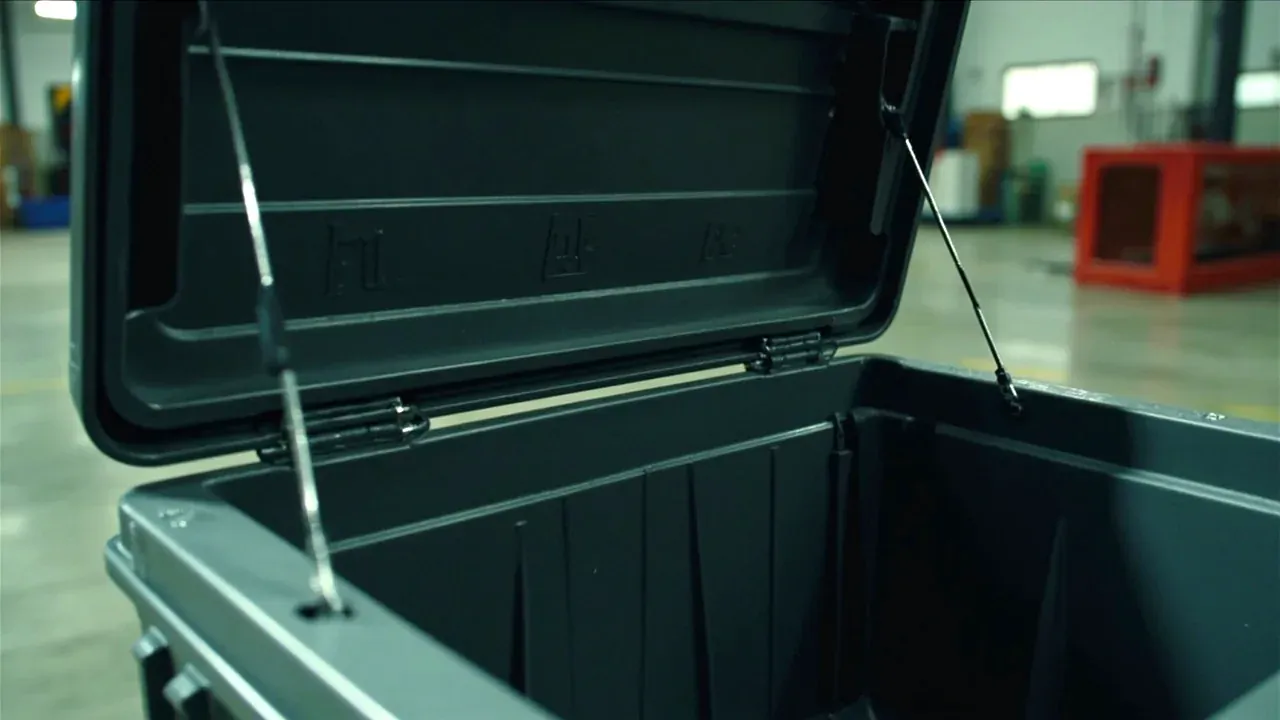
Check a tool box lid in three moves. Close it and measure rim offset, where 1.5 mm is the limit. Latch it and a 0.3 mm feeler should not enter the keeper floor. Open it and the strap tightens near one hundred degrees.
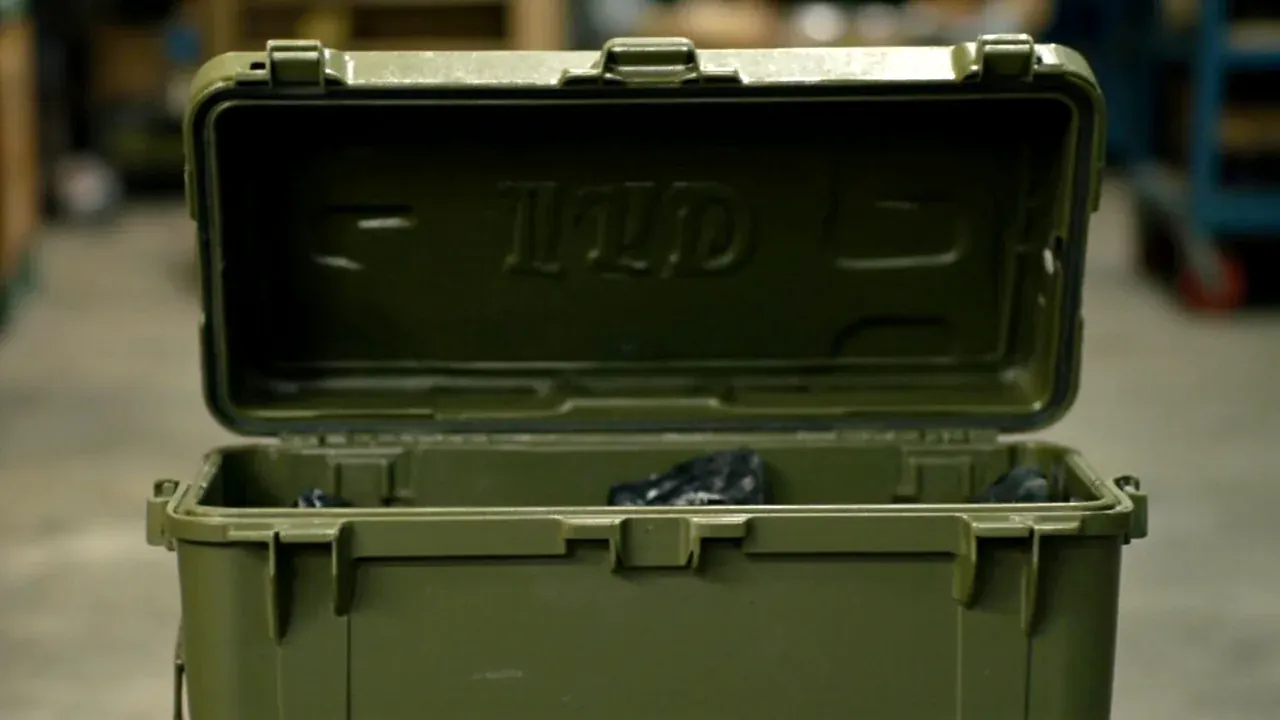
Sealing is structure, not a rating claim. The seal path is one closed loop, and corners tighter than a fifteen millimetre radius thin the gasket, which is where leaks begin. Ratings come from a third-party report, never from feel.
5. Matching the lid type to cycles and stack height
Choose a tool box lid by daily openings, then stack height, then whether it must lift off. Past thirty openings the living hinge fails first. Above three tiers the panel needs uniform-load design and corner bumpers.
Two edges are easy to miss. A pale lid runs ten to fifteen degrees cooler in sun, which slows creep. Keep lid and body from one batch, because a 0.2 percent shrinkage difference offsets the rim beyond latch adjustment.
| Lid type | Seal path | Travel | Daily openings | Replacement |
|---|---|---|---|---|
| Integral hinged | single rim groove | 95 to 105 degrees | under ten | not separable |
| Detachable | corner lips, flat gasket | no stop, lifts off | ten to forty | lid alone |
| Double wall | groove between skins | 90 to 110 degrees | under twenty | pin out first |
Conclusion
Judge a tool box lid in one order: openings per day, then stack height, then whether it must lift off. Frequency sets the hinge, height sets panel stiffness and whether the air layer earns its weight, and removal sets integral against detachable. Only then does sealing deserve discussion, because the groove follows those answers, and a lid chosen the other way round ends short on hinge life.
This article covers container-side specifications and design implications only, not the handling, loading or use of the contents.
Related Reading
- Diagnosing lid distortion and latch failure
- Rotomolded Cases: Rotational-Moulded Shell Structure & Pro…
- tool-box-cover-explained
- Material choice for a plastic tool box
Related Products
- 8 Series — Gun Cases; Military Equipment Cases; Camera Equipment Cases; Drone Cases; Watch Cases; Knife Cases; First Aid Cases; Electronics Equipment Cases
- WL8-2812 PP Gun Case — model WL8-2812
- All protective cases and toolboxes: 7 series, 158 models