

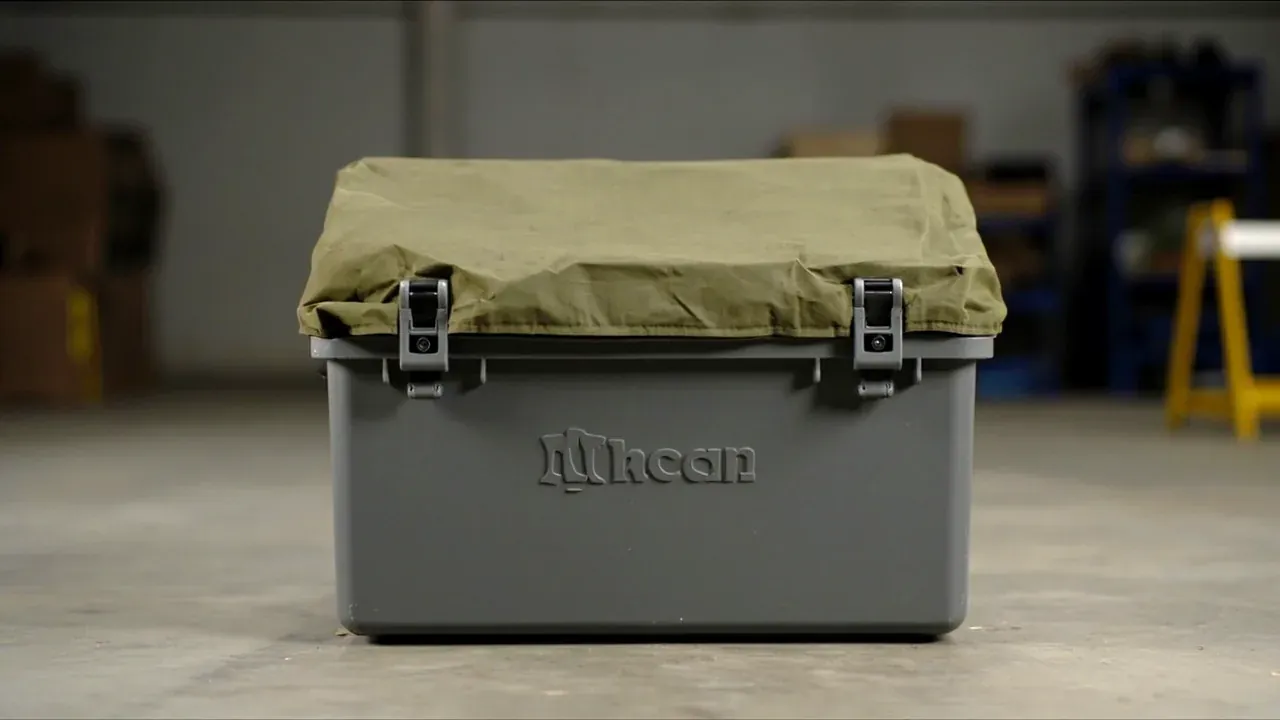
Quick answer: A tool box cover is a removable shell over a rotomoulded tool box. It lifts off, blocks nothing on the lid, and carries no load; wall thickness, gasket and latches stay with the box. It handles dust driven into latch keepers, ultraviolet light that chalks the polyethylene skin, and rain that climbs the rim under capillary action and wind pressure. Each needs a different detail, namely a close skirt, a pale face and a sloped, lapped top.
Table of contents
- Where a tool box cover sits
- Dust: the path into the latch keeper
- Sun: how ultraviolet light chalks polyethylene
- Rain: crossing the two rim lips
- Fixings and three field checks
- FAQ
1. Where a tool box cover sits
A tool box cover is a removable shell over the outside of a rotomoulded tool box. It lifts off, blocks nothing on the lid, and carries no load. Wall thickness, gasket and latches stay with the box, so the cover preserves those properties rather than replacing them.
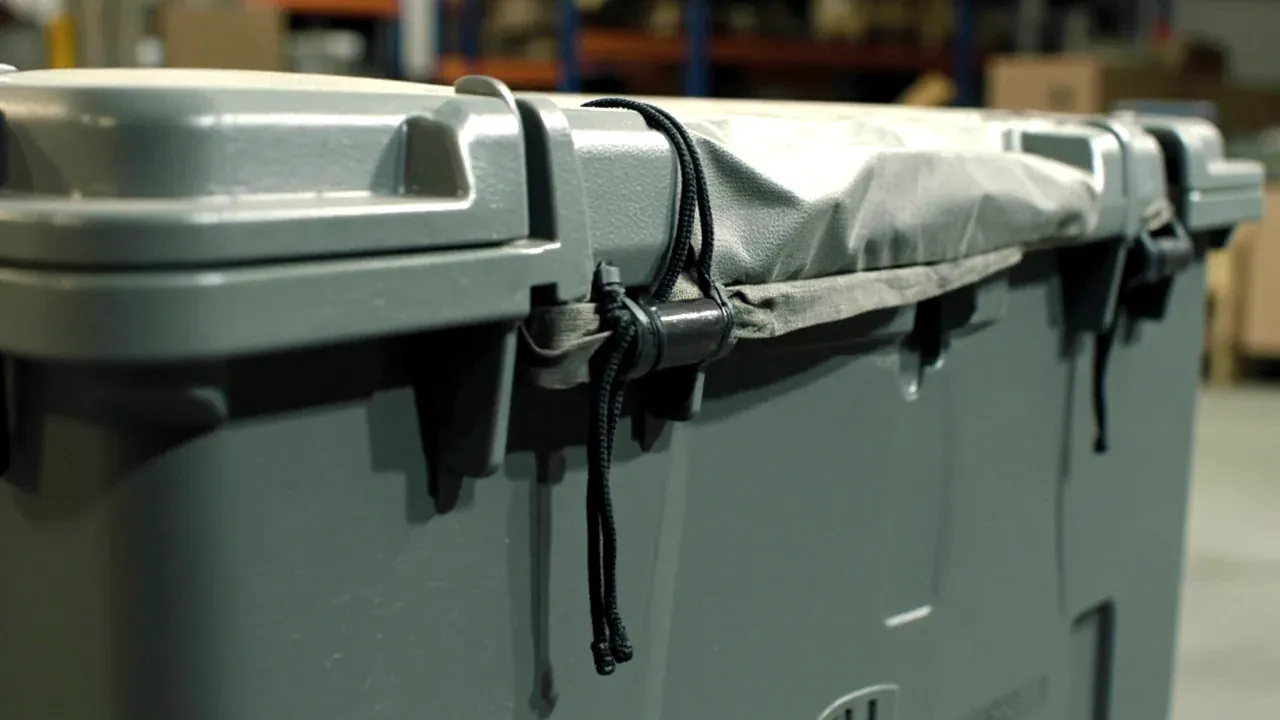
Polyethylene holds static charge, so dust clings to the lid face and the rim step. A tool box cover does not isolate the box; it slows how fast dirt arrives, stretching cleaning from weekly to monthly. Drying inside remains the gasket's job.
2. Dust: the path into the latch keeper
Dust rides air rather than falling evenly. Every closure pushes air out through the rim gap, and every opening draws it back. The latch keeper, one to two millimetres deep with 0.3 mm side clearance, is where particles stop and stay.
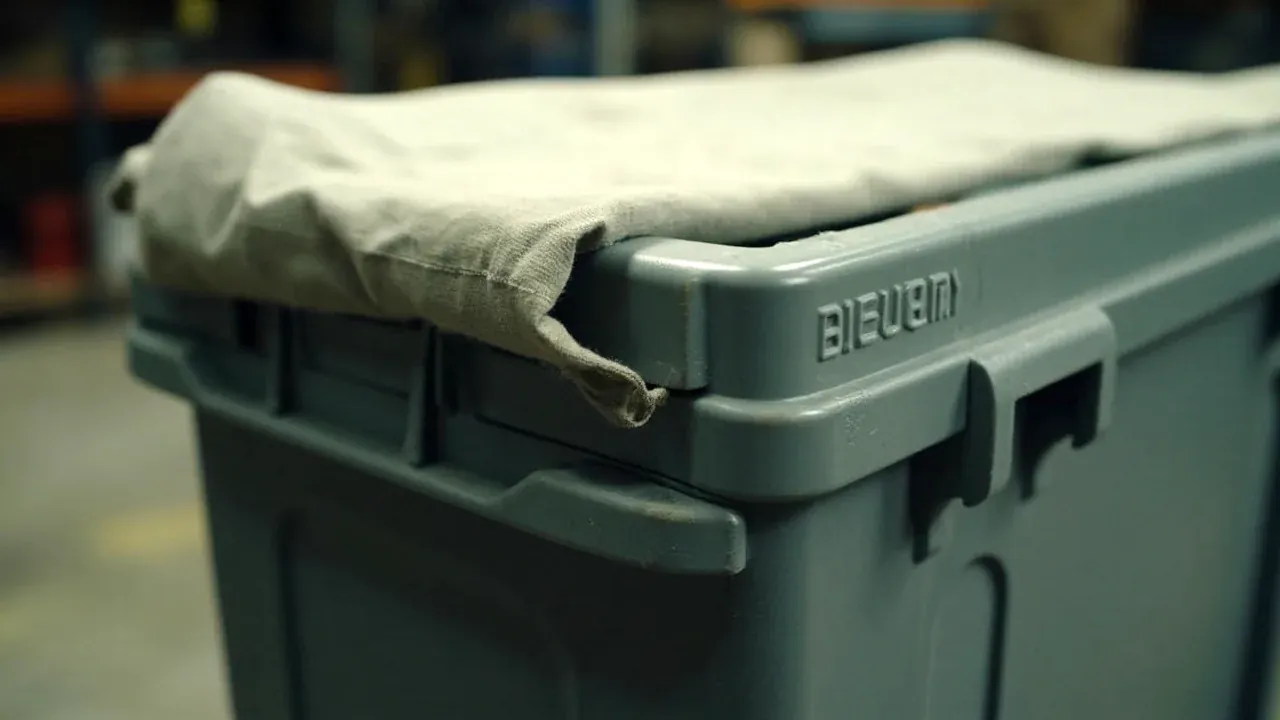
A tool box cover works through skirt length. Eighty millimetres past the rim, drawn in by a base cord, forces grit to travel down and back up. A slack cover pumps dust inward instead, and a continuous grit line on the rim proves it.
3. Sun: how ultraviolet light chalks polyethylene
Polyethylene reacts to light from 290 to 400 nanometres. Carbon-hydrogen bonds break, carbonyl groups form, and a chalk layer fifty to one hundred and fifty micrometres deep builds on the skin. Structure survives; colour and printed marks do not.
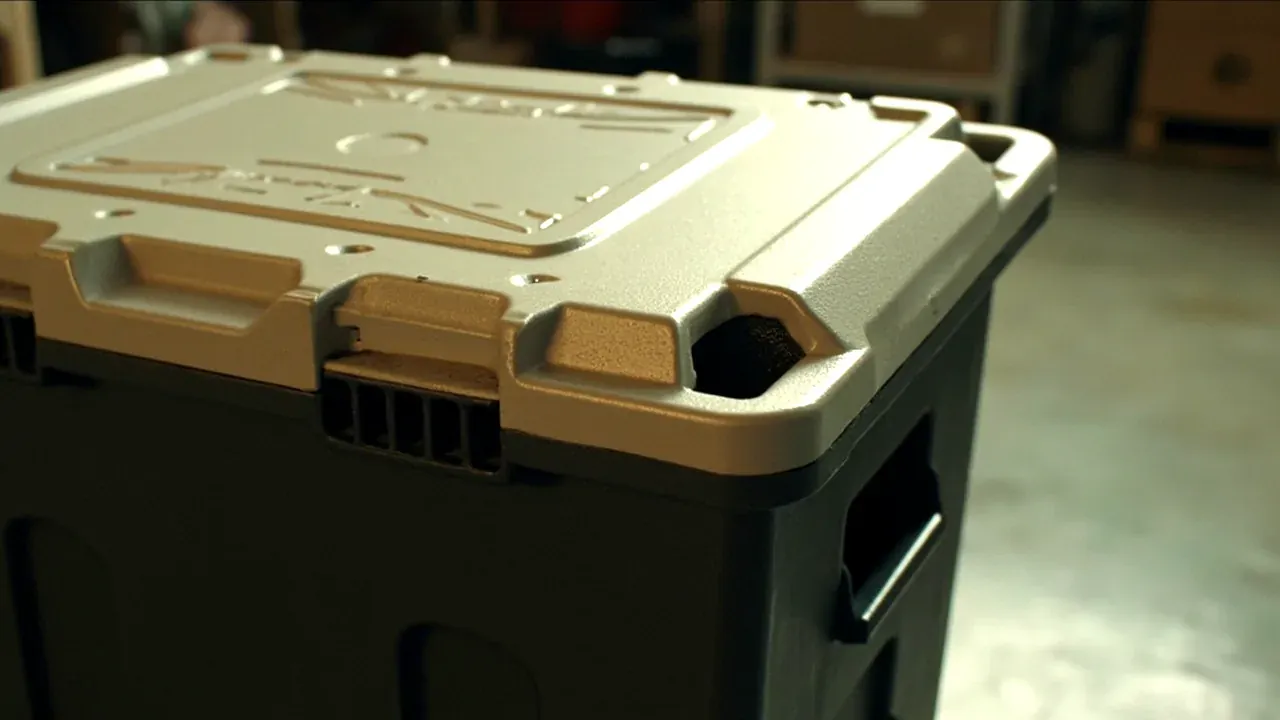
A tool box cover shades and cools. A dark lid passes seventy degrees at midday, and a pale cover takes fifteen to twenty off it, while each ten degrees removed roughly halves photo-oxidation. Hold ten to twenty millimetres of air and never seal the top.
4. Rain: crossing the two rim lips
Water enters two ways. Capillary channels a tenth of a millimetre wide lift it ten millimetres or more along the rim joint. Wind pressure then holds water against the rim face until it crosses one lip, pools outside the gasket, and crosses the second.
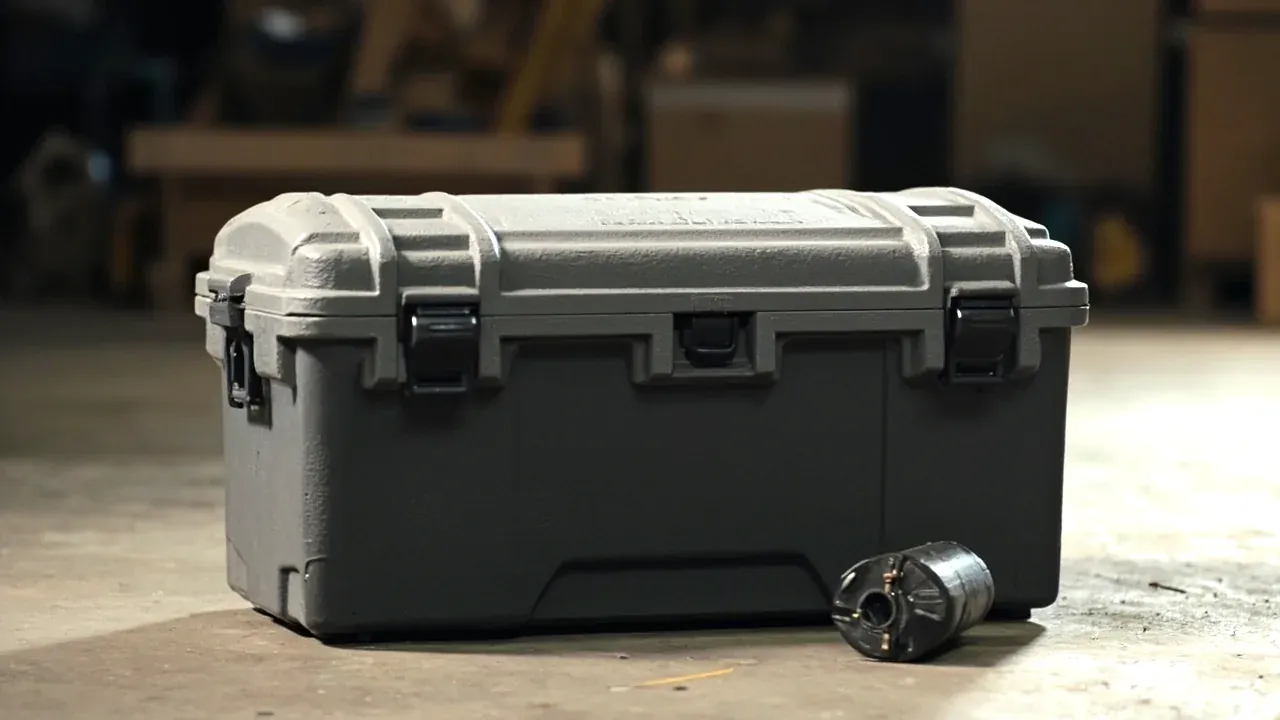
A tool box cover must follow that flow. Give the top three to five degrees of fall away from prevailing wind, lap seams sixty millimetres with the upper panel outside, and hold the skirt within ten millimetres of the wall. A soaked cover stays off the box.
5. Fixings and three field checks
Three fixings do different jobs. A hem cord with a toggle holds best in wind and suits seasonal access. Diagonal corner straps locate the cover and release fast for weekly use. Mesh vents on both sides, propped by a stiffener, carry vapour out of the space.
Checks need no tools. Push the skirt sideways, where twenty millimetres is the limit. Both diagonals should tighten together. Feel the inner face on removal, since heavy condensation means the vent is undersized for the duty.
| Duty | Mechanism | Cover measure | Check |
|---|---|---|---|
| Dust | grit driven into keepers | skirt 80 mm past rim, corded | grit line on rim |
| Sun | UV scission, chalking | pale face, 15 mm air gap | powder on wiped lid |
| Rain | capillary rise, wind push | 3 to 5 degree fall, lapped | water inside rim |
| Vapour | condensation trapped | mesh vents, stiffened | damp inner face |
Conclusion
Judge a tool box cover in one order: the box seal first, then skirt and fixing, then material. A failed gasket cannot be rescued by any cover, a loose skirt defeats the best fabric, and material only decides whether the service life runs three years or five. Working in that order settles most arguments before the fabric is even discussed, and it keeps the box rather than the cover at the centre of the decision.
This article covers container-side specifications and design implications only, not the handling, loading or use of the contents.
Related Reading
- Comparing cover materials and choosing one
- Lid structure and the three lid types
- Rotomolded Cases: Rotational-Moulded Shell Structure & Pro…
- Tool Cases: Hardware Tool Storage & Transport Protection
Related Products
- 8 Series — Gun Cases; Military Equipment Cases; Camera Equipment Cases; Drone Cases; Watch Cases; Knife Cases; First Aid Cases; Electronics Equipment Cases
- WL8-2812 PP Gun Case — model WL8-2812
- All protective cases and toolboxes: 7 series, 158 models