

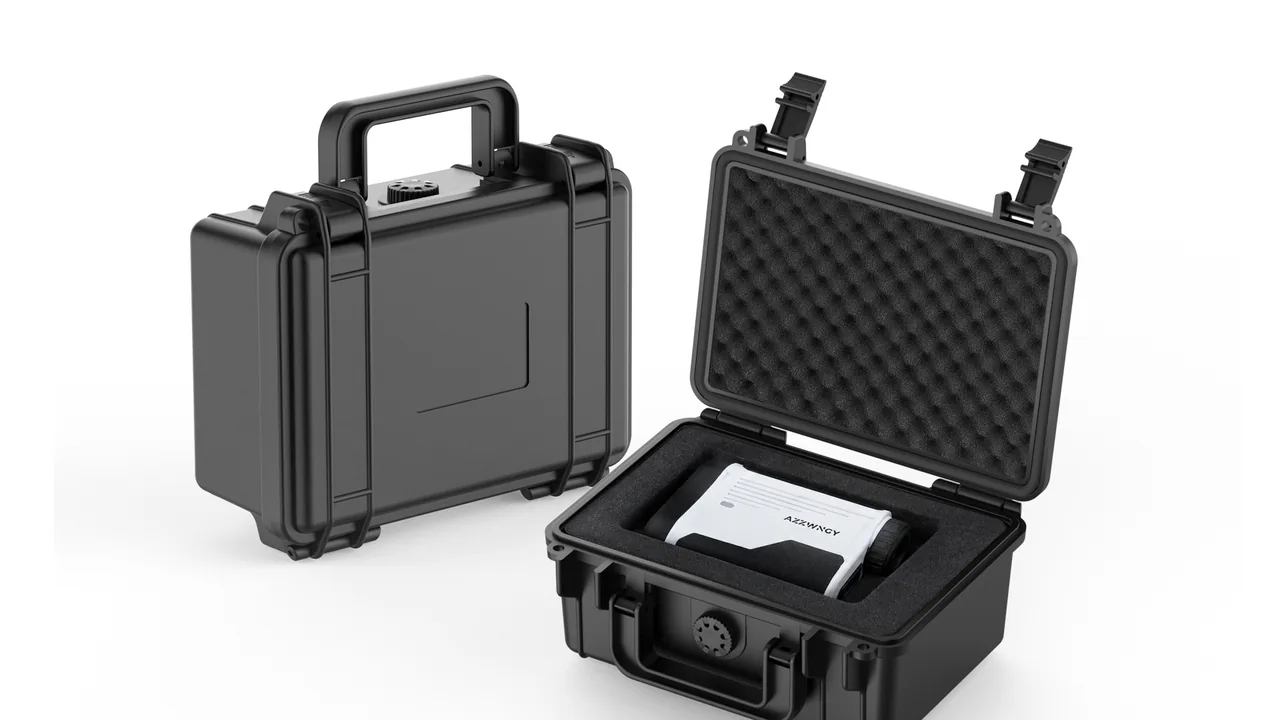
Tools are the one asset in production that gets used every day and protected almost never. A service van bounces across a site for eight hours and the sockets roll into a heap inside a plastic tray. A technician drops a torque wrench and a hammer into the same box, and one hard brake is enough to shock the calibrated scale barrel. An electrician packs a multimeter with screwdrivers, and next time the lid opens the test leads have become a knot. A site box gets rained on, and three days later the calipers come out with rust blooming on the beam.
Tool damage rarely stops work immediately, but it consumes time continuously: time spent searching, time spent reworking, and the hidden quality cost of measuring instruments that have quietly drifted out of specification.
JUNZHIJIA designs tool cases around a single principle: a good tool case does not merely contain tools, it gives every tool a defined position, a defined attitude, and a defined retrieval path. Defined positions deliver three things at once: no tool strikes another in transit, nothing has to be searched for at the point of use, and a missing item is visible the moment the lid opens. Together those determine tool availability and service life.
Table of Contents
- Operating Scenarios and the Cost of Failure
- Tool Inventory and Capacity Estimation
- Shell Selection: Injection PP, Rotomolded PE, Aluminum
- Ingress Protection: Matching IP54 and IP65 to the Job
- Liner Design: EVA, EPE, and Hard Tool Trays
- Compartments for Wrenches, Sockets, Drivers, Gauges
- Precision Tools and Measuring Instruments
- Storing Power Tools and Their Batteries
- Latches, Hinges, and Handle Load Design
- Stacking, Vehicle Transport, and Vibration
- Dust, Moisture, and Salt Fog Environments
- Cleaning, Maintenance, and Liner Replacement
- Capacity Planning, Customization, and Acceptance
- Frequently Asked Questions FAQ
- Conclusion and Related Reading
Operating Scenarios and the Cost of Failure
Construction and site work is dominated by impact and dust. Boxes are loaded and unloaded repeatedly, crushed under other materials, and bounced over unfinished ground, so tools collide with each other constantly. Dust that reaches latches and hinges causes binding, and dust inside sockets degrades bolt engagement.
Equipment repair and line maintenance is dominated by mixed packing. Under time pressure, tools are thrown in loose, and the next job begins with a search. Precision gauges then take hits from hard objects. The priority here is not a higher ingress rating but clearer compartments and a shorter retrieval path.
Electrical, telecom, and outdoor installation faces rain, mud, and temperature swings. The case needs real water resistance, and tools stored wet corrode, so drainage and drying matter more than extra wall thickness.
Precision assembly and laboratories face electrostatic discharge, cleanliness, and accuracy. The payload includes gauges, reference standards, and ESD-safe tools, and any shock above the allowable value can shift a reading.
| Scenario | Primary risk | Key need | Recommended direction |
|---|---|---|---|
| --- | --- | --- | --- |
| Construction | Impact, dust, crushing | Impact resistance, dust-tight, stacking strength | Rotomolded or thick injection shell, IP65 |
| Equipment repair | Mixed packing, slow retrieval | Clear compartments, fast access, visible gaps | Cut EVA liner, tray format |
| Electrical and outdoor | Rain, mud, corrosion | Water resistance, drainage, desiccant bay | IP65/IP67, separate desiccant bay |
| Precision assembly | Shock, ESD, contamination | Low allowable acceleration, ESD control, cleanable | High-density layered liner, dissipative surfaces |
| Aviation and rail MRO | High-value tools, traceability | Precise location, gap visibility, lockable | Custom pockets, numbering, lock provisions |
Quantifying failure cost helps set the specification: retrieving a misplaced tool costs minutes, but a rework caused by a drifted gauge costs hours. Cutting the time to find and verify a tool from two minutes to twenty seconds, many times a day, covers the cost of a mid-range case within a year.
Tool Inventory and Capacity Estimation
Capacity is not the sum of tool volumes. Tools need separating layers, grab clearance, and insertion space, so usable volume typically runs 55% to 75% of internal volume. The ratio depends on how regular the shapes are: socket rails and wrench sets pack efficiently, while drills and angle grinders waste substantial space.
A workable process follows. Classify every tool by shape and fragility: long slender items such as screwdrivers, flat items such as wrenches and calipers, block items such as sockets, and irregular items such as power tools and gauge bodies. Measure the maximum, not the average, of each dimension, otherwise the case fits most tools but not the longest one. Estimate the footprint by layout type, and reserve clearance: slot depth 2–4 mm deeper than tool thickness for preload, 2–3 mm extra width as a grab allowance, and 5%–10% expansion margin.
| Tool class | Examples | Recommended containment | Space efficiency | Caution |
|---|---|---|---|---|
| --- | --- | --- | --- | --- |
| Long slender | Screwdrivers, hex keys, extensions | Parallel slots, vertical or angled | High | Tips down or toward a fixed face |
| Flat | Wrenches, calipers, blades | Layered flat with separators | Medium-high | Never stack over thin-walled gauges |
| Block | Sockets, hammer heads, tapes | Grid cells, one item per cell | High | One per cell, no mutual contact |
| Irregular | Drills, grinders, gauges | Individual pocket plus grab clearance | Low | Must be located, never unsupported |
| Consumables | Bits, blades, abrasive sheets | Small cells or drawer boxes | Medium | Edges inward, stored separately |
| Accessories | Batteries, chargers, cables | Separate cavity with desiccant bay | Medium | Batteries never share with metal |
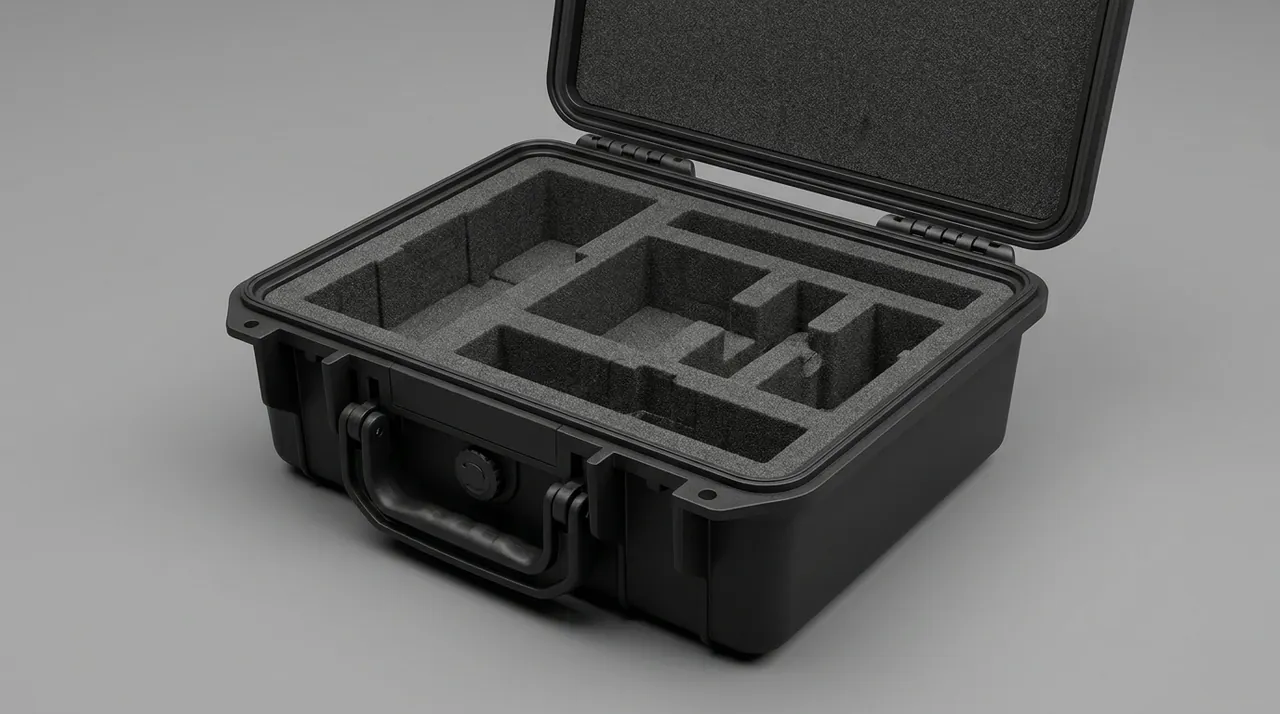
One variable is routinely missed: retrieval frequency. The tools used most often, usually about 20% of the inventory, should sit where they are visible on opening. A layout optimized purely for volume puts them at the bottom, saving case size and costing time on every job; moving frequently used items up one layer often halves retrieval time.
Shell Selection: Injection PP, Rotomolded PE, Aluminum
Shell choice balances impact resistance, self-weight, and how easily the interior can be structured.
Injection-molded PP is formed in a single shot with uniform walls and high dimensional accuracy, so ribs, latch seats, handles, and compartment skeletons can be molded as integral features. It is light, dimensionally consistent, and its cost falls steeply with volume. For cases carried by hand where total weight must stay under about 15 kg, injection PP is the best-balanced option. The limits are high tooling investment and part size constrained by machine capacity.
Rotomolded PE is produced from powder in a rotating mold, giving a seamless part with walls of 6–12 mm and outstanding drop and crush resistance. It suits heavy cases that are loaded and unloaded constantly, especially those carrying hydraulic tools, power tools, and large wrench sets. The trade-offs are weight, a rougher finish, and wider tolerances.
Aluminum extrusion combines profile frames with riveted or bolted panels, delivering high stiffness, rectilinear geometry, and easy internal layering with drawer slides. Thermal performance is better than plastic, which suits heat-generating tools and battery equipment. The drawbacks are the highest weight at a given rating and seams that must be sealed against dust.
| Shell route | Impact | Weight | Interior flexibility | Tooling | Best fit |
|---|---|---|---|---|---|
| --- | --- | --- | --- | --- | --- |
| Injection PP | Medium | Light | High, molded compartments | High | Field service, portable kits |
| Rotomolded PE | High | Heavy | Medium, relies on liner | Medium | Site work, heavy tools, rough handling |
| Aluminum extrusion | Medium-high | Heaviest | Highest, accepts drawer slides | Low | Precision tools, vehicle-mounted, long-term stations |
The practical criterion is fully loaded weight against carrying method, and stacking behaviour follows from the same stiffness budget; see stackable toolbox height limits and benefits of stackable toolbox design. Under about 12 kg carried by one person, injection PP wins. Above about 15 kg, or where the case lives in a vehicle mount, the stiffness of rotomolded PE or aluminum pays for itself.
Ingress Protection: Matching IP54 and IP65 to the Job
Ingress protection follows IEC 60529 or GB/T 4208, describing resistance to solids and water. The common mistake is assuming a higher number is always better; each duty has a different optimum.
| Rating | Dust | Water | Typical duty | Recommendation |
|---|---|---|---|---|
| --- | --- | --- | --- | --- |
| IP54 | Limited | Splashing | Indoor repair, dry shops | Fixed indoor stations only |
| IP65 | Dust-tight | Water jets | Rain and snow, outdoor install, washing | Recommended for field work |
| IP66 | Dust-tight | Powerful jets | Sites that pressure-wash housings | Specific duties |
| IP67 | Dust-tight | Temporary immersion | Water crossings, mud, dropped-equipment risk | Special situations |
The test is direct: does the tool need dust exclusion, does it need rain protection, will it contact flowing or standing water? In practice, dust matters more than water. Fine particles reaching latches, hinges, and socket bores cause abrasive wear that is harder to remove and often more damaging than a brief shower. In dusty trades such as woodworking, concrete, and metal finishing, specify a fully dust-tight structure at IP65 even if water is never present.
Remember that an ingress rating is a property of the complete case system: latches must be fully engaged, the gasket clean, and the pressure equalization valve reseated. Tool cases are opened far more often than equipment cases, so partially engaged latches are routine. A three-point closing check covering latches, sealing face, and valve is worth more than the rating figure itself. Gasket material and compression matter for long-term sealing, and silicone or EPDM is the usual specification; see seal ring replacement and care.
Liner Design: EVA, EPE, and Hard Tool Trays
A tool liner must deliver both location and access, and these two goals do not always pull in the same direction.
EVA is the workhorse. Density is adjustable, it cuts cleanly, it is closed-cell and non-absorbent, and its cut faces hold shape for years. Tool liners normally use medium-to-high density EVA at 45–70 kg/m³. Too low and the pockets deform until tools lose their location; too high and insertion becomes stiff with too little cushioning stroke.
EPE is softer and lighter, suiting the lid preload layer or filling irregular voids. Its low tear strength makes it unsuitable for deep cut pockets.
Hard tool trays form a third route: an injection-molded or vacuum-formed tray with shaped recesses, matched to the shell. Trays offer the highest shape accuracy, lift out as a unit, and make missing items obvious. The costs are re-tooling on any change and the need to eliminate clearance between tray and shell wall.
| Liner route | Locating accuracy | Cushioning | Changeover cost | Best fit |
|---|---|---|---|---|
| --- | --- | --- | --- | --- |
| Cut EVA | High | Medium-high | Low, just re-cut | Many tool types, frequent change |
| EPE fill with separators | Low | High | Low | Irregular tools, temporary storage |
| Hard tray | Very high | Low | High, requires tooling | Fixed inventory, strict gap control |
| Layered EVA plus tray | Very high | Medium-high | Medium | High-value tools, gauges |
The common engineering answer is a layered combination: a 15–20 mm high-density EVA base carrying the load, a 40–60 mm medium-density layer holding the cut pockets, and a 10–20 mm EPE layer bonded into the lid for soft preload. This hard-base, medium-core, soft-cap arrangement keeps tools located under impact without making them hard to remove. Quantitative comparisons appear in liner foam types explained.
Compartments for Wrenches, Sockets, Drivers, Gauges
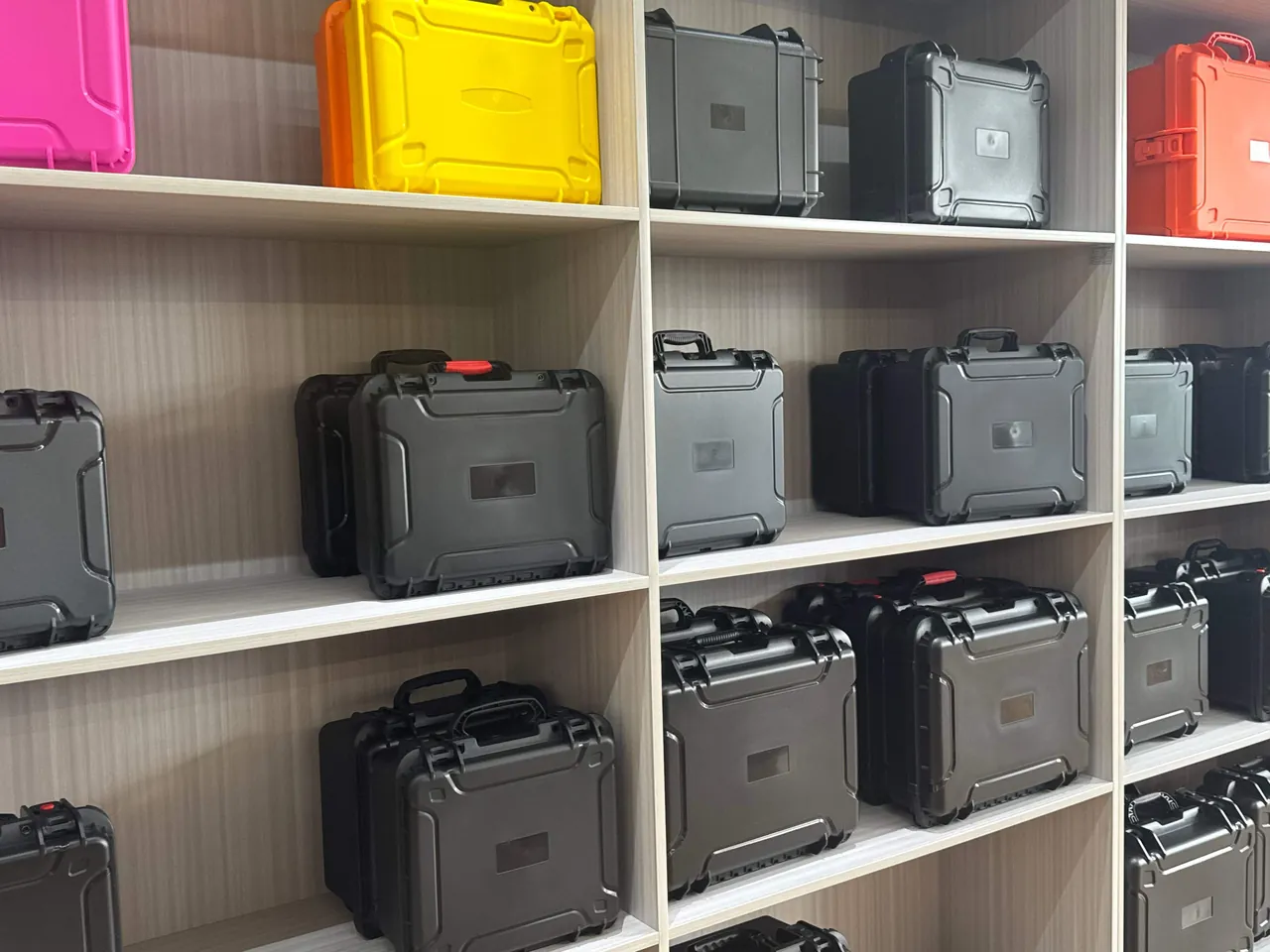
Compartment design aims at one outcome: every tool has exactly one home, so gap checking becomes a glance rather than a count.
Wrenches are flat, grouped, and size-stepped. Arrange them in ascending order in angled slots separated by 3–5 mm EVA ribs, jaws facing up or toward a fixed direction. This prevents contact while allowing fast size selection. Avoid stacking, because stacking lets thin-walled wrenches rub against each other in transit and damages plating and markings.
Sockets belong one per cell, grouped by drive size and specification. The internal bore is the working surface, so any impact degrades fit, which rules out sharing a cavity with wrenches or hammers. Where socket counts are high, a two-tier tray with common sizes above and spares below works well.
Screwdrivers and hex keys are slender and suit parallel slots with tips uniformly down or toward one side. Exposed tips need their own shallow recess so they cannot strike a case wall.
Gauges and precision tools such as calipers, micrometers, torque wrenches, and levels need dedicated shallow cavities, curved cradles, and high-density padding. Torque wrenches deserve special attention: most designs suffer spring fatigue when stored at a set value, so the scale should be returned to zero before storage and the liner must clear the scale barrel entirely.
| Tool class | Containment | Spacing | Attitude | Common error |
|---|---|---|---|---|
| --- | --- | --- | --- | --- |
| Open-end and box wrenches | Angled parallel slots | 3–5 mm ribs | Jaws up | Stacking several together |
| Sockets | One per cell | Full separation | Vertical or angled | Sharing with hard objects |
| Drivers and hex keys | Parallel slots | 2–3 mm | Tips down | Exposed tips hitting the wall |
| Torque wrench | Dedicated cavity | Over 10 mm | Scale at zero, barrel clear | Stored at a set value |
| Calipers and micrometers | Dedicated cavity | Full separation | Measuring faces clear | Sharing with other metal |
| Tape and hammer | Grid cells | Full separation | Head located | Bridging an open cavity |
Precision Tools and Measuring Instruments
Precision tools resemble precision instruments because their failure mode is accuracy drift, not visible damage. Caliper jaws and micrometer anvils, torque wrench springs, level vials, and laser rangefinder windows all react to shock long before the housing shows anything.
Four measures follow. Dedicated cavities with curved cradles keep gauges away from other tools, with a thin IXPE layer on the bearing surface to suppress fretting. Layered cushioning puts 60–80 kg/m³ material beneath the gauge and a soft EPE preload above. Attitude fixing keeps calipers closed, micrometer faces unloaded, levels flat, and rangefinder windows off hard surfaces. Periodic calibration remains necessary, since a liner reduces shock but cannot replace calibration.
| Instrument | Sensitive area | Design measure | Operating rule |
|---|---|---|---|
| --- | --- | --- | --- |
| Vernier caliper | Jaws and slider face | Dedicated cavity, closed lock | No contact with hard parts |
| Micrometer | Anvil and thimble | Curved cradle, preload | Measuring faces unloaded |
| Torque wrench | Spring and scale barrel | Zeroed storage, dedicated slot | Never stored at a set value |
| Spirit level | Vial | Flat cradle | Never carried standing |
| Laser rangefinder | Emitter window | Window clear of liner | Fit a protective cap |
| Feeler and angle gauge | Leaves and hinge | Thin dedicated slots | Leaves never bent |
Related guidance appears in shockproof cases for precision tools and measuring tool protective cases. For teams carrying gauges alongside power tools, a two-case split is the most practical answer: gauges and precision items travel in one case, general tools in another, rather than saving a case at the expense of instrument risk.
Storing Power Tools and Their Batteries
Power tools are the heaviest and least regular members of the kit, and they also drive the thermal and electrical safety requirements.
Drills, angle grinders, and powered drivers need individual pockets with attention to three features. The trigger must not be pressed by the lid, or it will sit under load and deform. The cooling vents must not be blocked by liner, or residual heat will be trapped. The chuck, spindle, or accessory interface should face a direction that allows quick removal.
Batteries follow the same rules as in equipment cases: individual cells, protected terminals, and distance from heat. Power tool packs are large and energy-dense, and a short circuit inside a shared cavity is a serious event. Battery compartments should therefore be fully separated from tool compartments by a solid divider, with an insulating barrier above the terminals.
| Component | Storage requirement | Implementation | Risk |
|---|---|---|---|
| --- | --- | --- | --- |
| Complete tool | Dedicated pocket, not unsupported | Curved cradle plus grab clearance | Oscillation in transit |
| Trigger | Not depressed | Recessed cavity relief | Deformation under load |
| Cooling vents | Not obstructed | Vent channel in the cavity base | Trapped residual heat |
| Battery | Isolated, short-circuit proof | One per cell, insulating barrier | Terminal bridging |
| Charger | Separate cavity | Cable storage position | Cable tangling and flexing |
| Abrasives and bits | Small individual cells | Rigid padding, edges inward | Chipped edges |
One general battery rule applies: avoid storing fully charged packs long term in a sealed case. Lithium cells age faster at elevated temperature, and a closed case in direct sun runs well above ambient. Where practical, remove packs after a shift and store them in shade. Air transport of spare batteries carries explicit requirements on state of charge, terminal protection, and packaging, and these vary by carrier, so the airline's current rules govern.
Latches, Hinges, and Handle Load Design
Latches, hinges, and handles on tool cases see far more load cycles than on equipment cases, because the box is opened daily and may be swung onto a rack one-handed.
Latches need symmetrical placement, a positive closing feel, and anti-accidental-opening features. Above about 500 mm of case length, a single latch per side cannot distribute compression evenly around the sealing perimeter, so two or more pairs are normal. The most direct proof of engagement is a continuous compression witness on the sealing face.
Hinges must support the lid and limit opening, so the lid cannot slam back under wind or incidental contact. On large cases carrying heavy tools, the hinge-to-shell junction is the classic stress concentration point and normally needs a metal reinforcement or thickened boss. Hinges should also avoid crevices where dust accumulates and accelerates wear.
Handles take the highest service load. Ergonomics put the comfortable one-handed limit at roughly 10% to 15% of body weight, so a case exceeding about 15 kg loaded should offer wheels and a telescopic handle, or be shaped for a two-person lift. Handle strength is normally verified at twice the fully loaded weight in a static hang test.
| Component | Key metric | Verification | Consequence of failure |
|---|---|---|---|
| --- | --- | --- | --- |
| Latch | Holding force, cycle life | Inspect deformation after 500 cycles | Pops open in transit |
| Hinge | Load, opening stop | Static hang test, loaded lid | Lid slams, hinge fractures |
| Handle | Static load, grip, return | Hang test at twice rated load | Fracture, pinched fingers |
| Wheels | Load, wear, obstacle climbing | Loaded towing over a set distance | Axle seizure |
| Gasket | Compression, aging | Witness check plus spray test | Water and dust ingress |
| Equalization valve | Cracking pressure, airflow | Opening force after thermal cycling | Suction or pop on opening |
Stacking, Vehicle Transport, and Vibration
Stacking load is governed by the compressive stiffness of side walls and lid. Upper cases transfer weight through corners and walls, and insufficient stiffness lets a case bulge until the sealing face distorts; ribs, double-wall construction, and thickened corners raise it. Establishing a stacking height combines loaded weight, storage temperature, since heat lowers the elastic modulus of plastics, and permitted duration. Design guidance appears in stackable toolbox height limits and benefits of stackable toolbox design.
Vehicle transport raises a specific problem: the case may not be restrained at all. A case that passes drop and vibration testing still accelerates forward under hard braking if it is loose, striking the cab bulkhead or other cargo. Reserve tie-down points or anti-slip feet at the base, use straps in transit, and on service vehicles consider locating chocks sized to the case for fast securing and fast release. Drop and vibration testing generally follows ISTA or GB/T 4857 procedures, but results hold only under the tested conditions, so a physical road trial is worthwhile before committing to volume.
Dust, Moisture, and Salt Fog Environments
Dust is the most underestimated threat. Fine particles reaching latches and hinges cause abrasive wear, particles inside sockets degrade bolt engagement, and particles on gauge slides cause sticky readings. The important design property is not the rating number but whether the sealing face is continuous and the latches apply even compression.
Moisture control is about what happens inside the case. Tools put away wet are the most common cause of corrosion: rain, hand sweat, and residual cleaning fluid all keep working in a closed space. Three habits help: dry tools before packing, provide a replaceable desiccant bay, and avoid long-term sealed storage of wet tools by ventilating the case periodically.
Salt fog attacks metal hardware and tool plating. After coastal or chemical plant work, rinse the case exterior with clean water and dry it, then check latch rivets, hinges, and tool surfaces for early rust points. GB/T 10125 defines the neutral salt spray method, but test duration does not convert simply into service life, since real life depends on salt concentration, wet-dry cycling, temperature, and maintenance. Treating hours as years is unsound.
| Environment | Primary threat | Protection measure | Maintenance action |
|---|---|---|---|
| --- | --- | --- | --- |
| Wood and concrete dust | Abrasive wear, binding | Dust-tight structure, continuous seal | Clean the seal groove periodically |
| Metalworking | Swarf and cutting fluid | Compartment isolation, washable liner | Remove swarf after each job |
| Rain and snow | Ingress, corrosion | IP65 or better, drainage provision | Dry tools before packing |
| Coastal humidity | Salt corrosion, condensation | Desiccant bay, corrosion-resistant hardware | Rinse the exterior after work |
| Hot workshops | Material softening, battery aging | Shade storage, ventilation | Store batteries separately |
Cleaning, Maintenance, and Liner Replacement
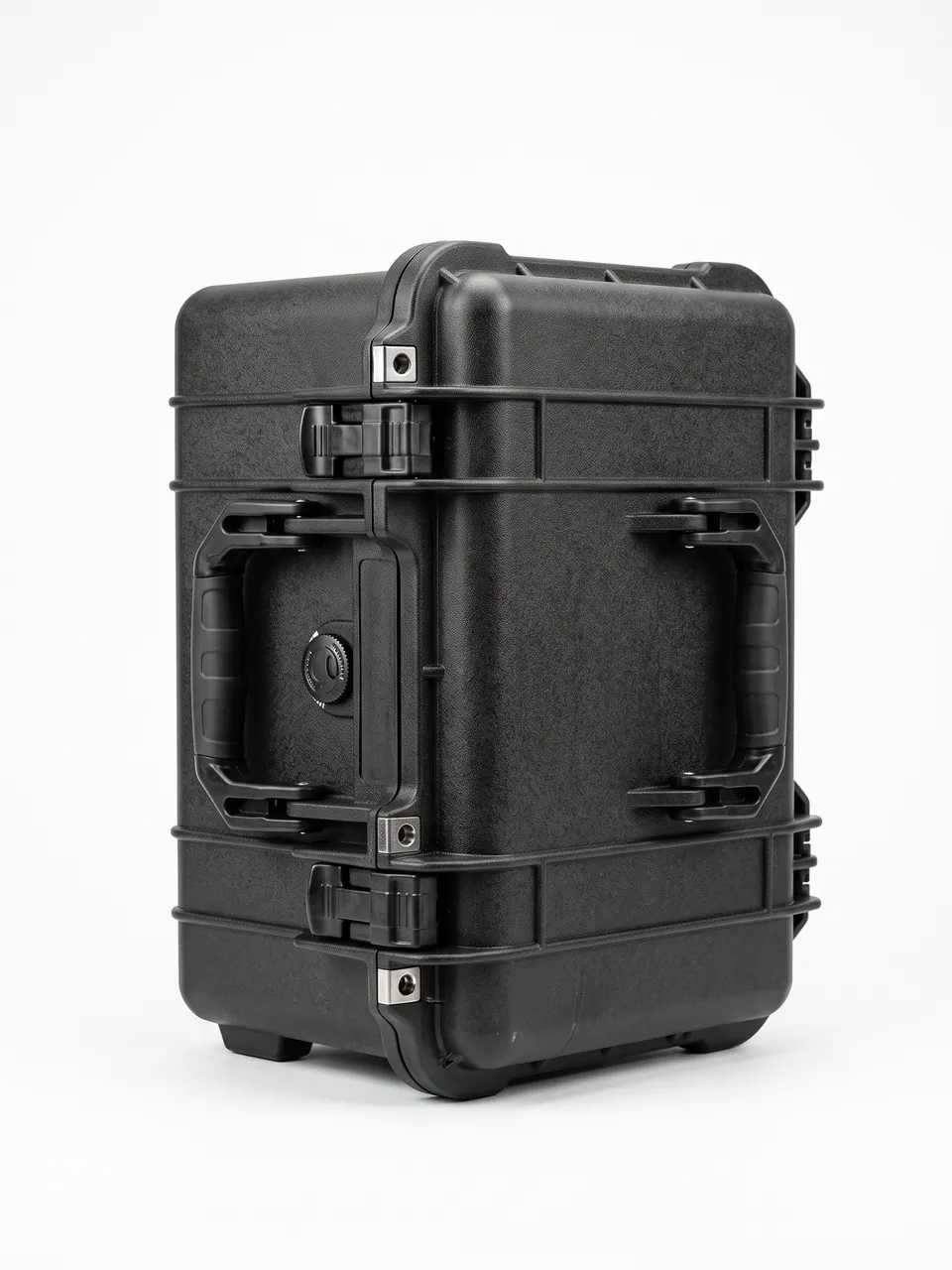
Liner life depends on usage frequency and tool shapes. Pocket edges fuzz and collapse gradually, and once collapse exceeds 1–2 mm the tools lose location, which shows up as rattling inside a closed case. Inspect high-frequency kits annually and replace on actual wear; removable liners located by posts rather than adhesive make this a spare-part task. Seal life depends on material, cycle count, and contact media.
Hardware life depends on lubrication and corrosion. Apply a small amount of dry lubricant to latch and hinge pivots, avoiding tacky grease that captures dust, and treat rust spots promptly.
Capacity Planning, Customization, and Acceptance
Capacity planning is usually reduced to buying a bigger box, which either wastes space or forces repeated replacements. A better method works backwards from the inventory.
The sequence runs: confirm the tool list and quantities, annotate retrieval frequency and fragility, estimate the footprint with grab clearance and expansion margin, check fully loaded weight against carrying method, choose shell route and ingress rating, design the layered liner and pockets, fit a first article, then produce in volume with re-inspection. Related methods appear in toolbox capacity calculation and multi-function toolbox capacity planning.
| Stage | Deliverable | Customer confirmation | Common rework point |
|---|---|---|---|
| --- | --- | --- | --- |
| Inventory | Tool list with frequency tags | Completeness including consumables | Consumables and accessories omitted |
| Capacity | Layout sketch and case size | Grab clearance, expansion margin | No expansion margin reserved |
| Shell selection | Material and rating proposal | Loaded weight, carrying method | One-handed carry limit ignored |
| Liner design | Layer and pocket drawings | Position of frequently used items | Common tools placed deep |
| First article | Prototype liner and fit trial | Handling motion is comfortable | Grab position pinches fingers |
| Production | Shipping report | Critical dimension sampling | Batch colour variation |
Acceptance should be a physical exercise, not a visual check.
| No. | Check item | Acceptance criterion | Action if failed |
|---|---|---|---|
| --- | --- | --- | --- |
| 1 | Shell appearance | No cracks, distortion, or sharp edges | Reject or replace |
| 2 | Liner pockets | Conformal, 2–4 mm preload | Rework liner |
| 3 | Tool location | No movement noise when inverted and shaken | Add ribs |
| 4 | Handling | One hand completes common retrieval | Optimize grab positions |
| 5 | Latches | Symmetrical engagement, continuous witness | Adjust or replace |
| 6 | Handle | No deformation at twice rated load | Reinforce structure |
| 7 | Spray test | No internal water or damp liner | Inspect sealing face |
| 8 | Stacking test | No bulging or collapse | Add ribbing |
| 9 | Gap visibility | Empty position obvious at a glance | Adjust colour or markings |
| 10 | Documentation | Packing list and care card present | Supply missing items |
Frequently Asked Questions FAQ
Q: Is a thicker tool case always stronger? Would a 10 mm wall outlast a 6 mm one?
A: Not necessarily. Wall thickness mainly affects resistance to cracking and overall structural stiffness, but what decides whether tools survive is the cushioning stroke of the liner and how completely the tools are constrained. A 10 mm shell with only 15 mm of liner and oversized pockets lets tools move freely, so a single drop can start sockets colliding and shock a gauge; a 6 mm shell with 45–60 kg/m³ medium-density EVA, 2–4 mm preload, and full-contact locating keeps impact acceleration inside the range the tools tolerate. The correct sequence is to establish the allowable acceleration for the most sensitive item, derive the required cushioning stroke from it, and only then specify wall thickness and rib geometry. Thicker walls also add substantial weight, which can push the loaded case past the comfortable one-handed carrying limit and encourage rougher handling, which increases drop risk rather than reducing it. Load the case with the real inventory before accepting the specification, because a geometry that works on paper can still exceed the carrying limit once batteries, chargers, and consumables are included.
Q: Is IP54 good enough on site, or is IP65 mandatory?
A: It depends on actual exposure to dust and water. IP54 means limited dust protection with splash resistance, which suits indoor repair rooms, dry shops, and sheltered workstations. On site, dust is usually more damaging than water: fine particles entering latches, hinges, and socket bores cause abrasive wear that is difficult to remove, and particles on gauge slides cause sticky readings. Even without direct water contact, a dusty trade therefore justifies a fully dust-tight structure at IP65. Where rain, washdown, or standing water is also present, IP65 is the floor and IP67 may be warranted. A practical review is to recall the worst single job of the past year and ask whether the case was rained on, set in mud, or washed with a hose. Remember that the rating describes the whole system, and since tool cases are opened constantly, a three-point closing check matters more than the label. Latch engagement, a clean sealing face, and a reseated equalization valve together determine whether the declared rating exists in practice.
Q: Should the liner be cut EVA, or should I buy a molded hard tool tray?
A: They solve different problems. Cut EVA offers high locating accuracy, can be adjusted freely, and needs only fresh cutting when the inventory changes, which suits tool sets that evolve; the drawback is that pockets gradually collapse under heavy use and need periodic replacement. A molded tray offers higher shape accuracy, lifts out as a unit, and makes missing items immediately visible, which suits fixed inventories with strict gap control; the drawback is that any tool change requires new tooling, with high cost and long lead time. Real projects often combine the two: a hard tray in the main cavity for the fixed inventory, with cut EVA for accessory cavities and spare positions to retain flexibility. Two questions decide the route: will the tool list change within a year, and do you need to confirm gaps at a glance? Where a tool set is safety-critical or expensive, the visibility argument usually outweighs the tooling cost, while for a general maintenance kit that changes every few months, cut EVA is almost always the better investment.
Q: Can power tool batteries travel in the same case as the tools?
A: Yes, but only with full separation, terminals facing up, and an insulating barrier. The dominant risk of sharing a cavity with metal tools is that a screwdriver or wrench bridges the terminals, and power tool packs carry enough energy for that to be serious. The engineering answer is a dedicated cell for each battery, one pack per cell, 2–3 mm lateral preload, terminals facing upward under an insulating plate, and a solid divider rather than foam alone between battery and tool compartments. Heat matters too: power tools are warm after use and should not be sealed in with batteries immediately, and lithium packs age faster when held above ambient temperature in a closed space. Air transport imposes separate requirements on state of charge and packaging, and those are governed by the carrier rather than the case maker, so check the current rules before any flight. A dedicated battery case with individual cells and a desiccant bay is the simplest way to keep the electrical risk isolated from the tool inventory entirely.
Q: Why should a torque wrench never be stored at its set value?
A: Because the calibrated spring inside a torque wrench takes a compression set when held under load, so the delivered torque drifts below the setting, and the scale gives no indication that anything has changed. Manufacturer instructions therefore require returning the scale to zero after use, precisely to remove sustained stress. From a case design perspective, two things follow. The liner must clear the scale barrel so neither the liner nor the lid contacts it, and the zeroing action should be built into the packing routine, ideally prompted by a marking printed inside the pocket. Torque wrenches are also calibrated instruments that need periodic verification, so frequent transport warrants a shorter calibration interval. A case reduces shock; it cannot substitute for calibration, and the two controls belong in separate procedures. Record the calibration due date on the liner itself so the instrument is not returned to service simply because the case looked complete. Rotating two identical instruments with staggered due dates keeps one available at all times.
Q: A loaded tool case is very heavy to carry. Are there design solutions?
A: There are three, and the right one depends on the duty. First, reduce the capacity of each case and split the kit by task so only the needed case travels; this is the most effective weight reduction but requires clearer job-based organization of the inventory. Second, add wheels and a telescopic handle, converting vertical load into rolling traction, at the cost of added case weight and difficulty over rough ground, which suits short runs from vehicle to workstation on firm surfaces. Third, improve the carrying method itself, for example positioning the handle directly over the loaded center of gravity or adding side handles for a two-person lift, which reduces the load on one wrist. The comfortable one-handed limit is roughly 10% to 15% of body weight, and above that users tend to set cases down carelessly, which raises drop risk. Weight reduction is therefore a protection issue, not only a comfort issue. Weigh the fully loaded case before signing off the design, and if it exceeds the limit, revisit the split rather than the handle.
Q: After long use my pockets have collapsed and the tools rattle. Do I need a whole new case?
A: Not necessarily. First determine what has actually collapsed. If it is EVA pocket edges taking a compression set, there are two remedies: patch locally by bonding a 1–3 mm layer of IXPE or thin EVA to the pocket side wall to restore lateral constraint, or replace the liner entirely, which is exactly why removable liners are specified in the first place and costs far less than a new case. If instead the gasket has hardened or a latch has distorted, replace the respective hardware. A simple field test is to close the loaded case and shake it gently: clear movement noise means constraint is no longer sufficient. Confirm at acceptance that the liner is removable, and record liner commissioning and replacement dates in a case log so replacement becomes a scheduled action rather than a reaction after a tool is damaged. Contact adhesive is not recommended for patches, since it hardens the foam and creates a new failure point at the patch edge.
Q: What information is needed for a custom tool case? Is a tool list enough?
A: A tool list is the starting point but not enough on its own. Supply the name, quantity, maximum three-axis dimensions, and weight of each tool; identify which items are precision gauges or fragile; mark which tools are used most often, typically about 20% of the list; state whether spare positions are needed; describe who carries the case and the maximum acceptable loaded weight; and specify whether the working environment involves dust, water, salt fog, or electrostatic control requirements. If the case needs locks, numbering, or a seal point, state that too. Photographs with a scale reference or a 3D model significantly improve pocket conformity, especially for drills, grinders, and gauges with irregular shapes. Consumables and accessories such as bits, abrasive discs, and blades should also be listed, because these small items are the main cause of wasted space and confused retrieval. If a 3D model is not available, send photographs from several angles with a rule in frame, and plan on a first-article fit before committing to volume.
Conclusion and Related Reading
The value of a tool case is not the case.
Related Reading