

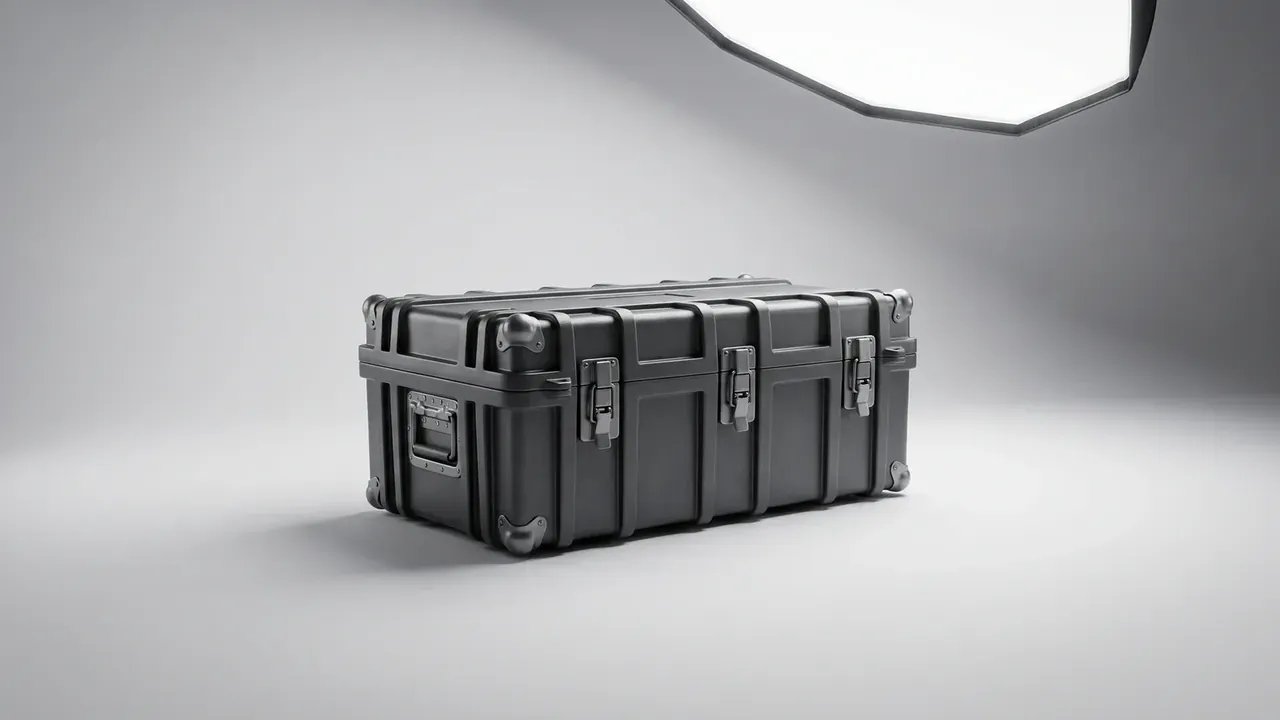
Quick answer: The size of an equipment case is not picked from a catalogue; it is derived from the largest outline of the load and the posture used to lift it out. Fix the load type first, then the liner, then the internal clear size, and only then the outside dimensions. In that order the size chain closes once. In reverse, the case arrives looking right and fails on the first lift.
Table of contents
- Equipment case selection: start with the load
- Three liner strategies and what each costs
- Sizing backwards from the load envelope
- How case-side specs follow the load
- Six data points to send with an RFQ
- FAQ
1. Equipment case selection: start with the load
The proportions of an equipment case follow the load, not the look of the shell. Sort the load into three types and the ratio and lid direction settle themselves; only tolerances and liner thickness remain. Reverse that order and the shell is chosen blind.
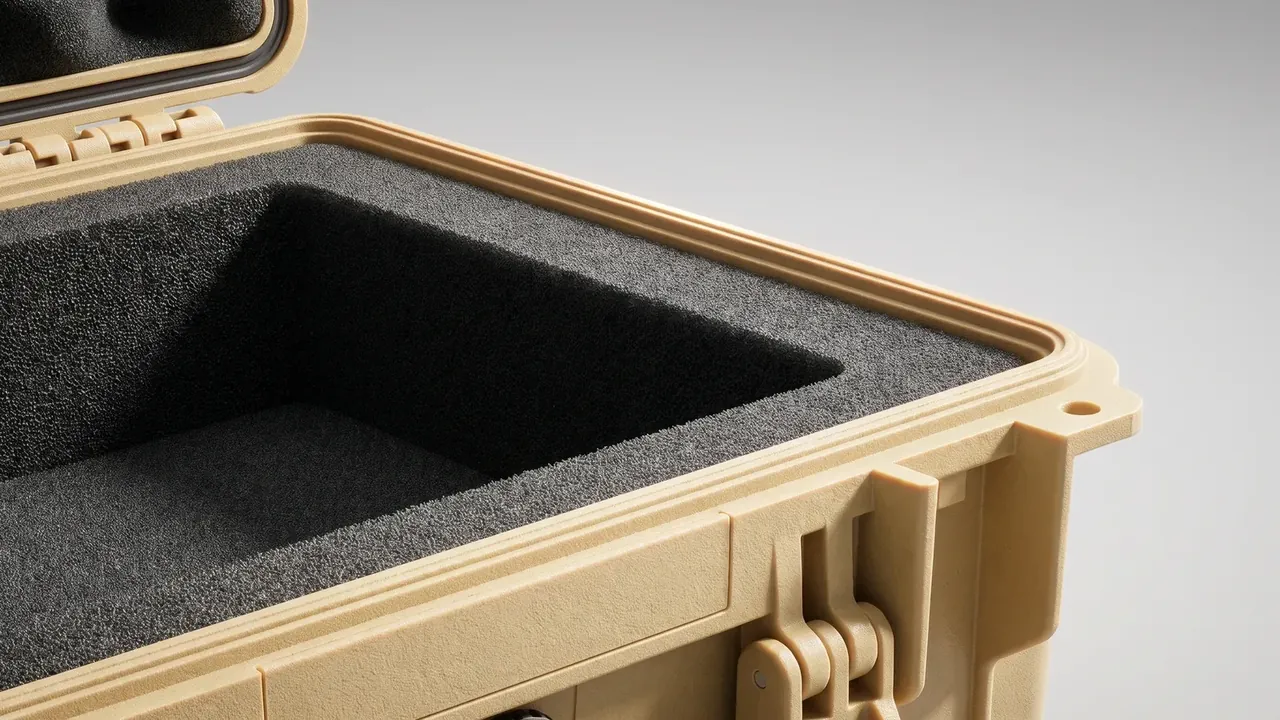
Long shafts set the internal length; width and height pull close and pad out. Panel instruments set the footprint from the faceplate, with depth following connectors and cable space. Loose loads are sized by count and largest piece, then divided rather than cut as one block.
2. Three liner strategies and what each costs
An equipment case has three liner options: a full foam cavity, adjustable dividers, or no liner with soft stowage. They trade cost, weight, access speed and cleaning effort; none wins on all four.
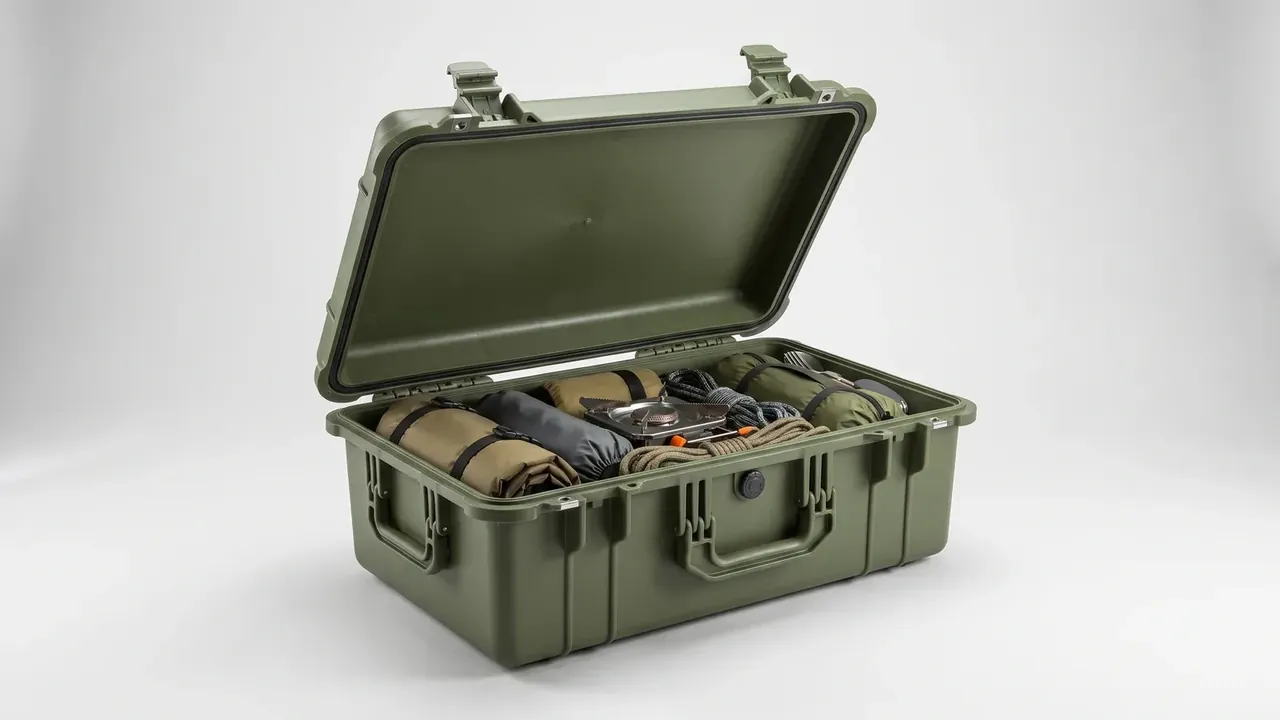
A cut foam cavity gives the tightest location and holds the load in a drop, at the price of volume. Dividers re-cut the space when counts change, losing precision but suiting mixed batches. A bare cavity maximises volume and cuts weight, at the cost of contact and slower counts. Thickness is buffer travel: ten extra millimetres add twenty to the cavity.
3. Sizing backwards from the load envelope
Internal clear size is an addition: load outline, plus foam on both sides, plus a finger gap, plus tolerance. Outer dimensions add wall thickness, ribs and the stacking face on top.
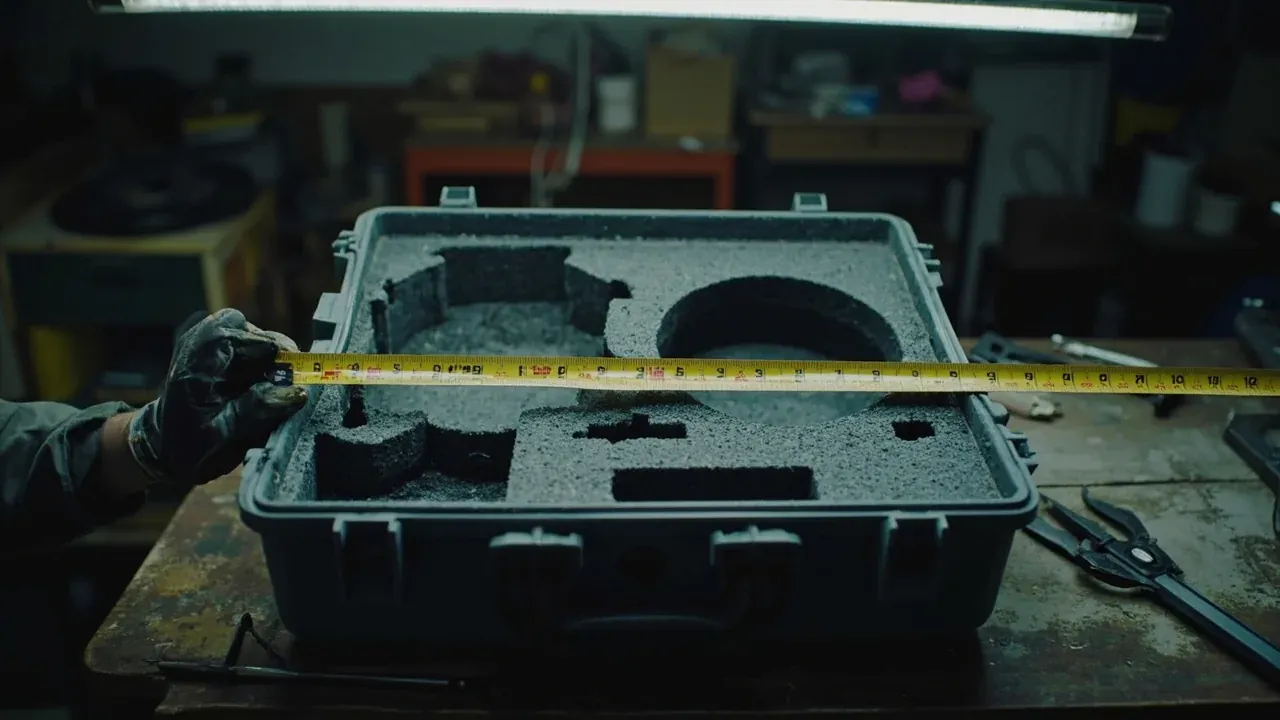
A load of 400 by 300 by 150 millimetres with 20 millimetres of foam and a 30 millimetre finger gap needs about 500 by 350 by 190 inside; walls add 15 to 25 per side. The finger gap is most often left off a drawing; without it an equipment case passes inspection and still cannot be unloaded. For volume orders, one outside size with several internal layouts keeps pallets uniform.
4. How case-side specs follow the load
Heavier and more delicate loads push case-side values up; the driver is packed weight, drop exposure and handling.
| Load trait | Case-side response | Reason |
|---|---|---|
| Under 10 kg | Single handle, two latches | One person, fast opening |
| 10 to 25 kg | Paired side handles, three latches | Two-person lift, shared load |
| Over 25 kg | Side handles plus wheels | Less carrying off the ground |
| Panel instruments | Thicker wall, separate liner bay | Impact kept off the faceplate |
Weight bands are a starting point: twenty kilograms of metal and twenty of instrument face need different walls and buffer. Sealing and stacking follow the same logic and change structure, so settle them before the cavity is frozen.
5. Six data points to send with an RFQ
Six data points remove two rounds of sampling, and with all six the quote covers cavity, liner, hardware and price.
- Largest outline and unit weight, with projections
- Item count and fixed positions
- Lifting posture and finger access
- Stacking tiers and handling
- Storage environment, seal grade
- Labelling or numbering method
Lifting posture is most often missing: given only an outline, a supplier quotes a plain cavity, and the finished equipment case needs a scallop that eats into the size chain. The other omission is the refresh cycle, where a replaceable liner outlasts a cut cavity.
Conclusion
The order for an equipment case is load, liner, cavity, outside size, hardware. Follow it and the dimensions close on the first drawing; reverse it and problems surface at sampling.
Test any proposal on three points: load fits, hand fits, and the packed equipment case still stacks and carries.
This article covers container-side specifications and design implications only.
Related Reading
- Equipment cases in industrial inspection and field work
- Dividers versus foam: choosing a liner
- How to size a protective case: cavity, outside size and tolerance
- Foam liner materials and cavity cutting
Related Products
- 8 Series — Gun Cases; Military Equipment Cases; Camera Equipment Cases; Drone Cases; Watch Cases; Knife Cases; First Aid Cases; Electronics Equipment Cases
- WL8-2812 PP Gun Case — model WL8-2812
- All protective cases and toolboxes: 7 series, 158 models