

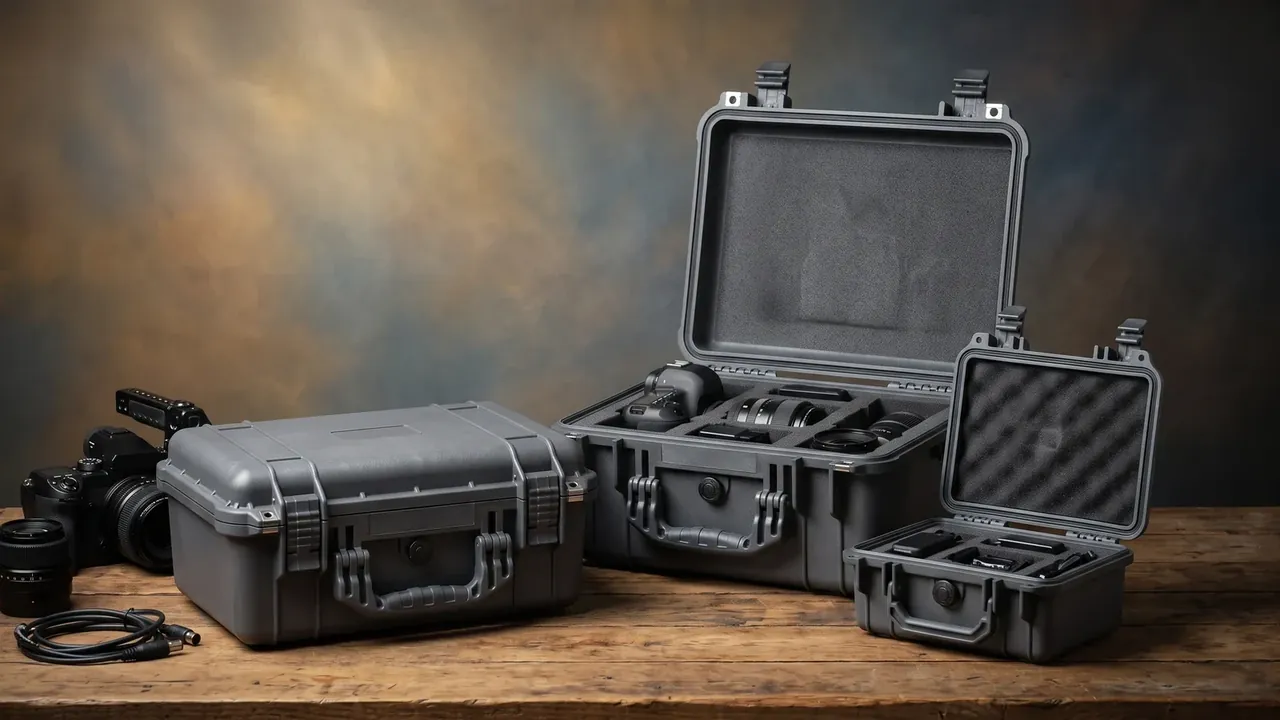
Quick answer: A clause for an Equipment Case is testable only when it names the item, method, condition, sample size and pass line. Class A takes zero defects, B and C are sampled by AQL, and serial numbers tie results to a batch.
Table of contents
- Test Items and Verdict Rules for an Equipment Case
- Visual, Dimensional and Latch Checks
- Pressure Decay, Drop and Vibration
- Salt Spray, Cycle Life and Shielding
- Sampling, Documents and Batch Traceability
- FAQ
1. Test Items and Verdict Rules for an Equipment Case
A clause saying the finish looks good cannot be measured: name the item, instrument, condition and limit. An Equipment Case sorts items by consequence, with a failed seal or a cracked shell in class A, assembly and life in B, appearance in C. Class A is never sampled, so every unit gets a pressure check; B follows level II, C may drop to S-2.
| Item | Class | Method | Pass line |
|---|---|---|---|
| Appearance | C | 800 lx, 600 mm, 45 degrees | No crack, sink 0.5 mm or less |
| Size | B | Caliper, three points | Outside ±2 mm, cavity ±1.5 mm |
| Pressure decay | A | Charge to 5 kPa | 30 s, decay 0.2 kPa or less |
| Drop | A | 1.2 m concrete, ten drops | No crack, decay 0.3 kPa |
| Stack | B | 250 kg on lid, 24 h | Set 3 mm or less |
Each row needs a position sketch, an instrument number and a signatory; without the number, two calipers give two verdicts.
2. Visual, Dimensional and Latch Checks
Fix the light first: 800 lx, 600 mm, 45 degrees. Sink depth is a 0.5 mm feeler that must not enter; flash on the parting line runs to 0.3 mm before rework.
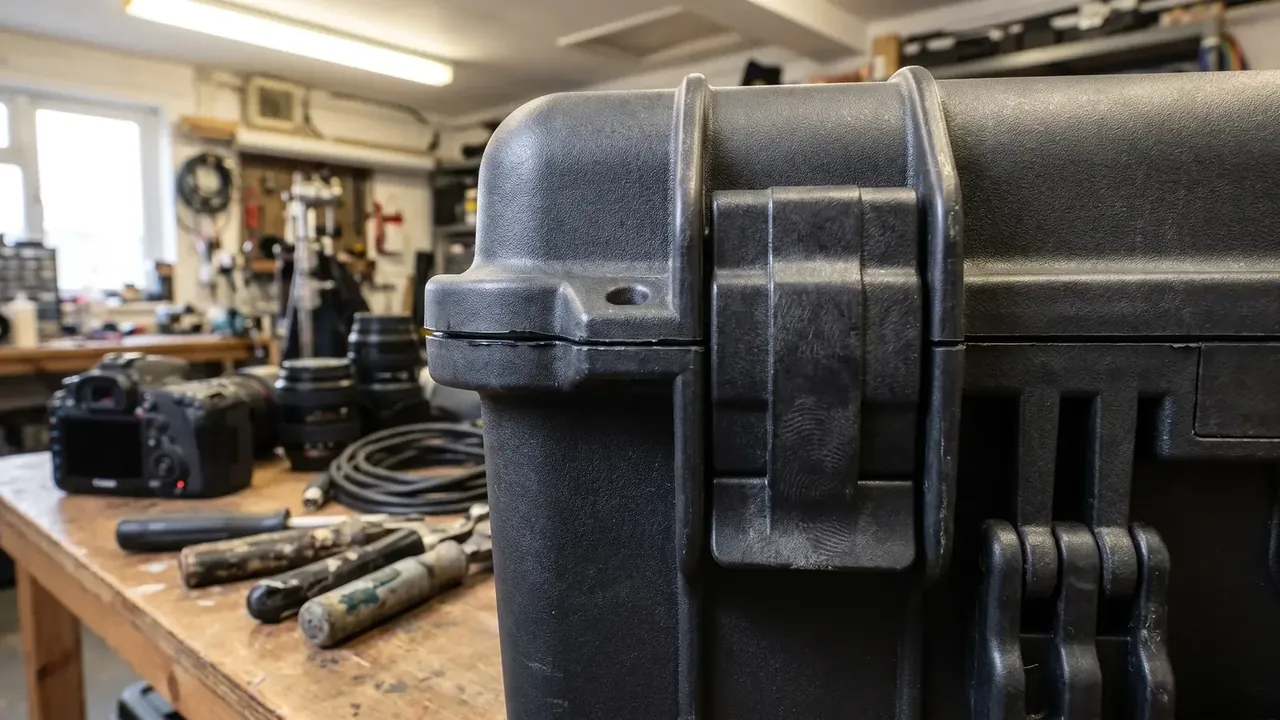
Size checks specify points: three per outside dimension, three at the mouth, three at the floor. The ±1.5 mm cavity limit carries the draft allowance; squeeze it to ±0.8 mm and good lots come back. Latches take a 400 N pull, 0.5 mm alignment and a 0.3 mm hinge bore.
3. Pressure Decay, Drop and Vibration
Test pressure two hours after moulding, then charge to 5 kPa and hold 30 seconds; 0.2 kPa of decay passes. A warm case cools inside, pulls a vacuum and reads better than it is.
| Test | Condition | Value | Pass line |
|---|---|---|---|
| Pressure | After 2 h soak | 5 kPa, 30 s | 0.2 kPa or less |
| Drop | Concrete, ten orientations | 1.2 m | No crack, 0.3 kPa |
| Vibration | Random, three axes | 1.04 g rms, 30 min | No loosening |
| Stack | Uniform lid load | 250 kg, 24 h | Set 3 mm |
Ten drops from 1.2 m onto 50 mm concrete, six faces, three edges, one corner, decay rechecked at 0.3 kPa; a case that stays intact but leaks is scrapped, since a distorted rim will not seal. Vibration is random at 1.04 g rms for 30 minutes per axis, clamped at the base corners.
4. Salt Spray, Cycle Life and Shielding
Salt spray on an Equipment Case means 5% sodium chloride at 35 °C for 48 hours: red rust fails, white rust fails above 5% of the area, and only metal parts are rated.
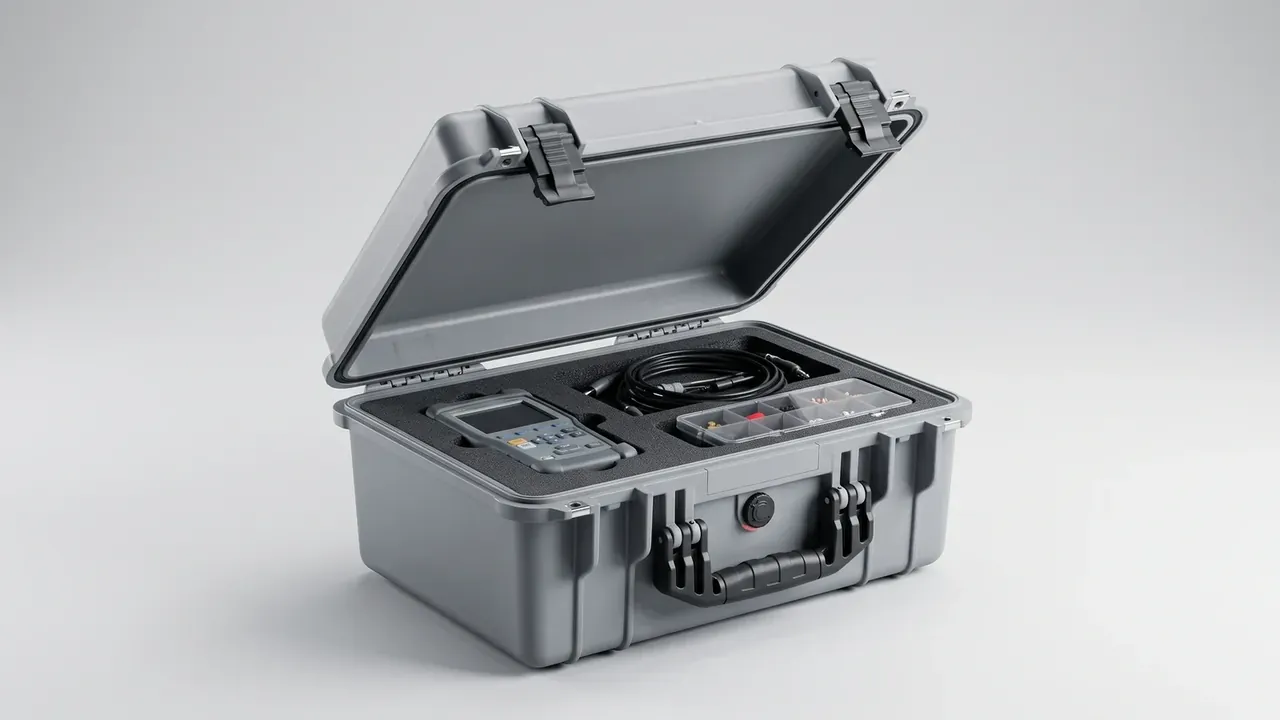
Cycles run at 15 per minute and 23 °C, 5,000 for latches and 3,000 for hinges; at 30 per minute heat softens the catch and inflates the figure. Force may decay 20%, so 400 N ends at 320 N. Shielding is read at five points from 200 to 1000 MHz, where 45 dB and 35 dB are the usual limits.
5. Sampling, Documents and Batch Traceability
Sampling of an Equipment Case follows an adjusting plan: level II, normal, single, AQL 2.5 for class B and 4.0 for class C. A lot of 501 to 1200 gives code J, sample 80, accept 5, reject 6.
| Lot | Sample | AQL 2.5 accept | reject | AQL 4.0 accept |
|---|---|---|---|---|
| 91 to 150 | 20 | 1 | 2 | 2 |
| 151 to 500 | 50 | 3 | 4 | 5 |
| 501 to 1200 | 80 | 5 | 6 | 7 |
Documents ship as a set: certificate, per-unit record, batch certificate, packing list and instructions, each record carrying serial, inspector, date and instrument number. The eight-digit serial is stamped 0.3 mm deep at the lower right of the back panel; keep three samples per lot for 24 months, and trace no further than the material lot.
Conclusion
Class decides sampling, method and condition decide whether readings compare, the pass line decides scrap or release. Write instrument number, hold time and retention period into the clause, and the Equipment Case is accepted on evidence, not negotiation.
This article discusses only the container (case body) side of specifications and design intent, and does not cover any handling, loading or use of the contents.
Related Reading
- Quality control points on the case assembly line
- Waterproof hard case grades and test methods
- Recording raw material lots for traceability
- What a trial moulding run must confirm
Related Products
- 8 Series — Gun Cases; Military Equipment Cases; Camera Equipment Cases; Drone Cases; Watch Cases; Knife Cases; First Aid Cases; Electronics Equipment Cases
- WL8-2812 PP Gun Case — model WL8-2812
- All protective cases and toolboxes: 7 series, 158 models