

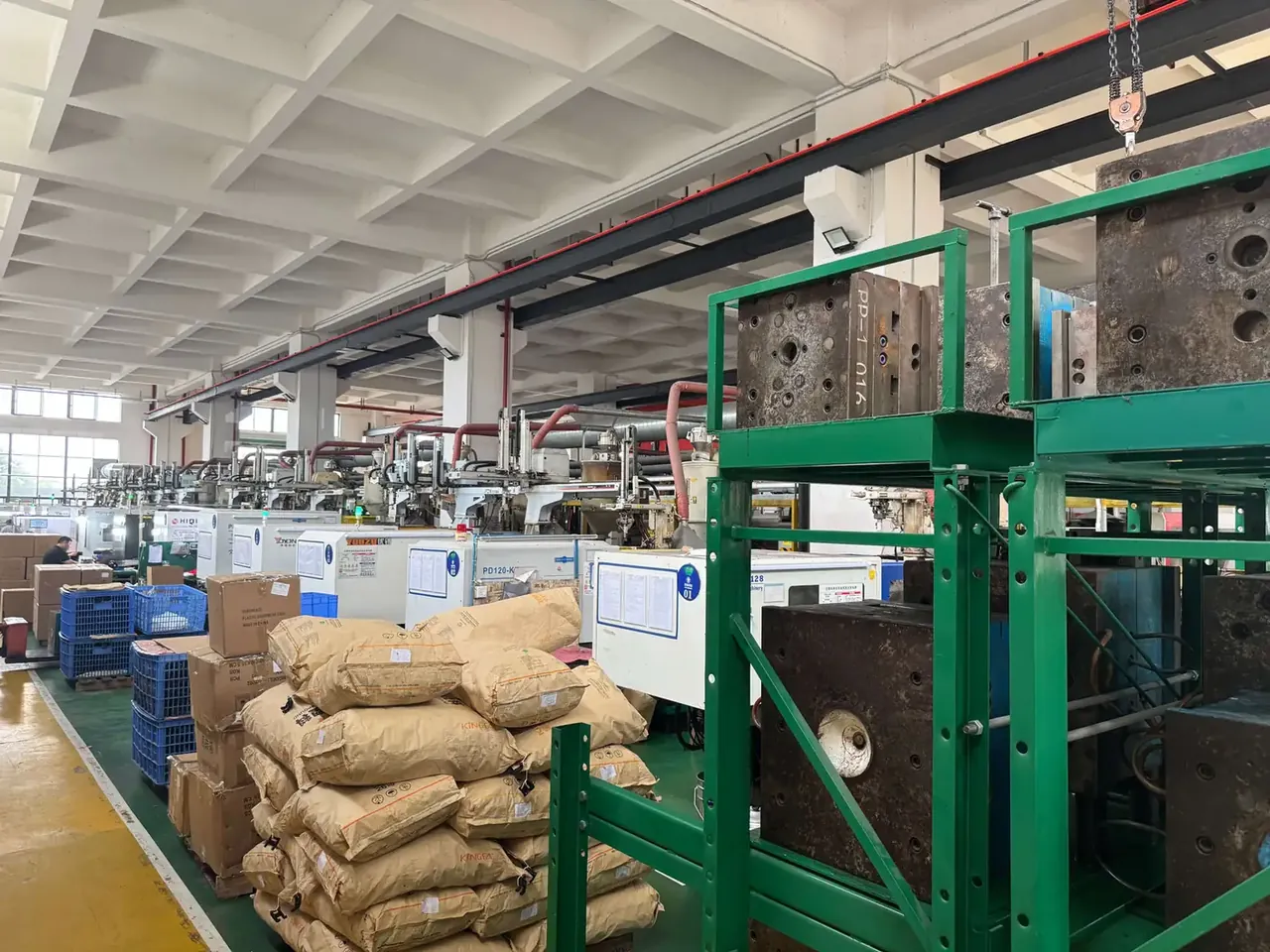
Quick answer: Traceability in case raw material preparation rests on three artifacts: a code pairing resin grade with supplier lot, a feeding sheet raised per drum, and a regrind label carrying pass count. Together they walk a finished case back to one sack.
Table of contents
- Why Case Raw Material Preparation Needs Lot Records
- Two Codes: Grade and Supplier Lot
- Feeding Sheets: Binding a Lot to Press and Shot
- Tagging Regrind by Lot
- Break Hunting, Samples and Retention
- FAQ
1. Why Case Raw Material Preparation Needs Lot Records
The paperwork in case raw material preparation answers one question backwards: which sack, from which supplier lot, went into this cracked case. Five links hold the chain — case, shot range and press, feeding sheet, sack label, supplier lot. A missing link ends the search at that level.
A latch-seat crack shows the value. With only a base date code, a plant quarantines a week of lots, about 6 tonnes. With feeding sheets it pins lot 260312KX01 in ten minutes and quarantines 800 kg.
| Link | Carrier | Key fields |
|---|---|---|
| 1 Case | Date code in base | Date and shift |
| 2 Shot | Press daily sheet | Shot range, press no. |
| 3 Feed | Feeding sheet | Drum, lot, ratios |
| 4 Sack | Bag label | Internal and supplier lot |
| 5 Incoming | Receiving log | Delivery note, verdict |
2. Two Codes: Grade and Supplier Lot
K8003 names the resin; 20260312A names the kettle. Case raw material preparation adds a third code, the internal receiving lot, to tie them: ten digits of date, supplier code and daily serial, as in 260312KX01.
Add an A or B suffix when a supplier shifts production line, never reuse a serial across grades, and put a 70 by 40 mm label 100 mm below the bag mouth, since inkjet print rubs off. All three codes must agree on sack, sheet and system, or the floor starts writing lots from memory.
3. Feeding Sheets: Binding a Lot to Press and Shot
In case raw material preparation a feeding sheet covers one drum, not one day. A 400 kg drum holds twenty 20 kg sacks; the sheet carries the drum number and the internal lot, without grade abbreviations.
Binding reaches the shot range: press 3, shots 1 to 240. Top-ups start new lines at two-hour granularity, and three signatures — handler, blender, shift leader — fix the time every later calculation runs from. The sheet number then enters the finished goods lot at dispatch.
4. Tagging Regrind by Lot
Regrind is the weakest link because it is made in-house and carries no supplier lot. Number it R plus the parent lot's last six characters, as in R312KX01, with source press, pass count and grinding date written beside it.
Two sources in one drum: record the higher pass count and the lower ratio, which keeps the trace honest after the fact. A change from 20 to 10 percent needs a note stating the shot it took effect, taped to the press rather than passed on verbally.
Untagged regrind is the commonest break of all. Fourth-pass material inside a first-pass sack cannot be separated later, so the whole batch is downgraded.
5. Break Hunting, Samples and Retention
Five places break: a torn sack not relabelled, a hopper not emptied at changeover, regrind mixed across sacks, an unsigned sheet, a date code with no shift. Pull three finished cases, read the base code, and follow it to a sack number within ten minutes.
Retain 500 g per lot in a vacuum foil bag for 12 months, rechecking melt index and moisture at month six on the same card. The sample reproduces what that lot was, rather than proving a pass.
| Record | Retention | Backup |
|---|---|---|
| Feeding sheet | 3 years | Monthly scan archive |
| Retained sample | 12 months | Sample cabinet |
| Complaint-linked lot | 5 years | Separate store |
Retention follows the strictest customer: five years for automotive and medical audits, three for general industrial work. Back up the log daily, never to the same machine, or case raw material preparation records everything and keeps nothing.
Conclusion
Lot traceability is not a software purchase. It is three habits inside case raw material preparation: a ten-digit lot pairing grade with supplier lot, a feeding sheet per drum bound to a shot range, and a regrind label stating its pass count. Do all three and the five links hold, so a quarantine falls from 6 tonnes to 800 kg. Those records earn their keep in the ten minutes after a complaint, which is what case raw material preparation is really for.
This article discusses only the container (case body) side of specifications and design intent, and does not cover any handling, loading or use of the contents.
Related Reading
- Incoming inspection for case batches
- Labels and asset tags on case bodies
- QR code asset tracking in practice
- How to audit a protective case factory
Related Products
- 8 Series — Gun Cases; Military Equipment Cases; Camera Equipment Cases; Drone Cases; Watch Cases; Knife Cases; First Aid Cases; Electronics Equipment Cases
- WL8-2812 PP Gun Case — model WL8-2812
- All protective cases and toolboxes: 7 series, 158 models