

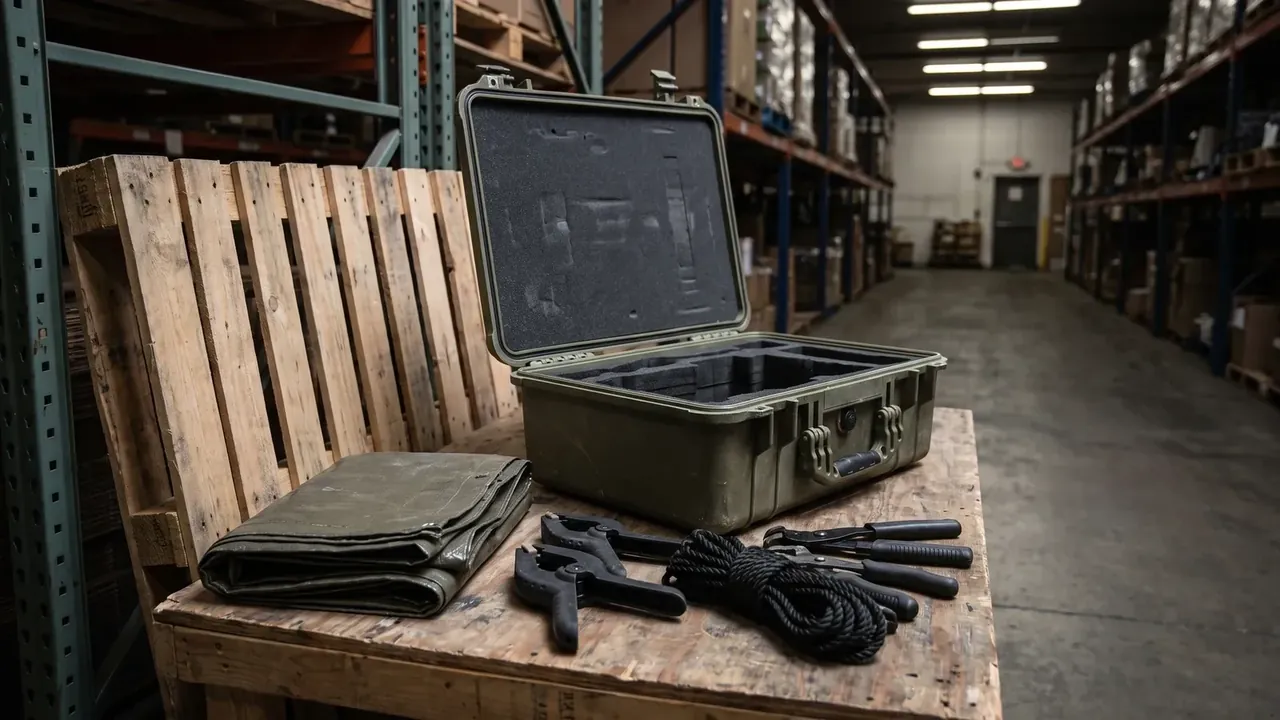
Quick answer: An EV Testing Equipment Case carries insulation values, leak-down figures and cell deltas, and one wrong number sends the report back for a second visit.
Table of contents
- Instrument List for High-Voltage Checks
- Fixing the Insulation Tester Inside
- Where Leak-Down and Cell Delta Records Live
- How Site Humidity Moves the Reading
- Tying Test Data to the Case Serial
- FAQ
1. Instrument List for High-Voltage Checks
The first instrument for a high-voltage check is an insulation tester, not a multimeter. A 400 V platform takes the 500 V DC setting and an 800 V one the 1000 V DC setting, over a 0.1 MΩ to 10 TΩ range.
The statutory floor scales with voltage: 100 Ω/V puts a 400 V system at 40 kΩ and an 800 V system at 80 kΩ. Those are minimums, not pass marks; healthy hardware reads in the tens of MΩ.
An EV Testing Equipment Case also carries a multimeter, there to prove the bus has fallen under 30 V after shutdown, plus a clamp meter for charge current.
GB/T 16739.1-2023 asks an EV workshop to hold six classes of battery equipment, insulation and leak testers and pack chargers among them. More instruments mean more cavities, one each.
Bus capacitors often exceed 1000 μF, about 80 J at 400 V, and falling under 60 V takes 3 to 5 min. Tape the discharge timetable inside the lid of the EV Testing Equipment Case.
| Instrument | What it reads | Range setting | Check before packing |
|---|---|---|---|
| Insulation tester | Bus to chassis | 500 V DC or 1000 V DC | Leads unbroken, range switch free |
| Digital multimeter | Residual voltage after shutdown | 1000 V DC | Battery level and lead insulation |
| Clamp meter | Charge and discharge current | 0–1000 A | Jaws close square, zero set |
| Leak tester | Pack shell pressure drop | 0–50 kPa | Hose fittings and O-ring |
| Pack charger | Capacity and internal resistance | By pack voltage | Cable lock and earth bond |
2. Fixing the Insulation Tester Inside
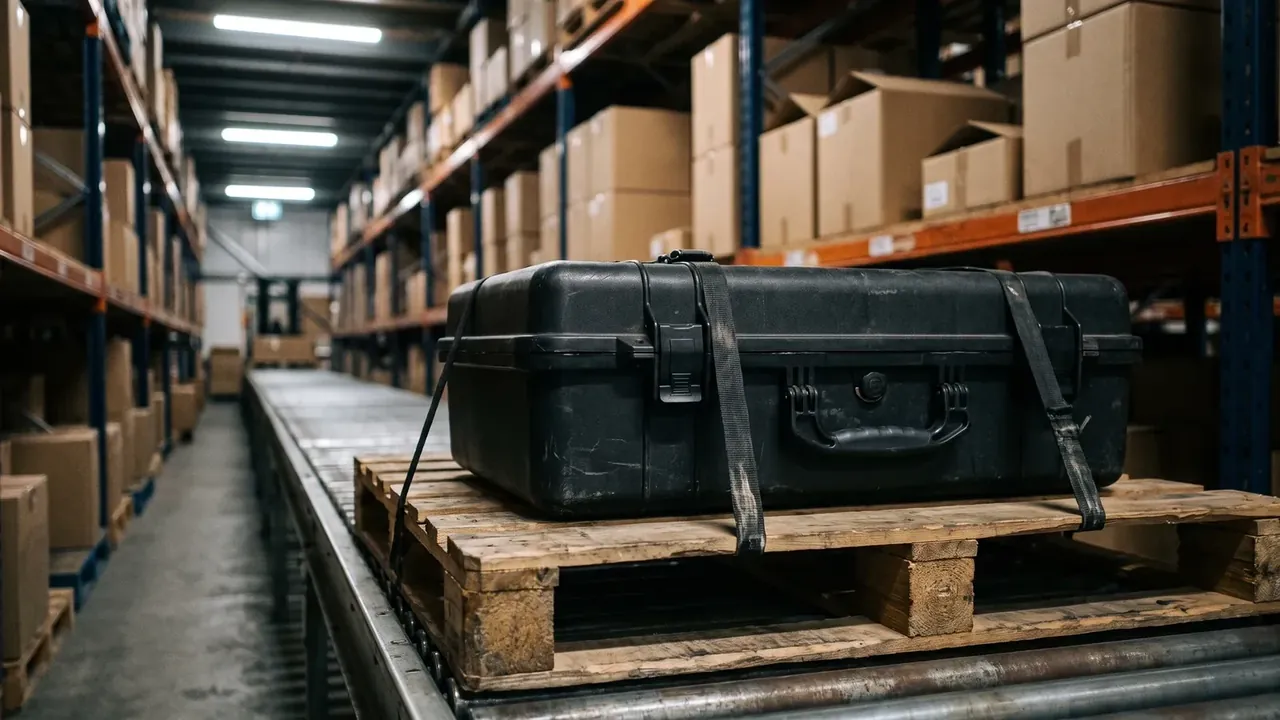
An insulation tester weighs 2 to 3 kg, and a drop multiplies that by a dozen in inertia. A shaped cavity is not enough: a strap holds the body and lid foam takes up the rest.
Face the dial up and coil the high-voltage leads apart. Once a lead jacket is pinched, the meter reads the leakage of its own lead instead of the vehicle.
Leads run 1.5 to 3 m, coiled to 15 cm and taped at both ends; a bundle dropped into a cavity loads the plugs and loosens the contacts. An EV Testing Equipment Case keeps the lead bay separate for that reason.
Sealing on an EV Testing Equipment Case follows IP67: dust tight and 1 m of water for 30 min. IP67 does not cover spray, so a pressure washer still puts water past the gasket.
The rejection line is three consecutive self-test failures on power-up, or 2 mm of cumulative movement in the insert cavities, and either one stops the van.
3. Where Leak-Down and Cell Delta Records Live
A leak test is read as pressure drop, not as sound. Inflate the pack to its set pressure, hold 5 min, and log the start and end values; an over-limit drop sends the technician to the sealing face.
Cell delta and temperature spread answer a different question. A freeze frame showing more than 300 mV between cells points to capacity fade, while a spread above 5 C points to a blocked cooling channel or a weak pump. Both numbers travel with the sample ID.
Two carriers ride in the EV Testing Equipment Case: a paper sheet that goes with the vehicle, and a tablet holding the electronic file. Paper survives a flat battery, the tablet exports charts.
Keep the EV Testing Equipment Case archive for three years. When the same vehicle returns, last year's delta curve explains more than a fresh one.
| Record | How it is taken | Where it lives | Kept for |
|---|---|---|---|
| Pack pressure drop | Start and end values over 5 min | Paper sheet in the case | 3 years |
| Cell delta | Freeze frame export | Tablet file | 3 years |
| Module temperature spread | Sensor readout | Tablet file | 3 years |
| Insulation value | Direct reading | Paper sheet plus photo | 3 years |
4. How Site Humidity Moves the Reading
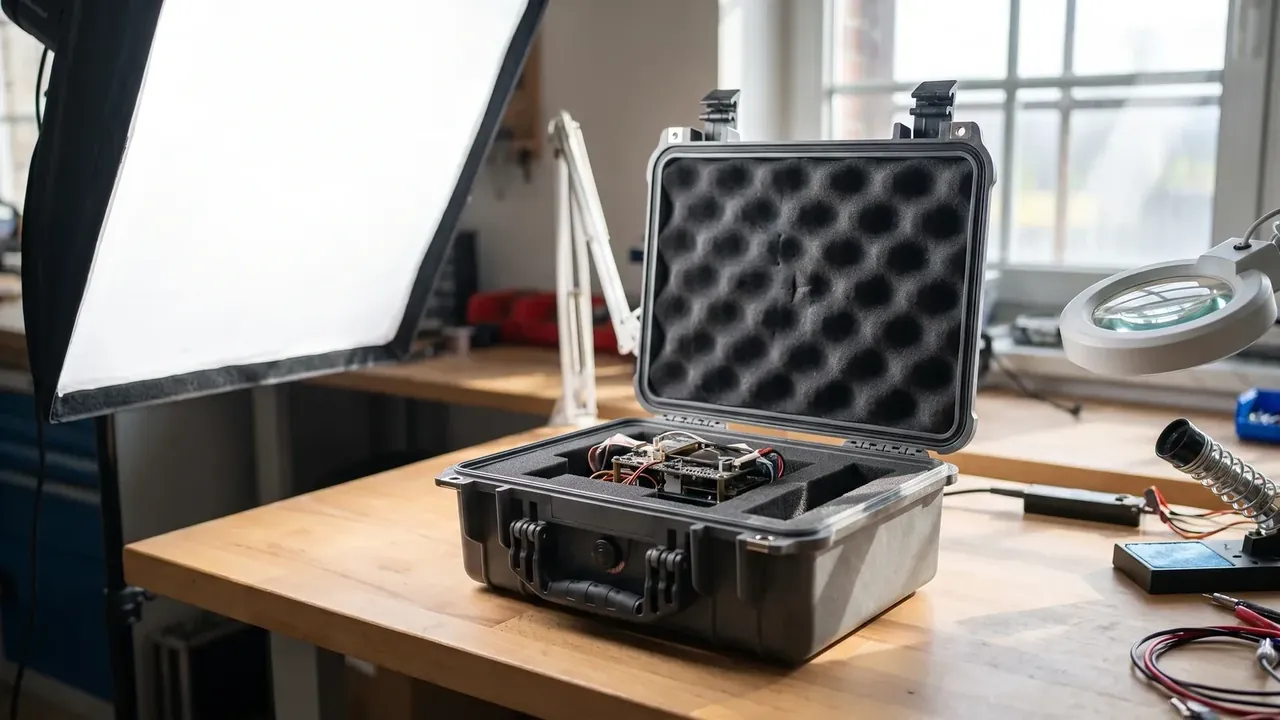
On an EV Testing Equipment Case run, insulation resistance follows humidity. Above 80% RH the leakage path across a dirty terminal climbs, and a reading can fall by half; wipe the surface dry and measure again.
Temperature pushes the other way. Cold electrolyte thickens, internal resistance rises, and a cold pack reads higher; 20% between a 25 C test and a −10 C test is not a fault.
An EV Testing Equipment Case that moves between climates needs 2 h of settling. Carried from a 5 C vehicle into a 25 C bay, it condenses inside and fails self-test.
Log the humidity: a report that says pass without the conditions cannot be defended three months later.
| Site condition | Shift in reading | Response | Recheck |
|---|---|---|---|
| Above 80% RH | Insulation reads low | Dry terminals, vent 10 min | Two readings, take the stable one |
| Ambient at −10 C | Insulation reads high | Let the vehicle sit 30 min | Compare with the warm baseline |
| Swing of 20 C or more | Self-test fails | Settle 2 h before power-up | Run self-test three times |
| Rain, outdoor bay | Water on terminals | Fit the rain cover first | Note weather and time |
5. Tying Test Data to the Case Serial
The case serial is the key for the whole record set. Build it from instrument type plus a sequence, IR-07 for instance, and give every instrument a child number under that prefix so file names follow.
Binding starts at purchase: fix the number, then label the instruments. From there one EV Testing Equipment Case owns one instrument set, one calibration file and one history.
A QR label on the outside of the EV Testing Equipment Case opens the inventory, the next calibration date and the last three trips, so checking the case becomes checking the account.
Renumbering breaks the chain: swapping cases without swapping numbers, or the reverse, detaches the history for good.
Related Reading
- Explosion-proof safety box for battery module testers
- Portable diagnostic equipment case
- Case volume, cavity and usable ratio
Related Products
- 8 Series — Gun Cases; Military Equipment Cases; Camera Equipment Cases; Drone Cases; Watch Cases; Knife Cases; First Aid Cases; Electronics Equipment Cases
- WL8-2812 PP Gun Case — model WL8-2812
- All protective cases and toolboxes: 7 series, 158 models