

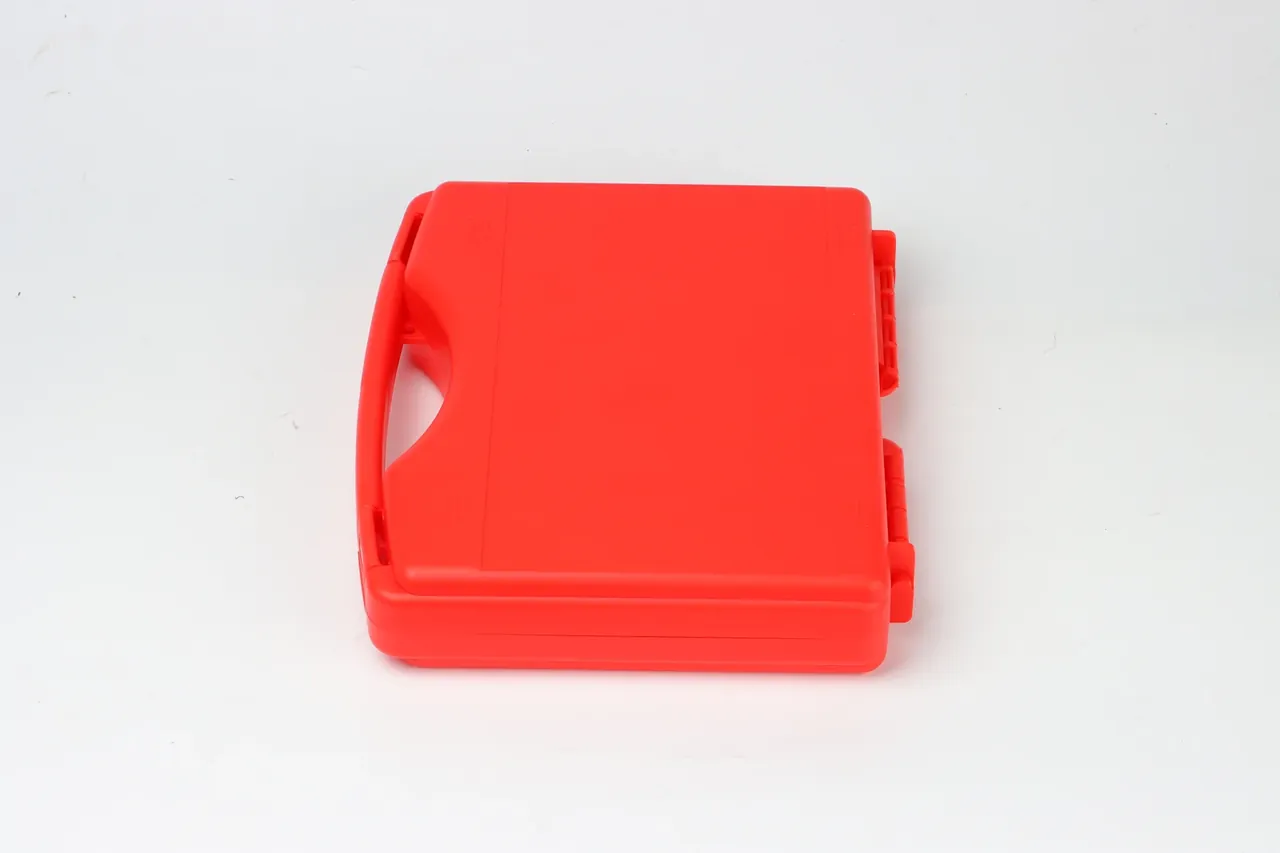
Quick answer: A Scene Kit needs four fixed zones, three seal points and a four-field signature pad; moulded in one pass, they keep a handover check under 90 seconds.
Table of contents
- How a Scene Kit splits into four zones
- Seal points: three through-slots and a routing rule
- Zone numbering on the body
- The four-field handover pad
- Empty-kit return: count, reset, restock
- FAQ
1. How a Scene Kit splits into four zones
Zoning a Scene Kit is a coordinate problem before it is a foam problem. On a 455 × 330 × 170 mm shell the four zones take 78% of the floor and leave 22% for ribs and finger gaps. Cut those rectangles into the mould and every seal slot inherits the grid, so later batches never re-measure.
Zone sizes follow the largest outline of the contents, not a count of items. A takes long tools at 210 × 150 × 60 mm, B boxed parts at 120 × 90 × 55 mm, C flat records at 300 × 120 × 40 mm, D bottles at 100 × 100 × 80 mm. Ribs sit 4 mm below the rim, so fingers clear the way in and the stack clears the contents.
| Zone | Floor (mm) | Depth (mm) | Body detail |
|---|---|---|---|
| A | 210 × 150 | 60 | 3 mm EVA, 6 mm radii |
| B | 120 × 90 | 55 | Wrapped rib, 2.2 mm wall |
| C | 300 × 120 | 40 | Lid strip 5 mm from edge |
| D | 100 × 100 | 80 | 3.2 mm wall, 2 mm step |
Base wall is 2.8 mm, lid 2.5 mm, corner radius 12 mm. At 18 kg the floor deflects 1.5 mm at most; past that the ribs touch the contents and the zone grid stops meaning anything for that case.
2. Seal points: three through-slots and a routing rule
A seal point is what turns a closed case into a checkable one. The case body carries three single-use points: across the front latch gap at 4 mm, through a rear threading hole at 3 mm, at the handle root at 3 mm. All three go on in one run with consecutive numbers, so a break shows which side opened.
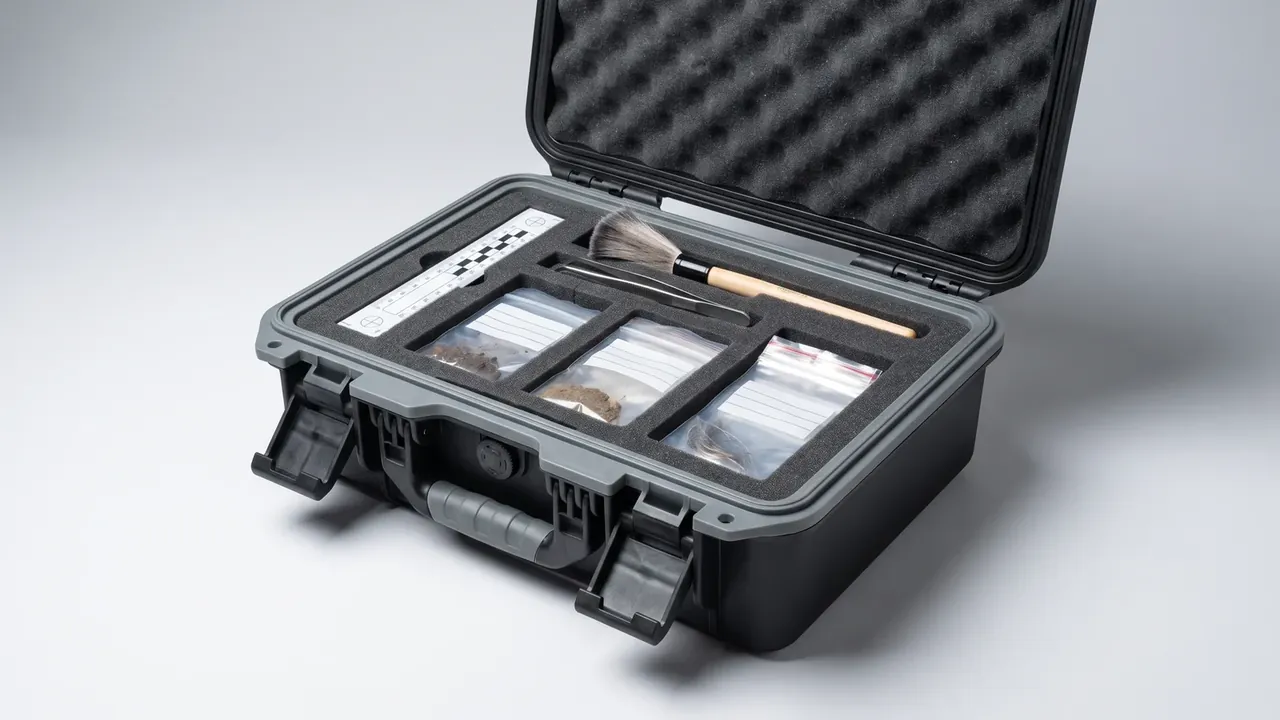
The detail that matters is a through-slot, not a dimple. A through-slot in 2.8 mm wall takes 25 kg of pull; a dimple splits at its root at minus 20 °C. Drops follow the MIL-STD-810H procedure at 1.2 m over 6 faces, 3 edges and 1 corner, ten times, no crack at the mouth. JUNZHIJIA chamfers that mouth 0.8 mm so a cord does not fray.
Routing stays 15 mm off the hinge axis, which carries 0.3 mm of axial play; a seal tight to it shears within a dozen cycles. One 8 mm dogleg in the run leaves the two cut ends unequal, visible without a gauge.
| Slot | Position | Width (mm) | Order | Break signature |
|---|---|---|---|---|
| S1 | Front latch gap | 4 | First | Two loaded spans |
| S2 | Rear thread hole | 3 | Second | Angled cut |
| S3 | Handle root ear | 3 | Third | Load at ear |
Keep 60 mm between slots so one tool cannot cut two at once, and radius the floor 0.5 mm so load spreads.
3. Zone numbering on the body
Marks are moulded into the inner wall at 6 mm cap height and 0.4 mm relief, 8 mm in from the zone edge. The code runs A1 to D4, sixteen positions, matching the last four digits of the outside serial.
- Contrast between mark and case at least 4.5:1, white on dark grey.
- Print survives 50 wipes with anhydrous ethanol.
- Serial is eight characters in a 20 × 8 mm clear area.
- Number field stays 6 mm clear of any seal slot.
Moulding and printing do different jobs. Zone codes travel with the tool and never shift between batches; serials travel with the order and are unique per case. Both sit on the plastic. Labels lift in cold, and a lifted label takes traceability with it.
Reuse is why the codes are moulded: when a returned Scene Kit is reassigned, the marks stay and only the serial is reprinted, so old and new records join on one number. A case keeps one trace line for its whole life.
4. The four-field handover pad
The pad sits inside the lid as four recesses, 60 × 18 mm at 0.6 mm depth, so a triplicate form lies flat without curling.
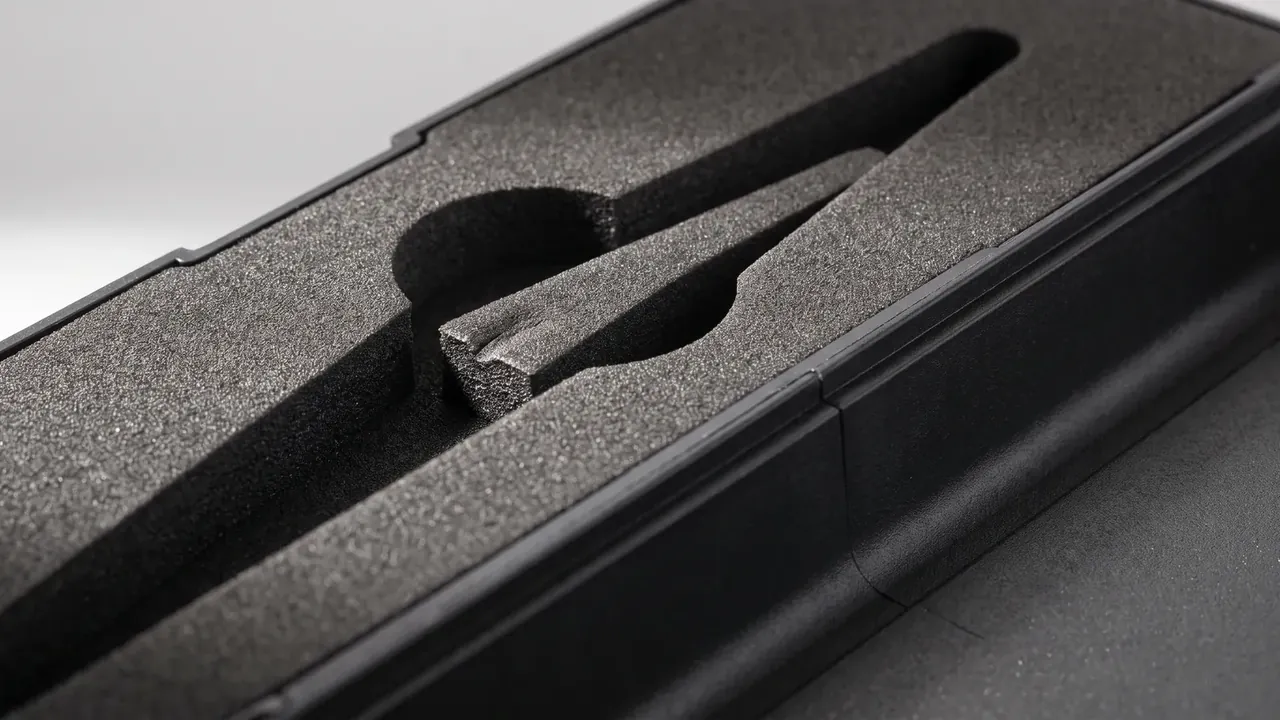
The four fields go to release, receipt, witness and seal check, capped at 12, 12, 10 and 12 characters. Seals sit outside, signatures inside, so a record survives the first opening; that split is the only audit trail a case body offers on its own.
| Field | Records | Cap | Copy |
|---|---|---|---|
| Release | Name, staff no., time out | 12 | First sheet |
| Receipt | Name, staff no., time in | 12 | Second sheet |
| Witness | Name, unit | 10 | Third sheet |
| Seal check | Last 4 digits, 3 seals | 12 | Case label |
Depth has a floor as well as a ceiling. At 0.6 mm a triplicate on 0.1 mm paper lies flat; below 0.4 mm the third copy takes pen pressure through.
The field order follows the handover: release, receipt, witness, seal check, fixed because the lid gives 0.15 m² of flat surface.
5. Empty-kit return: count, reset, restock
Return handling is three checks; the body helps by placing each where a handler sees it.
Counting looks at slot mouth and hinge: a chip over 0.5 mm retires the case, a pin offset over 0.5 mm needs a new pin. Resetting looks at ribs and padding: EVA compressed below 80% of its original thickness is swapped. Restocking opens 10% of the batch and compares each case number with the log.
Stacking stops at three high. A loaded Scene Kit weighs 18 kg, so the bottom case carries 54 kg and its lid ribs deflect 0.8 mm, which recovers; at four high they take 2.1 mm and stay there, and a sagging lid no longer holds the pad flat.
Conclusion
Judge a Scene Kit on three body details: whether the zone grid is in the tool, whether the seal points are through-slots clear of the hinge, and whether the signature recess reaches 0.6 mm. With all three, four zones, three seal points and four fields hold a handover check under 90 seconds.
Related Reading
- Foam liners and bench fit for lab sampling cases
- Port cut-outs and power positions on command cases
- Cold-weather setup for field research sampling cases
Related Products
- 8 Series — Gun Cases; Military Equipment Cases; Camera Equipment Cases; Drone Cases; Watch Cases; Knife Cases; First Aid Cases; Electronics Equipment Cases
- WL8-2812 PP Gun Case — model WL8-2812
- All protective cases and toolboxes: 7 series, 158 models