

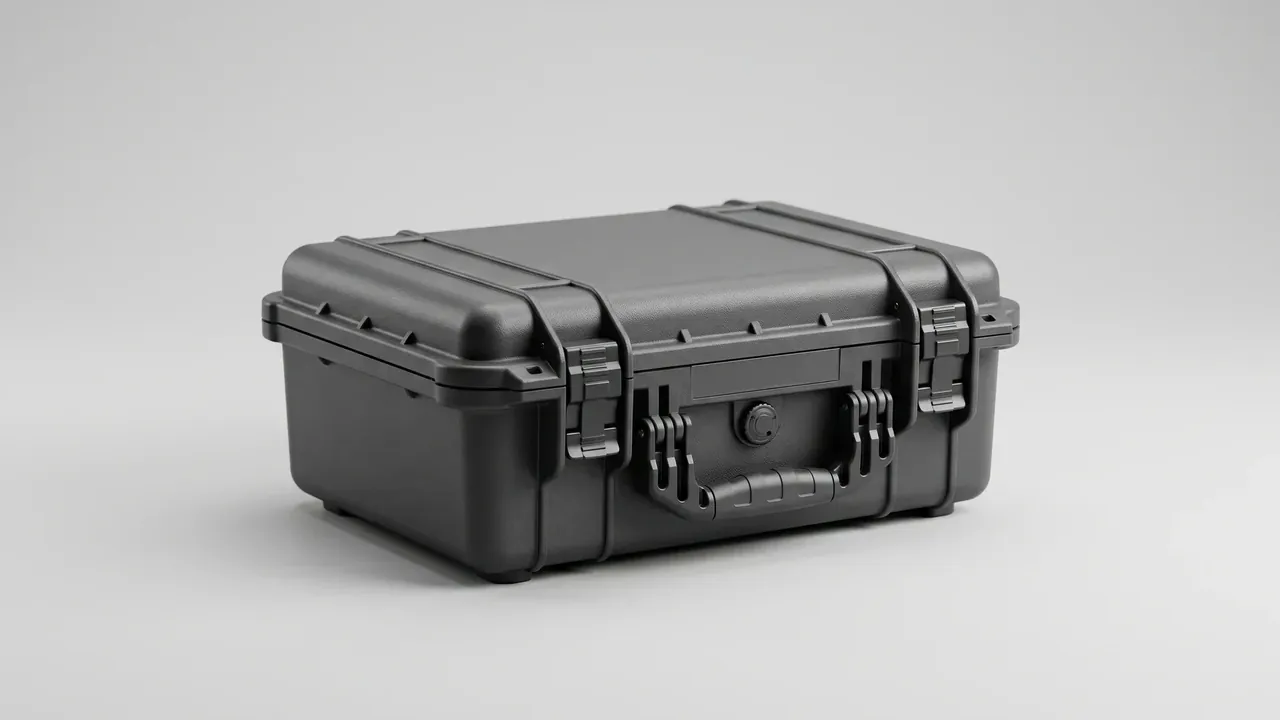
Quick answer: High-hazard-content packaging takes two forms — the mobile storage box (carried, vehicle-loaded, moves with the work face) and the fixed or semi-fixed storage cabinet (floor-mounted, managed at one point). The trade-off rests on three variables: is the work mobile, is management site-based, what is the per-move capacity. Mobile work takes the box; a fixed store takes the cabinet; mature projects combine both — cabinets for in-store holding, boxes as transit units. This article compares container forms only.
Table of contents
- How the two forms differ in position
- Six-dimension comparison
- When the mobile box fits
- When the fixed cabinet fits
- Combined use: dividing the work
- FAQ
1. How the two forms differ in position
The conclusion first: box and cabinet are not competitors; they are container forms for different nodes of a chain.
- The mobile box is a transit unit — it lives in the transport chain, moving from one work face to another; its design centers on impact resistance, sealing and controlled opening.
- The cabinet is a fixed holding unit — it stands in a store or base; its design centers on capacity management, lock hierarchy and inventory efficiency.
Using a cabinet as a box (frequent handling) or a box as a cabinet (long-term stacking without positioning) applies each structure's strengths to the wrong job.
2. Six-dimension comparison
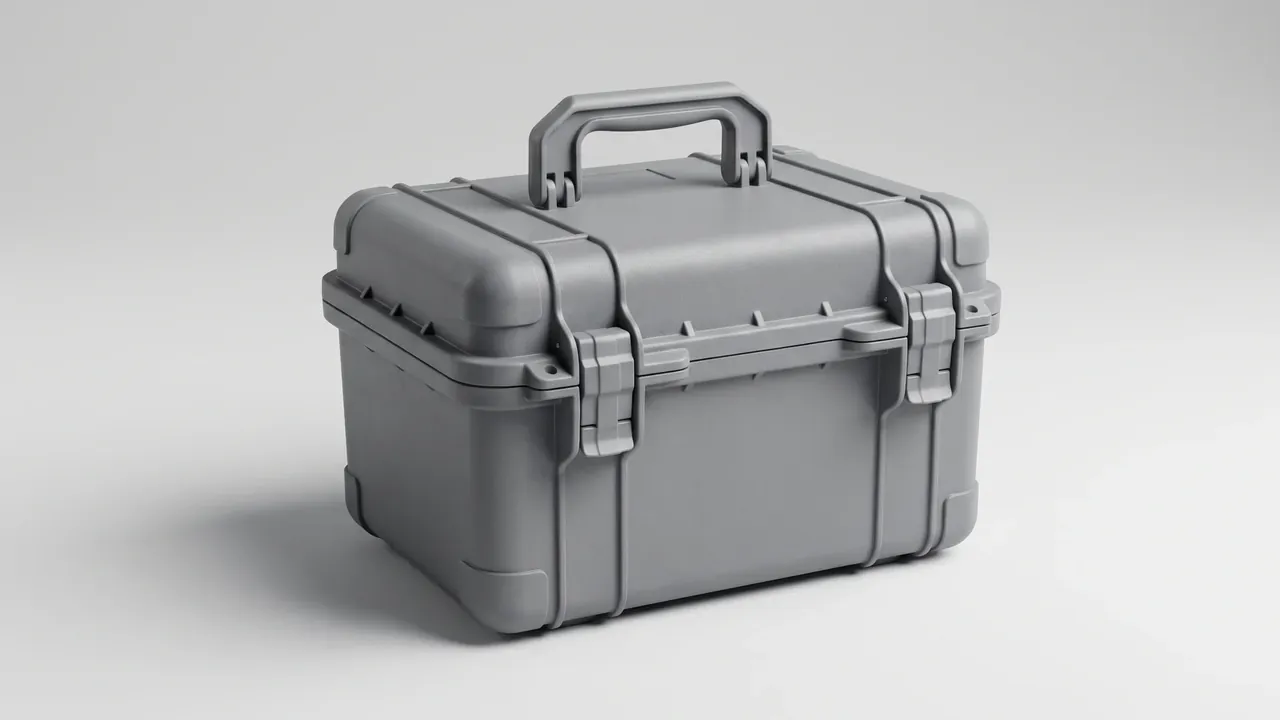
| Dimension | Mobile storage box | Fixed storage cabinet |
|---|---|---|
| Position | In the transport chain | Fixed in store/base |
| Structural focus | Drop resistance, sealing, weight–rigidity balance | Load bearing, compartments, lock hierarchy |
| Capacity | Single-move quantity | Large volume, compartmented |
| Management interface | Sealing, per-case numbering | Access control, ledgers, inventory |
| Mobility | Forklift/lifting/manual short moves | Usually static (or lifted as a unit) |
| Typical cost | Low per case | High per cabinet, diluted by capacity |
"Typical cost" is per unit. On container cost per kilogram of contents, cabinets are usually cheaper for fixed scenarios; boxes are irreplaceable for mobile ones.
3. When the mobile box fits
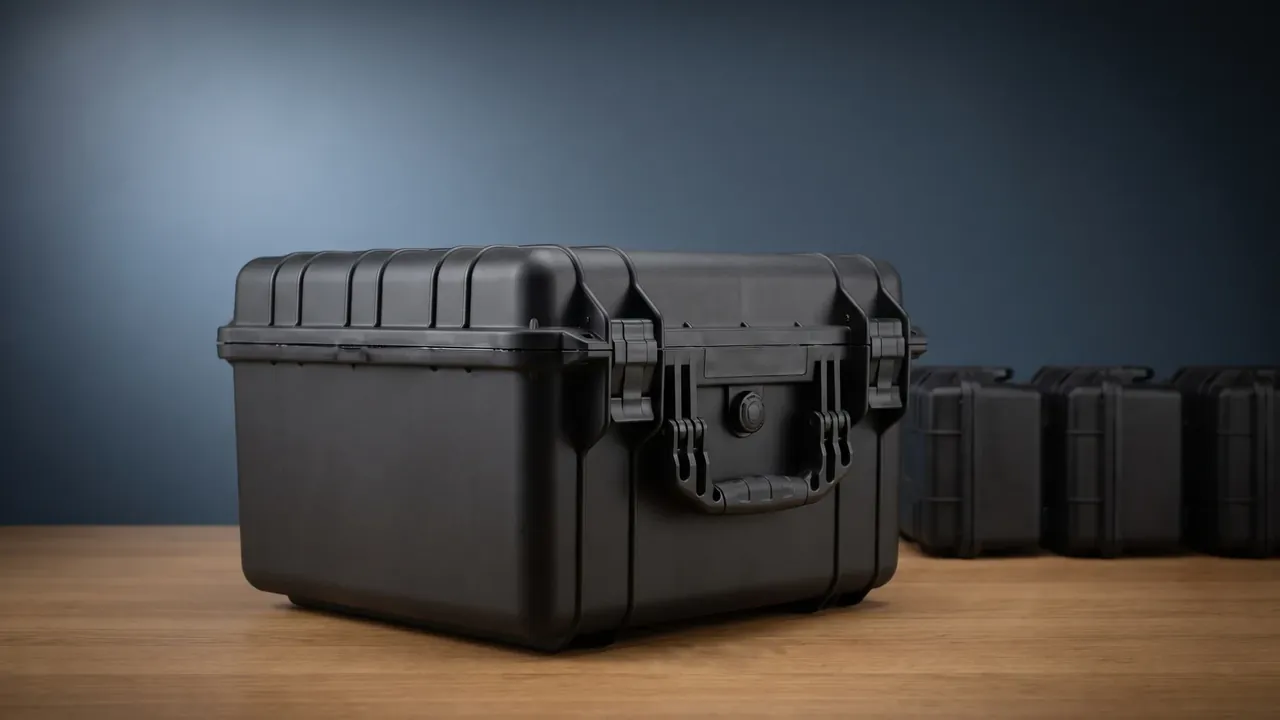
Choose the box when:
- The work face moves: construction progress, line work — transfer with the job;
- The transport chain is involved: vehicle loading, sea legs, multi-stage handling;
- Small quantities at high frequency: shift- or day-based drawdowns covered by one case's capacity.
Three engineering confirmations when buying boxes: impact grade (drop condition), sealing and drainage (open-air transit), and sealing/numbering (handover records).
4. When the fixed cabinet fits
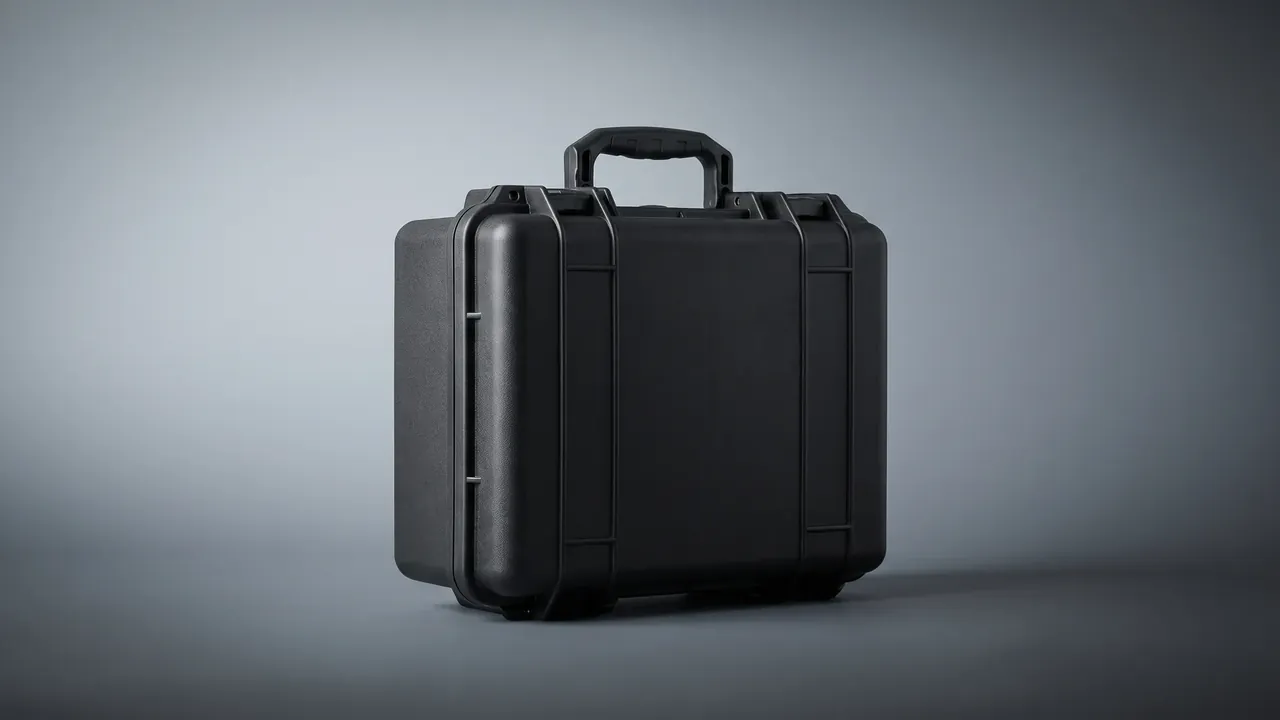
Choose the cabinet when:
- Management is site-based: contents stay in a fixed store for long periods;
- Volume and variety are large: compartments, layers and ledger management are needed;
- Management integration: the cabinet can integrate physically and procedurally with access control, monitoring and alarm systems.
Three engineering confirmations when buying cabinets: floor load and fixing method (anchoring requirements), lock hierarchy (matching the management system), and internal positioning (compartments and racking).
5. Combined use: dividing the work
Mature projects use both:
- Cabinets hold in-store stock: goods-in, compartmented positioning, ledger entry;
- Boxes serve as transit units: cabinet to work face per shift, drawn out and returned;
- Handover by seal: numbered seals between box and cabinet close the record loop.
The value of this division is that each container does only what it is good at: the cabinet never takes drops, the box never takes year-long stacking. Most overspending comes from asking one container to do both jobs.
Conclusion
Box or cabinet is a chain-node question: boxes for the moving legs, cabinets for the fixed node, joined by seals and ledgers. Draw the flow first — where it rests, where it goes, who hands it over — and the container form almost chooses itself. Furnishing a mobile job with cabinets, or a fixed store with piles of boxes, is the cost of mismatching container to scenario.
This article compares container forms only. It does not cover any storage practices; applicable legal requirements follow current laws and regulations.
Related Reading
- Explosive Storage Box: The Container Compliance Boundary
- War Reserve Case: Packaging Strategy for War Reserve and C…
- Heavy-Duty Protective Case: Structure and Load Design
Related Products
- 8 Series — Gun Cases; Military Equipment Cases; Camera Equipment Cases; Drone Cases; Watch Cases; Knife Cases; First Aid Cases; Electronics Equipment Cases
- WL8-2812 PP Gun Case — model WL8-2812
- All protective cases and toolboxes: 7 series, 158 models