

Quick answer: Service-life management does not wait for failure — it manages parts by class: gaskets and desiccant on monthly/quarterly cycles, latches and hinges by operating condition, shells by annual inspection, and the whole case retired when repair cost exceeds residual value. A sustainable inspection schedule plus three retirement red lines lowers life-cycle cost more than any "top-spec configuration" ever will. This article covers container maintenance only.
Table of contents
- The idea: manage parts by class, not the case as one lump
- The inspection schedule
- How to judge the key components
- Three retirement red lines
- Ledger and batch management
- FAQ
1. The idea: manage parts by class, not the case as one lump
A case is assembled from parts with entirely different lifetimes: the shell counts in decades, hardware in operating cycles, gaskets and desiccant in months. Managing the whole case as a single lifetime entity either wastes serviceable cases or runs tired ones past their limits.
Classify parts into three tiers:
- Consumable tier (gasket, desiccant, security seals): replace proactively on schedule;
- Fatigue tier (latches, hinges, handles): assess by condition; replace at cycle count or when looseness appears;
- Structural tier (shell, ribs, lock bosses): annual inspection; retire when damage crosses a red line.
After classification, maintenance stops being "it feels due" and becomes "the schedule says check" — the only way such a program survives contact with daily operations.
2. The inspection schedule
| Cycle | Check / action | Part | Acceptance |
|---|---|---|---|
| Every opening | Visual | Cavity, insert | No debris, no water, foam intact |
| Monthly | Humidity check | Desiccant / indicator card | Color normal or replaced |
| Monthly | Seal face | Gasket | No embedded debris, even imprint |
| Quarterly | Open–close test | Latches, hinges | Firm rebound, no looseness |
| Yearly | Full visual | Shell, ribs, markings | No cracks, no stress whitening, marks legible |
| Yearly | Gasket assessment | Gasket | Slow rebound or permanent dents → replace |
The schedule's value is executability: posted in the store or embedded in an inspection app, it beats any elaborate engineering judgment. Shorten intervals for humid, hot, or high-frequency-opening environments.
3. How to judge the key components
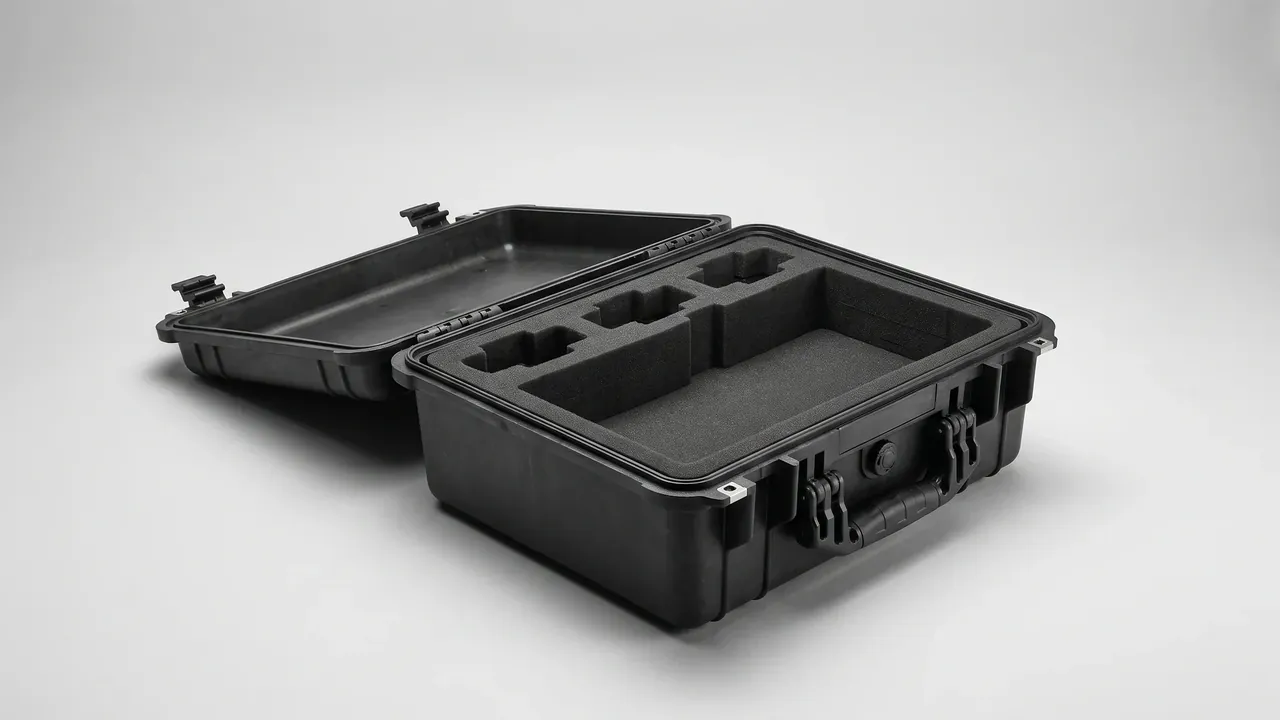
Gasket: press the lid lip and watch rebound. Slow rebound, permanent dents or local collapse mean compression set has accumulated to the failure edge — replace now. The gasket is the cheapest and most critical part; when it fails, the IP rating promise fails with it.
Latches and hinges: cycle twenty times; feel whether latch pressure decays and hinges loosen. Weak latch springs can let a lid pop open — a safety-relevant failure that must not wait.
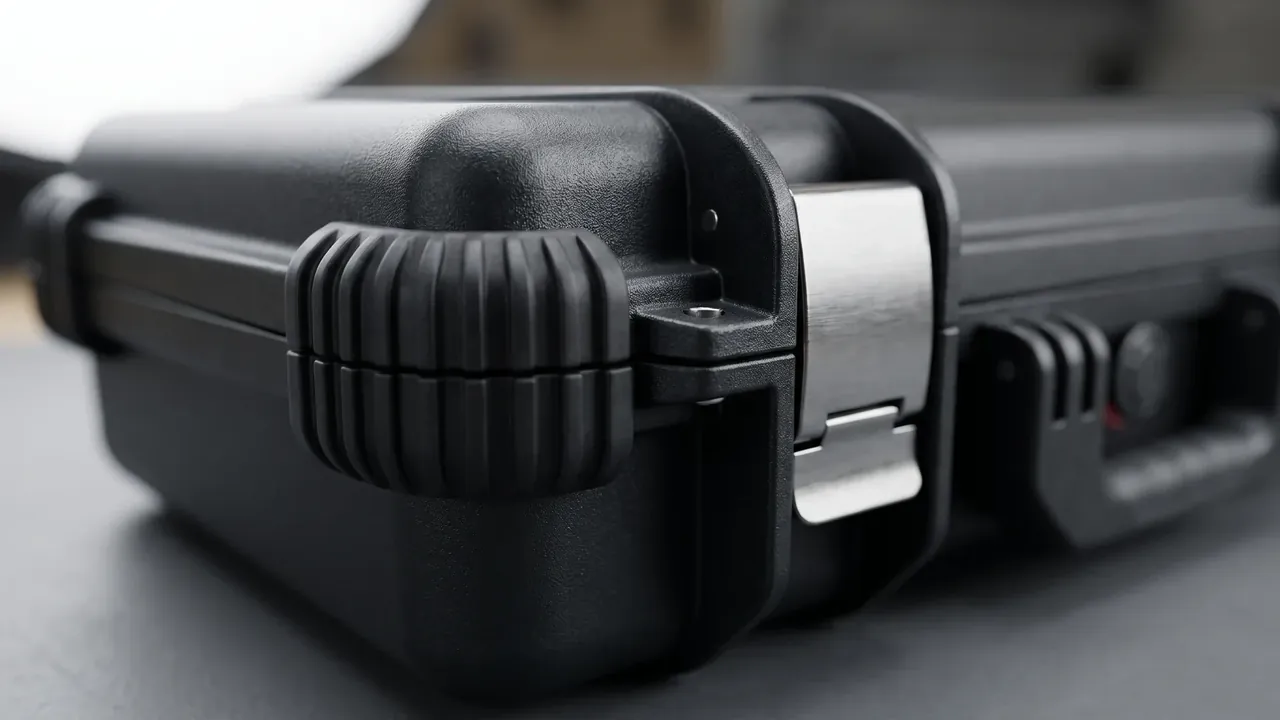
Shell: check three spots — corners (drop load), lid lip (seal face), rib roots (stress concentration). Cracks and stress whitening are early structural signals.
Desiccant and humidity card: the card is the most直观 tool — replace desiccant when the indicator exceeds limits; if the case lacks a card, add one at configuration stage.
4. Three retirement red lines
Any one of the following retires the case rather than repairs it:
- Structural shell crack: a through crack at a corner or rib root — the shell is the load basis; bonded repairs are not trustworthy;
- Permanent seal-face damage: a deformed lid lip or damaged groove that no longer compresses the gasket — a new gasket cannot restore sealing;
- Locking failure: a broken lock boss or latch seat that prevents controlled closure — this is the security floor.
All other damage (surface scratches, finish wear, non-critical hardware) is repairable. The line between repair and retirement is whether structural parts still perform their design function — not cosmetic age.
5. Ledger and batch management
Life management ends in a ledger:
- One record per case: number, purchase batch, part replacements, inspection history;
- Part batches: log when consumables like gaskets were replaced, to build real-life statistics;
- Retirement registry: record where retired cases go (scrapped or downgraded), so they do not flow back into the original use.
The ledger pays back twice: cases stay in a known state, and procurement gradually shifts from intuition to data — next year you will know which gasket brand really lasts and which latch batch failed most.
Conclusion
Service-life management means splitting case lifetime into part lifetimes: consumables on schedule, fatigue parts by condition, structural parts by red line — with a ledger recording every action. The mechanism costs almost nothing and returns two things: every case stays in a known state, and procurement decisions slowly turn from experience into data.
This article covers container maintenance only. It does not cover any storage practices; applicable regulatory requirements follow current laws.
Related Reading
- Explosive Storage Case: Container Configuration for Field Operations
- Cartridge Storage Box: Moisture and Corrosion Control for Long-Term Storage
- War Reserve Case: Packaging Strategy for War Reserve and C…
Related Products
- 8 Series — Gun Cases; Military Equipment Cases; Camera Equipment Cases; Drone Cases; Watch Cases; Knife Cases; First Aid Cases; Electronics Equipment Cases
- WL8-2812 PP Gun Case — model WL8-2812
- All protective cases and toolboxes: 7 series, 158 models