

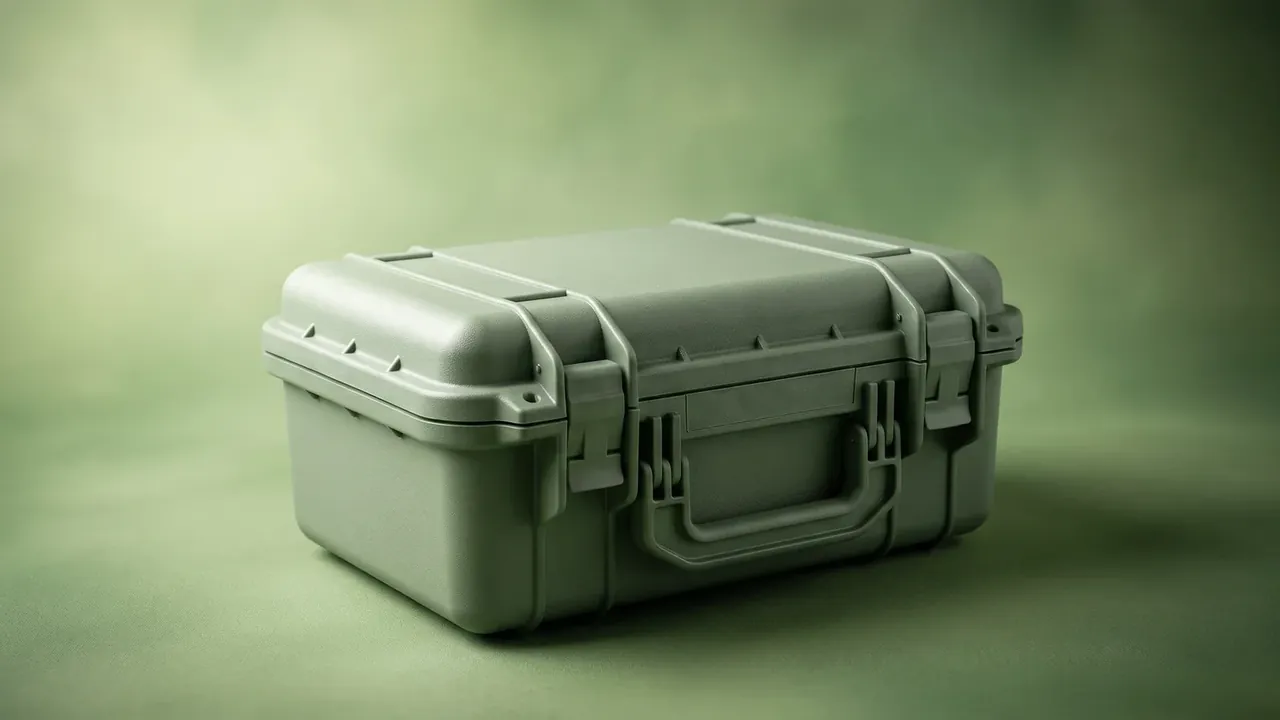
Quick answer: A field service tool case proves itself in one call-out. This walk-through follows a 3-hour-40-minute repair: how the case was strapped down, how three trays were stacked, how the lid opened one-handed in 1.5 seconds, and how it was counted back.
Table of contents
- One call-out in six stages
- Loading: tie-downs and three stacked trays
- On site: one-hand opening in rain and dust
- The reload: counting back and a missing-part rate
- Six mistakes this set-up fixed
- FAQ
1. One call-out in six stages
A 280-tonne moulding machine flagged low hydraulic pressure at 7:20. Two technicians loaded one field service tool case into a pickup, drove forty minutes and worked two and a half hours on site.
| Stage | Clock | What the case does | Measured value |
|---|---|---|---|
| Load-out | 07:20 | Lifted into the bed, four straps | Shift under 2 mm |
| Arrival | 08:05 | Carried sixty metres one-handed | 21.5 kg loaded |
| First open | 08:10 | Latches released, first tool out | 1.5 s, one hand |
| Work | 08:12–10:20 | Opened thirty-eight times | Lid holds at 100° |
| Reload | 11:00 | Back on shelf level two | 20 mm shelf lip |
The lesson was sequence: reverse those three steps and the tidiest tray falls apart overnight.
2. Loading: tie-downs and three stacked trays
Two minutes of loading set the tone.
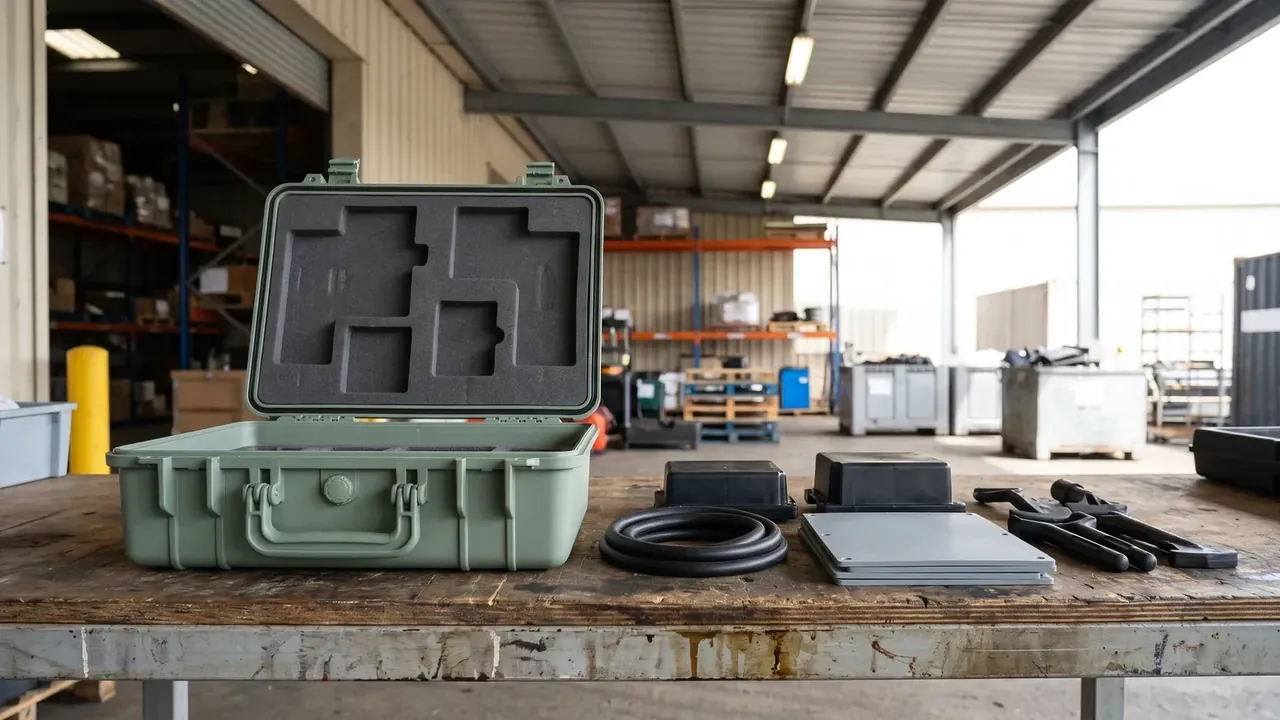
This field service tool case carried forty-eight tools in three trays. The top held twelve high-frequency pieces: adjustable wrench, hex key set, two screwdrivers. The middle held twenty sockets and extensions, the bottom sixteen gauges, O-rings and ties. Trays follow reach, not size.
Each tray is 12 mm EVA with 0.5 mm clearance. Trays and tools weigh 15.9 kg, the case 5.6 kg, so a full load is 21.5 kg — carriable sixty metres in one hand.
In the bed, four 25 mm straps run through the side slots and across the lid ends over a 3 mm mat; across three speed bumps at 40 km/h the case shifted under 2 mm. On the shelf a 20 mm lip locates it.
3. On site: one-hand opening in rain and dust
The crew arrived at 08:05 in light rain; the case sat in the drizzle for forty seconds.
| Condition | What happens | Case feature |
|---|---|---|
| Rain | Water pools on the rim and runs in at the seam | Double-lip gasket, drain channel |
| Grinding dust | Powder packs into the hinge gap | Internal pin, 0.3 mm exposed |
| Oily hands | Palm slips off the latch | 28 mm latch face with ribs |
| Bed in summer | Cavity reaches 55 °C | Lengthwise lid ribs resist warp |
The 1.5 seconds is a real motion: palm presses the front latch, thumb flicks the rear one, the left hand lifts the lid until it holds at 100°, and the right hand is already in the top tray. Repeated thirty-eight times, that saves under a minute — but needing both hands and a free surface would cost twenty.
Rain is less about water than the puddle carried inside as the lid opens; a shallow channel traps it. Dust is worse: powder packs into anything under half a millimetre, and hinges go first. An internal pin leaves one 0.3 mm line to blow out. The gasket is a wear part, chosen by opening frequency. Opened dozens of times a day, it loses rebound in two years. Make it hard instead and opening force climbs from 30 N past 60 N, and one-handed latching is gone. A replaceable medium-hardness gasket is the practical middle; this crew swapped theirs at month eighteen.
4. The reload: counting back and a missing-part rate
Counting back is the first step skipped.
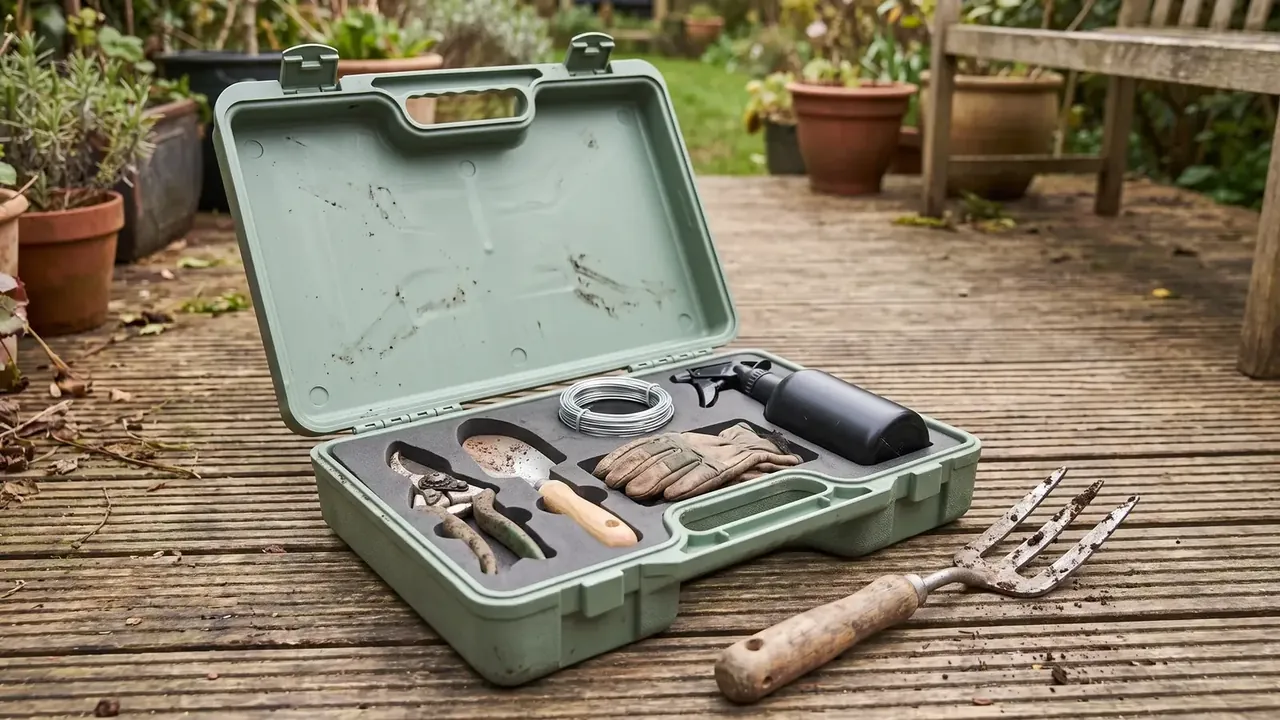
From month two the crew tracked a missing-part rate: every return, each empty pocket counted as one item. Month one ran at 2.1 percent, roughly one item per two trips; after trays were cut per item and numbered, month three fell to 0.8 percent.
The restock list sits in the lid: hex keys, O-rings, cable ties, tape, bolts. It says refill, never a quantity. The count takes three minutes: eyes across the tray, empty pocket refilled from the pouch.
5. Six mistakes this set-up fixed
Moved to another crew, the same set-up fails on habits before hardware:
- Trays cut too full with no finger clearance; leave 15 mm notches between pockets.
- Case sized by tool count, not volume; forty-eight tools in a forty-tool case means digging.
- Strap slots cut into the lid rim, so tension bows the lid and rain enters.
- Foam cut as one solid block, which bulges with heat and will not close.
- Counting from memory, which fails within three days.
- A clear lid, chosen for visibility, ageing fastest under UV.
The first four are design-stage calls; the last two are habits. The envelope cannot change later: bed width, shelf height and handle height belong in the order.
Conclusion
One call-out settled what the field service tool case has to be: it stays put in the bed, opens to the right item in one motion, keeps rain and dust off the tray, and makes an empty pocket obvious. Choosing a field service tool case means choosing how reliably those four actions repeat.
This article discusses only the container (case body) side of specifications and design intent, and does not cover any handling, loading or use of the contents.
Related Reading
- Hardware tool boxes on the bench and on site
- Trolley tool cases for inspection rounds
- Three ways a vehicle tool case gets used
- Tray layout and compartment design inside a tool box
Related Products
- 8 Series — Gun Cases; Military Equipment Cases; Camera Equipment Cases; Drone Cases; Watch Cases; Knife Cases; First Aid Cases; Electronics Equipment Cases
- WL8-2812 PP Gun Case — model WL8-2812
- All protective cases and toolboxes: 7 series, 158 models