

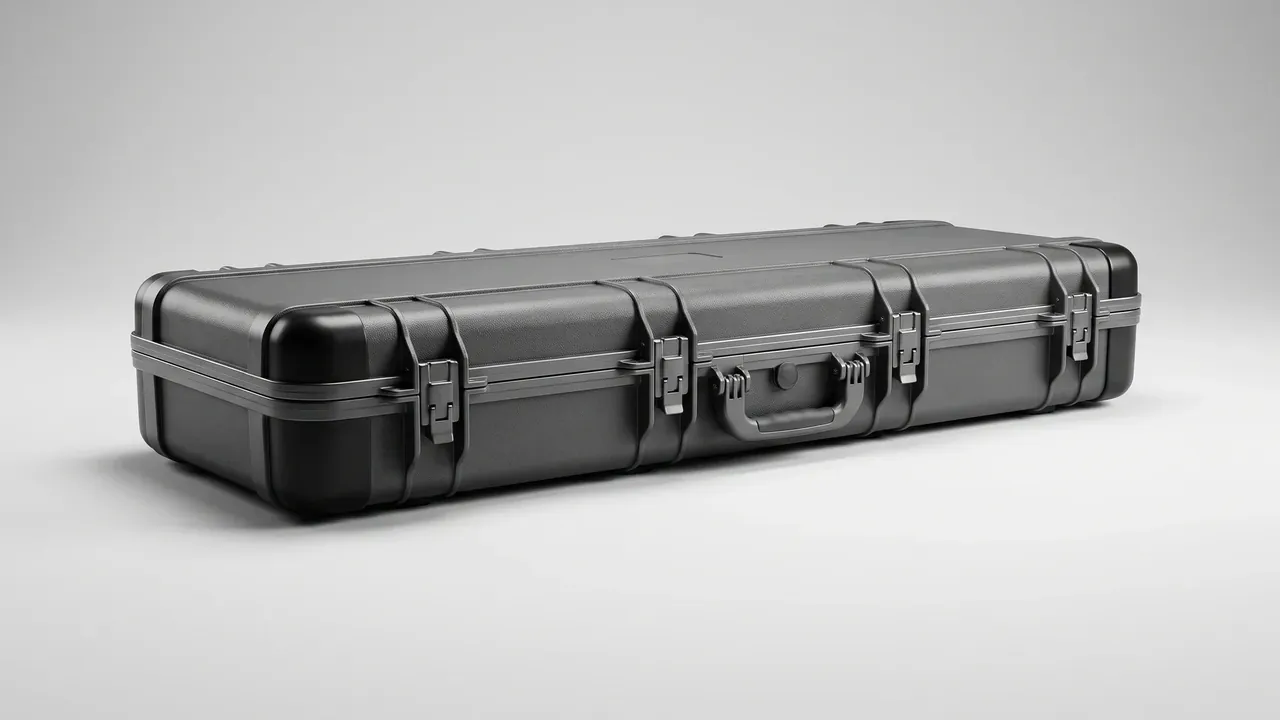
Quick answer: The four mainstream shell materials resolve to one table — injection PP: best overall value, tough; injection ABS: hard surface, easy to print, brittle in cold; roto-molded PE: one-piece seamless, best drop resistance, heavier; aluminum-magnesium: most rigid, premium look, high on both cost and weight. The formula: conditions set priorities, priorities set material — transport drops favour rotomolding, volume cost favours PP, cold climates avoid ABS, static display or co-stored electronics justify aluminum. This article covers shell materials only.
Table of contents
- The four materials side by side
- PP: the value baseline
- ABS: hard surface, cold weakness
- Roto-molded PE: the impact route
- Aluminum-magnesium: rigidity and its price
- Material advice by condition
- FAQ
1. The four materials side by side
| Dimension | Injection PP | Injection ABS | Roto PE | Aluminum-Mg |
|---|---|---|---|---|
| Impact | Good (tough rebound) | Medium (brittle when cold) | Best (one-piece energy absorption) | Poor (permanent dents) |
| Stiffness | Medium | Higher | Medium (wall-thickness compensated) | Highest |
| Weight | Light | Light | Heavy | Heaviest |
| Temperature | −20 to +60 ℃ typical | Notable cold brittleness | Wide range | Wide range |
| Sealing | Good (mold precision) | Good | Excellent (seamless) | Depends on structure |
| Surface | Silkscreen / IML | Silkscreen / spray, easy | Texture + silkscreen | Anodized / spray |
| Cost | Low | Low-medium | Medium (cheap tooling, long cycle) | High |
| Batch fit | Large runs | Large runs | Small-mid runs, large sizes | Small runs, premium |
Remember the conclusion first: no material wins everywhere — only matching matters.
2. PP: the value baseline
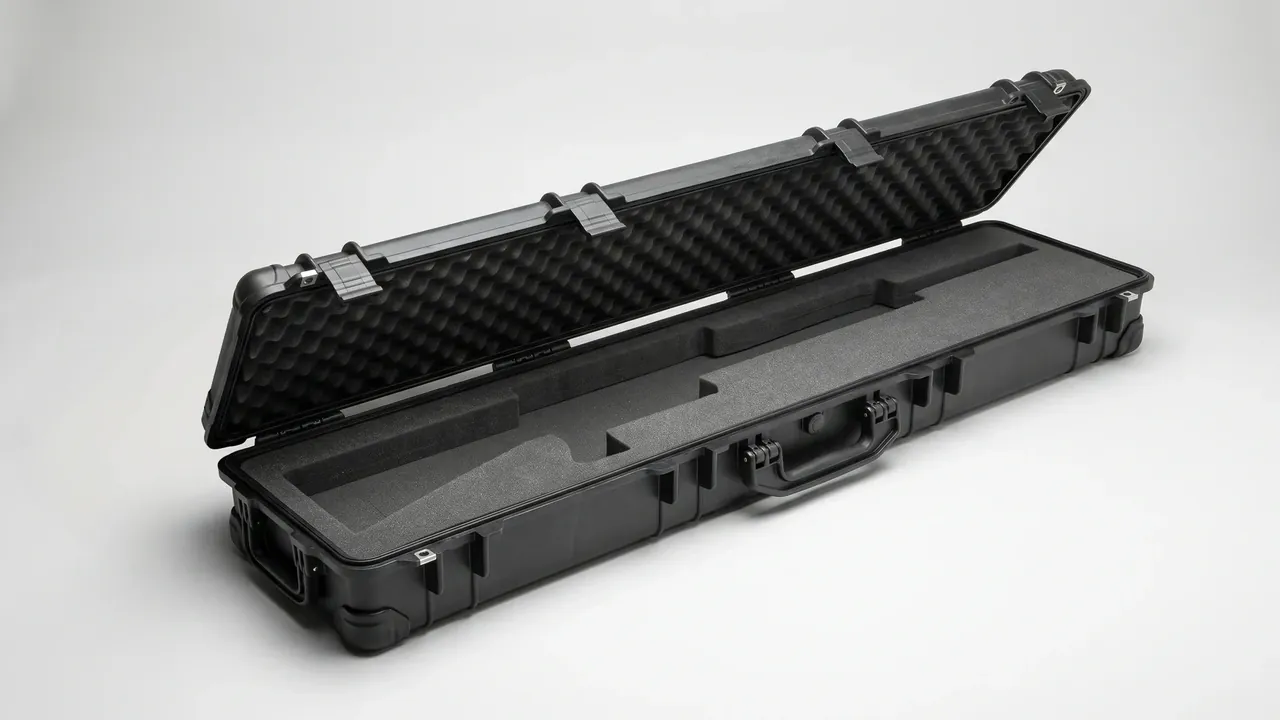
PP is the default starting point for three reasons:
- Toughness: deforms and rebounds under impact without permanent damage — exactly what a transport container needs;
- Fatigue resistance: latch and hinge zones stress the material cyclically; PP holds up;
- Cost: tooling and unit cost both support volume issuance.
Limits are equally clear: rigidity drops in heat (a car parked in summer sun is the classic case), and outdoor life depends on the UV package — confirm UV stabilization for long outdoor use, or the shell chalks within years.
3. ABS: hard surface, cold weakness
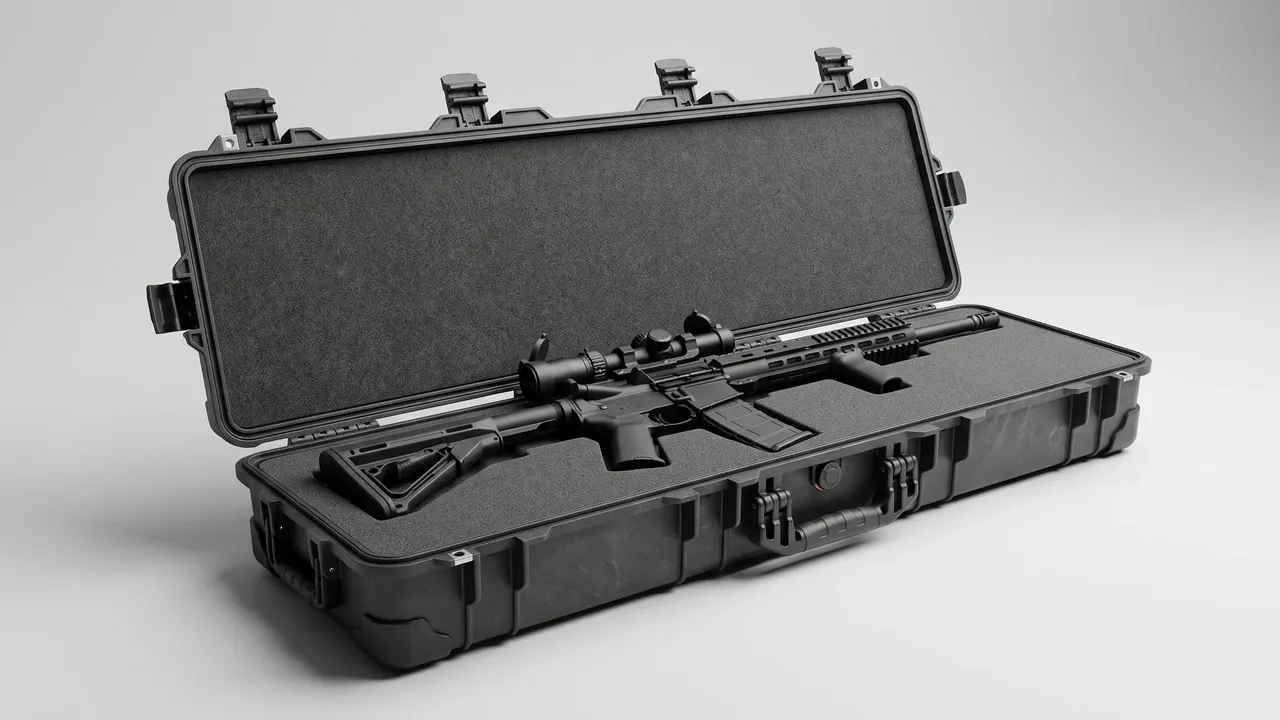
ABS differentiates on surface: harder, glossier, better print and spray adhesion — ideal where marking and appearance matter (display, training, rental). Dimensional precision is also slightly better, helping insert-fit designs.
The price is cold brittleness: winter drops in northern climates or cold chains crack ABS far more readily than PP. For uses involving low temperatures, either avoid ABS or require modified compounds with low-temperature impact data.
4. Roto-molded PE: the impact route
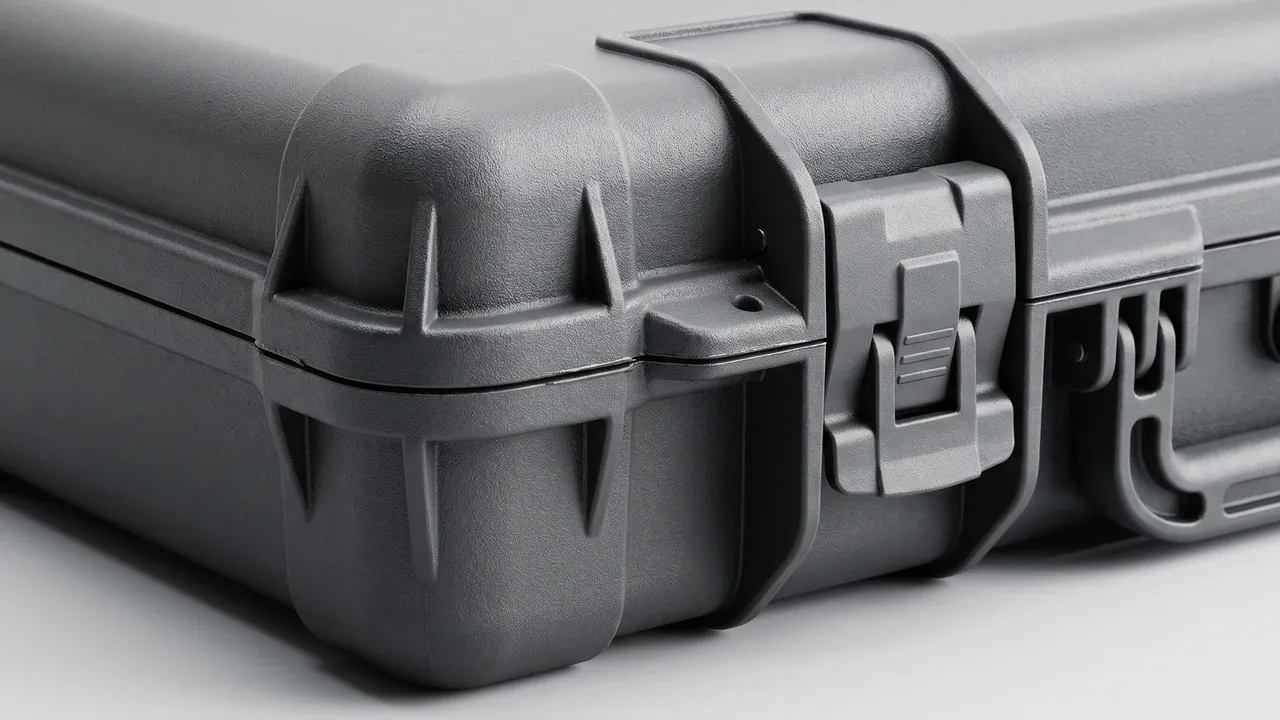
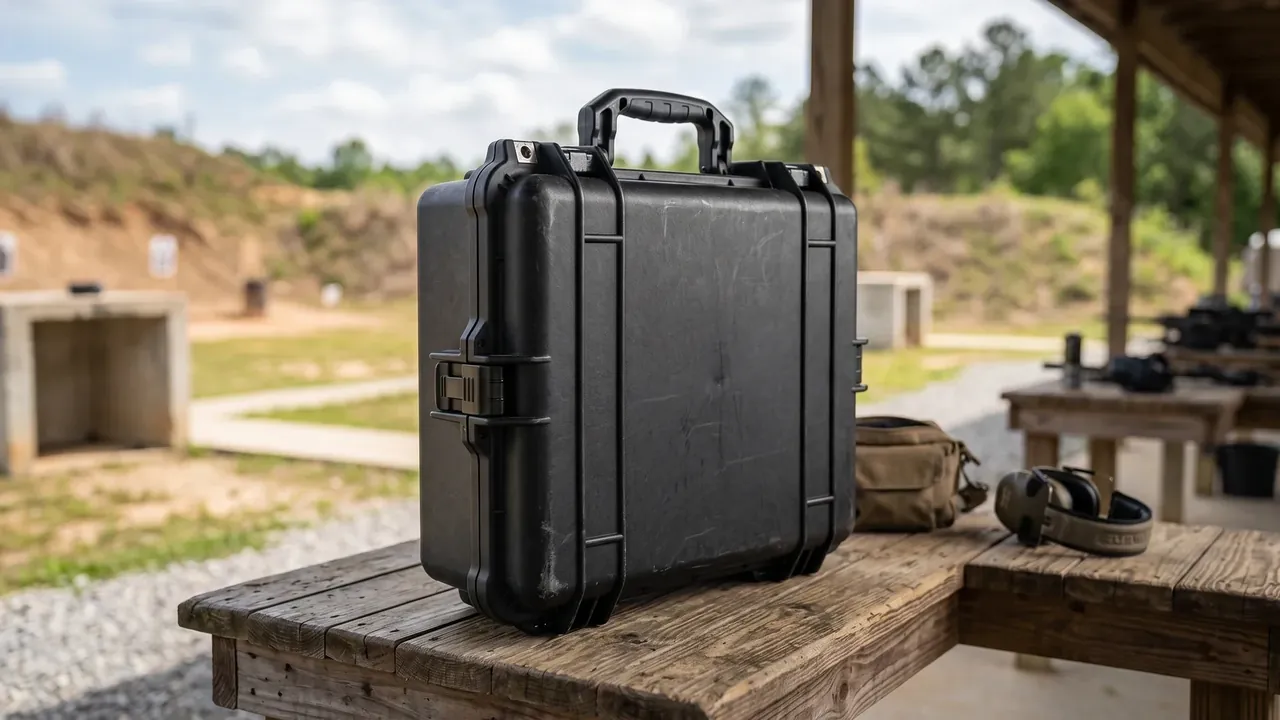
Rotational molding's advantages come from the process itself: one piece, no seams, thick walls — a natural fit for "drop-proof, waterproof, large":
- No seams = no leak paths; sealing reliability is high;
- Thick tough walls = strong drop-energy absorption; the first choice for field and rough-handling conditions;
- Cheap tooling = the economical route for small-to-mid runs and large sizes.
The costs are weight and precision: heavier than injection (compute tare ratio for manual chains), lower dimensional precision (precision-fitting structures are hard). Roto suits "take abuse first" scenarios, not "light and precise" ones.
5. Aluminum-magnesium: rigidity and its price
Aluminum's position is rigidity and image: very stiff, dimensionally stable, dissipates heat, looks premium — suited to static storage, display, or co-stored electronics.
The cost list is long: heaviest (unfriendly to manual carrying), dents permanently on drops (worst impact behaviour), high cost, visible scratches. Treating an aluminum case as "a more advanced protective case" is a common mistake — its premium is in rigidity, not impact resistance. Where a metal body and impact resistance are both required, examine the insert and structure, not just the material.
6. Material advice by condition
| Condition | Recommended | Why |
|---|---|---|
| Volume issuance, mixed indoor/outdoor | Injection PP | Best toughness-cost balance |
| Marking, display, rental | Injection ABS | Surface finish; indoor duty sufficient |
| Field transport, rough handling | Roto PE | One-piece impact resistance, reliable sealing |
| Large equipment | Roto PE | Best economics at size |
| Static storage with electronics | Aluminum-Mg | Rigidity and heat dissipation |
| Cold outdoor | PP or roto PE | Avoids ABS cold brittleness |
When conditions stack, let the one with the worst consequence choose the material.
Conclusion
Shell selection means aiming each material's strength at the condition's main risk: drops and rough handling go to roto PE, volume cost to PP, marking and appearance to ABS, static rigidity and heat to aluminum. Four cards, no hierarchy — only playing them at the right moment. The input to a material decision is always the conditions list, never the price table.
This article covers shell materials only. It does not cover anything about the handling of items placed inside.
Related Reading
- Firearm Protective Case: Waterproofing, Dustproofing and Impact Design
- Cartridge Box Materials: Metal vs Plastic vs Fiber
- What Is a Firearm Storage Case: Types, Materials and Protection Levels
Related Products
- 8 Series — Gun Cases; Military Equipment Cases; Camera Equipment Cases; Drone Cases; Watch Cases; Knife Cases; First Aid Cases; Electronics Equipment Cases
- WL8-2812 PP Gun Case — model WL8-2812
- All protective cases and toolboxes: 7 series, 158 models