

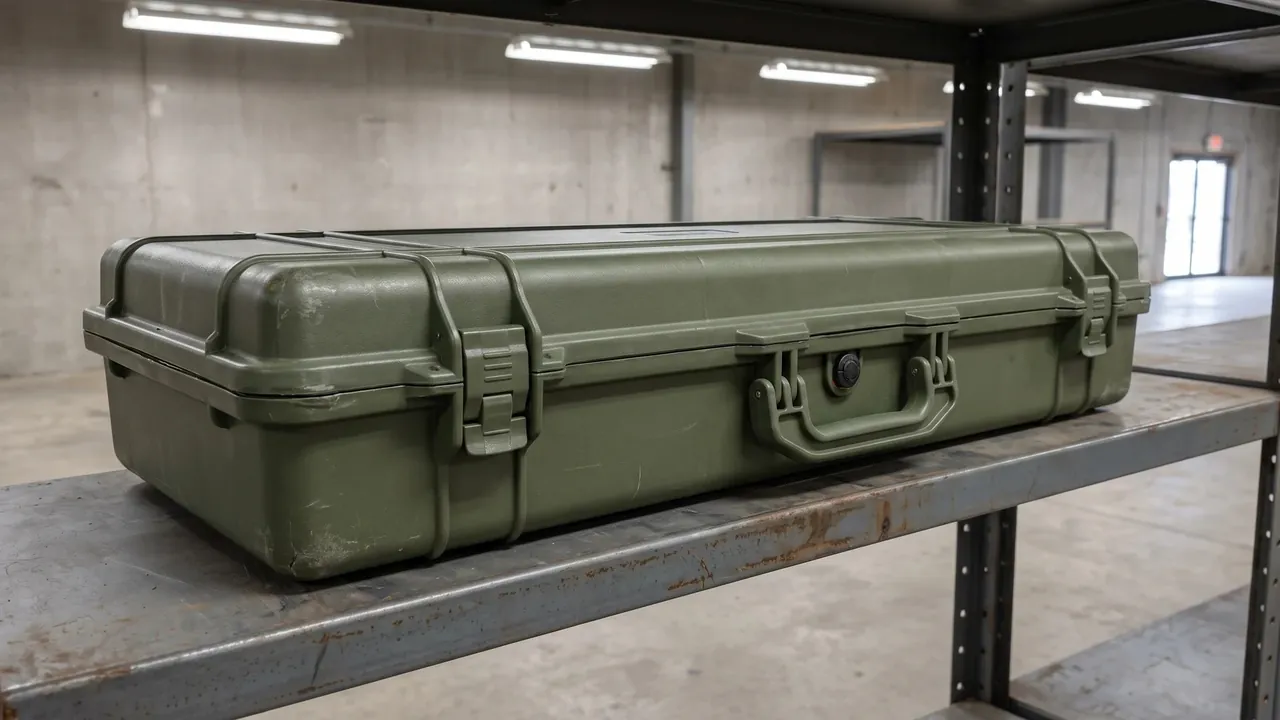
Quick answer: The three protection capabilities each have a main line: waterproofing relies on the trio of gasket + compression structure + drainage/balancing; dustproofing relies on seal continuity (dust is more invasive than water); impact resistance relies on three defense lines — shell energy absorption, insert cushioning, and hardware keeping the case closed. Impact resistance is most overestimated ("hard shell is enough"), dustproofing most underestimated ("a gasket is enough"). This article unpacks each with its failure modes; it covers the container only.
Table of contents
- Waterproofing: the trio, no exceptions
- Dustproofing: a harsher demand than water
- Impact: three defense lines
- How the three capabilities trade off
- Design verification checklist
- FAQ
1. Waterproofing: the trio, no exceptions
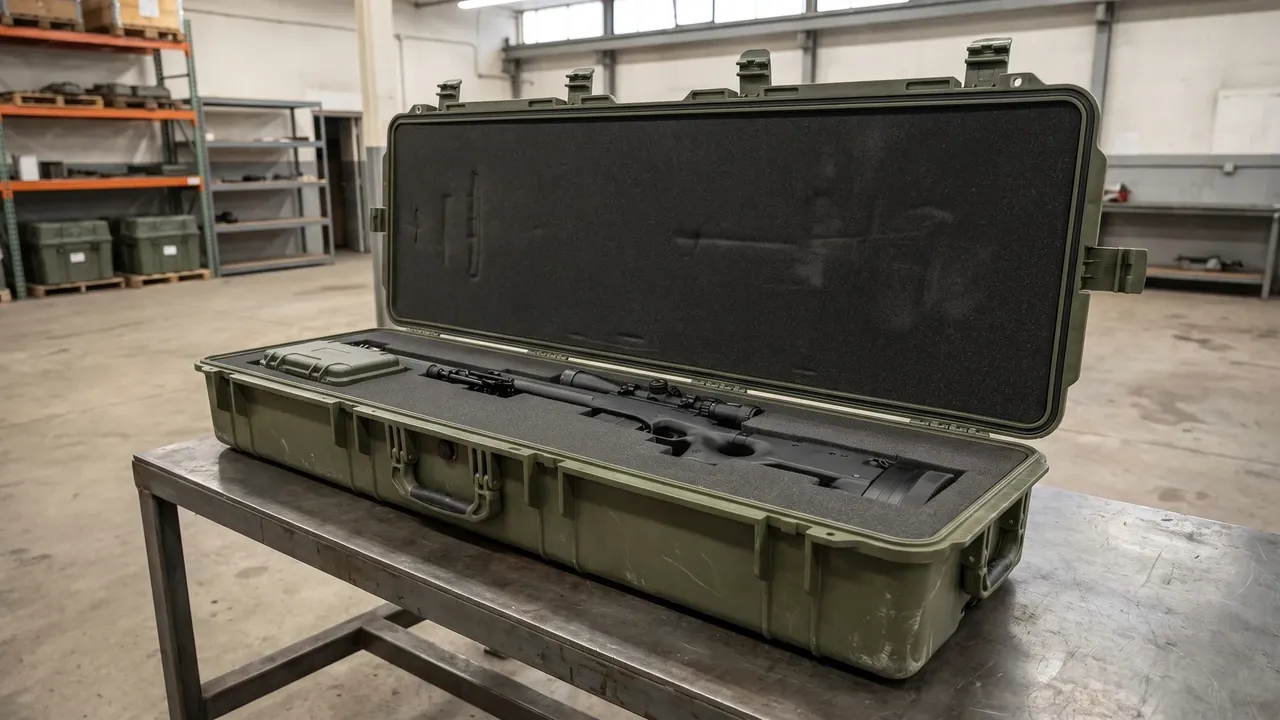
Three engineering pieces:
1. The gasket: foam or solid elastomer with a designed cross-section and compression. Watch two things — material aging resistance (EPDM-class outlasts ordinary rubber) and section matching (changing sections changes compression behaviour).
2. The compression structure: the gasket must sit in a groove under even pressure. A strip glued to a flat face has uncontrolled compression and is a classic failure point. Check: open the lid — is the gasket grooved, with locating ribs?
3. Drainage and balancing: drains handle liquid water; valves equalize thermal pressure differentials. They seem to contradict "waterproof," but they are system design — located outside the seal zone or one-way, serving the seal system's longevity.
Their relationship: the gasket is the main line, the compression structure decides its quality, and drainage/balancing decides its lifespan. Judging waterproofing by gasket material alone is the most common half-job.
2. Dustproofing: a harsher demand than water
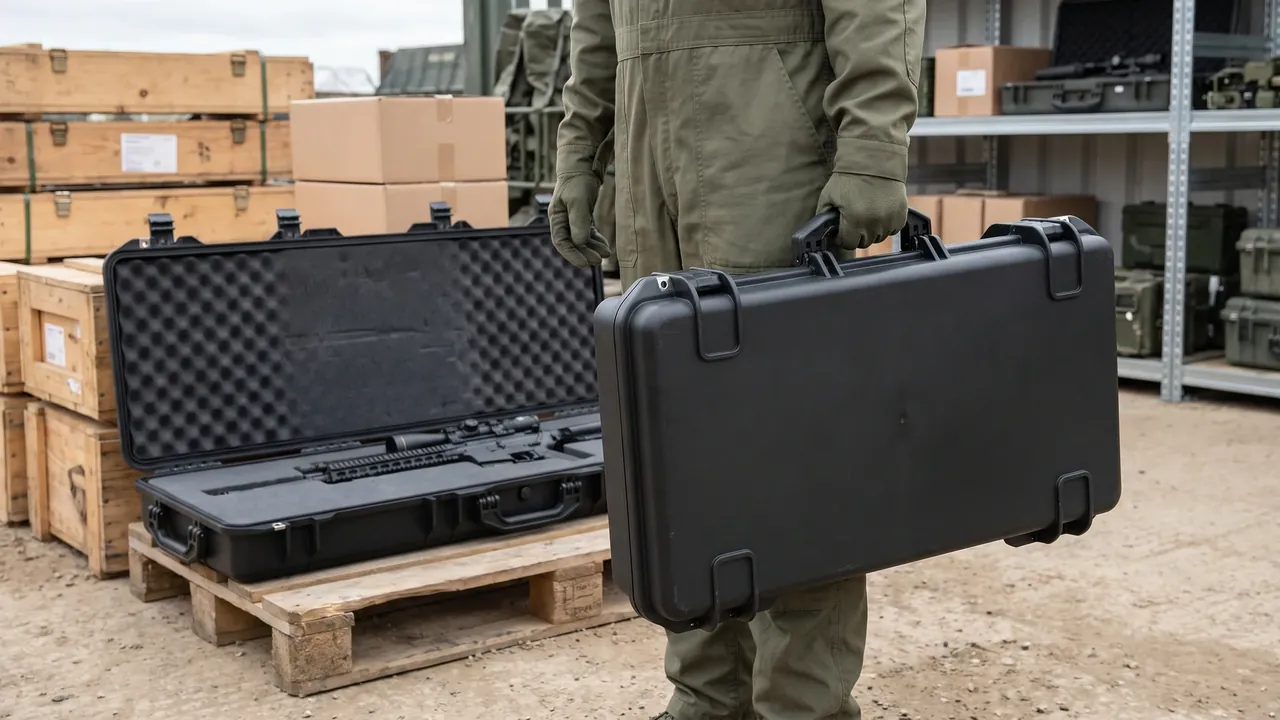
Dust is harder because of two properties: particles far smaller than droplets, and no gravity self-cleaning (water flows away, dust accumulates). Three design points:
- Seal continuity: any break in the ring is a dust path — hinge bosses, latch seats, label screws are the usual breaks; route them off the seal line or seal them;
- Static over dynamic seals: the whole case is static-sealed, which favours dust protection; the hinge's moving gap is the exception and needs its own sealing attention;
- Surface self-cleaning: smooth surfaces shed dust; deep textures trap it. For dusty outdoor duty, prefer light texture or gloss.
The benchmark is the IP6X (dust-tight) test — far harsher than IPX7. A dust-tight case is usually well sealed against water; the reverse does not hold.
3. Impact: three defense lines
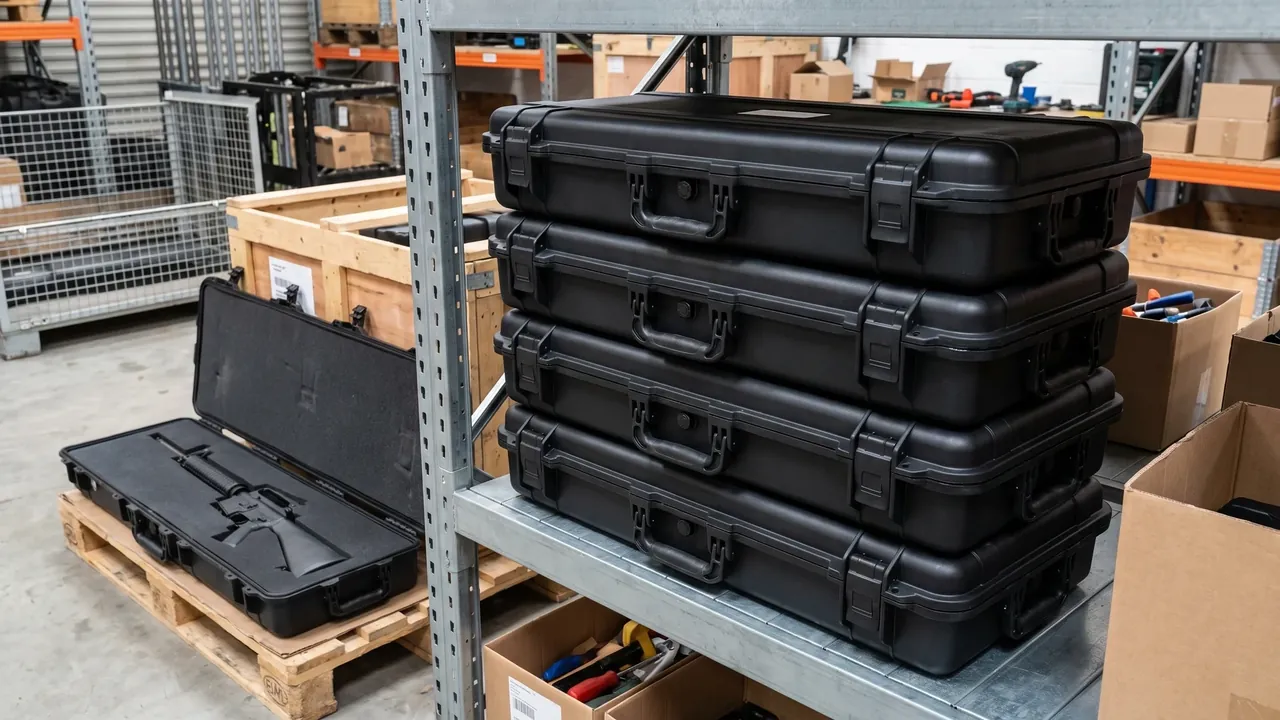
Impact resistance is not "hardness" — three lines absorb the energy in sequence:
- Line 1 — shell energy absorption: tough materials (PP, roto PE) deform to absorb most energy; rigid aluminum passes it on. This is why "harder is better" is wrong;
- Line 2 — insert cushioning: energy passing the shell is absorbed again by foam; thickness, cut style and content weight together set the effect;
- Line 3 — staying closed: the lid must not pop open under shock; latch pressure and lock count act here. A micro-open lid turns the impact into a free fall no cushion can catch.
Post-drop inspection checks all three: shell cracks (line 1), content shift (line 2), latches still closed (line 3). Any line failing voids the protection promise.
4. How the three capabilities trade off
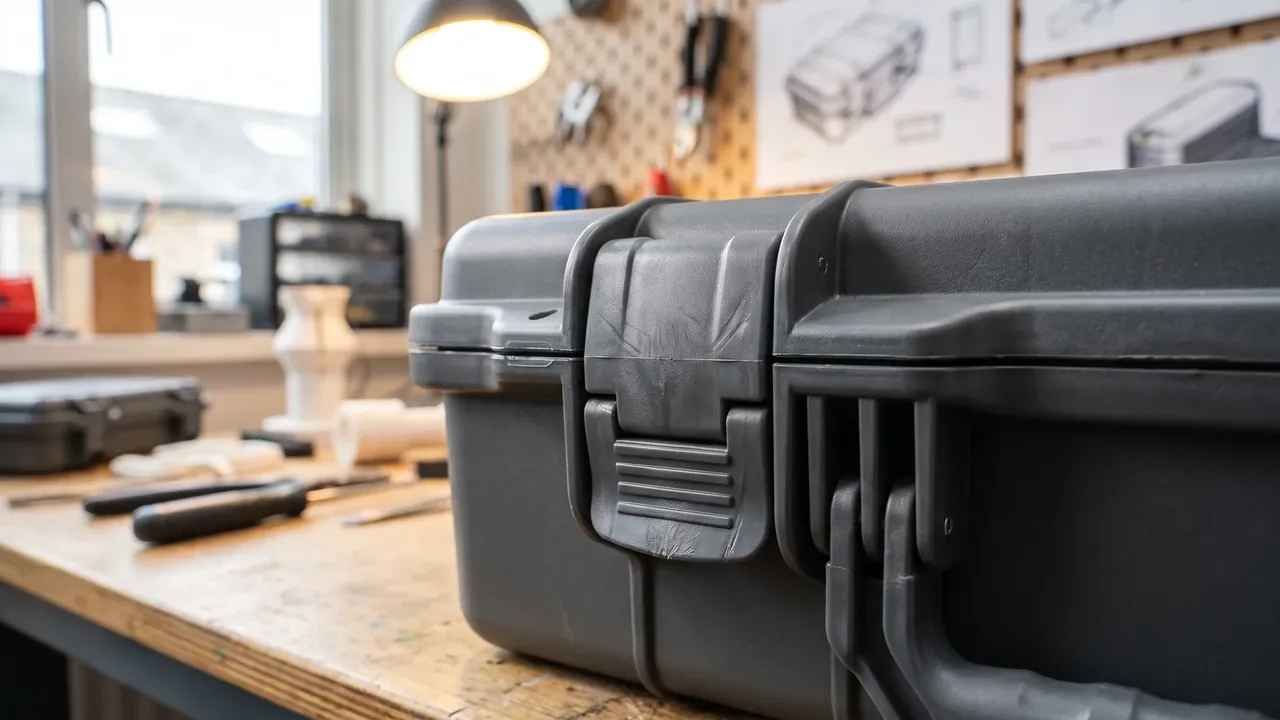
The capabilities are not independent; real trade-offs exist:
| Trade-off | Conflict | Balance method |
|---|---|---|
| Waterproof vs impact | Drops can deform the seal face | Grooves away from corner impact zones; reinforced corners |
| Dust vs venting | Any opening is a dust path | One-way valves, labyrinth vents |
| Sealing vs opening ease | Tighter compression = harder to open | Even compression + assisted-pull handles |
| Impact vs weight | Energy absorption needs material | Ribs replace uniform thickness; local reinforcement |
A good protective case is the condition-matched balance point among these trade-offs. When evaluating, ask not "what IP rating" but "what structural price paid for it" — a design that can state its price is usually a real design.
5. Design verification checklist
- Gasket grooved and located, not glued flat;
- No auxiliary breaks on the seal line (hinges, latches, labels);
- Drain holes and relief valve sensible, one-way or labyrinth;
- Shell toughness matches drop conditions; corners reinforced;
- Insert thickness matched to content weight; slots position;
- Latch pressure adequate, count matched to size;
- Drop reports cover edge/corner orientations; acceptance includes seal and latch re-verification.
Conclusion
The three capabilities have their own main lines: waterproofing is the gasket-compression-drainage trio; dustproofing is seal continuity taken to its limit; impact is the shell-insert-closure three-line defense. They trade off against each other, and good design matches the trade-offs to the use. Evaluate from structural price rather than the rating number, and you will recognize the cases that were truly engineered.
This article covers container design points only. It does not cover anything about the handling of items placed inside.
Related Reading
- Firearm Protective Case Shell Materials: PP, ABS, Aluminum, Roto PE
- Cartridge Box: Causes of Moisture Damage and Seal Failure
- Reusable Shipping and Storage Container: Economics of Retu…
Related Products
- 8 Series — Gun Cases; Military Equipment Cases; Camera Equipment Cases; Drone Cases; Watch Cases; Knife Cases; First Aid Cases; Electronics Equipment Cases
- WL8-2812 PP Gun Case — model WL8-2812
- All protective cases and toolboxes: 7 series, 158 models