

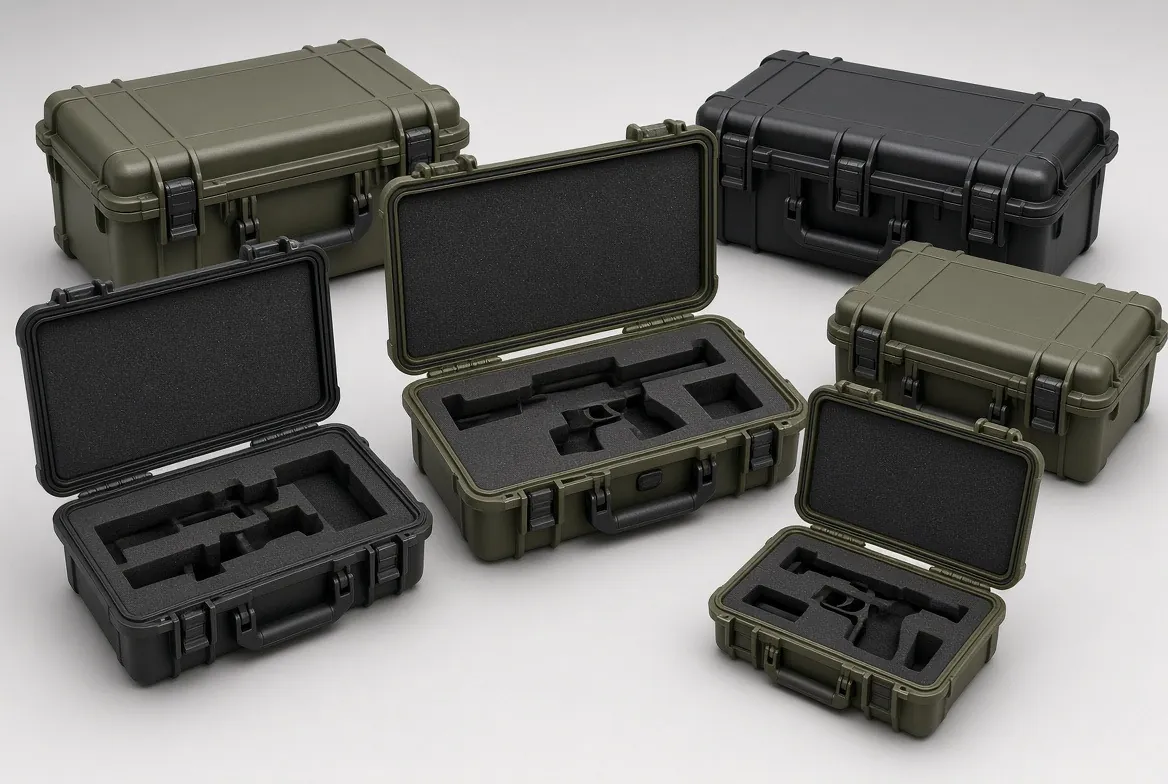
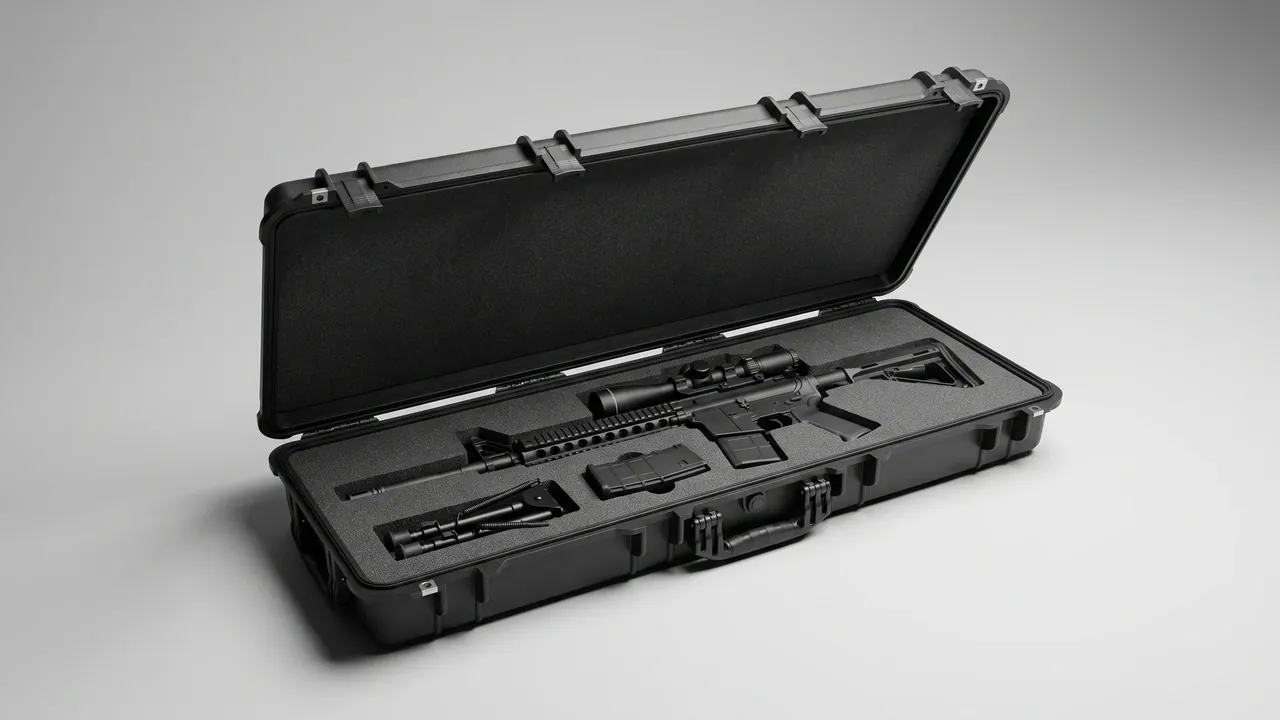
Quick answer: A firearm storage case is the collective term for rigid containers that hold firearm-type items. It classifies along three dimensions: by form (attache-style, clamshell, cabinet), by material (injection-molded PP/ABS, roto-molded PE, aluminum-magnesium), and by protection level (IP54 basic dust/splash, IP65 water jets, IP67 short immersion). Crossing the three produces a product matrix — use case sets the level, level sets the material, material sets the form and cost. This article covers container classification and materials only.
Table of contents
- Dimension 1: form
- Dimension 2: material
- Dimension 3: protection level
- Crossing the three: using the matrix
- Common classification mistakes
- FAQ
1. Dimension 1: form
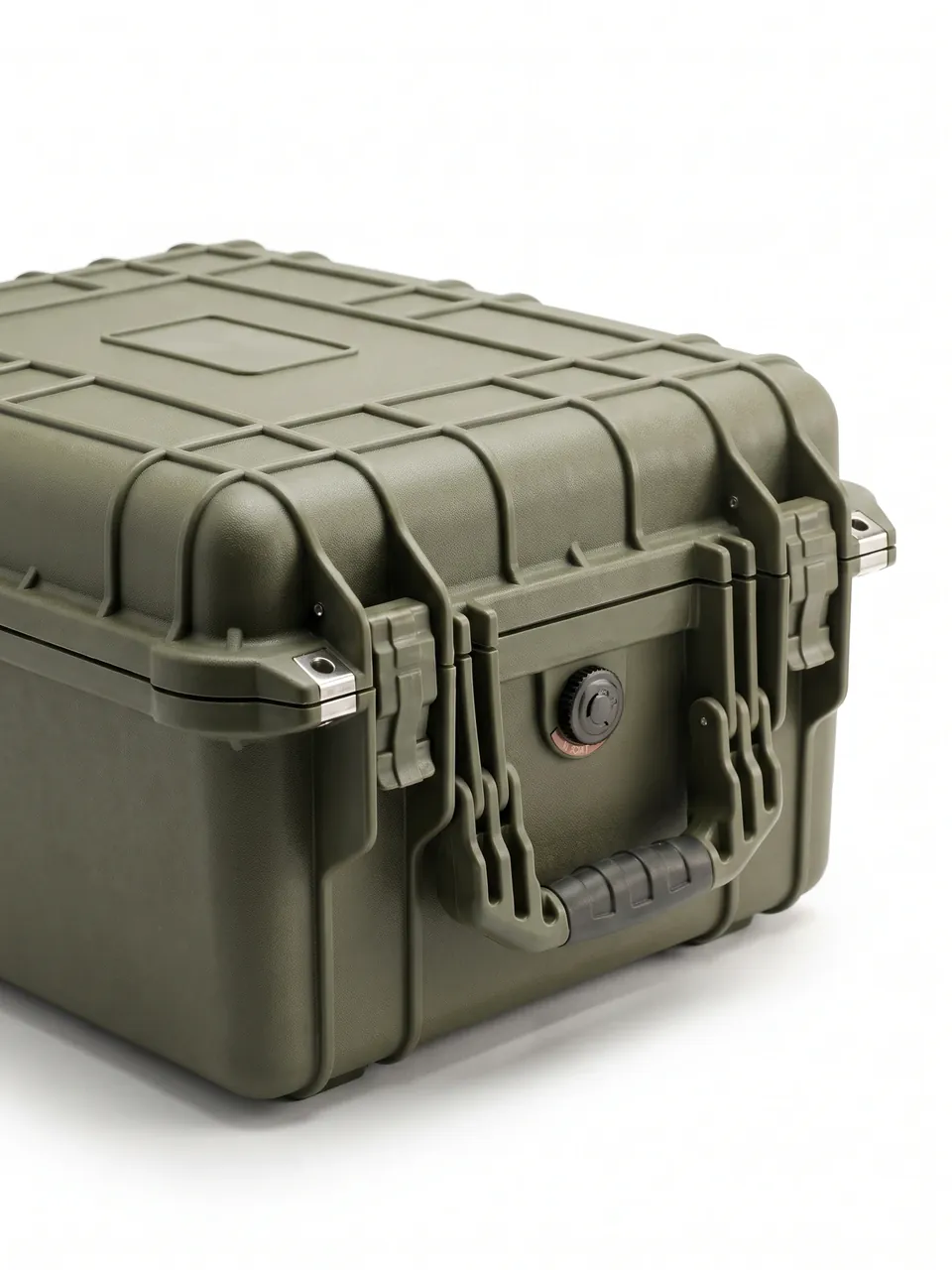
Three forms differ in how they open and how they are used:
| Form | Structure | Typical use |
|---|---|---|
| Attache-style | Single cavity, single handle, flat-elongated | Single-item carry, short transit |
| Clamshell | Split lid/base, deep cavity, stackable | Multi-item storage, warehouse stacking |
| Cabinet | Vertical door, internal shelving/compartments | Fixed centralized management |
Form follows usage posture: frequent carrying favours attache-style (best centre of gravity and handle loading); storage and stacking favour clamshell; fixed, item-level access favours cabinet. Choosing the wrong form usually costs more than choosing the wrong material.
2. Dimension 2: material
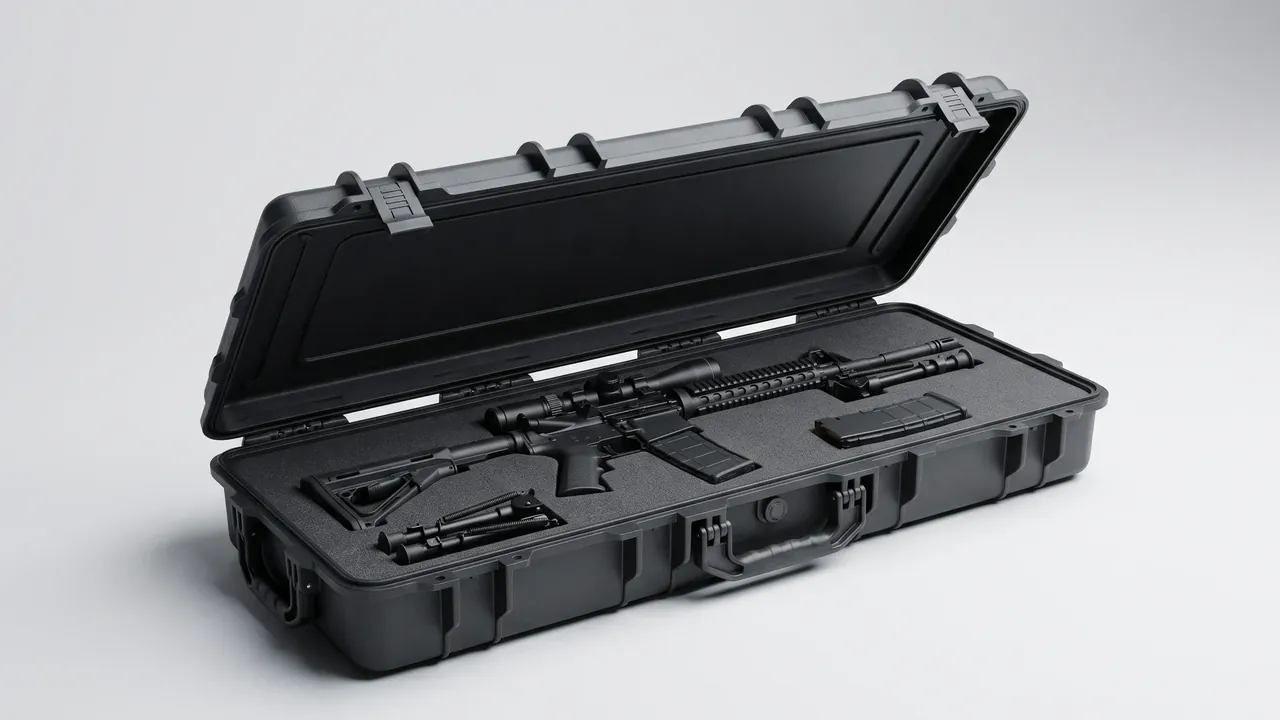
How the main materials divide the key metrics:
| Material | Process | Strength | Weakness |
|---|---|---|---|
| PP | Injection molding | Tough, fatigue-resistant, economical | Rigidity drops at heat |
| ABS | Injection molding | Hard surface, easy to silkscreen | More brittle in cold than PP |
| Roto-molded PE | One-piece rotational shell | No seams, drop-resistant, scalable | Heavy, lower dimensional precision |
| Aluminum-magnesium | Bending + welding | Most rigid, dissipates heat | Heavy, scratches easily, costly |
Selection logic: fixed indoor storage makes injection molding the best value; outdoor and transport conditions favour roto-molded PE for impact and one-piece integrity; extreme rigidity or heat dissipation (electronics co-stored) is when aluminum-magnesium earns its cost.
3. Dimension 3: protection level
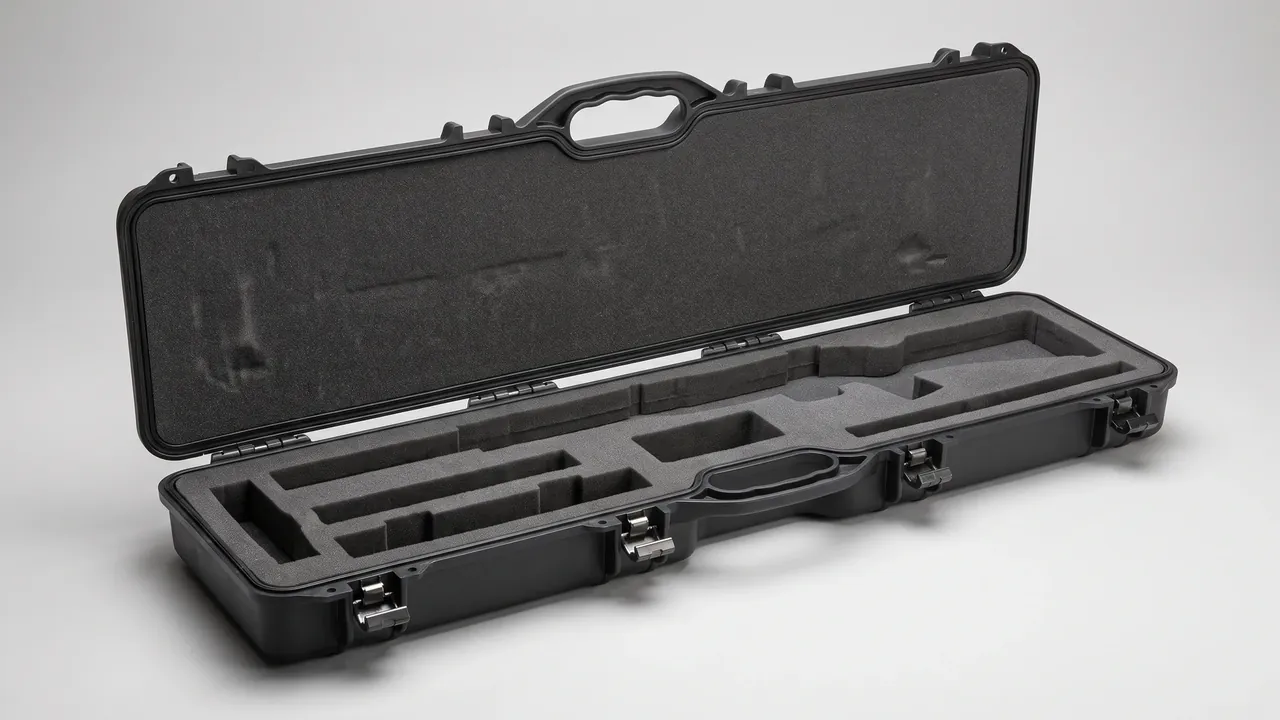
Protection level is the hard specification, tiered by environment:
| Level | Meaning | Suitable environment |
|---|---|---|
| IP54 | Limited dust ingress + splash resistance | Indoor, sheltered storage points |
| IP65 | Dust-tight + water jets | Outdoor storage, rain, washdown |
| IP67 | Dust-tight + short immersion (1 m / 30 min) | Standing water, long open-air storage, waterside work |
Two points to hold: IP ratings are type-test results, not lifetime promises — gaskets age and the rating degrades; and higher costs more, so match the tier to the actual environment rather than always buying the top — buying IP67 where IP54 suffices is pure waste.
4. Crossing the three: using the matrix
Cross the three dimensions and selection becomes nearly mechanical:
- Fixed store + item access + indoor → cabinet / injection-molded / IP54;
- Store stacking + batch storage + sheltered → clamshell / injection-molded / IP54;
- Outdoor storage + stacking + rain → clamshell / roto-molded PE / IP65;
- Transport + frequent handling + open-air staging → attache-style / roto-molded PE / IP67 + relief valve.
The method is to start from two knowns — environment and usage posture — then derive level, material and finally form. Starting from a model number and justifying it afterwards is the main source of selection rework.
5. Common classification mistakes
- Treating "military" as a product category: military is a use scenario, not a material or grade; the same material serves police and industry alike;
- Treating IP as a strength metric: IP describes dust and water only; impact is a separate system and must be confirmed separately;
- Equating roto-molding with premium: it wins on impact and large sizes but loses on precision and weight — not universally better;
- Ignoring the insert dimension: the insert (egg-crate, CNC-cut, compartment tray) is effectively a fourth dimension that decides positioning and counting capability.
Conclusion
"Classification" for firearm storage cases is not academic; it is how you organize the selection path: form sets usage posture, material sets condition tolerance, level sets environmental exposure, insert sets management granularity. Deriving successively from known conditions converges quickly and accurately; starting from model numbers and justifying afterwards almost guarantees rework.
This article covers container classification and materials only. It does not cover anything about the handling of items placed inside.
Related Reading
- Firearm Storage Case Applications: Ranges and Law-Enforcement Units
- How to Choose a Military Firearm Case: Four Hard Metrics
- Firearm Protective Case Materials: PP, ABS, Aluminum and Roto-molded
Related Products
- 8 Series — Gun Cases; Military Equipment Cases; Camera Equipment Cases; Drone Cases; Watch Cases; Knife Cases; First Aid Cases; Electronics Equipment Cases
- WL8-2812 PP Gun Case — model WL8-2812
- All protective cases and toolboxes: 7 series, 158 models