

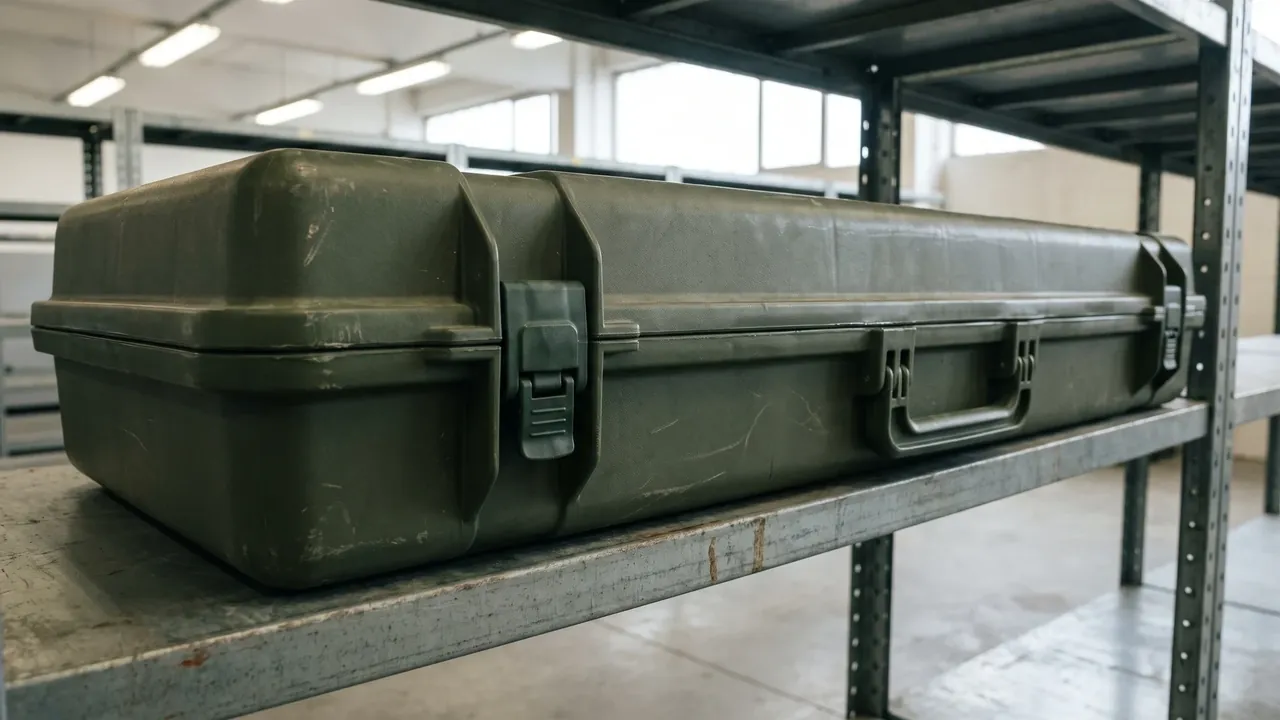
Quick answer: Choosing a military firearm case is an engineering decision about the container, not the contents. Four metrics decide everything: (1) internal dimensions versus the length and sight height of the item being carried; (2) foam insert layout and density; (3) lock structure — drawbolt latches, padlock loops or TSA locks; (4) shell protection — IP dust/water rating and impact resistance. This article covers the case itself only; it does not cover handling, loading or use of the items placed inside.
Table of contents
- First, clarify: you are buying a container
- Metric 1: Internal dimensions and fit
- Metric 2: Foam inserts — layout and density
- Metric 3: Lock structure and security level
- Metric 4: Protection rating and shell material
- Scenario-based selection checklist
- Common mistakes
- FAQ
1. First, clarify: you are buying a container
A military firearm case is a rigid protective container used to store and transport firearm-type items in law-enforcement, range, security and outdoor transport settings. What separates it from an ordinary storage box is not appearance but three engineering capabilities: positioning (contents do not shift inside), sealing (moisture and dust stay out), and controlled opening (locks decide who can open it).
The most common procurement mistake is comparing prices on look-alike shells while ignoring what actually drives cost: mold precision, gasket quality, foam cutting and hinge life. Those four items are where the price difference comes from.
2. Metric 1: Internal dimensions and fit
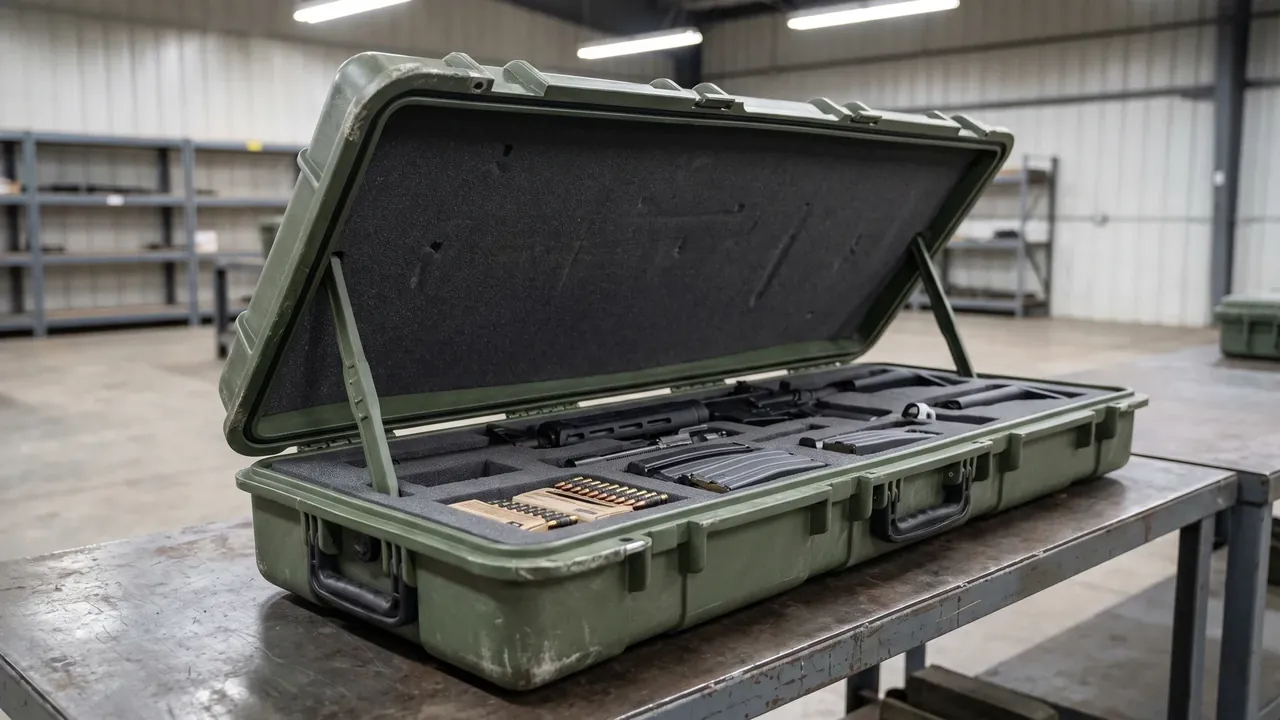
Internal dimensions follow three measurements; missing any one of them leads to returns:
| Dimension | What to measure | Frequent oversight |
|---|---|---|
| Length | Full length with stock extended | Ignoring the extended folding stock |
| Height | From receiver top to magazine base | Ignoring an already-mounted optic |
| Width | Two items side by side, or one plus accessories | Ignoring side foam walls (recommend ≥ 20 mm) |
The common industry method is to derive the internal cavity as "item dimensions + 20–30 mm foam allowance per side", then add wall thickness for the external size. If the case will fly as checked baggage, also reserve space for a desiccant pouch and a pressure-relief valve — at altitude, trapped pressure differential can suck the gasket inward, making the lid hard to open and shortening gasket life.
3. Metric 2: Foam inserts — layout and density
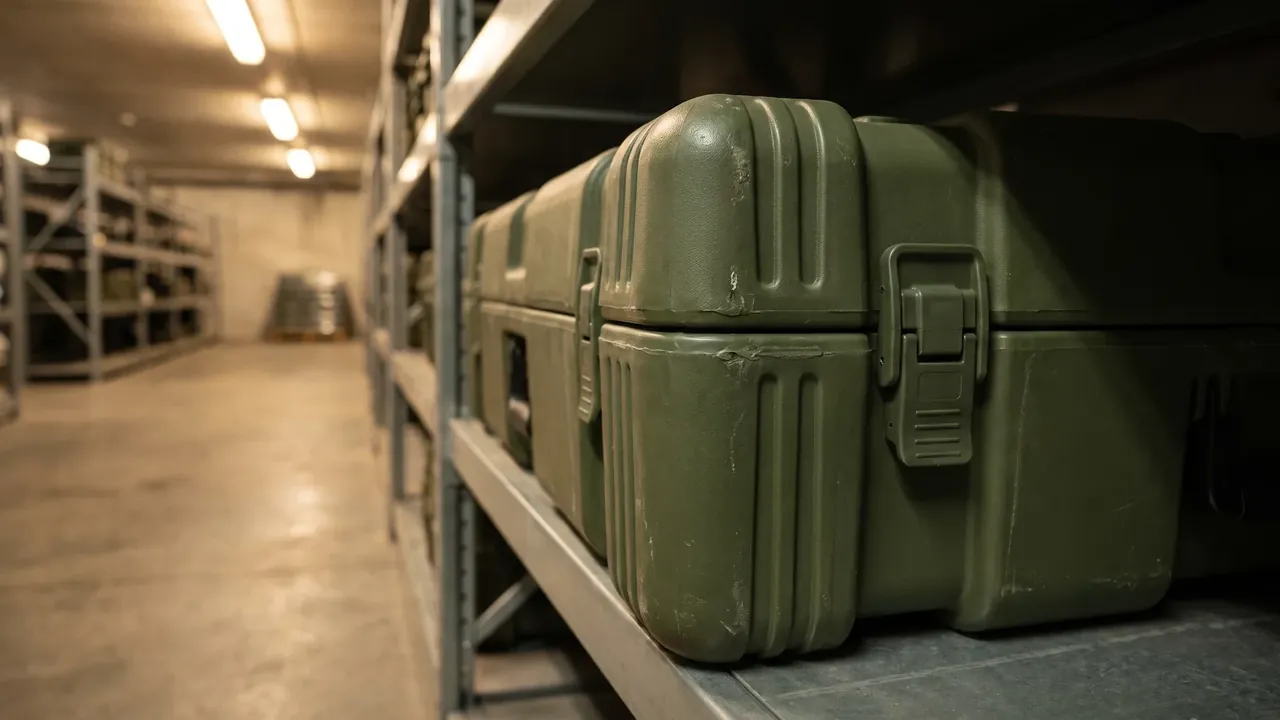
Foam is the functional core of the case — it is what actually positions the contents. Three materials dominate:
| Foam | Typical density | Character | Best for |
|---|---|---|---|
| EVA | Medium | Easy to CNC-cut, low cost | General inserts, volume cutting |
| PE (polyethylene) | Low moisture uptake | Chemical-resistant, does not absorb water | Humid storage, long-term storage |
| PU (polyurethane) | High rebound | Strong cushioning, resists compression set | Precision optics and scopes |
On layout: CAD/CNC cutting matches slots to the actual item 1:1, and empty slots are visible at a glance, which helps inventory control. For "just a soft layer" scenarios, full egg-crate foam is cheaper but provides no positioning. Buy accordingly: CNC slots for anti-shift positioning, egg-crate for base cushioning — they are not interchangeable.
4. Metric 3: Lock structure and security level
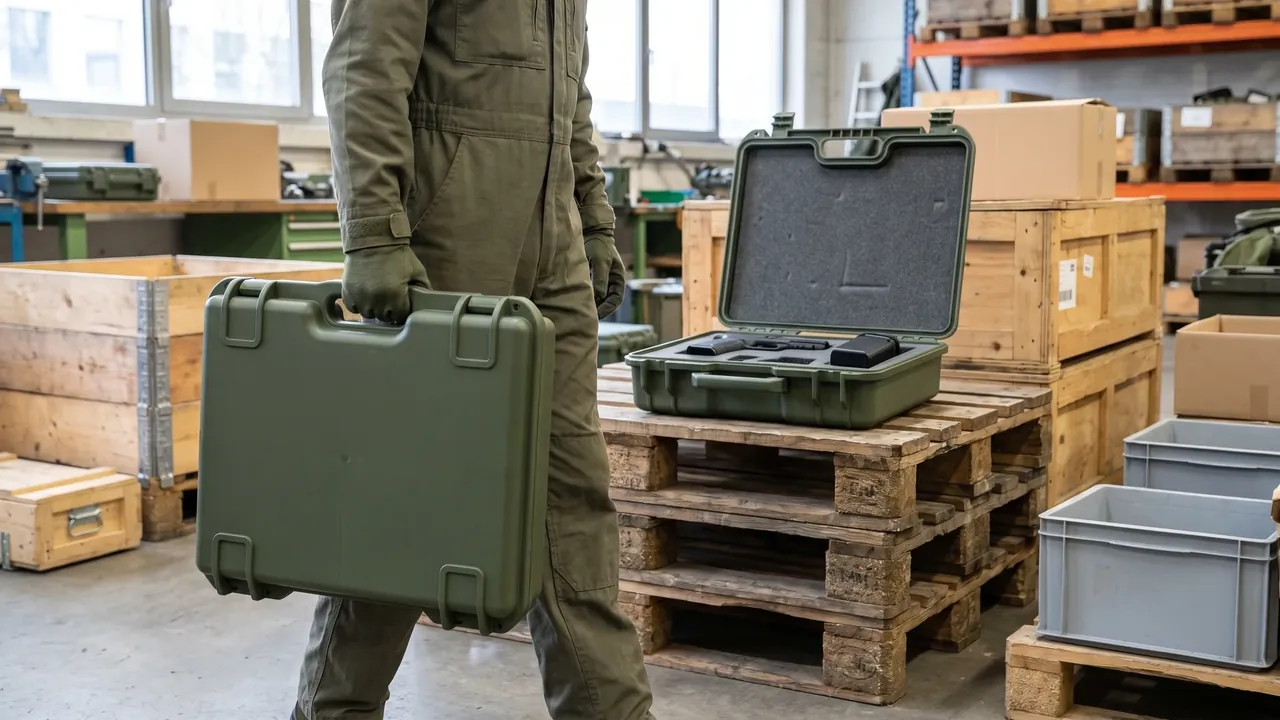
Locks define controlled opening. Three tiers are common:
- Spring drawbolts (no keyway): provide closing pressure only, no security. Fine when contents are low-value and protection is the goal.
- Drawbolts + padlock loops: the buyer adds their own padlock; the most common compromise in domestic and European markets.
- TSA combination lock: US Transportation Security Administration officers can open it with a universal key, so checked baggage to the US does not get force-opened. Prefer this for international air transport.
One often-missed detail: lock count should match hinge placement. A long case with one lock and one hinge has a prying risk at the far end; a two-lock layout at both ends resists prying substantially better.
5. Metric 4: Protection rating and shell material
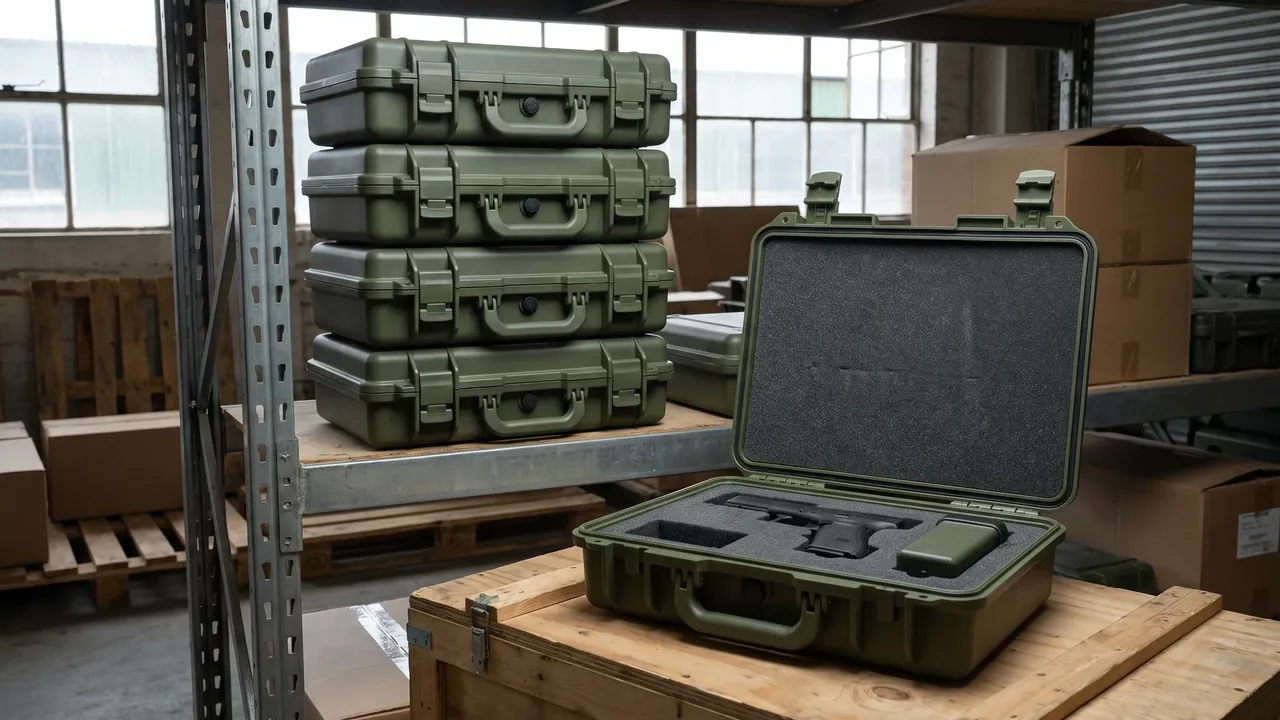
Shell material sets the ceiling for protection and the floor for weight:
| Material | Process | Strength | Limitation |
|---|---|---|---|
| PP (polypropylene) | Injection molding | Tough, fatigue-resistant, economical | Rigidity drops at high temperature |
| ABS | Injection molding | Hard surface, easy to silkscreen | More brittle than PP in cold weather |
| Roto-molded PE | Rotational molding, one piece | Seamless, very impact-tolerant, scalable to large sizes | Heavy, lower dimensional precision |
| Aluminum-magnesium | Sheet bending + welding | Very rigid, dissipates heat, premium look | Heavy, shows scratches |
For ingress protection, IP65 (water jets) covers most outdoor transit; IP67 (1 m immersion for 30 minutes) suits open-air storage where standing water or rain is possible. IP ratings are defined by IEC 60529 and are type tests, not lifetime promises — gaskets age and the rating degrades, so confirm whether the seal is replaceable before buying.
6. Scenario-based selection checklist
Deriving configuration from the use case is the most reliable method:
- Ranges and training facilities: cavity cut for the training model + double drawbolts; no strict IP requirement; prioritize unit cost.
- Law enforcement / security issuance: CNC insert + padlock loops + silkscreened asset numbers, balancing inventory control and controlled access.
- International air freight: TSA lock + pressure-relief valve + IP65 or better + reinforced hinges.
- Long-term storage (1+ years sealed): PE foam + replaceable gasket + desiccant compartment; avoid EVA, which absorbs moisture over time.
7. Common mistakes
- "Harder is better" — extreme surface hardness usually means lower impact toughness; a cracked shell in a drop is far worse than a scuffed one.
- "IP67 solves everything" — IP67 is a static immersion test; it does not cover high-velocity water or long-term aging. For open-air storage, gasket maintainability matters more.
- "More foam is better" — slot depth beyond roughly 80% of content height makes retrieval difficult. Correct approach: enough for location control plus base cushioning.
- "One lock is enough" — a single lock on a long edge can open a gap under lateral load; two locks distributed at both ends is the safer engineering choice.
Conclusion
There is no mystery to selecting a military firearm case — treat it as an engineering container and inspect it as one: dimensions decide whether it fits, foam decides whether it stays put, locks decide who opens it, and the protection rating decides whether it survives transport. Deriving all four from the actual use scenario turns procurement from comparing looks into comparing parameters.
This article discusses the container only. It does not cover the handling, loading or use of any items placed inside.
Related Reading
- Military Firearm Case vs Ordinary Storage Box: What Actually Differs
- What Is a Firearm Storage Case: Types, Materials and Protection Levels
- From Drawing to Approval Sample: The Protective Case Sampl… (category page)
Related Products
- 8 Series — Gun Cases; Military Equipment Cases; Camera Equipment Cases; Drone Cases; Watch Cases; Knife Cases; First Aid Cases; Electronics Equipment Cases
- WL8-2812 PP Gun Case — model WL8-2812
- All protective cases and toolboxes: 7 series, 158 models