

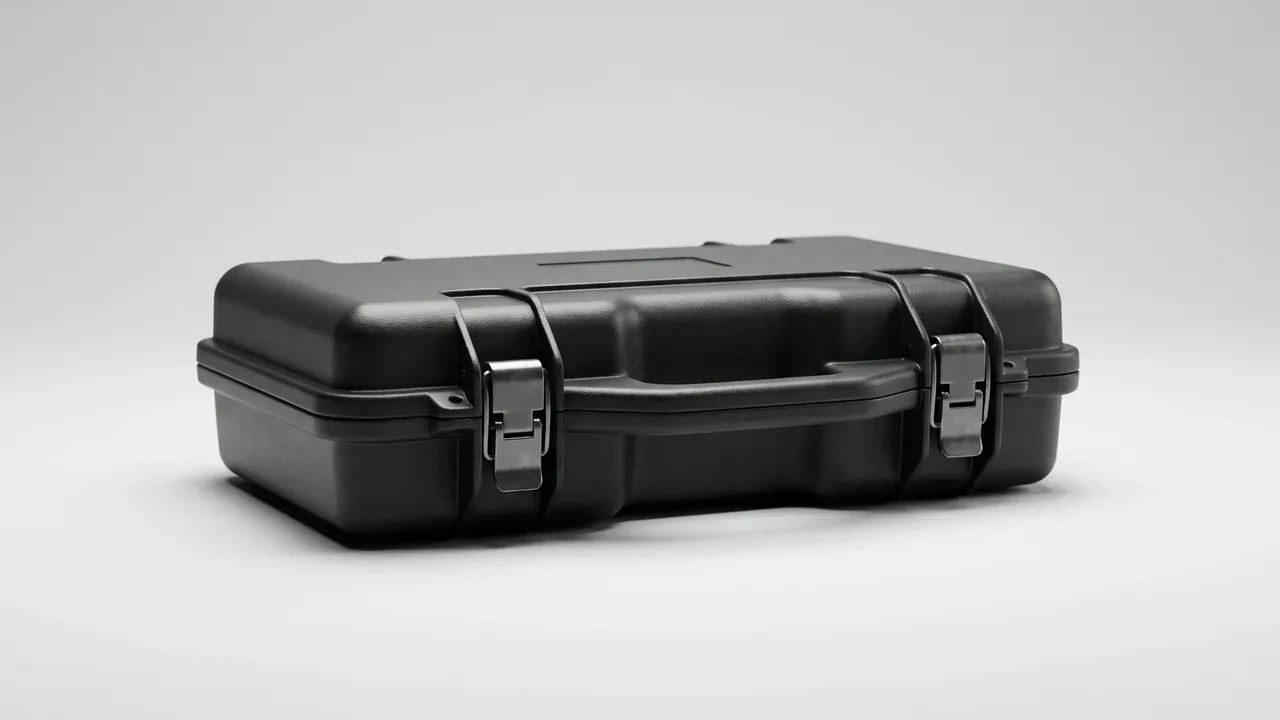
Quick answer: The price gap between a military firearm case and an ordinary storage box comes from five engineering differences: purpose-cut foam inserts, a gasket with pressure equalization, a two-point locking structure, an impact-designed shell, and batch consistency (tooling and inspection). An ordinary box aims to hold things; a firearm case aims to keep specific contents intact through drops, stacking, rain and controlled opening. If your contents need none of positioning, sealing or controlled access, the ordinary box is the economical choice. If even one of the three matters, do not substitute.
Table of contents
- Conclusion first
- Five-dimension comparison
- Where the extra money actually goes
- When the ordinary box is enough
- When only a purpose-built case will do
- FAQ
1. Conclusion first
The two products are not in the same category, and the price gap is not a brand premium. An ordinary storage box is a household container designed around volume and stackability. A military firearm case is a transport packaging container designed so that specific contents survive drops, rain, stacking and repeated handling — and can only be opened by authorized people.
A practical test: drop both boxes from one meter onto concrete. A household box typically pops its latches or distorts at the lid; a transport-grade case should stay closed with contents unmoved. That difference is structural; thicker plastic alone does not close it.
2. Five-dimension comparison
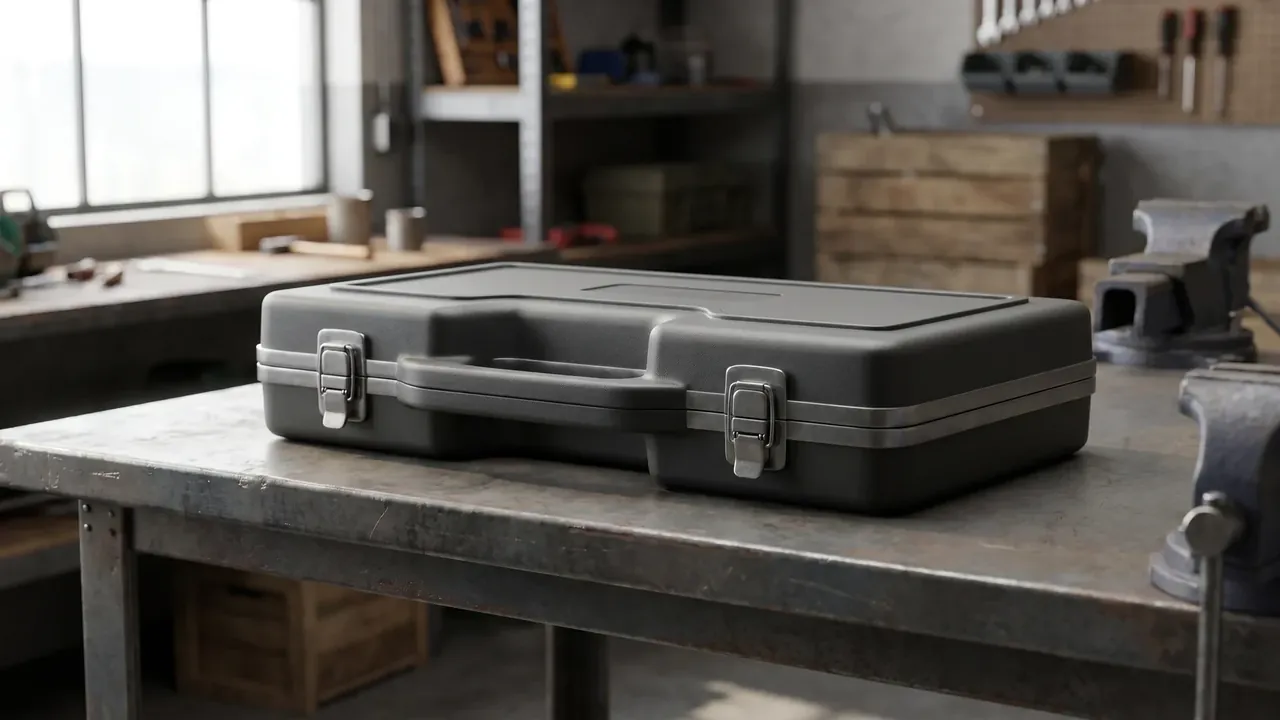
| Dimension | Ordinary storage box | Military firearm case |
|---|---|---|
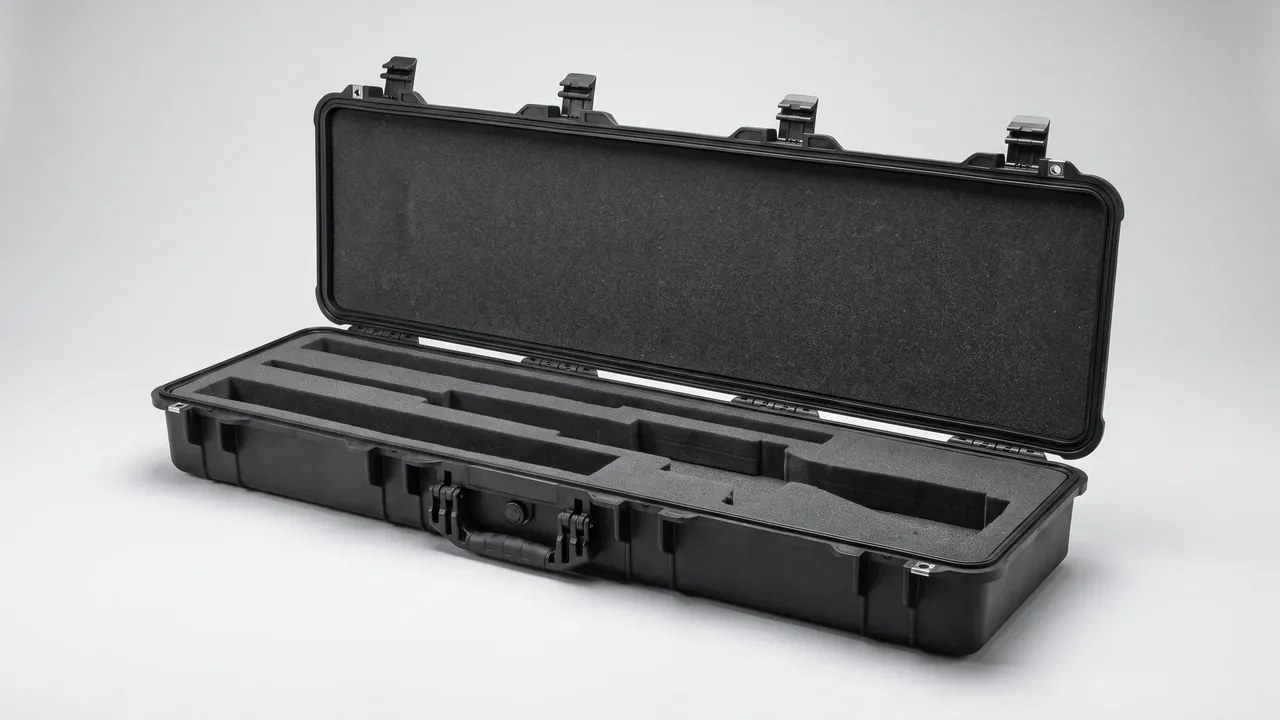
| Insert | Flat pad or none | CNC-cut to the contents; positions and allows visual inventory |
| Sealing | Plain lid lip, no gasket | Foam gasket + pressure-relief valve on most models |
| Locking | Snap-on lid tabs | Two-point drawbolts + padlock loops / TSA lock, pry-resistant |
| Shell | Thin-wall PP, optimized for stacking | Thickened wall or one-piece roto-molding, optimized for drops |
| Consistency | Acceptable piece by piece | Tooling, gaskets and hinge fatigue verified per batch |
Note: "ordinary storage box" here means retail household plastic bins. Premium photography and instrument cases approach purpose-built cases on sealing and inserts, but are usually not cut for firearm-type contents and lack controlled locks.
3. Where the extra money actually goes
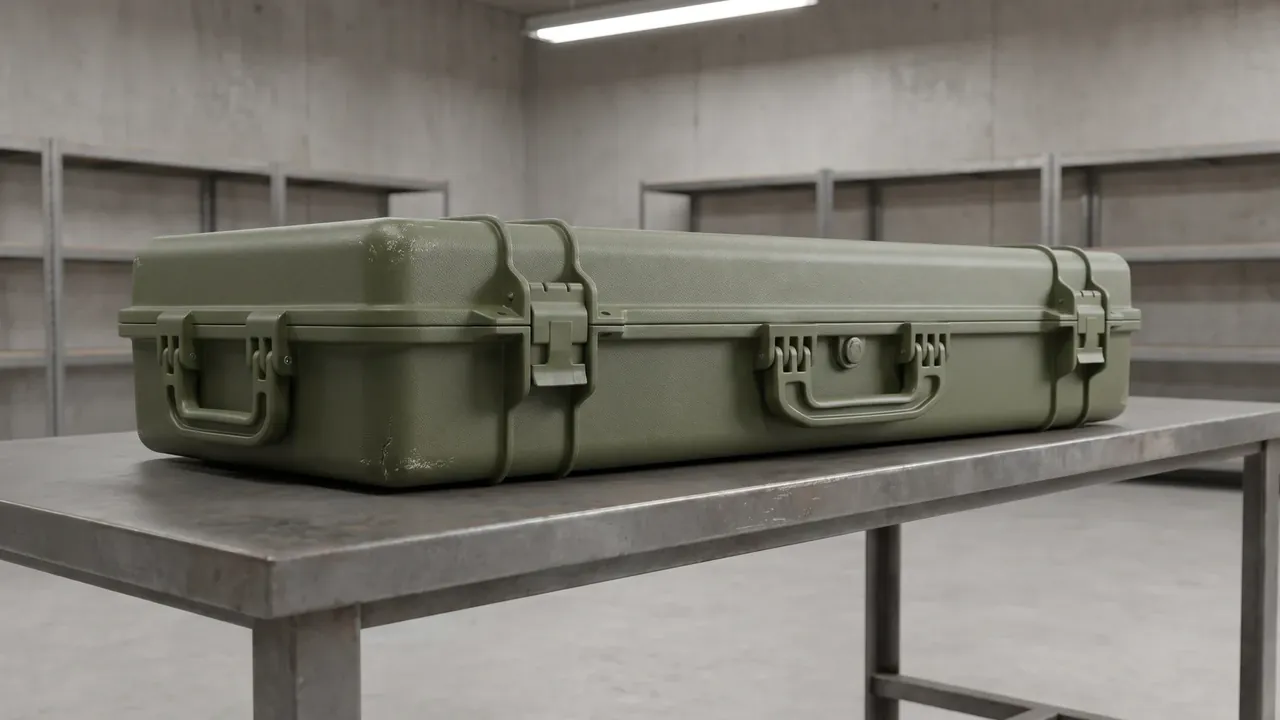
Breaking down the price difference, cost concentrates in four places:
- Tooling and wall thickness — transport-grade shells run roughly 1.5–2× the wall of household bins, with rib layouts designed for drop directions.
- Sealing system — gasket, groove and pressure valve together take a larger cost share than a household lid lip.
- Insert processing — CNC cutting requires sampling and programming; in small batches this is often the largest per-unit adder.
- Hardware life — latches and hinges are fatigue-rated for repeated cycles; household lid tabs generally carry no such rating.
In short, a purpose-built case costs more because its reliability is specified, not because it looks better. Asking a supplier to document these four items is more effective than comparing prices.
4. When the ordinary box is enough
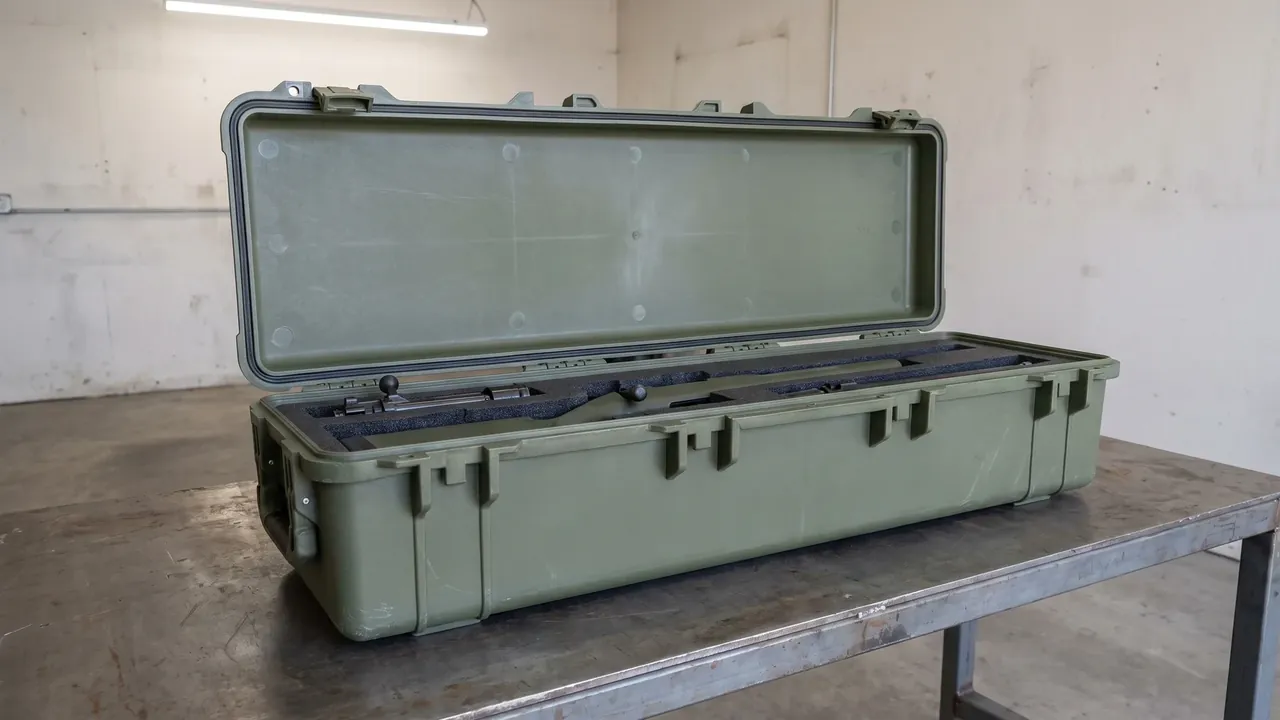
Not every scenario needs a purpose-built case. The ordinary box is sufficient when:
- Contents are low-value, impact-tolerant consumables moved by short manual handling;
- Storage is an indoor, climate-stable room with no rain, standing water or thermal cycling;
- Usage is infrequent (a few retrievals a year), so hinge and latch wear is negligible.
In those cases, paying for sealing, positioning and controlled access buys capability you will never use — over-specification, not savings.
5. When only a purpose-built case will do
Conversely, do not substitute when:
- Contents include precision parts (optics, mechanisms) that need foam positioning rather than a soft pad;
- The transport chain includes air, sea or multi-stage handling, where drops and stacking are unavoidable;
- Opening must be controlled — access logged, seals or locks managed;
- Storage is open-air or field-based, where the gasket and pressure valve decide whether contents stay dry.
The test is simple: walk through "one-meter drop, one-hour rain, three-layer stack, can an unauthorized person open it." If any answer is "yes, there is a problem," use a transport-grade case.
Conclusion
The difference between a military firearm case and an ordinary storage box is the difference between a daily utility container and transport packaging: one is optimized for volume, the other for conditions. Understanding the four cost drivers — inserts, sealing, locking, impact design — tells you whether to spend the money or keep it. Buy the purpose-built case when the scenario demands it; refuse to pay for capability you will never use.
This article compares the containers themselves. It does not cover the handling, loading or use of any items placed inside.
Related Reading
- How to Choose a Military Firearm Case: Four Hard Metrics
- How to Choose a Tactical Storage Box: A Multi-Scenario Gui…
- Heavy-Duty Protective Case: Structure and Load Design
Related Products
- 8 Series — Gun Cases; Military Equipment Cases; Camera Equipment Cases; Drone Cases; Watch Cases; Knife Cases; First Aid Cases; Electronics Equipment Cases
- WL8-2812 PP Gun Case — model WL8-2812
- All protective cases and toolboxes: 7 series, 158 models