

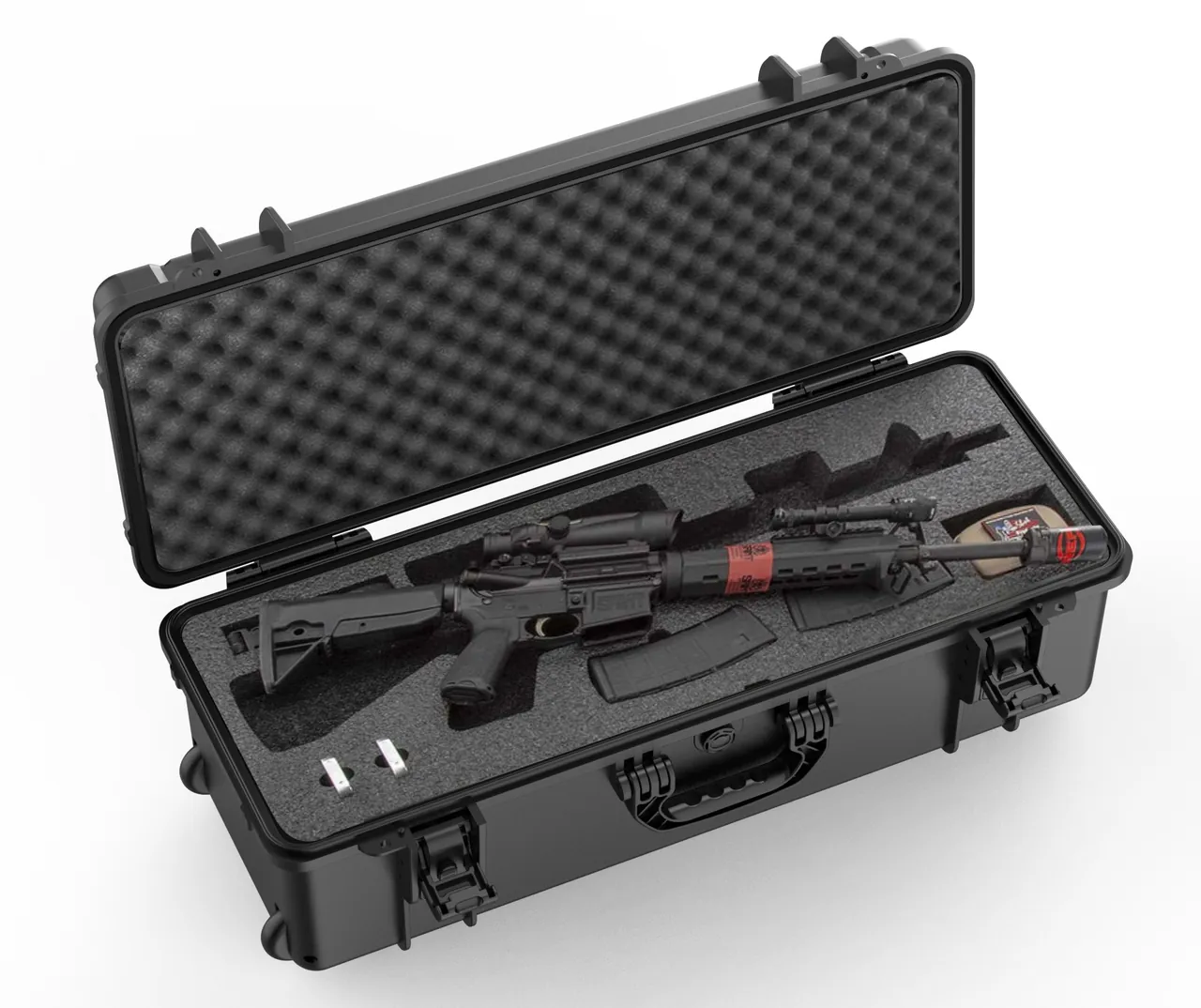
Quick answer: Beyond generic transport packaging, carrying firearm-type items adds three special container requirements: controlled opening (locks and seals must support traceable handovers), low-profile exterior (no markings that advertise contents), and cross-jurisdiction variation (each country and carrier sets its own declaration and packaging rules — the container is one link). Generic requirements (drop, stacking, sealing) still apply, sized to the harshest leg. This article covers the container side only.
Table of contents
- How generic and special requirements stack
- Controlled opening: locks and seals
- Exterior and marking principles
- Cross-jurisdiction transport notes
- Compliance acceptance checklist
- FAQ
1. How generic and special requirements stack
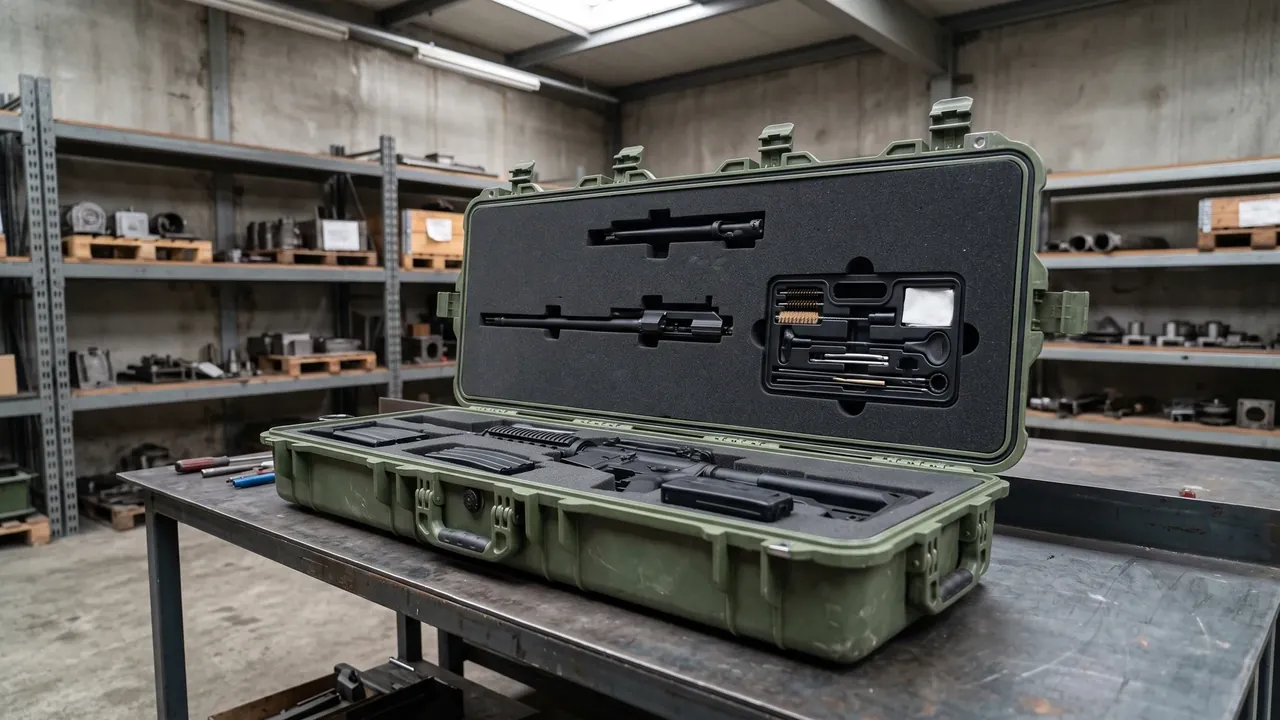
Requirements come in two layers:
Generic layer — applies to all transport packaging: drop grade, stacking strength, moisture sealing, vibration tolerance. Selection methodology is covered in the transport-packaging article; the key is sizing to the harshest leg of the chain.
Special layer — the increments that firearm-type contents bring: controlled opening, discreet exterior, and cooperation with cross-jurisdiction declaration. This layer is what separates a firearm transport case from an ordinary hard case.
The stacking rule: generic is the floor, special sets the tier. A case with passing generic performance but no controlled opening cannot serve this chain.
2. Controlled opening: locks and seals
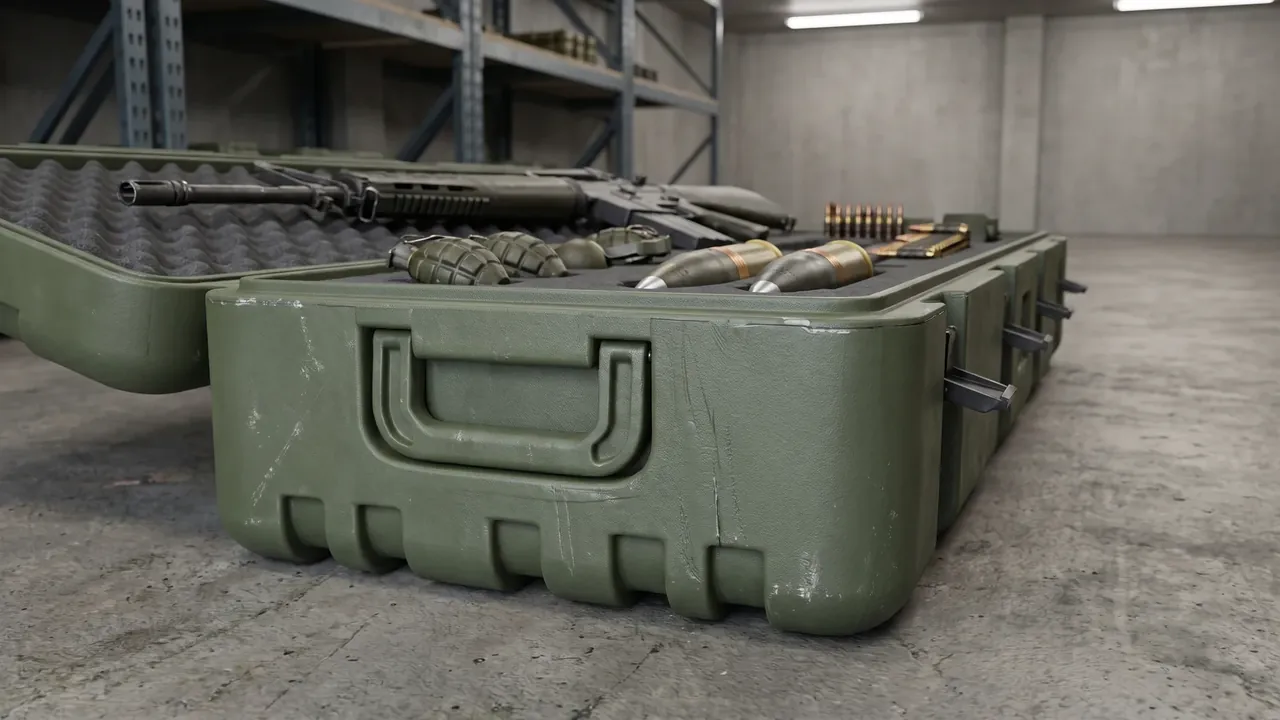
Three engineering requirements:
1. Lock redundancy. Two or more lock points, diagonal or at both ends of the long edge; a single point failing must not open the case.
2. Traceable sealing. Security seals, lead seals or numbered ties make every opening recordable; seal numbers map to handover slips, forming a continuous "sealed — opened — re-sealed" record chain.
3. Key/code hierarchy. Lock tiers match the management system: user, team lead and storekeeper hold different levels; emergency-open procedures are pre-agreed to avoid improvised breaking.
Air-transport supplement: for US-bound checked baggage, a TSA combination lock lets inspectors open with a universal key instead of cutting your lock — the container doing its part for cross-jurisdiction process.
3. Exterior and marking principles
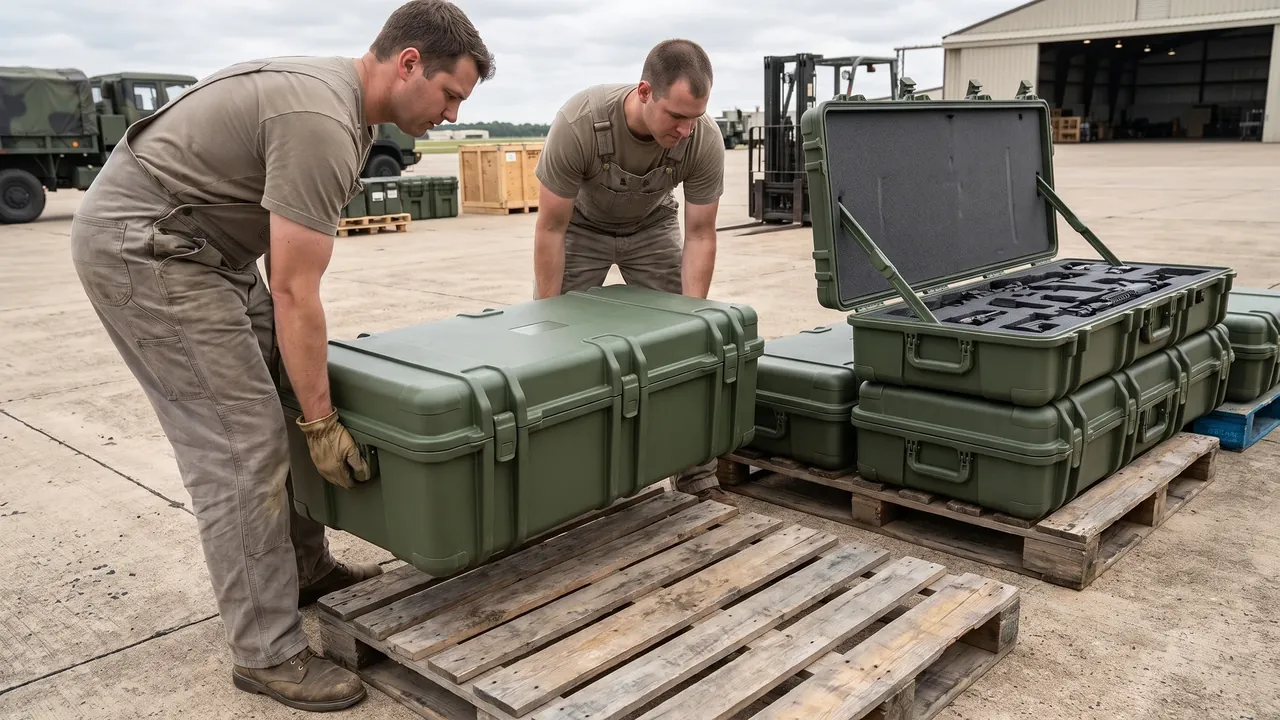
Exterior marking follows "manageable, not announcing":
- Should have: case number, shipping-information field, orientation arrows, stack-limit pictogram, recycling marks — these serve logistics and management;
- Should not have: any graphics, text or branding that hints at the contents; a low-profile exterior is basic risk reduction in transit;
- Attached, not printed: information required by carriers or regulators travels as accompanying documents, not printed on the shell.
This principle serves both goals: the management chain keeps the information it needs, and the road sees nothing it does not.
4. Cross-jurisdiction transport notes
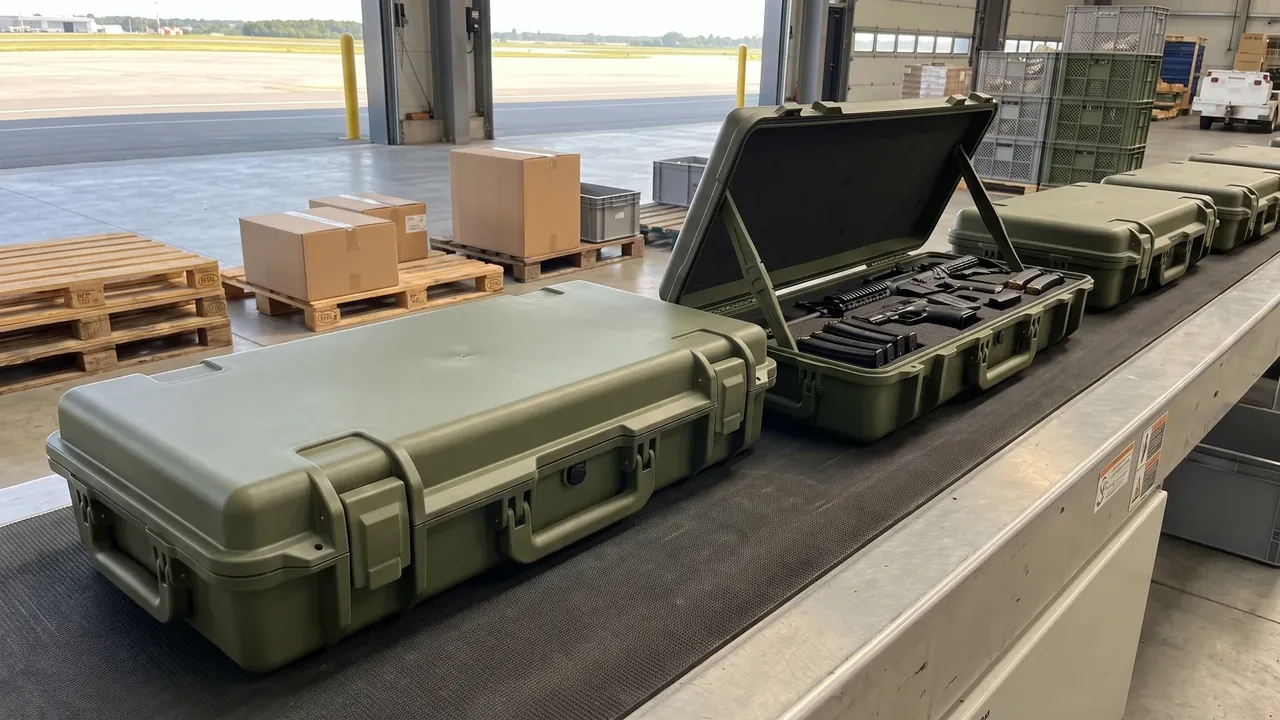
For cross-border or cross-province moves:
- Configure to the strictest jurisdiction: take the maximum across jurisdictions — preparing for the strictest leg usually covers the whole route;
- Carrier pre-check: submit packaging specs, locking method and document list to the carrier before departure to avoid rejection at loading;
- Documents match reality: declared information must agree with the actual case (size, locks, marks); mismatch is the most common inspection problem;
- The container does not replace declaration: shipper declarations and permits remain the shipper's duty; the container side supports with performance and marks. Write the boundary into the contract.
5. Compliance acceptance checklist
- Generic performance files complete: drop, stacking, sealing (per harshest leg);
- Lock points two or more, correctly distributed;
- Seal points functional, numbering rules defined;
- Markings follow "manageable, not announcing";
- External size matches the carrier (vehicle, air ULD);
- Document list pre-checked with the carrier.
With all six, container-side compliance is deliverable; any gap should close before shipping.
Conclusion
Firearm transport case compliance = generic transport performance as the floor + three special requirements as the tier: controlled opening (redundant locks, traceable seals, hierarchy), discreet exterior (manageable, not announcing), and cross-jurisdiction cooperation (configure to the strictest, pre-check with the carrier). In this chain the container is the carrier of performance and traceability; declaration and permits remain the shipper's — clear boundaries make the chain work.
This article covers the container side only. It does not cover anything about the handling of items placed inside; applicable regulations follow their current versions.
Related Reading
- Shifting and Impact Damage in Transit: Causes and Fixes
- Cartridge Transport Box: What Transport Packaging Requires
- military-supply-transport-case-applications
Related Products
- 8 Series — Gun Cases; Military Equipment Cases; Camera Equipment Cases; Drone Cases; Watch Cases; Knife Cases; First Aid Cases; Electronics Equipment Cases
- WL8-2812 PP Gun Case — model WL8-2812
- All protective cases and toolboxes: 7 series, 158 models