

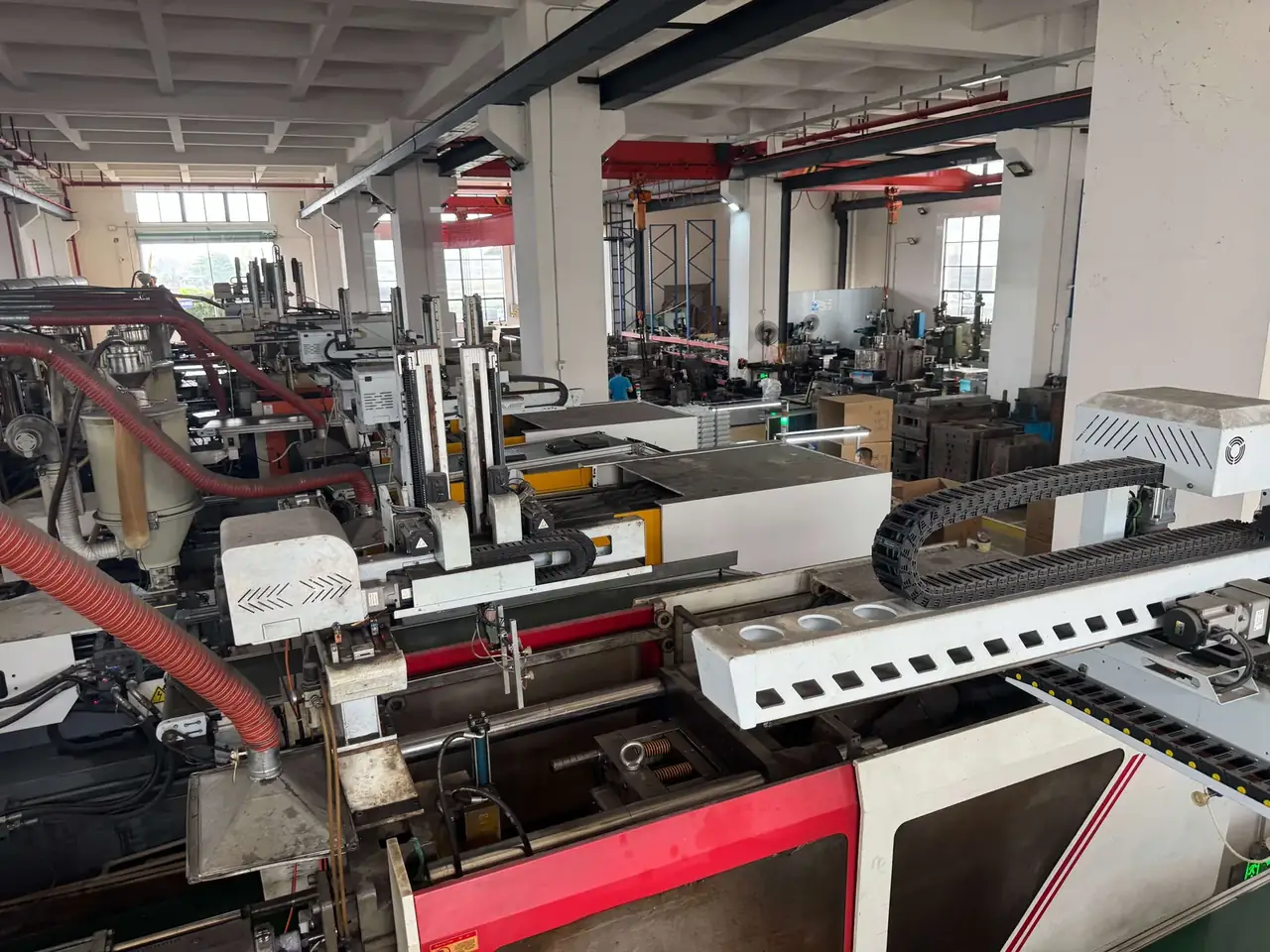
Quick answer: First order delivery takes 95 days against 62 for a repeat run, and the 33 day gap sits in three gates: sampling, tooling and first article approval.
Table of contents
- Why First Order Delivery Runs 33 Days Longer
- Sampling to First Article Approval
- Tooling at 25 Days, 40 With Slides
- The Run: 90 s Cycle and 320 a Day
- Booking Cut-off to a 0.5% Count Gap
- FAQ
1. Why First Order Delivery Runs 33 Days Longer
A repeat order runs on a settled calendar: 3 days to confirm, 7 for material, 2 to mould, 2 to inspect, 5 to the cut-off, 28 at sea and 15 to clear and warehouse. That is 62 days. First order delivery adds three gates in front of it, sampling, tooling and first article approval, for 95.
The 33 days are not three blocks added end to end. Sampling, 3 rounds of 7 days, overlaps the 10 days of confirmation and material a repeat needs anyway, netting 11. Tooling's first 11 days go to base, roughing and electrodes while sampling rounds 2 and 3 run, netting 14. T1 trial moulding and first article approval, 5 and 3, cannot start earlier, so all 8 are new. Eleven, 14 and 8 make 33.
| Stage | Days first/repeat | Document |
|---|---|---|
| Confirmation and material | 10 / 10 | Purchase order |
| Sampling, 3 rounds | 21 / 0, 11 net | Approval sheet |
| Tooling | 25 / 0, 14 net | Mould form |
| T1 trial and first article | 8 / 0 | Approval sheet |
| Run and inspection | 4 / 4 | Inspection report |
| Cut-off, sea, arrival | 48 / 48 | Bill of lading |
| Total | 95 / 62 | Eight documents |
The tooling rows add to 33, a third of the schedule; shortening first order delivery means moving the parallel parts.
2. Sampling to First Article Approval
Sampling is capped at 3 rounds of 7 days, each with 4 days of courier transit and 3 of review. Round 1 checks outer form and parting line, round 2 insert cavities and latches, round 3 colour and finish. A round still shifting structure means the drawing is not fixed, so 3 change items per round is the rule.

The sample approval sheet is the first milestone in first order delivery: photographs, a measured dimension table and two signatures. Without measurements the 21 days buy nothing.
First article approval at 3 days runs from the T1 part arriving to the signed sheet returning; the customer measures 5 critical dimensions and fits once. While it is out the machine waits, and that wait lands on the delivery date.
3. Tooling at 25 Days, 40 With Slides
A mould base takes 25 days from order to arrival with no slides. Side recesses or a handle pocket that strips sideways need slides, and the schedule becomes 40 days; the extra 15 go into machining and hand fitting the seats. One question decides: does the parting line release in a single opening?
Slides also make the first trial twice, for travel then dimensions, with 1 day of chip clearing inside the 5 days of T1.
Five stops, each with a written test and a named owner:
| Hold-up | Test applied | Owner |
|---|---|---|
| Round 3 still changing structure | Same feature changed 3 rounds | Customer engineering |
| Tooling past 25 days | Slide seats take 15 extra days | Tool room |
| T1 part out of spec | 5 critical dimensions out | Tool room and moulding |
| First article past 3 days | Sheet unsigned | Customer quality |
| Run below 320 a day | Cycle slower than 90 s | Moulding floor |
The first two account for six tenths of first order delays and both are front-end failures; the rest can be recovered.
4. The Run: 90 s Cycle and 320 a Day
The minimum order for first order delivery is 300 units, which at a 90 s cycle take 7.5 hours. The 2 days come from 4 hours of mould change, 2 of drying, 3 of set-up, and first-off checks.
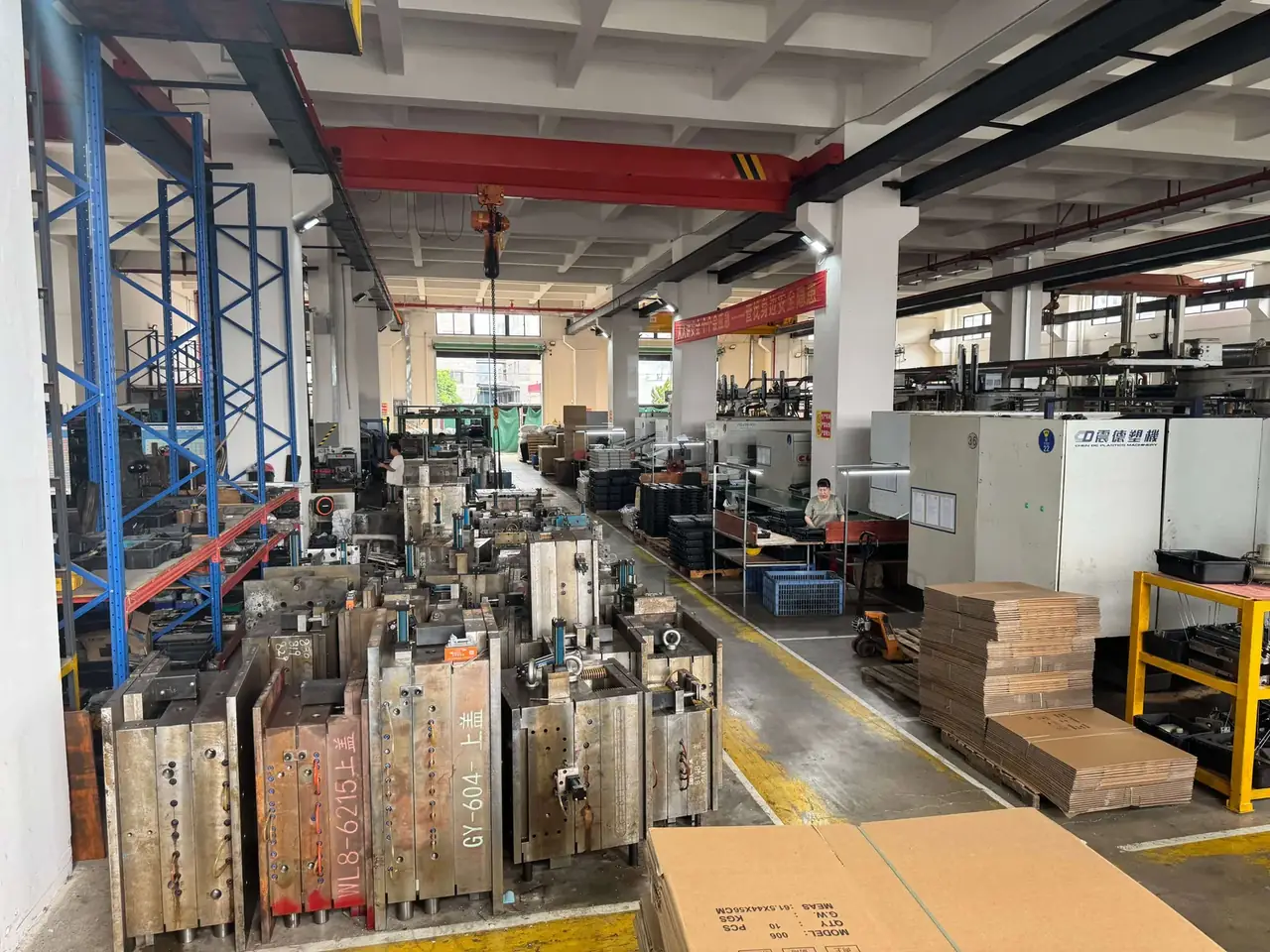
The 320 a day figure is the cycle times 8 hours less 15% downtime, so 300 units book 1 day and 1,200 book 4.
Inspection draws 80 units, over a fifth of the batch, checked within 4 hours for latch force, the handle joint and the shut line. One latch that will not close returns the batch, 2 cosmetic scratches force re-inspection, and a rework costs 1 day. That is why first order delivery keeps 1 day of buffer outside the 95.
5. Booking Cut-off to a 0.5% Count Gap
The 5 day cut-off is the carrier's document deadline, not the loading date: the inspection report is due 2 days before it, customs papers 3. Sea freight takes 28 days, then 9 of customs, 3 of warehousing and 3 of buffer.
| First order vs repeat | Where the gap sits | Room to compress |
|---|---|---|
| 95 days | 11 sampling, 14 tooling, 8 trial and approval | 3 days, by overlapping sampling with the base |
| 62 days | No front-end gate | 2 days, by ordering material early |
| 33 days | Net addition of the three gates | 5 days at most |
The receiving count stays within 0.5%, allowing 1 unit on 300 and 6 on 1,200; gaps come from short loading, not damage, and are reported the same shift.
Above 0.5%, check documents, then carton numbers, then loading photographs; if none reconciles, ship the shortfall with the next sea batch and settle on the verified difference.
Conclusion
The 95 days of first order delivery are not 62 plus three blocks; they are a parallel schedule where sampling yields 10 days and tooling 11, leaving 33. Each gate carries one document, and a missing one stops the 90 s cycle. Split the 33 into 11, 14 and 8 and it is clear which part can move.
Related Reading
- Scheduling lead time milestones without collisions
- The order of sampling and sealed sample approval
- Incoming inspection for batch arrivals
- Matching payment milestones to a first order
Related Products
- 8 Series — Gun Cases; Military Equipment Cases; Camera Equipment Cases; Drone Cases; Watch Cases; Knife Cases; First Aid Cases; Electronics Equipment Cases
- WL8-2812 PP Gun Case — model WL8-2812
- All protective cases and toolboxes: 7 series, 158 models