

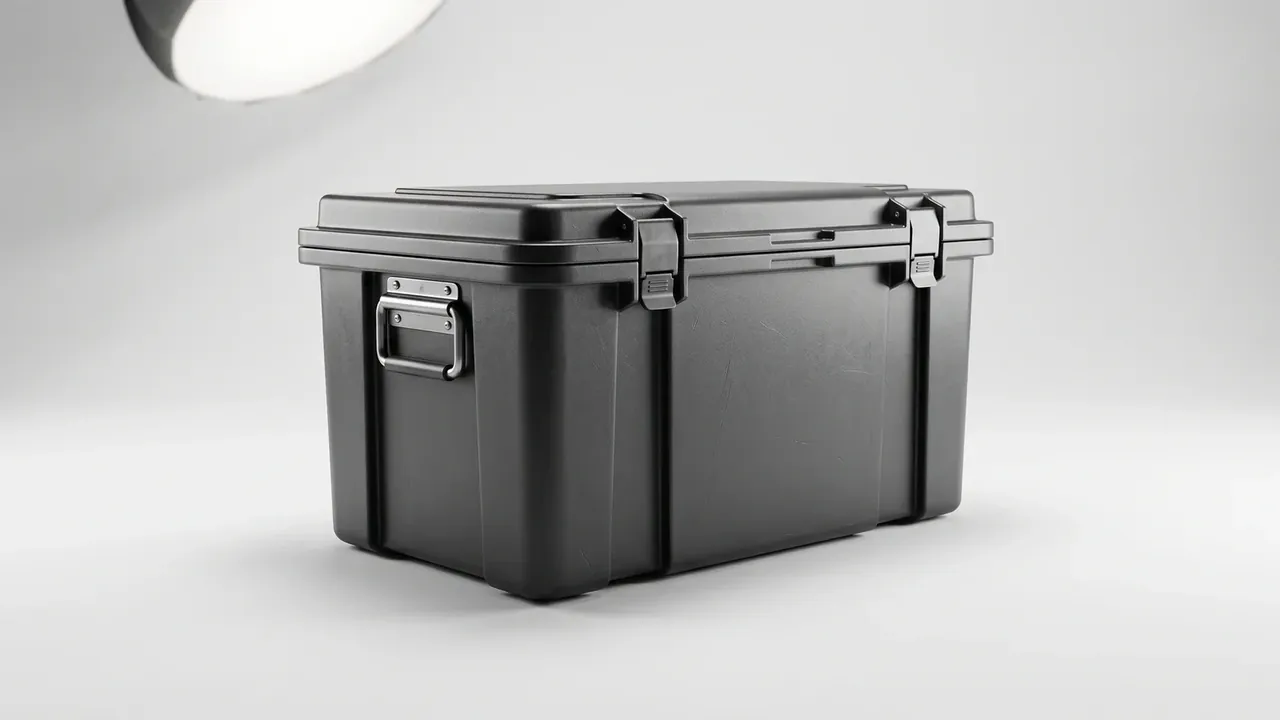
Quick answer: A gasket-sealed protective case is only as good as its cord. Profile suits the cycle count, compound suits the temperature, hardness and compression decide contact, groove dimensions keep it seated, and a replacement date keeps the seal honest.
Table of contents
- How a gasket-sealed protective case seals
- Material: EPDM versus silicone
- Hardness and compression ratio
- Groove and installation
- Failure signs and replacement interval
- FAQ
1. How a gasket-sealed protective case seals
A gasket-sealed protective case seals because rubber is compressed and springs back into the gap. Clamping harder is not sealing better: over-compress the cord and it loses rebound for good.
Profile comes first. Solid square suits a case opened a few times a year; an O-ring compresses evenly on a flat lid face; hollow lip and D profiles deflect further under the same latch force and suit daily opening.
| Profile | Opening frequency | Compression | Watch out |
|---|---|---|---|
| Solid square | A few times a year | 25–30% | High clamp force |
| O-ring | A few times a month | 25–30% | Twists at corners |
| Hollow lip | Several times a day | 20–25% | Cuts easily |
| D profile | Ten times a day or more | 20–25% | Tight groove tolerance |
Pull the cord out and pinch it. Full thickness within two seconds means the elastomer is alive. A quote that says only rubber strip has specified nothing.
2. Material: EPDM versus silicone
EPDM handles outdoor and wet service: ozone, ultraviolet and water, minus 40 to plus 80 degrees Celsius, and 96 hours at 50 pphm ozone without crazing. Cheap compounds fail there first.
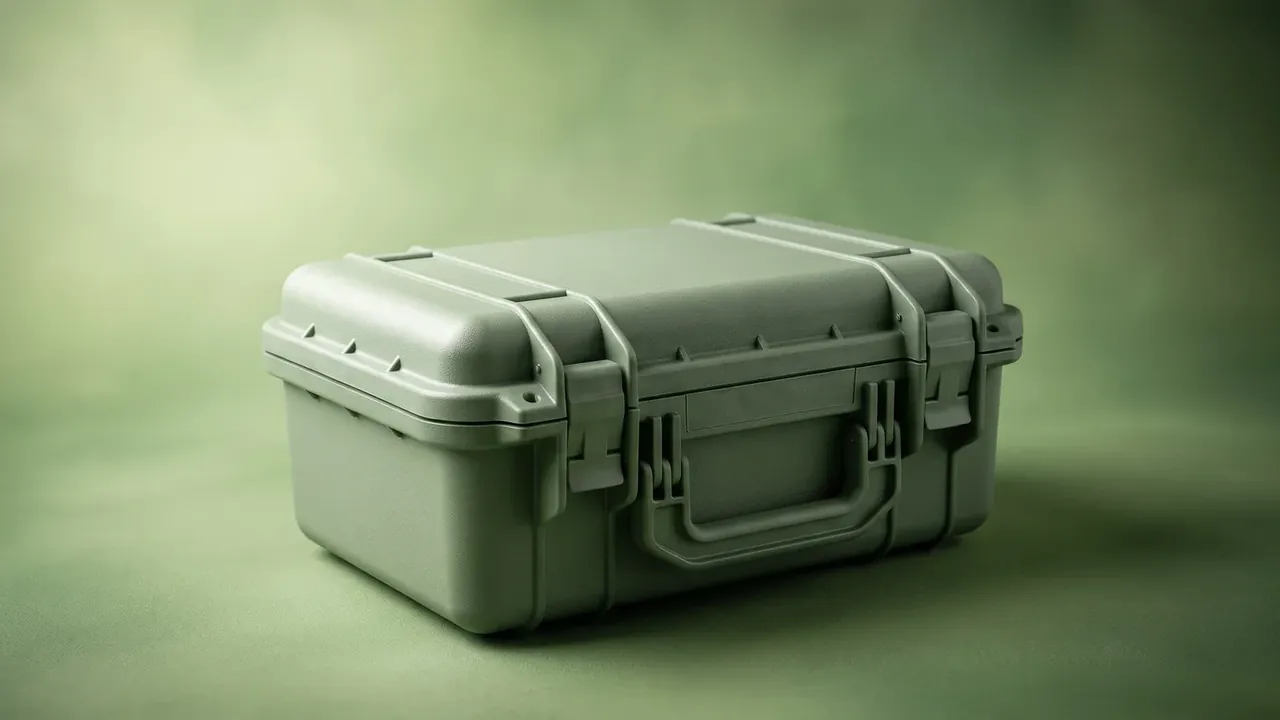
Silicone covers minus 55 to plus 200 degrees and stays soft in cold stores, but tears easily; a burr or a screw hole starts a split. Use it for sterilisation or heat, and EPDM for ordinary storage.
Never mix both on one case. Hardness curves diverge with temperature, compression turns uneven, and leaks begin at a splice.
3. Hardness and compression ratio
For a gasket-sealed protective case, Shore A 55±5 covers most sealing. Harder cord cannot conform under a light lid and only a few points carry load; softer cord creeps in heat and thins under pressure. Check five samples per batch.
Compression ratio is thickness lost over free thickness, normally 25–30%. Below 20% small waviness leaks; above 40% the cord sits pre-loaded and compression set climbs. Cap set at 25% after 24 hours at 70 degrees Celsius.
The ratio is geometry: cord crown to groove floor, subtracted from free height, divided by free height. A drawing for a gasket-sealed protective case should state the number, not leave it to the bench.
4. Groove and installation
The groove is the seat, and on a gasket-sealed protective case small errors tilt or roll the cord. For a 5.0 mm cord, 6.5 mm wide by 3.6 mm deep gives about 28% compression and 1.5 mm of lateral room; at 5.5 mm wide the cord is pushed out as the lid closes.
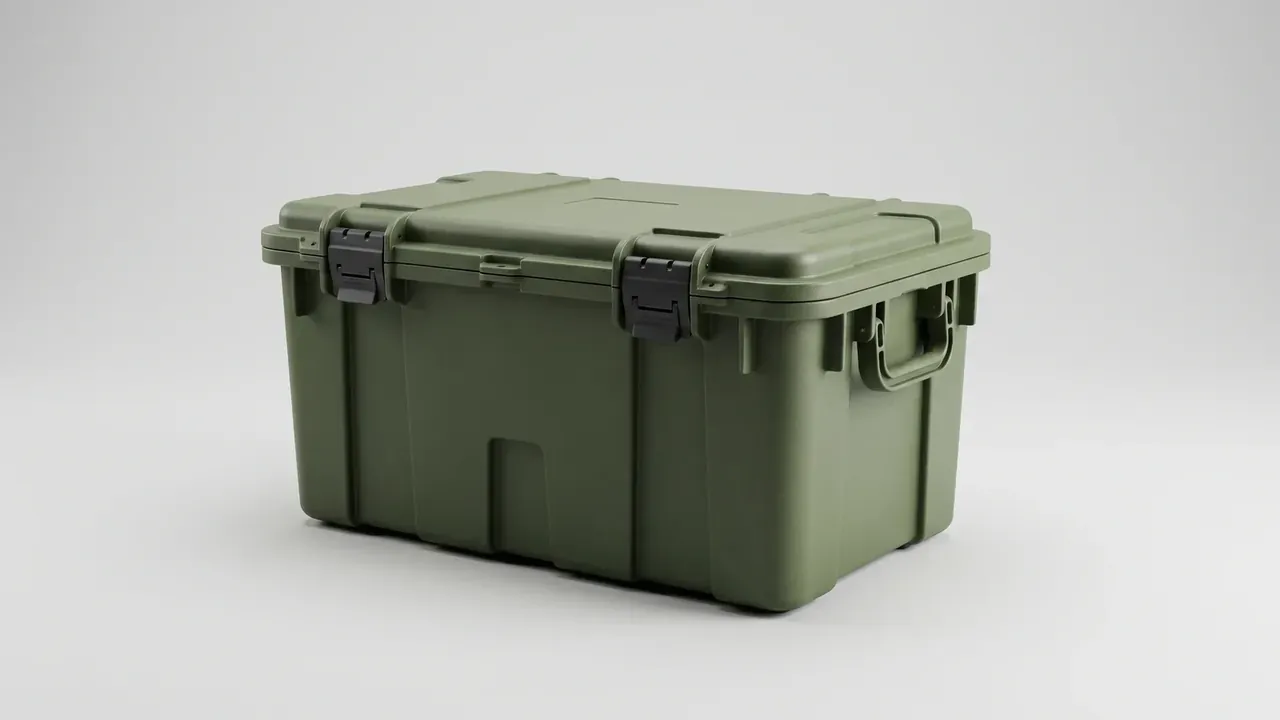
Keep splices to two per loop, vulcanised end to end, offset within 0.3 mm; glued joints open in cold weather within months. Wipe on a 0.1 mm film of silicone grease before fitting.
Clean the groove as well. Flash, release agent and swarf raise one point under the cord, and that point becomes the leak path.
5. Failure signs and replacement interval
Rubber is a service part: replace at 24 months or 300 openings, whichever comes first, and at 12 months under heat, vapour or a dozen openings a day.
Four signs justify it: hardness up 10 points, no recovery within two seconds, fine crazing, or a visible gap at a splice.
| Symptom | Usual cause | Action |
|---|---|---|
| Uniformly hard | Heat or ozone ageing | Replace loop |
| Flat spot | Over-compression | Replace cord, deepen groove |
| Fine cracks | UV or cheap EPDM | Change compound |
| Open splice | Glued joint, cold shrink | Vulcanised joints |
| One-point leak | Debris in groove | Clean, keep cord |
Measure rather than eyeball: read thickness at three points and replace once 15% is lost. In salt air, add 48 hours of neutral salt spray and look for a tacky contact face.
Conclusion
The life of a gasket-sealed protective case is written on the rubber: profile, compound, hardness against compression, groove with room to spare, replacement before failure. Specify those five and the seal becomes testable, whatever the shell thickness says.
This article discusses only the container (case body) side of specifications and design intent, and does not cover any handling, loading or use of the contents.
Related Reading
- Waterproof hard case ratings and test methods
- How a hard case keeps water out
- Moisture-proof case selection and humidity control
- Temperature-controlled case selection by range
Related Products
- 8 Series — Gun Cases; Military Equipment Cases; Camera Equipment Cases; Drone Cases; Watch Cases; Knife Cases; First Aid Cases; Electronics Equipment Cases
- WL8-2812 PP Gun Case — model WL8-2812
- All protective cases and toolboxes: 7 series, 158 models